
India News
India refuses to sign Bali declaration against Myanmar’s persecution of Rohingyas

[vc_row][vc_column][vc_column_text]Indian delegation led by Lok Sabha Speaker Sumitra Mahajan says Parliamentary Forum was for sustainable development goals, reference to Myanmar on violence in Rakhine state “unjustified”
At a time when leading countries from across the globe have condemned the ongoing persecution of Rohingya Muslims in Myanmar’s Rakhine state, India refused to sign a declaration at the World Parliamentary Forum on Sustainable Development held at Nusa Dua in Indonesia, on Thursday, because it urged all participating countries to “respect the human rights of all people in Rakhine state (the epicenter of violence against Rohingyas)”.
The decision of the Indian parliamentary delegation led by Lok Sabha Speaker Sumitra Mahajan to not sign the Bali declaration, on Thursday, can be seen as an extension of the stand taken by India during Prime Minister Narendra Modi’s first bilateral talks with Myanmar’s State Counsellor Aung San Suu Kyi on Thursday.
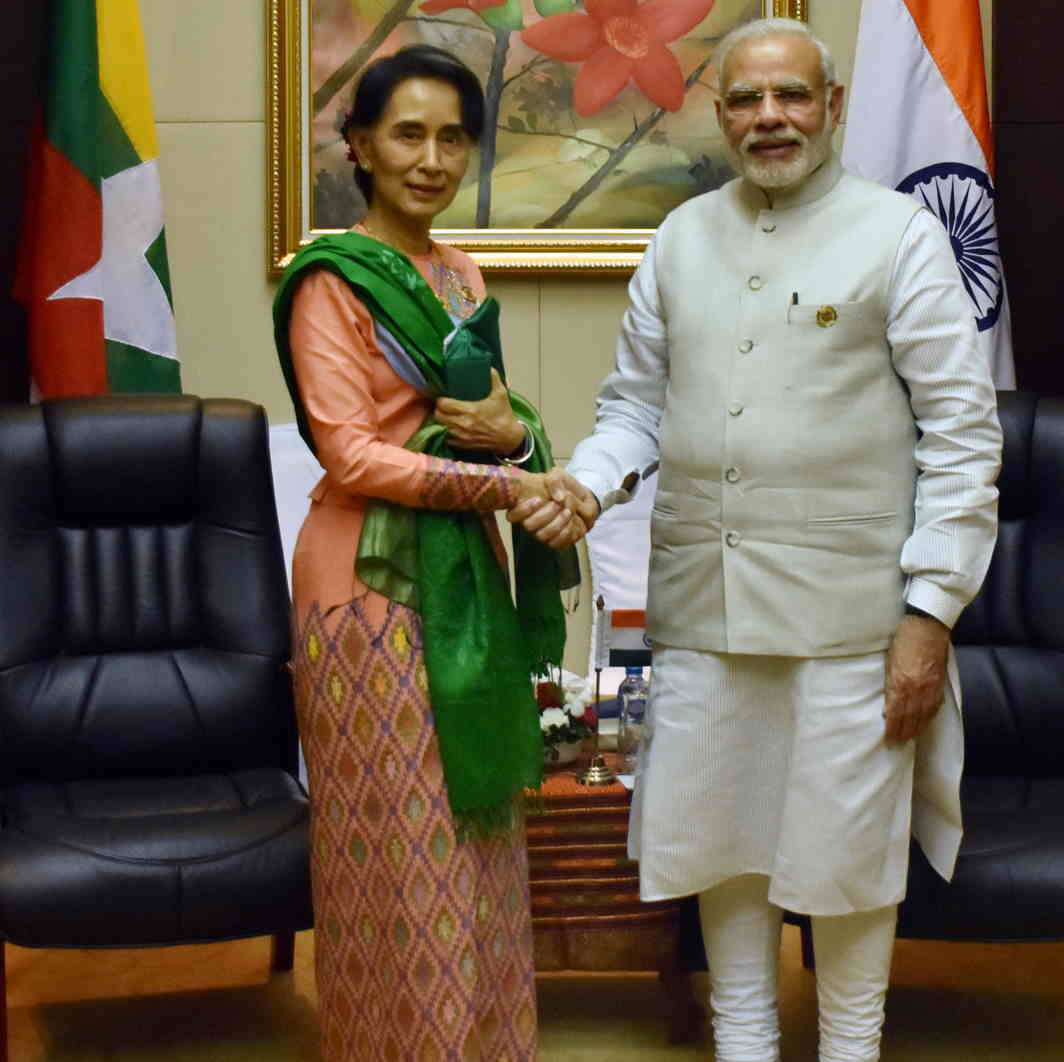
The joint statement issued by India and Myanmar after the bilateral talks between the two leaders had predictably glossed over the atrocities on the Rohingya Muslims – term that neither establishments recognise in official dialogue, choosing instead to call it an issue of illegal immigrants or developments in the Rakhine state.
The joint statement had said: “India condemned the recent terrorist attacks in northern Rakhine State, wherein several members of the Myanmar security forces lost their lives. Both sides agreed that terrorism violates human rights and there should, therefore, be no glorification of terrorists as martyrs. They called on the international community to end selective and partial approaches to combating terrorism and, in this regard, jointly called for the expeditious finalization and adoption of a Comprehensive Convention on International Terrorism by the United Nations General Assembly.” In effect, India stood by Myanmar on its justification of the violence against Rohingya Muslims – one of the most persecuted ethnic minorities in the world.
Expectedly then, the Indian parliamentary delegation distanced itself from the Bali declaration on Thursday as being a signatory to it would have meant that India was going back on its assurances to Myanmar during the bilateral talks.
The Bali declaration, which had called on all parties to contribute to restoring stability and security in the region, had urged everyone to “exercise maximum self-restraint from using violent means, respect the human rights of all people in Rakhine state regardless of their faith and ethnicity, as well as facilitate and guarantee safe access for humanitarian assistance.”
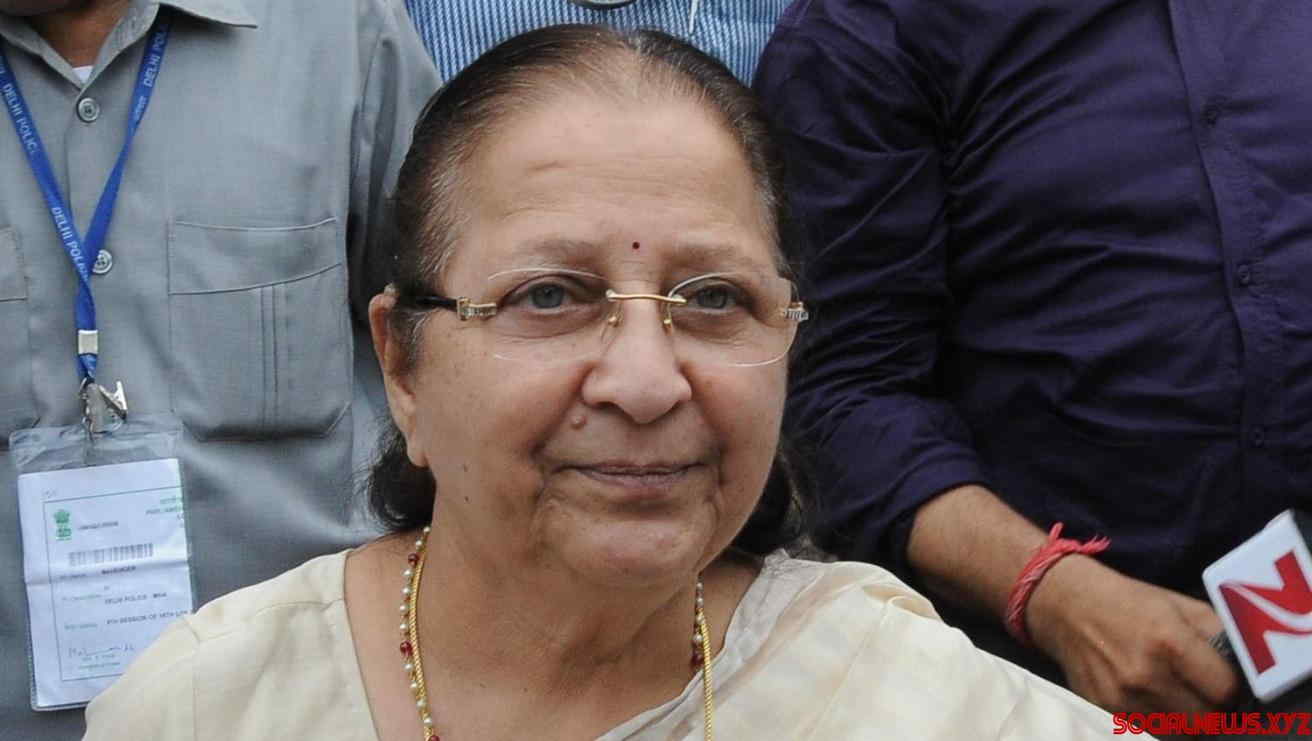
The Indian delegation claimed that: “The country-specific amendment to the draft declaration was proposed at the eleventh hour by selective countries which referred to the violence in Rakhine state of Myanmar. India argued that specifying a particular country is unjustified as this Forum is focused on SDGs (Sustainable Development Goals) and inclusive development for all countries based on cooperative and collaborative approach to achieve the 2030 Agenda for the world.”
A statement issued by the Lok Sabha secretariat to explain the delegation’s rationale for not signing the declaration said: “This was in view of the fact that the declaration, which was to be adopted at the conclusion of the forum, was not in line with the agreed global principles of sustainable development.”
“Never before country-specific issues have been included in the declaration as these dilute the objective of these Forums which require unity and focused efforts of all the countries,” the statement added.
The diplomatic parlance of the Indian establishment over its decision to not sign the declaration aside, the fact is that India has been trying to shut its doors on the Rohingya Muslims who are fleeing Myanmar amid mass killings of members of the community by the Myanmar Army. The Narendra Modi government has also been consistent in its stand of calling the Rohingyas “illegal immigrants” and officially maintaining that they must be sent back to their country. There are an estimated 40,000 Rohingya Muslim refugees in India; spread across Jammu and Kashmir, Haryana, Uttar Pradesh, Telangana, Rajasthan and Delhi.
Meanwhile, Yanghee Lee, the UN special rapporteur on human rights in Myanmar, has said: “Perhaps about a thousand or more are already dead” in the recent spate of violence in the Rakhine state and that while the figure may be indicative of casualties of both – the minorities and the Myanmar Army – but the deaths “would be heavily concentrated on the Rohingya population”.
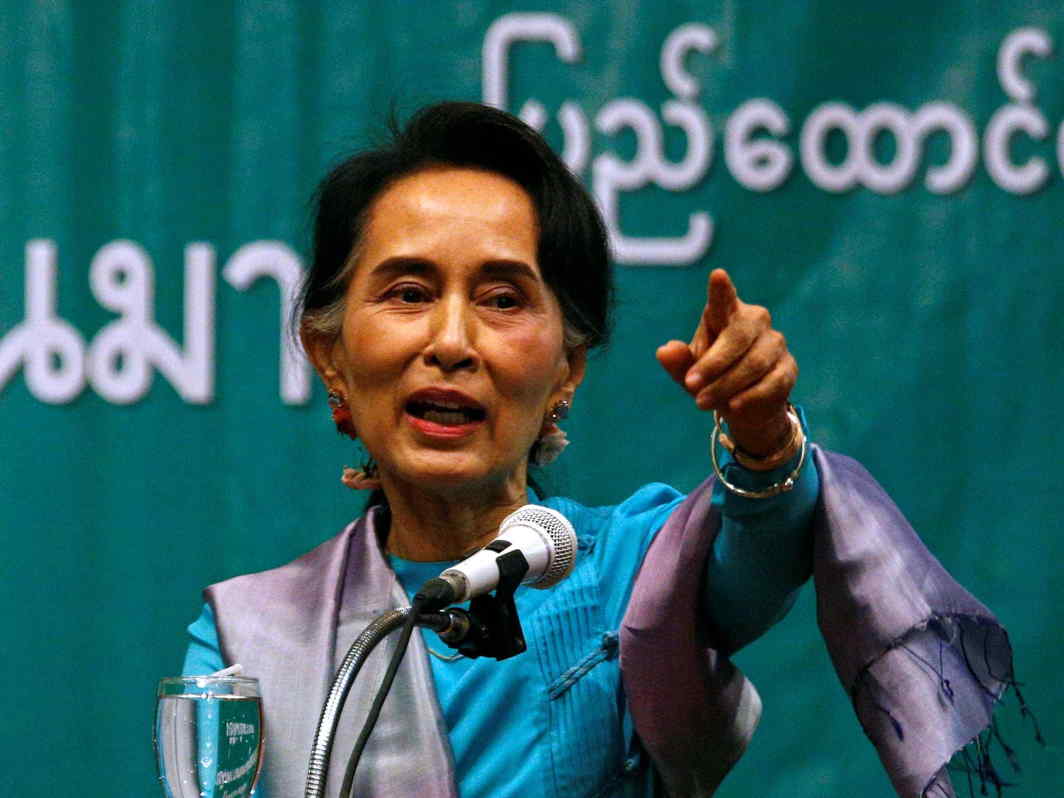
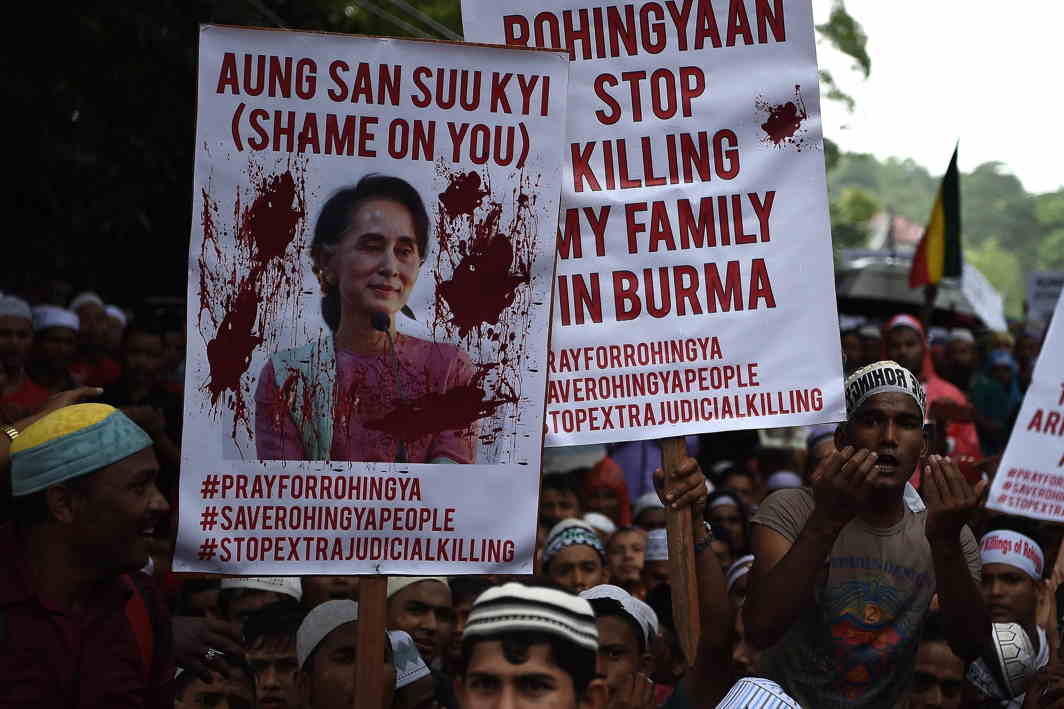
Myanmar State Counsellor Aung San Suu Kyi – a Nobel Peace Prize winner – has been facing widespread criticism for her government’s tacit support for the killing of the Rohingyas, with many even calling for a case to be filed against her at the International Court of Justice in The Hague to try her for condoning hate crimes, violence and killings.
On Thursday, Suu Kyi said: “The issue (Rohingya Muslims) is one of the biggest challenges Myanmar has to face, because you know that the situation in Rakhine has been difficult for many decades and in fact it goes right back to pre-colonial times… It is a little unreasonable to expect that the issue can be resolved in 18 months as you know that our administration has been in power for the last 18 months.”
Suu Kyi, whose government has not allowed a delegation led by former UN Secretary General Kofi Annan to visit the Rakhine state to ascertain the extent of the human rights violation, said: “We are implementing recommendations given by former U.N. secretary-general Kofi Annan as quickly as possible to create harmony and peace in the Rakhine state. Our recommendation is harmony and we shall be addressing it quickly”.[/vc_column_text][/vc_column][/vc_row]









India News
Two election commissioners complained against senior poll officer, RTI reveals
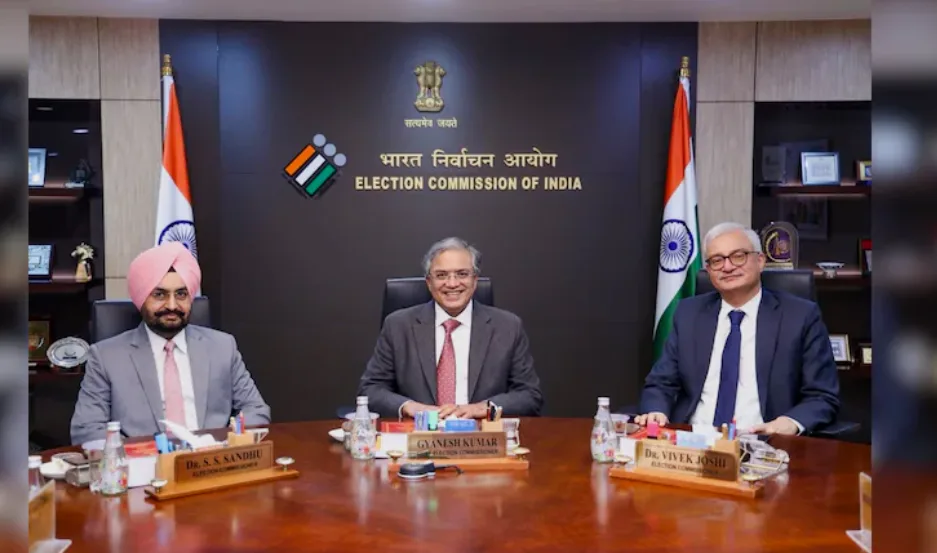
An RTI response has shed light on complaints by two Election Commissioners against a senior poll panel officer and the Cabinet Secretariat’s decision not to intervene directly.

India News
Punjab strike hits public services as 3 lakh employees and roadways workers protest
Punjab is facing disruption to government work and public transport as over three lakh government employees participate in a mass leave protest and roadways workers continue their strike over pending demands.
India News
Amit Shah says congress won’t return to power for 30 years
Union Home Minister Amit Shah took a swipe at Rahul Gandhi over the Opposition’s vote theft allegations, asserting that the Congress would not return to power for the next 30 years.


Magnitude 7 earthquake strikes Tibet after floods

Yogi Government cites Rs.15,233 crore seizures in UP gangster crackdown

PM Modi attacks Rahul Gandhi with failed product jibe

Amit Shah says congress won’t return to power for 30 years

Punjab strike hits public services as 3 lakh employees and roadways workers protest

Two election commissioners complained against senior poll officer, RTI reveals
Punjab strike hits public services as 3 lakh employees and roadways workers protest
Amit Shah says congress won’t return to power for 30 years
Magnitude 7 earthquake strikes Tibet after floods
PM Modi attacks Rahul Gandhi with failed product jibe

Afghan Men Try To Hang With The Jet Engine Of The Aircraft in Kabul- Afghanistan News – Kabul News
Trending Top 10 News: 10000 Crore Fine on Flipkart, Apple to Launch Unique Feature, Hdfc Bank Job Ad

Trending Top 10 News: Nokia 6310, Apple sales, Bachpan ka Pyar Video Kid, Dainik Bhaskar IT Raid

Trending Top 10 News: Canada bans Indian flights, Rain in Delhi NCR, AIMIM Twitter hacked, Raj Kundra case

Trending Top 10 News: Shein India, Apple New Service, Pocket Oxygen, Oppo Launched New Phone
-
 Latest world news18 hours ago
Magnitude 7 earthquake strikes Tibet after floods
-
 India News21 hours ago
Yogi Government cites Rs.15,233 crore seizures in UP gangster crackdown
-
 India News18 hours ago
PM Modi attacks Rahul Gandhi with failed product jibe
-
 India News17 hours ago
Amit Shah says congress won’t return to power for 30 years
-
 India News6 hours ago
Punjab strike hits public services as 3 lakh employees and roadways workers protest
-
 India News6 hours ago
Two election commissioners complained against senior poll officer, RTI reveals
