
India News
Indu Malhotra to be first woman to be promoted from Bar to SC judgeship

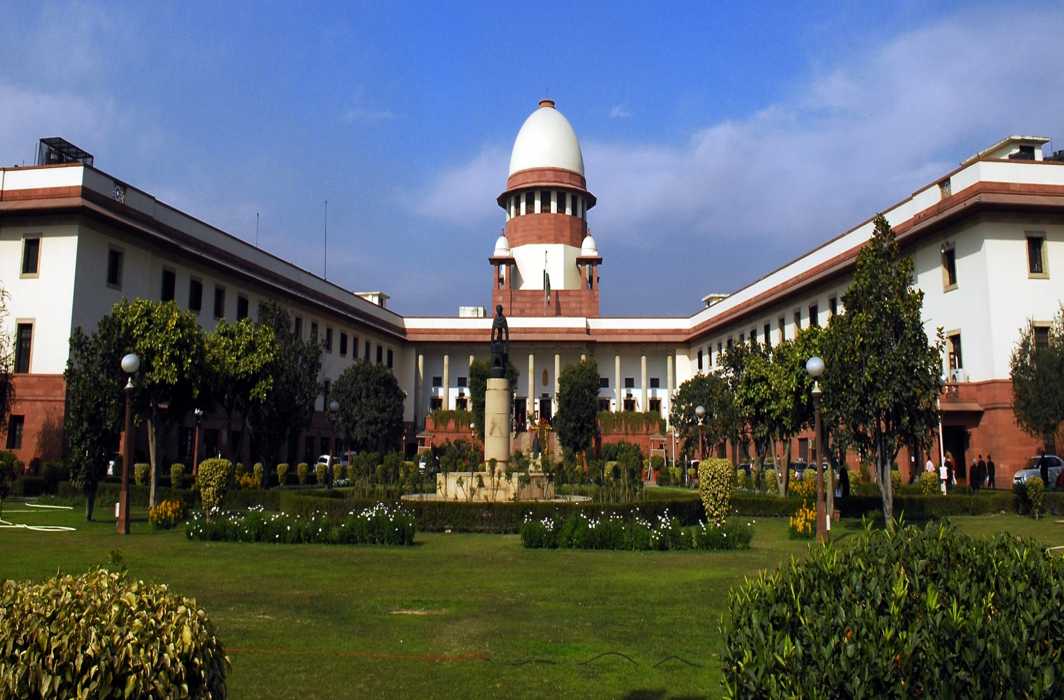
Supreme Court Collegium also recommends elevation of Uttarakhand Chief Justice KM Joseph as judge of the apex court
In a first, the Supreme Court Collegium has decided to elevate a woman lawyer – Indu Malhotra – straight from the Bar Council to be made a judge of the apex court.
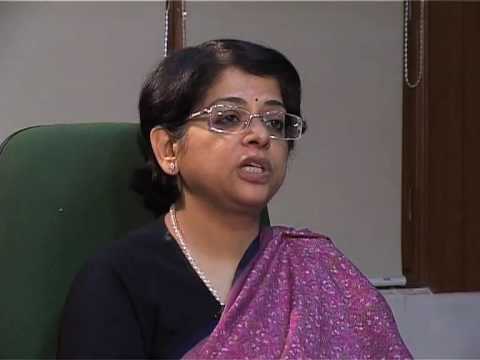 The Collegium, comprising senior-most judges of the Supreme Court – Chief Justice Dipak Misra, Justices Chelameswar, Ranjan Gogoi, Madan B Lokur and Kurian Joseph – has, according to media reports, recommended unanimously the appointment of Malhotra and Uttarakhand Chief Justice KM Joseph as judges of the apex court.
It is pertinent to note that in the first 39 years of its existence, the Supreme Court’s judiciary had no woman member. The glass ceiling was broken in 1989 with the appointment of Justice Fathima Beevi as a judge of the Supreme Court. Justice Beevi was not just the first woman judge of the Supreme Court but also the first Muslim woman to have made it to India’s higher judiciary. The other women judges of the Supreme Court have been Justice Sujatha Manohar, Justice Ruma Pal, Justice Gyan Sudha Misra and Justice Ranjana Desai.
With Malhotra’s appointment, the Supreme Court will now have two sitting women judges, the other being Justice R Banumati. Malhotra would be one of only seven women judges that the apex court has had so far since independence.
However, this won’t be the first time that the apex court will have two sitting women judges. Speaking to India Legal, Justice (retired) Gyan Sudha Misra said: “Little after Justice Ruma Pal retired I was elevated to the Supreme Court and was the only lady judge for a while before Justice Ranjana Desai was elevated to the SC. Justice Desai and I served as judges of the Supreme Court together for a while.”
However, when asked for her views on the direct elevation of a lawyer to the SC judgeship, Justice (retd) Misra said: “It is the Collegium’s decision and I would not like to comment on it”.
Malhotra had, in 2007, become the second woman to be designated as a Senior Advocate by the Supreme Court. A expert on arbitration, Malhotra has authored the third edition of The Law and Practice of Arbitration and Conciliation, 2014 and has appeared in various domestic and international commercial arbitrations. She has also served as a member of the Centre-appointed High Level Committee (HLC) in the Ministry of Law and Justice to review ‘Institutionalization of Arbitration Mechanism in India’.
Daughter of the late Om Prakash Malhotra, a legal luminary himself with pioneering work in the legal disciplines of industrial disputes and arbitration, Indu Malhotra had enrolled as a lawyer in the Bar Council of Delhi in 1983. Then, in 1988 she qualified as an Advocate-on-Record (AoR) in the Supreme Court and also served as Standing Counsel for the State of Haryana and represented statutory bodies like the Securities Exchange Board of India (Sebi), Delhi Development Authority (DDA), Council for Scientific and Industrial Research (CSIR), Indian Council for Agricultural Research (ICAR), before the Supreme Court.
The Collegium’s other pick for the Supreme Court judiciary – Uttarakhand Chief Justice KM Joseph – is also an interesting one. It was Justice Joseph who had, in 2016, struck down the imposition of President’s Rule in Uttarakhand by the Narendra Modi-led government and allowed Congress’ Harish Rawat to prove his strength in the state assembly. The decision had paved the way for Harish Rawat to return as Uttarakhand chief minister following the controversial defections to the BJP that had been orchestrated by his predecessor and then party colleague Vijay Bahuguna. A month after he delivered this verdict, the Supreme Court Collegium had recommended Justice Joseph’s transfer to the joint high court for Andhra Pradesh and Telangana in Hyderabad. However, the Modi government refused to clear the transfer, instead choosing to keep the Chief Justice’s post vacant. The high court at Hyderabad still does not have a full-time Chief Justice.
The Collegium has also regularised Chief Justices of five High Courts which currently had acting chief justices. Justice J Bhattacharaya, who is presently chief justice of Calcutta High Court, will be the new chief justice of Delhi High Court, taking over from Justice Gita Mittal who has been serving as the acting chief justice of the court for several months now.
Chief Justice of the Chattishgarh High Court, Justice TB Radhakrishnan, has been transferred to the Andhra Pradesh High Court which Justice Abhilasha Kumari of the Gujarat High Court has been transferred to Manipur as chief justice. The Collegium has also appointed Justice A Dominic as chief justice of the Kerala High Court while Justice Ajay Rastogi has been transferred to the Tripura High Court. Justice Surya Kant of the Punjab and Haryana High court will be the new chief justice of Himachal Pradesh.





India News
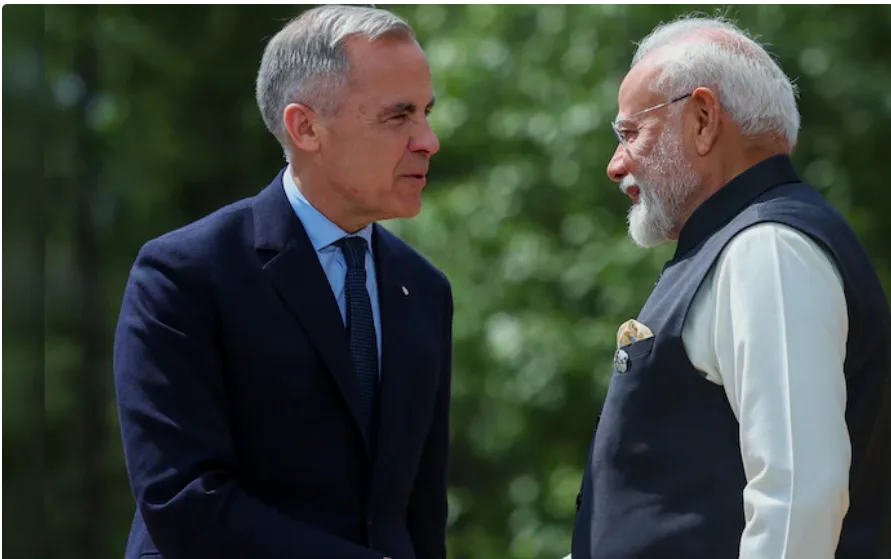
PM Modi speaks to Mark Carney as India and Canada push to strengthen ties
Prime Minister Narendra Modi held a telephone conversation with Canadian Prime Minister Mark Carney on October 13, with both leaders agreeing to strengthen India-Canada ties and pursue concrete outcomes across key areas of their strategic partnership.

India News
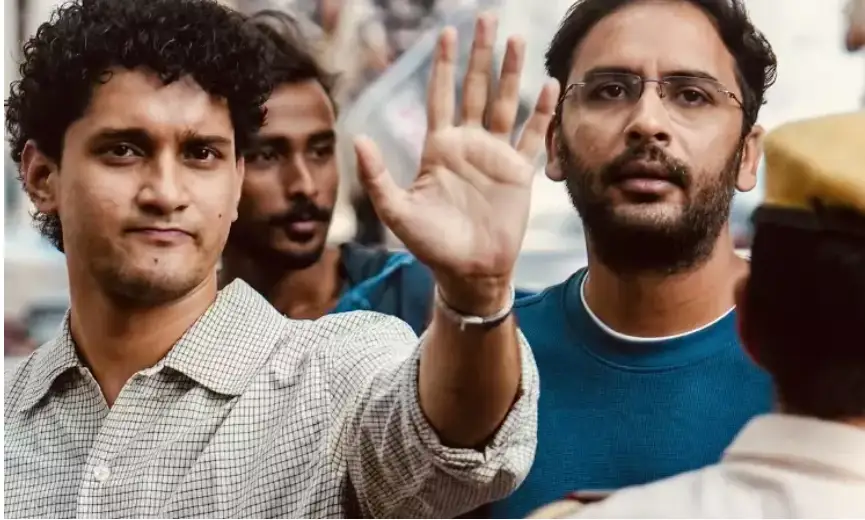
CJP leaders Saurav Das, Ashutosh Ranka, Ajinkya Shinde sent to 5-day judicial custody
Three CJP leaders, Saurav Das, Ashutosh Ranka and Ajinkya Shinde, were placed under preventive arrest following a protest at Delhi’s Jantar Mantar over Chief Election Commissioner Gyanesh Kumar.
India News
BJP focuses on religion as opposition pushes BDM strategy in UP
The BJP is emphasising religious issues ahead of the Uttar Pradesh Assembly elections, while opposition parties are seeking to consolidate Backward, Dalit and Minority voters. Recent exchanges involving Yogi Adityanath, Akhilesh Yadav and Asaduddin Owaisi have added to the political contest over the state’s electoral narrative.


Supreme Court stays defamation case against Rahul Gandhi over PM Modi remarks

Rahul Gandhi hosts high tea for INDIA bloc after Gyanesh Kumar protests

L Murugan quits Union ministry to strengthen BJP in Tamil Nadu

Amit Shah attacks Rahul Gandhi over Congress poll losses, questions SIR row

BJP focuses on religion as opposition pushes BDM strategy in UP

PM Modi speaks to Mark Carney as India and Canada push to strengthen ties

S Jaishankar says India is a natural option for Russia amid Europe tensions

CJP leaders Saurav Das, Ashutosh Ranka, Ajinkya Shinde sent to 5-day judicial custody
BJP focuses on religion as opposition pushes BDM strategy in UP
L Murugan quits Union ministry to strengthen BJP in Tamil Nadu

Afghan Men Try To Hang With The Jet Engine Of The Aircraft in Kabul- Afghanistan News – Kabul News
Trending Top 10 News: 10000 Crore Fine on Flipkart, Apple to Launch Unique Feature, Hdfc Bank Job Ad

Trending Top 10 News: Nokia 6310, Apple sales, Bachpan ka Pyar Video Kid, Dainik Bhaskar IT Raid

Trending Top 10 News: Canada bans Indian flights, Rain in Delhi NCR, AIMIM Twitter hacked, Raj Kundra case

Trending Top 10 News: Shein India, Apple New Service, Pocket Oxygen, Oppo Launched New Phone
-
 India News22 hours ago
Supreme Court stays defamation case against Rahul Gandhi over PM Modi remarks
-
 India News14 hours ago
Rahul Gandhi hosts high tea for INDIA bloc after Gyanesh Kumar protests
-
 India News13 hours ago
L Murugan quits Union ministry to strengthen BJP in Tamil Nadu
-
 India News14 hours ago
Amit Shah attacks Rahul Gandhi over Congress poll losses, questions SIR row
-
 India News12 hours ago
BJP focuses on religion as opposition pushes BDM strategy in UP
-
 India News2 hours ago
CJP leaders Saurav Das, Ashutosh Ranka, Ajinkya Shinde sent to 5-day judicial custody
-
 Latest world news1 hour ago
S Jaishankar says India is a natural option for Russia amid Europe tensions
-
 India News1 hour ago
PM Modi speaks to Mark Carney as India and Canada push to strengthen ties
