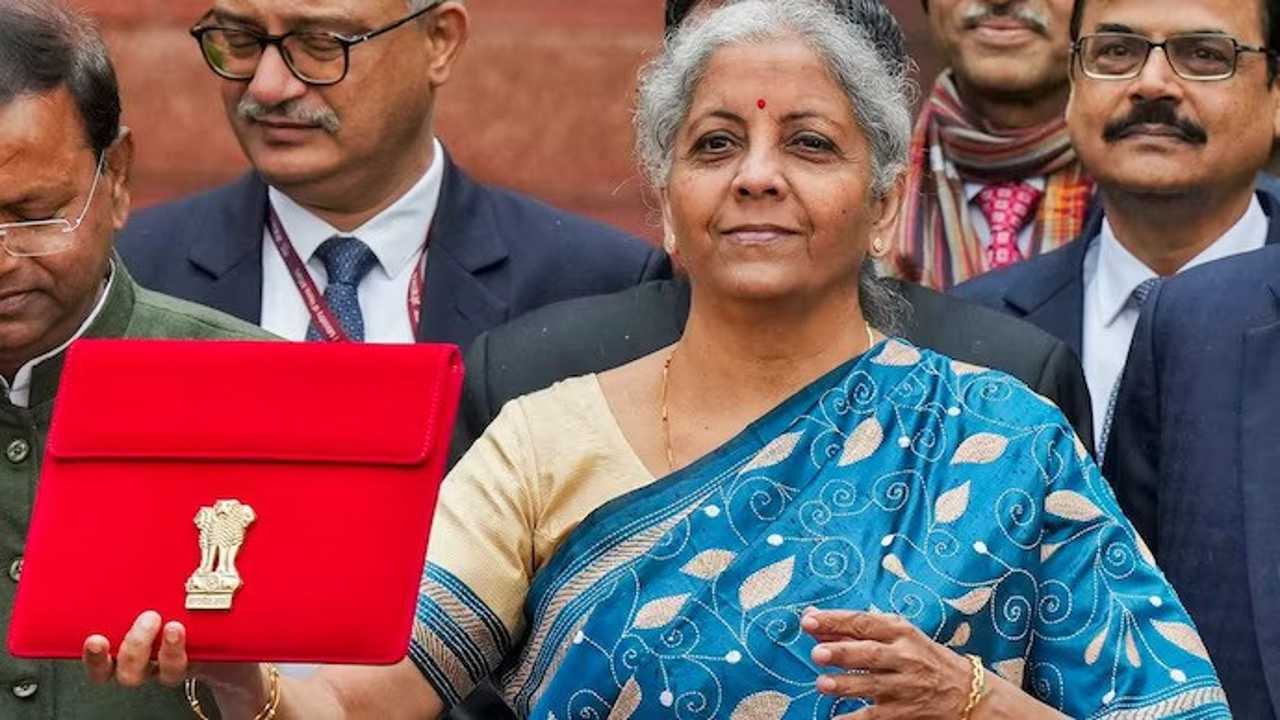
Hon’ble Speaker,
I present the Interim Budget for 2024-25.
Introduction
The Indian economy has witnessed profound positive transformation in the last ten years. The people of India are looking ahead to the future with hope and optimism.
With the blessings of the people, when our Government under the visionary and dynamic leadership of Hon’ble Prime Minister Shri Narendra Modi assumed office in 2014, the country was facing enormous challenges. With ‘Sabka Saath, Sabka Vikas’ as its ‘mantra’, the Government overcame those challenges in right earnest. Structural reforms were undertaken. Pro-people programmes were formulated and implemented promptly. Conditions were created for more opportunities for employment and entrepreneurship. The economy got a new vigour. The fruits of development started reaching the people at scale. The country got a new sense of purpose and hope. Naturally, the people blessed the Government with a bigger mandate.
In the second term, our Government under the leadership of Hon’ble Prime Minister doubled down on its responsibilities to build a prosperous country with comprehensive development of all people and all regions. Our Government strengthened its ‘mantra’ to ‘Sabka Saath, Sabka Vikas, and Sabka Vishwas’. Our development philosophy covered all elements of inclusivity, namely, social inclusivity through coverage of all strata of the society, and geographical inclusivity through development of all regions of the country.
With the ‘whole of nation’ approach of ‘Sabka Prayas’, the country overcame the challenge of a once-in-a-century pandemic, took long strides towards ‘Atmanirbhar Bharat’, committed to ‘Panch Pran’, and laid solid foundations for the ‘Amrit Kaal’. As a result, our young country has high aspirations, pride in its present, and hope and confidence for a bright future. We expect that our Government, based on its stupendous work, will be blessed again by the people with a resounding mandate.
Inclusive Development and Growth
Our humane and inclusive approach to development is a marked and deliberate departure from the earlier approach of ‘provisioning up-to-village level’. Development programmes, in the last ten years, have targeted each and every household and individual, through ‘housing for all’, ‘har ghar jal’, electricity for all, cooking gas for all, bank accounts and financial services for all, in record time.
The worries about food have been eliminated through free ration for 80 crore people. Minimum support prices for the produce of ‘Annadata’ are periodically increased appropriately. These and the provision of basic necessities have enhanced real income in the rural areas. Their economic needs could be addressed, thus spurring growth and generating jobs.
Social Justice
Our Government is working with an approach to development that is all-round, all-pervasive and all-inclusive (सर्वांगीण, सर्वस्पर्शी और सर्वसमावेशी). It covers all castes and people at all levels. We are working to make India a ‘Viksit Bharat’ by 2047. For achieving that goal, we need to improve people’s capability and empower them.
Previously, social justice was mostly a political slogan. For our Government, social justice is an effective and necessary governance model. The saturation approach of covering all eligible people is the true and comprehensive achievement of social justice. This is secularism in action, reduces corruption, and prevents nepotism (भाई-भतीजावाद). There is transparency and assurance that benefits are delivered to all eligible people. The resources are distributed fairly. All, regardless of their social standing, get access to opportunities. We are addressing systemic inequalities that had plagued our society. We focus on outcomes and not on outlays so that the socio-economic transformation is achieved.
As our Prime Minister firmly believes, we need to focus on four major castes. They are, ‘Garib’ (Poor), ‘Mahilayen’ (Women), ‘Yuva’ (Youth) and ‘Annadata’ (Farmer). Their needs, their aspirations, and their welfare are our highest priority. The country progresses, when they progress. All four require and receive government support in their quest to better their lives. Their empowerment and well-being will drive the country forward.
Garib Kalyan, Desh ka Kalyan
We believe in empowering the poor. The earlier approach of tackling poverty through entitlements had resulted in very modest outcomes. When the poor become empowered partners in the development process, government’s power to assist them also increases manifold. With the pursuit of ‘Sabka ka Saath’ in these 10 years, the Government has assisted 25 crore people to get freedom from multi-dimensional poverty. Our Government’s efforts are now getting synergized with energy and passion of such empowered people. This is truly elevating them from poverty.
‘Direct Benefit Transfer’ of 34 lakh crore from the Government using PM-Jan Dhan accounts has led to savings of 2.7 lakh crore for the Government. This has been realized through avoidance of leakages prevalent earlier. The savings have helped in providing more funds for ‘Garib Kalyan’.
PM-SVANidhi has provided credit assistance to 78 lakh street vendors. From that total, 2.3 lakh have received credit for the third time.
PM-JANMAN Yojana reaches out to the particularly vulnerable tribal groups, who have remained outside the realm of development so far. PM-Vishwakarma Yojana provides end-to-end support to artisans and craftspeople engaged in 18 trades. The schemes for empowerment of Divyangs and Transgender persons reflect firm resolve of our Government to leave no one behind.
Welfare of Annadata
Farmers are our ‘Annadata’. Every year, under PM-KISAN SAMMAN Yojana, direct financial assistance is provided to 11.8 crore farmers, including marginal and small farmers. Crop insurance is given to 4 crore farmers under PM Fasal Bima Yojana. These, besides several other programmes, are assisting ‘Annadata’ in producing food for the country and the world.
Electronic National Agriculture Market has integrated 1361 mandis, and is providing services to 1.8 crore farmers with trading volume of ` 3 lakh crore.
The sector is poised for inclusive, balanced, higher growth and productivity. These are facilitated from farmer-centric policies, income support, coverage of risks through price and insurance support, promotion of technologies and innovations through start-ups.
Empowering Amrit Peedhi, the Yuva
Our prosperity depends on adequately equipping and empowering the youth. The National Education Policy 2020 is ushering in transformational reforms. PM ScHools for Rising India (PM SHRI) are delivering quality teaching, and nurturing holistic and well-rounded individuals.
The Skill India Mission has trained 1.4 crore youth, upskilled and reskilled 54 lakh youth, and established 3000 new ITIs. A large number of new institutions of higher learning, namely 7 IITs, 16 IIITs, 7 IIMs, 15 AIIMS and 390 universities have been set up.
PM Mudra Yojana has sanctioned 43 crore loans aggregating to ` 22.5 lakh crore for entrepreneurial aspirations of our youth. Besides that, Fund of Funds, Start Up India, and Start Up Credit Guarantee schemes are assisting our youth. They are also becoming ‘rozgardata’.
The country is proud of our youth scaling new heights in sports. The highest ever medal tally in Asian Games and Asian Para Games in 2023 reflects a high confidence level. Chess prodigy and our Number-One ranked player Praggnanandhaa put up a stiff fight against the reigning World Champion Magnus Carlsson in 2023. Today, India has over 80 chess grandmasters compared to little over 20 in 2010.
Inclusive Development and Growth
The empowerment of women through entrepreneurship, ease of living, and dignity for them has gained momentum in these ten years.
Thirty crore Mudra Yojana loans have been given to women entrepreneurs. Female enrolment in higher education has gone up by twenty-eight per cent in ten years. In STEM courses, girls and women constitute forty-three per cent of enrolment – one of the highest in the world. All these measures are getting reflected in the increasing participation of women in workforce.
Making ‘Triple Talaq’ illegal, reservation of one-third seats for women in the Lok Sabha and State legislative assemblies, and giving over seventy per cent houses under PM Awas Yojana in rural areas to women as sole or joint owners have enhanced their dignity.
Exemplary Track Record of Governance, Development and Performance (GDP)
Besides delivering on high growth in terms of Gross Domestic Product, the Government is equally focused on a more comprehensive ‘GDP’, i.e., ’Governance, Development and Performance’.
Our Government has provided transparent, accountable, people-centric and prompt trust-based administration with ‘citizen-first’ and ‘minimum government, maximum governance’ approach.
The impact of all-round development is discernible in all sectors. There is macro-economic stability, including in the external sector. Investments are robust. The economy is doing well.
People are living better and earning better, with even greater aspirations for the future. Average real income of the people has increased by fifty per cent. Inflation is moderate. People are getting empowered, equipped and enabled to pursue their aspirations. There is effective and timely delivery of programmes and of large projects.
Economic Management
The multipronged economic management over the past ten years has complemented people-centric inclusive development. Following are some of the major elements.
All forms of infrastructure, physical, digital or social, are being built in record time.
All parts of the country are becoming active participants in economic growth.
Digital Public Infrastructure, a new ‘factor of production’ in the 21st century, is instrumental in formalization of the economy.
Goods and Services Tax has enabled ‘One Nation, One Market, One Tax’. Tax reforms have led to deepening and widening of tax base.
Strengthening of the financial sector has helped in making savings, credit and investments more efficient.
GIFT IFSC and the unified regulatory authority, IFSCA are creating a robust gateway for global capital and financial services for the economy.
Proactive inflation management has helped keep inflation within the policy band.
Global Context
Geopolitically, global affairs are becoming more complex and challenging with wars and conflicts. Globalization is being redefined with reshoring and friend-shoring, disruption and fragmentation of supply chains, and competition for critical minerals and technologies. A new world order is emerging after the Covid pandemic.
India assumed G20 Presidency during very difficult times for the world. The global economy was going through high inflation, high interest rates, low growth, very high public debt, low trade growth, and climate challenges. The pandemic had led to a crisis of food, fertilizer, fuel and finances for the world, while India successfully navigated its way. The country showed the way forward and built consensus on solutions for those global problems.
The recently announced India-Middle East-Europe Economic Corridor is a strategic and economic game changer for India and others. In the words of Hon’ble Prime Minister, the corridor “will become the basis of world trade for hundreds of years to come, and history will remember that this corridor was initiated on Indian soil”.
Vision for ‘Viksit Bharat’
Our vision for ‘Viksit Bharat’ is that of “Prosperous Bharat in harmony with nature, with modern infrastructure, and providing opportunities for all citizens and all regions to reach their potential”.
With confidence arising from strong and exemplary track-record of performance and progress earning ‘Sabka Vishwas’, the next five years will be years of unprecedented development, and golden moments to realize the dream of developed India @ 2047. The trinity of demography, democracy and diversity backed by ‘Sabka Prayas’ has the potential to fulfill aspirations of every Indian.
As Hon’ble Prime Minister in his Independence Day address to the nation mentioned, “There is no dearth of opportunities; as many opportunities as we want. The country is capable of creating more opportunities. Sky’s the limit”.
Strategy for ‘Amrit Kaal’
Our Government will adopt economic policies that foster and sustain growth, facilitate inclusive and sustainable development, improve productivity, create opportunities for all, help them enhance their capabilities, and contribute to generation of resources to power investments and fulfil aspirations.
Guided by the principle ‘Reform, Perform, and Transform’, the Government will take up next generation reforms, and build consensus with the states and stakeholders for effective implementation.
It is an important policy priority for our Government to ensure timely and adequate finances, relevant technologies and appropriate training for the Micro, Small and Medium Enterprises (MSME) to grow and also compete globally. Orienting the regulatory environment to facilitate their growth will be an important element of this policy mix.
Aligning with the ‘Panchamrit’ goals, our Government will facilitate sustaining high and more resource-efficient economic growth. This will work towards energy security in terms of availability, accessibility and affordability.
For meeting the investment needs our Government will prepare the financial sector in terms of size, capacity, skills and regulatory framework.
Aspirational Districts Programme
Our Government stands ready to assist the states in faster development of aspirational districts and blocks, including generation of ample economic opportunities.
Development of the East
Our Government will pay utmost attention to make the eastern region and its people a powerful driver of India’s growth.
PM Awas Yojana (Grameen)
Despite the challenges due to COVID, implementation of PM Awas Yojana (Grameen) continued and we are close to achieving the target of three crore houses. Two crore more houses will be taken up in the next five years to meet the requirement arising from increase in the number of families.
Rooftop solarization and muft bijli
Through rooftop solarization, one crore households will be enabled to obtain up to 300 units free electricity every month. This scheme follows the resolve of Hon’ble Prime Minister on the historic day of consecration of Ram Mandir in Ayodhya. Following benefits are expected.
Savings up to fifteen to eighteen thousand rupees annually for households from free solar electricity and selling the surplus to the distribution companies;
Charging of electric vehicles;
Entrepreneurship opportunities for a large number of vendors for supply and installation;
Employment opportunities for the youth with technical skills in manufacturing, installation and maintenance;
Housing for middle class
Our Government will launch a scheme to help deserving sections of the middle class “living in rented houses, or slums, or chawls and unauthorized colonies” to buy or build their own houses.
Medical Colleges
Several youth are ambitious to get qualified as doctors. They aim to serve our people through improved healthcare services. Our Government plans to set up more medical colleges by utilizing the existing hospital infrastructure under various departments. A committee for this purpose will be set-up to examine the issues and make relevant recommendations.
Cervical Cancer Vaccination
Our Government will encourage vaccination for girls in age group of 9 to 14 years for prevention of cervical cancer.
Maternal and child health care
Various schemes for maternal and child care will be brought under one comprehensive programme for synergy in implementation. Upgradation of anganwadi centres under “Saksham Anganwadi and Poshan 2.0” will be expedited for improved nutrition delivery, early childhood care and development.
The newly designed U-WIN platform for managing immunization and intensified efforts of Mission Indradhanush will be rolled out expeditiously throughout the country.
Ayushman Bharat
Healthcare cover under Ayushman Bharat scheme will be extended to all ASHA workers, Anganwadi Workers and Helpers.
Agriculture and food processing
The efforts for value addition in agricultural sector and boosting farmers’ income will be stepped up. Pradhan Mantri Kisan Sampada Yojana has benefitted 38 lakh farmers and generated 10 lakh employment. Pradhan Mantri Formalisation of Micro Food Processing Enterprises Yojana has assisted 2.4 lakh SHGs and sixty thousand individuals with credit linkages. Other schemes are complementing the efforts for reducing post-harvest losses, and improving productivity and incomes.
For ensuring faster growth of the sector, our Government will further promote private and public investment in post-harvest activities including aggregation, modern storage, efficient supply chains, primary and secondary processing and marketing and branding.
Nano DAP
After the successful adoption of Nano Urea, application of Nano DAP on various crops will be expanded in all agro-climatic zones.
Atmanirbhar Oil Seeds Abhiyan
Building on the initiative announced in 2022, a strategy will be formulated to achieve ‘atmanirbharta’ for oil seeds such as mustard, groundnut, sesame, soybean, and sunflower. This will cover research for high-yielding varieties, widespread adoption of modern farming techniques, market linkages, procurement, value addition, and crop insurance.
Dairy Development
A comprehensive programme for supporting dairy farmers will be formulated. Efforts are already on to control foot and mouth disease. India is the world’s largest milk producer but with low productivity of milch-animals. The programme will be built on the success of existing schemes such Rashtriya Gokul Mission, National Livestock Mission, and Infrastructure Development Funds for dairy processing and animal husbandry.
Matsya Sampada
It was our Government which set up a separate Department for Fisheries realizing the importance of assisting fishermen. This has resulted in doubling of both inland and aquaculture production. Seafood export since 2013-14 has also doubled. Implementation of Pradhan Mantri Matsya Sampada Yojana (PMMSY) will be stepped up to enhance aquaculture productivity from existing 3 to 5 tons per hectare, double exports to ` 1 lakh crore and generate 55 lakh employment opportunities in near future. Five integrated aquaparks will be setup.
Lakhpati Didi
Eighty-three lakh SHGs with nine crore women are transforming rural socio-economic landscape with empowerment and self-reliance. Their success has assisted nearly one crore women to become Lakhpati Didi already. They are an inspiration to others. Their achievements will be recognized through honouring them. Buoyed by the success, it has been decided to enhance the target for Lakhpati Didi from 2 crore to 3 crore.
Technological Changes
New age technologies and data are changing the lives of people and businesses. They are also enabling new economic opportunities and facilitating provision of high-quality services at affordable prices for all, including those at ‘bottom of the pyramid’. Opportunities for India at the global level are expanding. India is showing solutions through innovation and entrepreneurship of its people.
Research and Innovation for catalyzing growth, employment and development
Prime Minister Shastri gave the slogan of “Jai Jawan Jai Kisan”. Prime Minister Vajpayee made that “Jai Jawan Jai Kisan Jai Vigyan”. Prime Minister Modi has furthered that to “Jai Jawan Jai Kisan Jai Vigyan and Jai Anusandhan”, as innovation is the foundation of development.
For our tech savvy youth, this will be a golden era.
A corpus of rupees one lakh crore will be established with
fifty-year interest free loan. The corpus will provide long-term financing or refinancing with long tenors and low or nil interest rates. This will encourage the private sector to scale up research and innovation significantly in sunrise domains. We need to have programmes that combine the powers of our youth and technology.
A new scheme will be launched for strengthening deep-tech technologies for defence purposes and expediting ‘atmanirbharta’.
Infrastructure Development
Building on the massive tripling of the capital expenditure outlay in the past 4 years resulting in huge multiplier impact on economic growth and employment creation, the outlay for the next year is being increased by 11.1 per cent to eleven lakh, eleven thousand, one hundred and eleven crore rupees (11,11,111 crore). This would be 3.4 per cent of the GDP.
Railways
Three major economic railway corridor programmes will be implemented. These are: energy, mineral and cement corridors, port connectivity corridors, and high traffic density corridors.
The projects have been identified under the PM Gati Shakti for enabling multi-modal connectivity. They will improve logistics efficiency and reduce cost.
The resultant decongestion of the high-traffic corridors will also help in improving operations of passenger trains, resulting in safety and higher travel speed for passengers. Together with dedicated freight corridors, these three economic corridor programmes will accelerate our GDP growth and reduce logistic costs.
Forty thousand normal rail bogies will be converted to the Vande Bharat standards to enhance safety, convenience and comfort of passengers.
Aviation Sector
The aviation sector has been galvanized in the past ten years. Number of airports have doubled to 149. Roll out of air connectivity to tier-two and tier-three cities under UDAN scheme has been widespread. Five hundred and seventeen new routes are carrying 1.3 crore passengers. Indian carriers have pro-actively placed orders for over 1000 new aircrafts. Expansion of existing airports and development of new airports will continue expeditiously.
Metro and NaMo Bharat
We have a fast-expanding middle class and rapid urbanization is taking place. Metro Rail and NaMo Bharat can be the catalyst for the required urban transformation. Expansion of these systems will be supported in large cities focusing on transit-oriented development.
Green Energy
Towards meeting our commitment for ‘net-zero’ by 2070, the following measures will be taken.
Viability gap funding will be provided for harnessing offshore wind energy potential for initial capacity of one giga-watt.
Coal gasification and liquefaction capacity of 100 MT will be set up by 2030. This will also help in reducing imports of natural gas, methanol, and ammonia.
Phased mandatory blending of compressed biogas (CBG) in compressed natural gas (CNG) for transport and piped natural gas (PNG) for domestic purposes will be mandated.
Financial assistance will be provided for procurement of biomass aggregation machinery to support collection.
Electric Vehicle Ecosystem
Our Government will expand and strengthen the e-vehicle ecosystem by supporting manufacturing and charging infrastructure. Greater adoption of e-buses for public transport networks will be encouraged through payment security mechanism.
Bio-manufacturing and Bio-foundry
For promoting green growth, a new scheme of bio-manufacturing and bio-foundry will be launched. This will provide environment friendly alternatives such as biodegradable polymers, bio-plastics, bio-pharmaceuticals and bio-agri-inputs. This scheme will also help in transforming today’s consumptive manufacturing paradigm to the one based on regenerative principles.
Blue Economy 2.0
For promoting climate resilient activities for blue economy 2.0, a scheme for restoration and adaptation measures, and coastal aquaculture and mariculture with integrated and multi-sectoral approach will be launched.
Comprehensive development of tourist centres
The success of organizing G20 meetings in sixty places presented diversity of India to global audience. Our economic strength has made the country an attractive destination for business and conference tourism. Our middle class also now aspires to travel and explore. Tourism, including spiritual tourism, has tremendous opportunities for local entrepreneurship.
States will be encouraged to take up comprehensive development of iconic tourist centres, branding and marketing them at global scale. A framework for rating of the centres based on quality of facilities and services will be established. Long-term interest free loans will be provided to States for financing such development on matching basis.
To address the emerging fervour for domestic tourism, projects for port connectivity, tourism infrastructure, and amenities will be taken up on our islands, including Lakshadweep. This will help in generating employment also.
Promoting Investments
The FDI inflow during 2014-23 was USD 596 billion marking a golden era. That is twice the inflow during 2005-14.
For encouraging sustained foreign investment, we are negotiating bilateral investment treaties with our foreign partners, in the spirit of ‘first develop India’.
Reforms in the States for ‘Viksit Bharat’
Many growth and development enabling reforms are needed in the states for realizing the vision of ‘Viksit Bharat’.
A provision of seventy-five thousand crore rupees as fifty-year interest free loan is proposed this year to support those milestone-linked reforms by the State Governments.
Societal Changes
The Government will form a high-powered committee for an extensive consideration of the challenges arising from fast population growth and demographic changes. The committee will be mandated to make recommendations for addressing these challenges comprehensively in relation to the goal of ‘Viksit Bharat’.
Amrit Kaal as Kartavya Kaal
Our Government stands committed to strengthening and expanding the economy with high growth and to create conditions for people to realize their aspirations. Hon’ble Prime Minister in his Independence Day address to the nation, in the 75th year of our Republic said; we “commit ourselves to national development, with new inspirations, new consciousness, new resolutions, as the country opens up immense possibilities and opportunities”. It is our ‘Kartavya Kaal’.
Every challenge of the pre-2014 era was overcome through our economic management and our governance. These have placed the country on a resolute path of sustained high growth. This has been possible through our right policies, true intentions, and appropriate decisions. In the full budget in July, our Government will present a detailed roadmap for our pursuit of ‘Viksit Bharat’.
Revised Estimates 2023-24
The Revised Estimate of the total receipts other than borrowings is ` 27.56 lakh crore, of which the tax receipts are 23.24 lakh crore. The Revised Estimate of the total expenditure is ` 44.90 lakh crore.
The revenue receipts at ` 30.03 lakh crore are expected to be higher than the Budget Estimate, reflecting strong growth momentum and formalization in the economy.
The Revised Estimate of the fiscal deficit is 5.8 per cent of GDP, improving on the Budget Estimate, notwithstanding moderation in the nominal growth estimates.
Budget Estimates 2024-25
Coming to 2024-25, the total receipts other than borrowings and the total expenditure are estimated at ` 30.80 and 47.66 lakh crore respectively. The tax receipts are estimated at ` 26.02 lakh crore.
The scheme of fifty-year interest free loan for capital expenditure to states will be continued this year with total outlay of 1.3 lakh crore.
We continue on the path of fiscal consolidation, as announced in my Budget Speech for 2021-22, to reduce fiscal deficit below 4.5 per cent by 2025-26. The fiscal deficit in 2024-25 is estimated to be 5.1 per cent of GDP, adhering to that path.
The gross and net market borrowings through dated securities during 2024-25 are estimated at ` 14.13 and
11.75 lakh crore respectively. Both will be less than that in
2023-24. Now that the private investments are happening at scale, the lower borrowings by the Central Government will facilitate larger availability of credit for the private sector.
Vote on Account
I will be seeking ‘vote on account’ approval of the Parliament through the Appropriation Bill for a part of the financial year 2024-25.
I will, now, move to Part B.
Part B
Hon’ble Speaker Sir,
Direct taxes
Over the last ten years, the direct tax collections have more than trebled and the return filers swelled to 2.4 times.
I would like to assure the taxpayers that their contributions have been used wisely for the development of the country and welfare of its people. I appreciate the tax payers for their support.
The Government has reduced and rationalized tax rates. Under the new tax scheme, there is now no tax liability for tax payers with income up to ₹ 7 lakh, up from ₹ 2.2 lakh in the financial year 2013-14. The threshold for presumptive taxation for retail businesses was increased from ₹ 2 crore to ₹ 3 crore. Similarly, the threshold for professionals eligible for presumptive taxation was increased from ₹ 50 lakh to ₹ 75 Lakh. Also, corporate tax rate was decreased from 30 per cent to 22 per cent for existing domestic companies and to 15 per cent for certain new manufacturing companies.
In the last five years, our focus has been to improve
tax-payer services. The age-old jurisdiction-based assessment system was transformed with the introduction of Faceless Assessment and Appeal, thereby imparting greater efficiency, transparency and accountability. Introduction of updated income tax returns, a new Form 26AS and prefilling of tax returns have made filing of tax returns simpler and easier. Average processing time of returns has been reduced from 93 days in the year
2013-14 to a mere ten days this year, thereby making refunds faster.
Indirect Taxes
By unifying the highly fragmented indirect tax regime in India, GST has reduced the compliance burden on trade and industry. The industry has acknowledged the benefits of GST. According to a recent survey conducted by a leading consulting firm, 94 per cent of industry leaders view the transition to GST as largely positive. According to 80 per cent of the respondents, it has led to supply chain optimisation, as elimination of tax arbitrage and octroi has resulted in disbanding of check posts at state and city boundaries. At the same time, tax base of GST more than doubled and the average monthly gross GST collection has almost doubled to ₹ 1.66 lakh crore, this year. States too have benefited. States’ SGST revenue, including compensation released to states, in the post-GST period of 2017-18 to 2022-23, has achieved a buoyancy of 1.22. In contrast, the tax buoyancy of State revenues from subsumed taxes in the pre-GST four-year period of 2012-13 to 2015-16 was a mere 0.72. The biggest beneficiaries are the consumers, as reduction in logistics costs and taxes have brought down prices of most goods and services.
We have taken a number of steps in Customs to facilitate international trade. As a result, the import release time declined by 47 per cent to 71 hours at Inland Container Depots, by 28 per cent to 44 hours at air cargo complexes and by 27 per cent to 85 hours at sea ports, over the last four years since 2019, when the National Time Release Studies were first started.
Tax proposals
As for tax proposals, in keeping with the convention, I do not propose to make any changes relating to taxation and propose to retain the same tax rates for direct taxes and indirect taxes including import duties. However, certain tax benefits to start-ups and investments made by sovereign wealth or pension funds as also tax exemption on certain income of some IFSC units are expiring on 31.03.2024. To provide continuity in taxation,
I propose to extend the date to 31.03.2025.
Moreover, in line with our Government’s vision to improve ease of living and ease of doing business, I wish to make an announcement to improve tax payer services. There are a large number of petty, non-verified, non-reconciled or disputed direct tax demands, many of them dating as far back as the year 1962, which continue to remain on the books, causing anxiety to honest tax payers and hindering refunds of subsequent years.
I propose to withdraw such outstanding direct tax demands up to twenty-five thousand rupees (₹ 25,000) pertaining to the period up to financial year 2009-10 and up to ten-thousand rupees (₹ 10,000) for financial years 2010-11 to 2014-15. This is expected to benefit about a crore tax-payers.
Economy – Then and Now
In 2014 when our Government assumed the reins, the responsibility to mend the economy step by step and to put the governance systems in order was enormous. The need of the hour was to give hope to the people, to attract investments, and to build support for the much-needed reforms. The Government did that successfully following our strong belief of ‘nation-first’.
The crisis of those years has been overcome, and the economy has been put firmly on a high sustainable growth path with all-round development. It is now appropriate to look at where we were then till 2014 and where we are now, only for the purpose of drawing lessons from the mismanagement of those years. The Government will lay a White Paper on table of the House.
The exemplary track record of governance, development and performance, effective delivery, and ‘Jan Kalyan’ has given the Government trust, confidence and blessings of the people to realize, whatever it takes, the goal of ‘Viksit Bharat’ with good intentions, true dedication and hard work in the coming years and decades.
With this, I commend the interim budget to this august House.
Jai Hind