Parliament has cleared the Viksit Bharat Guarantee for Employment and Livelihood Mission (Rural) Bill, commonly referred to as the G RAM G Bill, paving the way for the replacement of the Mahatma Gandhi National Rural Employment Guarantee Act (MGNREGA). The legislation was passed within two days amid sharp political confrontation, walkouts and overnight protests by opposition parties.
The bill was approved by the Lok Sabha despite repeated disruptions and protests. In the Rajya Sabha, the debate stretched beyond midnight, with voting held around 12.15 am. The bill was eventually passed by a voice vote after opposition members staged a walkout, leaving the ruling alliance members present in the House.
Opposition objects to name change and provisions
The Congress and other opposition parties mounted a strong challenge to the bill, objecting both to the change in the scheme’s name and its revised framework. A key point of contention was the removal of Mahatma Gandhi’s name from the legislation, which opposition leaders said reflected an ideological shift rather than a policy necessity.
Congress president Mallikarjun Kharge launched a sharp attack during the Rajya Sabha debate, urging the government to withdraw the bill and warning that it would harm the rural poor. He accused the government of speaking in the name of welfare while undermining the interests of vulnerable communities, making an emotional appeal to reconsider the legislation.
Several opposition members initially demanded that the bill be referred to a standing committee for detailed scrutiny. When that demand was not accepted, they called for the bill’s withdrawal and later staged a walkout. Members of the Trinamool Congress and other parties subsequently sat on a dharna within Parliament premises.
Heated exchanges in the Upper House
The debate witnessed intense exchanges between the treasury benches and the opposition. Trinamool Congress MP Derek O’Brien linked the passage of the bill with developments in West Bengal, alleging that the Centre’s actions had consequences for the implementation of rural employment schemes in the state. He also referred to the state government’s decision to rename its employment initiative following the Lok Sabha vote.
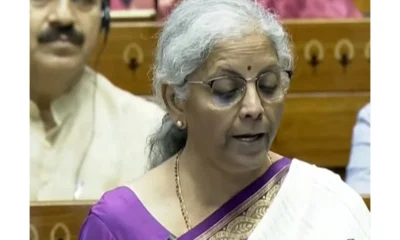
As Rural Development Minister Shivraj Singh Chouhan rose to reply, opposition members raised slogans demanding the withdrawal of what they termed a “black bill”. When the protests continued, opposition MPs walked out, allowing the bill to be passed without their presence.
Responding sharply, Chouhan criticised the walkout and accused the opposition of refusing to engage in debate. He defended the government’s move, arguing that the earlier scheme had suffered from corruption and inefficiencies, and said the new law was drafted after consultations with stakeholders.
Government defends overhaul of rural employment scheme
The government has maintained that updating the two-decade-old MGNREGA framework was necessary to address structural shortcomings and align it with current rural needs. According to the provisions outlined, the new law increases the guaranteed days of work from 100 to 125 while retaining key elements of the earlier scheme.
However, critics have pointed out that employment under the new framework will be based on pre-approved plans rather than demand-driven applications at the gram panchayat level. The work categories have also been streamlined into four segments—water security, core rural infrastructure, livelihood-related assets, and climate resilience—raising concerns that local flexibility may be reduced.
Opposition leaders have argued that these changes dilute the original spirit of MGNREGA, which was designed as a rights-based, demand-driven employment guarantee programme.
Protests continue after passage
Following the bill’s passage, opposition parties reiterated their charge that the legislation weakens the guarantee, livelihood assurance and social security that formed the core of the original programme introduced in 2005. Despite these objections, the government’s numerical strength ensured the bill’s smooth passage through both Houses.
With parliamentary approval now secured, the G RAM G Bill is set to replace MGNREGA, marking a significant shift in India’s rural employment policy framework amid continuing political debate.