English हिन्दी
Connect with us

India News

Karnataka announces night curfew for 10 days, bans on New Year parties amid fears over Omicron variant

Published

on

Covid cases

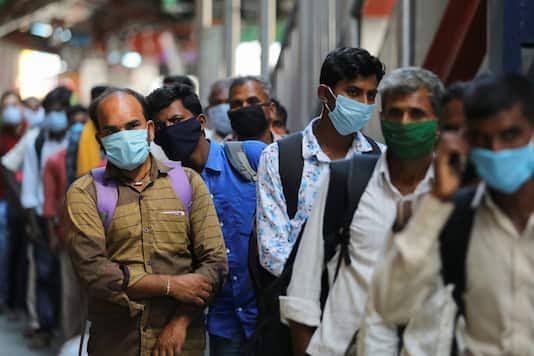
The Karnataka government on Sunday announced a night curfew for 10 days across the state starting from December 28. State health minister Dr. K Sudhakar said the night curfew will start between 10 pm and continue till 5 am. The decision has been taken amid the tension over the sudden surge in Omicron cases in the state, which is reportedly 4 times infectious than the Covid delta variant.

Apart from the night curfew, the state health minister also informed people about the restrictions on New Year celebrations, amid tension over rising coronavirus cases in the state and the increasing tension of Omicron variant. Sudhakar said in a view of covid-19’s new variant Omicron, all the restaurants, hotels, pubs, and eateries in Karnataka will be operational only with 50 percent of seating capacity with full focus on covid protocols such as wearing masks and maintaining a proper social distance. There will be a complete ban on parties, function in the external premisses, the state health minister added.

Taking about the covid vaccination process in the state, Sudhakar said 75 percent of the eligible population have been fully vaccinated against coronavirus as of now. He further added that the state government is all set to increase the vaccination drive very soon. He urged people to follow Covid-19 protocols in the state. It is the only weapon to stop the spread as Omicron in the state, Sudhakar added.

Meanwhile, the health ministry on Sunday reported Karnataka on Saturday has witnessed 270 fresh coronavirus cases with 4 infection-related deaths. Out of 270 Covid cases, seven cases are found of Omicron variant. As of now, the state’s Covid case tally crossed the 30.04 lakh mark, under which 7,200 are active cases.

India News

Women wrestlers challenge Brij Bhushan’s acquittal in sexual harassment case

Four women wrestlers have challenged the acquittal of former WFI chief Brij Bhushan Sharan Singh and co-accused Vinod Tomar in a sexual harassment case.

Published

on

Brij Bhushan Sharan Singh

Four women wrestlers have approached a Delhi court challenging the acquittal of former Wrestling Federation of India (WFI) chief and BJP leader Brij Bhushan Sharan Singh in a sexual harassment case.

The wrestlers have also challenged the acquittal of co-accused Vinod Tomar. The matter is scheduled to be heard by a Special Judge at the Rouse Avenue Courts.

The appeal challenges the order passed by an Additional Chief Judicial Magistrate on August 3, 2026, when Brij Bhushan and Tomar were acquitted in the case.

Wrestlers challenge court’s reasoning

In their appeal, the wrestlers have argued that the acquittal order is legally unsustainable and that the evidence was not assessed appropriately.

They have also alleged that the order relied on assumptions about how victims of sexual assault and harassment were expected to behave instead of assessing the evidence and circumstances of the complainants.

The challenge seeks judicial scrutiny of the findings that resulted in the acquittal of Brij Bhushan and Tomar.

Brij Bhushan was acquitted in August

The Rouse Avenue court acquitted Brij Bhushan Sharan Singh on August 3 in the sexual harassment case involving women wrestlers. The court’s decision followed consideration of the evidence and statements presented during the proceedings.

The case had emerged after several women wrestlers accused the former WFI chief of sexual harassment. The allegations had led to a major protest by wrestlers in 2023.

The latest appeal means the acquittal is now being challenged before a higher court.

Continue Reading

India News

Congress protests against Gyanesh Kumar, demands Election chief’s resignation

Congress workers took to the streets against Chief Election Commissioner Gyanesh Kumar, with protests and demonstrations held over the party’s allegations concerning the Election Commission.

Published

on

Congress stepped up its campaign against Chief Election Commissioner Gyanesh Kumar, with party workers taking to the streets and demanding his resignation amid the ongoing row over the Election Commission.

The protests followed repeated criticism by Congress leaders of the poll panel and its functioning. The party has alleged irregularities in the electoral process and has sought accountability from the Election Commission.

Congress leaders have also targeted Gyanesh Kumar personally, with Rahul Gandhi among those calling for the Chief Election Commissioner to step down.

Congress takes protest to streets

Congress workers staged demonstrations in different places as part of the party’s campaign against the Election Commission.

The protests featured sharp symbolism, including masks and handcuffs, as Congress sought to highlight its allegations against the poll panel and demand action against Gyanesh Kumar.

The demonstrations are part of a wider confrontation between the Congress and the Election Commission over issues related to electoral rolls and the conduct of elections.

Congress demands Gyanesh Kumar’s resignation

The Congress has repeatedly demanded the resignation of Gyanesh Kumar, accusing the Election Commission of failing to adequately address the concerns raised by the opposition party.

Rahul Gandhi has also stepped up his criticism of the poll panel. In a statement on Thursday, he demanded that Gyanesh Kumar resign and alleged that the Election Commission had acknowledged the issue of “vote theft”. These are allegations made by the Congress and should not be treated as an established finding unless confirmed by the relevant authority.

The dispute comes amid a broader political debate over electoral rolls, voter verification and the functioning of the Election Commission.

Election Commission under opposition scrutiny

The Congress has intensified its campaign against the poll body in recent weeks, with party leaders repeatedly questioning its decisions and procedures.

The Election Commission, meanwhile, has maintained that India’s electoral process is conducted according to the Constitution, electoral laws and prescribed procedures. Chief Election Commissioner Gyanesh Kumar has previously defended the integrity of the electoral system and rejected claims that electronic voting machines can be remotely hacked.

The latest protests add to the continuing political confrontation over the Election Commission and the opposition’s demands concerning the poll panel’s functioning.

Continue Reading

India News

Assam makes Muslim marriage registration compulsory under new rules

Assam has approved rules for compulsory registration of Muslim marriages, with couples able to register through government marriage registrars.

Published

on

The Assam Cabinet has approved the Assam Muslim Marriage Registration (Compulsory) Rules, 2026, establishing the procedure for mandatory registration of Muslim marriages in the state.

The rules operationalise the Assam Compulsory Registration of Muslim Marriages and Divorces Act, 2024, which replaced the earlier Assam Muslim Marriages and Divorces Registration Act, 1935.

Who will register Muslim marriages in Assam?

Chief Minister Himanta Biswa Sarma said Muslim couples will now be able to register their marriages with government marriage registrars.

The government had earlier decided that kazis would not register Muslim marriages under the new system, but there was uncertainty over who would carry out the registration. The newly approved rules establish the registration mechanism through marriage registrars.

Sarma said that if the number of applications becomes large, the government could give marriage-registration powers to officers at the panchayat level so that applicants do not face difficulties.

What does the 2024 law say?

The 2024 Act made the registration of Muslim marriages and divorces with the government mandatory. It also prohibits registration of marriages that do not meet the legally prescribed minimum age requirements.

The law specifies the minimum marriage age as 18 years for females and 21 years for males.

The legislation was introduced by the Assam government with the stated objective of curbing child marriage and ending the earlier kazi-based registration system.

Under the previous 1935 law, marriage registration was conducted through kazis and was not compulsory. The earlier system also allowed registration involving minors in certain circumstances, while the new law does not permit such registration.

Registration timeline and penalties

The 2024 legislation provides that Muslim marriages should be registered within 30 days of the marriage. It also provides for registration of divorces within one month of their occurrence.

The law also contains penalties for violations. Producing fake or forged certificates can attract imprisonment of up to two years, a fine of up to Rs. 10,000, or both, along with action under relevant provisions of the Bharatiya Nyaya Sanhita, 2023.

Registering a marriage in violation of the law can attract imprisonment of up to one year and a fine of up to Rs. 50,000.

The Assam Cabinet’s approval of the 2026 rules provides the administrative framework for implementing the compulsory registration system.

Continue Reading

Trending

© Copyright 2022 APNLIVE.com