English हिन्दी
Connect with us

India News

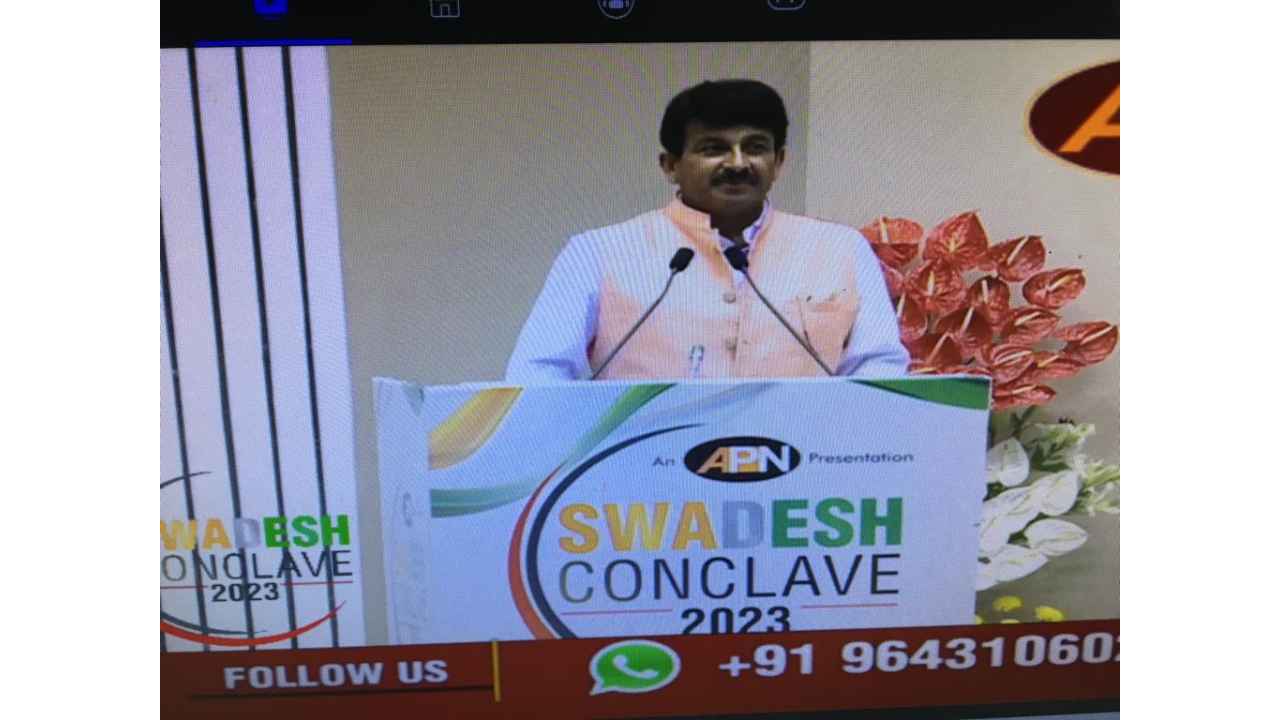
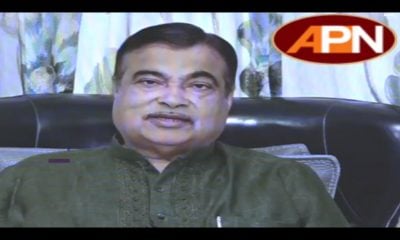
Manoj Tiwari says Delhi is in debt of 1.5 lakh crore at Swadesh Conclave 2023

Reflecting on his own life, Tiwari remarked that at times, he felt he has experienced four distinct lives within one. Speaking about the trials he faced, he underlined, the most challenging chapters often transform into the most rewarding victories.

Published

on

Manoj Tiwari says Delhi is in debt of 1.5 lakh crore at Swadesh Conclave 2023

Manoj Tiwari was among the notable speaker in the Swadesh Conclave 2023. speaking at the event, the BJP MP congratulated Rajshree Rai, Editor-in-Chief APN and expressed that she is a remarkable individual who has navigated her journey with sheer determination. He also extended his felicitations to Senior Advocate Pradeep Rai, who is also his university classmate, emphasizing the value of their shared academic background.

Reflecting on his own life, Tiwari remarked that at times, he felt he has experienced four distinct lives within one. Speaking about the trials he faced, he underlined, the most challenging chapters often transform into the most rewarding victories.

Manoj Tiwari further stated, he never resorted to copying or barely passing with a third division. He proudly announced his graduation with first division honours and a notable 62 percent in his report card as a turning point in his life’s trajectory. Fondly reminiscing about his past, Tiwari expressed pride in his journey despite initial challenges.

Read more: Swadesh Conclave 2023: India will be country with world’s second finest metro system, says Union Minister Hardeep Singh Puri

Encouraging others to explore their capabilities, Tiwari advocated for personal experimentation. Recalling humble times, he shared an anecdote about a motorcycle, which was an aspiration that seemed monumental back then.

Manoj Tiwari also mentioned about composing a song about female foeticide in 1996, a groundbreaking achievement in the Bhojpuri music industry during that time. He also touched on the era when people paid hefty sums to adorn red beacons on their vehicles, sharing his song on the subject.

Read more: Swadesh Conclave: India will be largest economy in the world by 2047, says MoS SP Baghel

Acknowledging the transformative impact of leadership, Manoj Tiwari credited Prime Minister Narendra Modi for eradicating VIP culture. Manoj Tiwari alleged that Delhi’s financial challenges and mentioned that the national capital has a debt of 1.5 lakh crores. He also lamented the absence of new schools opening in Delhi.

Ajai Chowdhry, Co-founder of HCL added that a significant enhancement in skill instruction can be achieved through virtual reality technology. He added that the optimal utilization of technology enables effective upskilling. He emphasized that the skills one possesses today may not retain their relevance or utility within the societal context even after a mere five years.

Read more: Swadesh Conclave 2023: Nitin Gadkari says performance audit more important than financial audit

Ajai Chowdhury, HCL Co-founder, underscored the potential of virtual reality to revolutionize skill education. He stated that leveraging technology effectively can facilitate seamless upskilling.

Highlighting the disparity in financial awareness between genders, CA Rachana Phadke Ranade noted that women often lag behind due to a lack of awareness, leading them to relinquish financial decision-making to men. This, she contended, can be attributed to a dearth of familiarity with financial matters among women.

Read more: Swadesh Conclave to be held in New Delhi, this year’s theme Influential India

CA Rachana Ranade elaborated that due to limited financial awareness, women tend to defer to men when it comes to handling financial matters. She suggested that increased financial literacy could empower women to take a more active role in such decisions, rather than relying solely on men.

Read more: Rajyavardhan Singh Rathore hails influencers as leaders at Swadesh Conclave 2023

Senior Advocate Pradeep Rai highlighted the shift towards digital tools like liquid text, replacing the need to carry multiple files. He indicated that this transition has streamlined legal processes, making them more efficient. Elaborating on the societal relevance of legal norms, Senior Advocate Pradeep Rai emphasized that the acceptance of laws within society is integral to their validity. He conveyed that the efficacy of legal principles hinges on their acceptance by the community, thereby underscoring the connection between law and social dynamics.

India News

Union Budget 2026: What the middle class gains despite no income tax slab changes

Union Budget 2026 retains income tax slabs but offers indirect relief to the middle class through TCS cuts, simpler tax filing, cheaper medicines and higher job-creating expenditure.

Published

on

Union Budget 2026: what the middle class gains despite no income tax slab changes

Union Budget 2026 may not have delivered direct income tax relief to salaried taxpayers, but the government has introduced several indirect measures aimed at easing financial pressure on middle-class households.

While tax slabs remain unchanged, the Budget outlines steps to simplify compliance, reduce taxes on overseas spending, lower the cost of essential medicines, and support job creation through higher public spending.

Income tax status quo continues

The government has retained the existing income tax framework for individuals. Annual income up to Rs 12 lakh continues to remain tax-free, and with the Rs 75,000 standard deduction, effective tax-free income rises to Rs 12.75 lakh.

No changes have been announced in income tax slabs, signalling policy continuity rather than immediate relief for salaried taxpayers.

Compliance relief and tax rationalisation measures

A key focus of Budget 2026 is reducing compliance burdens and improving the taxpayer experience.

The government has proposed a reduction in Tax Collected at Source (TCS) on overseas tour programme packages to 2%, down from the earlier rates of 5% and 20%. TCS under the Liberalised Remittance Scheme (LRS) for education and medical expenses has also been cut to 2% from 5%, providing relief to families sending money abroad for essential purposes.

To ease return filing pressure, timelines have been staggered. Individual taxpayers filing ITR-1 and ITR-2 can continue to file returns till July 31, while non-audit businesses and trusts will now get time till August 31.

Protection for small investors

The Budget proposes taxing all share buybacks as capital gains instead of dividends, a move aimed at protecting minority retail investors.

In another relief measure, interest awarded by Motor Accident Claims Tribunal (MACT) to individuals will be exempt from income tax, and the applicable TDS will be removed.

A single-window system will also be introduced for submitting Form 15G and Form 15H through depositories for TDS on dividends and interest, simplifying compliance for senior citizens and small savers.

Cheaper medicines and essential products

Healthcare costs may ease slightly as the government has announced duty exemptions on about 17 cancer medicines. Personal imports of medicines for seven rare diseases will also be allowed duty-free.

In addition, customs duty relief has been extended to critical components used in the manufacture of microwave ovens, television equipment, leather goods and footwear, which could help moderate consumer prices.

Job creation through higher spending

The government has raised capital expenditure to over Rs 12 lakh crore, with allocations for railways, tourism, logistics and technology sectors. These investments are expected to support employment generation and long-term economic activity, indirectly benefiting middle-class households.

Continue Reading

India News

Budget 2026 balances high capex and growth, says PM Modi

Prime Minister Narendra Modi said Union Budget 2026 strikes a balance between high capital expenditure and strong growth while reinforcing reforms and fiscal discipline.

Published

on

pm modi

Prime Minister Narendra Modi on Saturday said the Union Budget 2026 strikes a fine balance between high capital expenditure and sustained economic growth, calling it a roadmap for long-term national development.

Speaking after Finance Minister Nirmala Sitharaman presented her ninth consecutive Budget, the prime minister said the proposals reflect a vision of trust-based governance and a human-centric economic framework. He added that India is not just focused on being the fastest-growing economy but is working towards becoming the world’s third-largest economy.

PM Modi said the Budget also reinforces India’s strong global standing and will provide fresh momentum to the country’s reform agenda. According to him, the measures announced will energise what he described as India’s “reform express”.

The prime minister highlighted the Budget’s focus on promoting tourism in the northeastern region, noting that it would create new opportunities and support regional development.

On fiscal management, the finance minister retained the states’ share in the divisible pool of central taxes at 41 per cent. She announced that Rs 1.4 lakh crore has been provided to states as Finance Commission grants for 2026–27, in line with the recommendations of the commission.

The Finance Commission, chaired by Arvind Panagariya, had submitted its report to the President in November 2025 after consultations with states and Union Territories, several of which had sought a higher share.

Sitharaman pegged the fiscal deficit for 2026–27 at 4.3 per cent of GDP, lower than the revised estimate of 4.4 per cent for 2025–26. She also said the debt-to-GDP ratio is projected to decline to 55.6 per cent in 2026–27 from 56.1 per cent in the previous fiscal.

A gradual reduction in the debt burden will help free up resources for priority sectors by lowering interest outgo, the finance minister said.

Continue Reading

India News

India to build seven high-speed rail corridors, Finance Minister announces

Union Budget 2026-27 unveiled seven high-speed rail corridors and a dedicated east-west freight corridor to boost sustainable transport and economic growth.

Published

on

India to build seven high-speed rail corridors, Finance Minister announces

Finance Minister Nirmala Sitharaman, presenting the Union Budget 2026-27 in Parliament on Sunday, announced that India will develop seven high-speed rail corridors connecting key cities across the country.

These corridors, described as ‘growth connectors’, aim to promote environmentally sustainable passenger transport systems. The proposed high-speed rail links will connect:

  • Mumbai and Pune
  • Hyderabad and Pune
  • Hyderabad and Bengaluru
  • Hyderabad and Chennai
  • Chennai and Bengaluru
  • Delhi and Varanasi
  • Varanasi and Siliguri

In addition to passenger rail, Sitharaman announced a dedicated east-west freight corridor connecting Dankuni in the east with Surat in the west. This initiative, along with the operationalisation of 22 new national waterways over the next five years, is intended to enhance multimodal transport and reduce logistics costs.

“These initiatives will strengthen freight movement and support sustainable cargo transportation,” the Finance Minister said.

The Budget also emphasizes infrastructure development in cities with populations over five lakh (Tier II and Tier III), which have emerged as key growth centres. Sitharaman further proposed a public capital expenditure of Rs 12.2 lakh crore for the financial year 2026-27.

She outlined that the Union Budget is guided by three core responsibilities—accelerating economic growth, fulfilling aspirations, and ensuring equitable access to resources for families, communities, and regions.

Describing the plans as part of a broader reform agenda, she added, “The ‘Reform Express’ is on its way.”

Continue Reading

Trending

© Copyright 2022 APNLIVE.com