English हिन्दी
Connect with us

India News

Amid Murshidabad violence, Mamata Banerjee says Waqf Amendment Act will not be implemented in West Bengal

“Traffic on the National Highway has returned to normal, and strict action will be taken against those who resorted to violence,” the police stated.

Published

on

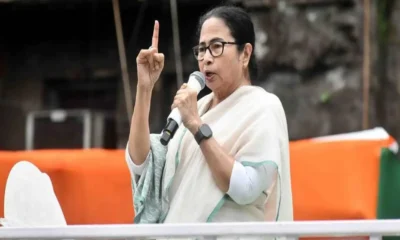
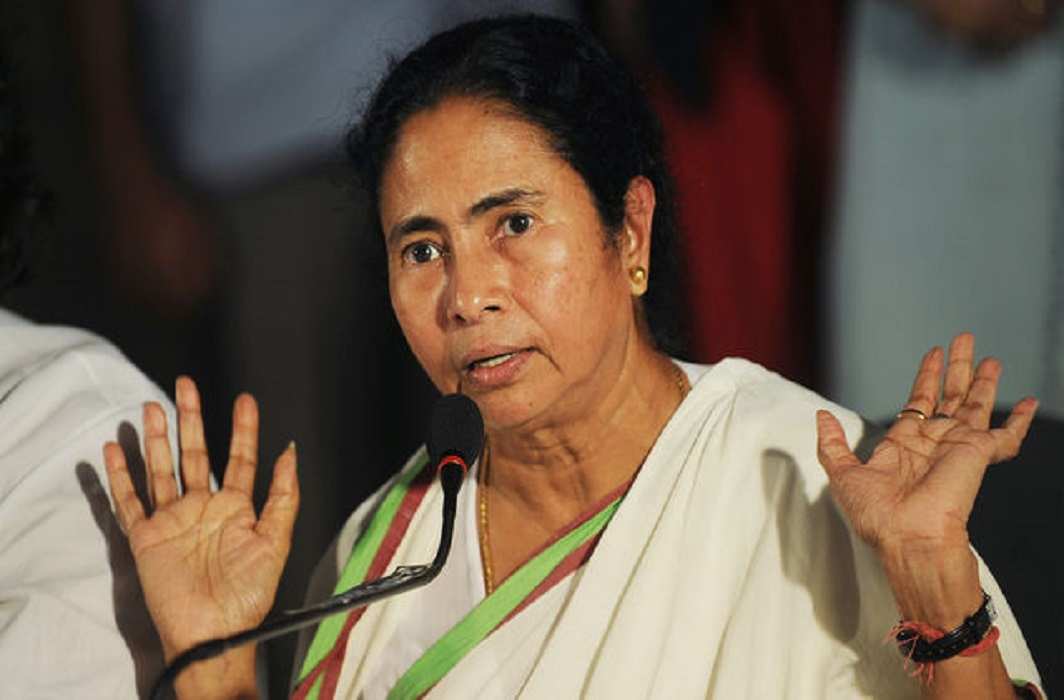
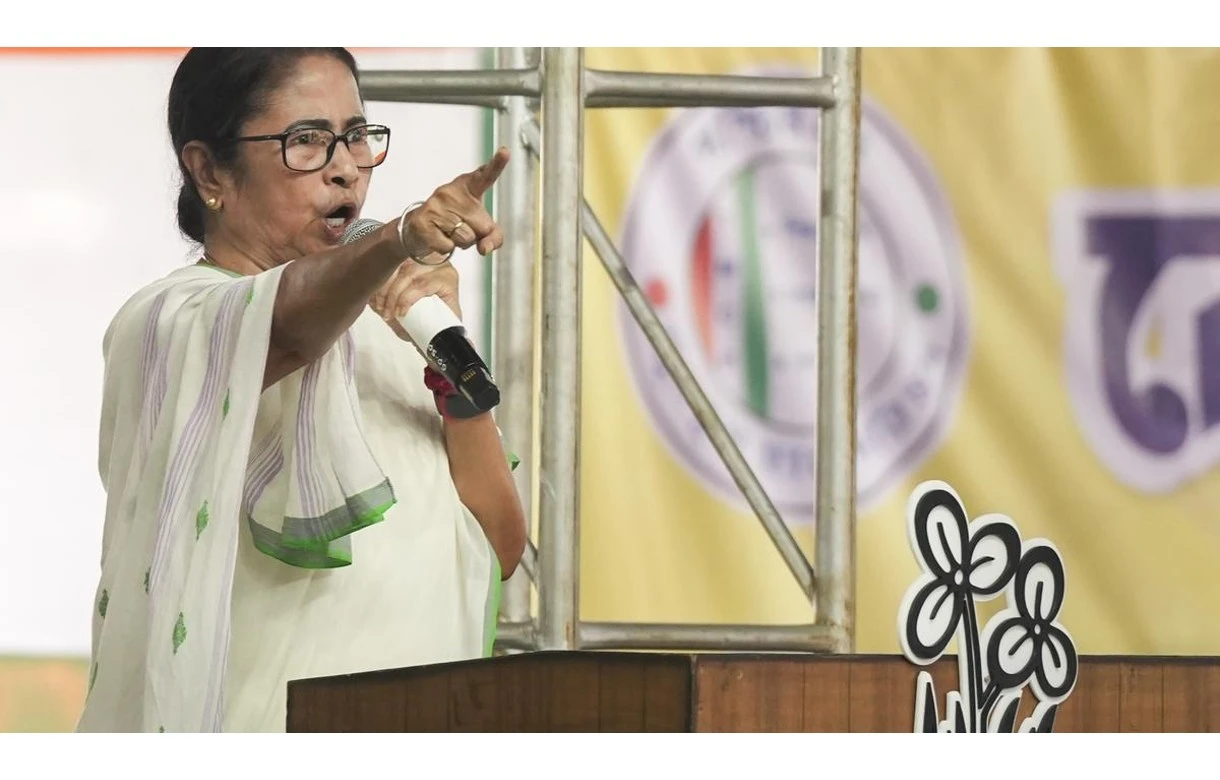
West Bengal Chief Minister Mamata Banerjee on Wednesday firmly stated that the state would not implement the recently passed Waqf (Amendment) Act, 2025, assuring minority communities of her unwavering support.

Speaking at a programme organized by the Jain community in Kolkata, Banerjee emphasized her commitment to safeguarding the rights and properties of minorities, urging unity amid rising tensions.

“I know you are hurt by the passage of the Waqf Act. But have faith—nothing will happen in Bengal that allows divide-and-rule tactics to succeed. Spread the message that we must all stay united,” she said, addressing concerns raised by the minority community.

Trinamool Congress supremo Banerjee also cautioned against falling prey to provocations aimed at sparking political movements, reassuring the audience, “When Didi is here, she will protect you and your property. Let us trust each other.”

Her remarks come in the wake of the Waqf (Amendment) Bill, which was passed by the Lok Sabha on April 3 and the Rajya Sabha in the early hours of April 4 after intense debates in both houses of Parliament.

The bill received presidential assent from President Droupadi Murmu on Saturday, but Banerjee made it clear that West Bengal would resist its implementation, citing the state’s diverse population, which includes 33 percent minorities. “What will I do with them if such laws create division?” she asked, referencing the delicate balance in border areas near Bangladesh.

Banerjee drew on history to underline her stance, noting, “Bengal, Bangladesh, Pakistan, and India were once together. Partition came later. Those living here now—it’s our duty to protect them.” She stressed that unity could empower people to “conquer the world,” urging restraint against those who might incite unrest.

The Chief Minister’s comments also addressed recent violence in Murshidabad district on Tuesday, where around 100 protesters clashed with police near Umarpur crossing along National Highway 12, opposing the Waqf (Amendment) Act.

The demonstration turned violent, with protesters allegedly throwing stones, vandalizing police vehicles, and torching two police cars, injuring several officers. West Bengal police responded with tear gas and lathi charges, apprehending at least 22 individuals.

“Traffic on the National Highway has returned to normal, and strict action will be taken against those who resorted to violence,” the police stated.
Banerjee condemned the timing of the legislation, saying, “This (Waqf Bill) should not have been passed now.” She reiterated her inclusive approach, highlighting her visits to places of worship across religions, including Durga Puja, Kali Puja, Jain and Buddhist temples, gurudwaras, churches, and Guru Ravidas temples.

“In Rajasthan, I visited both Ajmer Sharif and the Brahma Temple in Pushkar,” she added, underscoring her commitment to interfaith harmony. “Even if you shoot me dead, you cannot separate me from this unity. Every religion, caste, and creed prays for humanity, and we love them all.”

India News

Tamil Nadu potboiler: Now, Sasikala to launch new party ahead of election

Sasikala has announced the launch of a new political party ahead of the Tamil Nadu Assembly elections, positioning herself against AIADMK chief Edappadi K Palaniswami.

Published

on

In a significant political development ahead of the Tamil Nadu Assembly elections, expelled AIADMK leader V. K. Sasikala has announced that she will float a new political party and contest the polls by fielding her own candidates.

Speaking in Madurai before heading to Pasumpon for a public event, Sasikala said she would unveil her party’s flag later in the evening. She indicated that more details regarding the party’s structure and plans would be shared at the gathering.

The event venue carries political symbolism. Pasumpon is the birthplace of Thevar leader Muthuramalinga Thevar, and Sasikala herself belongs to the influential Thevar community in southern Tamil Nadu. The programme was held as part of birth anniversary events of former Chief Minister J. Jayalalithaa.

Direct challenge to EPS

Sasikala’s move is being viewed as a direct political challenge to AIADMK general secretary Edappadi K. Palaniswami (EPS). After Jayalalithaa’s death in 2016, Sasikala briefly took control of the party and had appointed Palaniswami as Chief Minister. However, following her conviction in the disproportionate assets case, she served a four-year prison term, and during that period, she was expelled from the party.

Palaniswami later aligned with O. Panneerselvam, whom Sasikala had earlier removed from the Chief Minister’s post. The two leaders subsequently adopted a dual leadership arrangement within the party and government.

Sasikala remains disqualified from contesting elections until 2027 due to her conviction. Nevertheless, she has stated that she intends to field candidates under her new party banner.

Fragmented Thevar vote base

Over the years, expulsions within the AIADMK — including Sasikala, her nephew TTV Dhinakaran and O Panneerselvam — have led to divisions within the Thevar support base. Political observers have linked this fragmentation to the party’s weakened electoral performance in the elections following Jayalalithaa’s passing.

While Dhinakaran has returned to the NDA fold, reports suggest Palaniswami is opposed to any arrangement that includes Sasikala or Panneerselvam. OPS, meanwhile, has exited the NDA.

Sasikala has repeatedly criticised Palaniswami, describing him as a betrayer, while he maintains that his leadership stems from the support of AIADMK legislators rather than her backing.

The AIADMK has not issued an official statement on Sasikala’s announcement. However, a senior party leader questioned her political standing, pointing out her disqualification from contesting elections and referring to legal issues linked to Jayalalithaa’s death.

With the Assembly polls approaching, Sasikala’s re-entry into active politics could further complicate the opposition space in Tamil Nadu and influence electoral calculations, particularly in the southern districts.

Continue Reading

India News

As stealth reshapes air combat, India weighs induction of Sukhoi Su-57 jets

India is assessing the possible induction of up to 40 Sukhoi Su-57 fifth-generation fighter jets as stealth becomes central to future air combat strategy.

Published

on

Sukhoi Su-57 jets

Aerial warfare is increasingly being defined by the ability to remain undetected rather than by traditional dogfighting skills, and India is now assessing options to strengthen its capabilities in this new paradigm. Defence circles are abuzz with indications that the Indian Air Force may consider procuring up to 40 Russian fifth-generation Su-57 fighter jets, according to sources.

The possible move comes less than a year after Operation Sindoor, which was launched in May last year following the Pahalgam terror attack. The air engagements with the Pakistan Air Force during the operation are understood to have provided fresh operational insights, prompting discussions on future preparedness.

Why stealth is central to fifth-generation fighters

Fifth-generation fighter aircraft are designed with a strong emphasis on low observability. Platforms such as the Su-57 incorporate airframes shaped to reduce radar signatures and use radar-absorbent materials to make detection more difficult across radar, infrared and visible spectrums.

These aircraft typically integrate advanced avionics, sensor fusion and supercruise capabilities. They are also configured to carry specialised weapons internally, enhancing stealth during combat missions.

According to information available on Sukhoi’s official platform, the Su-57 is equipped with a deeply integrated avionics suite that offers a high level of automation and intelligent crew support. Its onboard systems enable it to operate autonomously and exchange data in real time with ground control systems or as part of a coordinated task force.

The aircraft can deploy a broad range of air-to-air and air-to-surface munitions, allowing it to undertake both fighter and strike roles. Sukhoi states that the jet is capable of conducting covert missions owing to reduced visibility across multiple wavelength ranges.

The Su-57 is also fitted with an auxiliary power unit designed to improve deployment autonomy and lower fuel consumption during ground operations. An onboard oxygen extraction unit enhances operational endurance. Additionally, the aircraft features an explosion-proof fuel tank system described as a generator-type neutral gas system, aimed at improving combat survivability.

Regional security context

The reported deliberations come amid evolving regional dynamics. China, regarded as Pakistan’s close strategic partner, has developed the J-20 fifth-generation stealth fighter, and there are indications that such capabilities could eventually be shared with Pakistan.

India is also pursuing its own fifth-generation programme, the Advanced Medium Combat Aircraft (AMCA). The first flight of the AMCA is expected around 2028 or 2029, with induction into the Air Force projected around 2035.

In this backdrop, any decision on the Su-57 would form part of a broader effort to ensure that the Indian Air Force remains prepared for future aerial warfare scenarios where stealth and advanced sensing capabilities play a decisive role.

Continue Reading

India News

RSS chief backs nationwide rollout of Uniform Civil Code, cites Uttarakhand model

RSS chief Mohan Bhagwat has supported nationwide implementation of the Uniform Civil Code, urging adoption of the Uttarakhand model.

Published

on

Mohan Bhagwat

Rashtriya Swayamsevak Sangh chief Mohan Bhagwat has expressed support for implementing the Uniform Civil Code (UCC) across the country, stating that it would be a “very good thing” if adopted nationwide. He suggested that the framework introduced in Uttarakhand could serve as a model for other states.

Speaking at a former servicemen’s dialogue seminar organised to mark the RSS’s 100th anniversary, Bhagwat said the UCC should be implemented in a manner similar to the approach followed by Uttarakhand. The hill state became the first in the country to enforce the Uniform Civil Code on January 27 last year.

Highlighting the process adopted in Uttarakhand, Bhagwat noted that after a draft proposal was prepared, it was opened for public discussion. According to him, suggestions from nearly three lakh people were received, and these inputs were examined and incorporated.

Describing the UCC as essential for societal unity, the RSS chief said such a legal framework would strengthen social cohesion.

When asked about the ongoing issue concerning the University Grants Commission, Bhagwat declined to comment, stating that the matter is currently under consideration by the Supreme Court of India.

Addressing retired personnel from the armed forces and paramilitary services at the event, Bhagwat underlined the continuing importance of defence forces, even in an independent nation, to safeguard sovereignty.

He also reflected on the journey of the RSS, saying the organisation was established without external resources and continued to grow despite facing severe sanctions on two occasions. He attributed its progress to the confidence and support of society.

Encouraging participation, Bhagwat invited former servicemen to attend Sangh camps and programmes to observe the work of volunteers and contribute to service activities based on their interests and abilities.

Continue Reading

Trending

© Copyright 2022 APNLIVE.com