English हिन्दी
Connect with us

India News

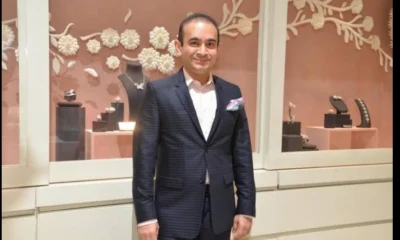
Nirav Modi-PNB scam: SC defers hearing in PIL till Mar 15 after high courtroom drama

Published

on

Nirav Modi

A petition seeking a special investigation team (SIT) probe in the over Rs 11,000 crore “scam” involving diamantaire Nirav Modi and his transactions with the Punjab National Bank (PNB) triggering a verbal duel between the Supreme Court bench of Chief Justice Dipak Misra and Justices AM Khanwilkar and DY Chandrachud and the petitioner, advocate Vineet Dhanda on Wednesday (February 21).

Dhanda’s petition, filed by his father – advocate JP Dhanda – on Tuesday, has made PNB, the Reserve Bank of India and the Union ministries of finance and law and justice parties in the case while seeking a direction for the initiation of deportation proceedings of Nirav Modi and others allegedly involved in the banking fraud, preferably within two months. It has also sought an investigation into the role of the top management of PNB in granting of loans to Nirav Modi and not being able to detect the alleged fraud. Directions from the top court to the Union finance ministry to frame guidelines on the grant and disbursal of loans involving big amounts has also been prayed for along with guidelines for framing of rules for the recovery of loans from the defaulters in a time-bound manner.

Following heated exchanges between the judges and Dhanda, during which Justice Chandrachud dubbed the petition as a “publicity interest litigation”, the top court decided to defer the hearing till March 15 when it will hear submissions by Attorney General KK Venugopal who has objected to the SIT probe and the petitioner’s other demand – the deportation of Nirav Modi.

During the course of the proceedings on Wednesday, the bench repeatedly reprimanded Dhanda while the Chief Justice too pulled him up for questioning Venugopal’s attempt at opposing the demand for an SIT probe.

Soon after the petition filed by Dhanda came up for hearing, Attorney General KK Venugopal opposed the demands made by the petitioner saying: “I am appearing for the Union Of India.We are opposing the petition. There is no need of intervention at this stage. This is a case in which FIRs have been filed, the investigation is on.”

However, Venugopal’s submissions did not go down well with Dhanda who shot back saying if a person takes a loan for Rs 1 lakh from a bank and defaults, he “suffers for not paying” but “the government is not doing anything when another person has walked away with Rs 11000 crore-worth of bank’s money”.

The petitioner asked the bench: “What does the AG mean by saying he is opposing” and added: “They (the government) should be answerable, the rich are escaping with money… a small man is hounded… Let him at least argue on issues.”

The Bench, however, denied Dhanda’s request for a notice to be issued to the centre on his petition, stating that since the Attorney General was present in the courtroom and was opposing the petition, there was no need at the moment for a notice to be issued to the centre.

As Dhanda continued with his demand, Chief Justice Misra shot back saying: “We are not here to hear speeches… you are just creating headlines, issuing notice is not your right”.

Observing that “by way of your petition, you are gaining publicity”, Justice Chandrachud told Dhanda: “It has become a fashion… you see something in the newspaper and then come and file a PIL.”

While Dhanda protested against the observations made by the Chief Justice and Justice Chandrachud, stating that he would withdraw his petition because the “Bench is insulting me”, Justice Khanwilkar intervened to say: “you can make legal arguments but do not make emotional arguments.”

Amid continuing outbursts by the petitioner, Chief Justice Misra asked: “the AG is opposing the petition on merits, shouldn’t we give him an opportunity to explain? Is investigation ordered in a day? These kinds of arguments – wholly emotional – you mean to say we must not hear the AG? (sic).”

Justice Chandrachud reiterated that Dhanda’s plea was “a publicity interest litigation” and said: “we must allow the government to investigate… if the government does not do, we can intervene. We cannot intervene like this… These are all PILs which play for the gallery.”

Dhanda shot back at the Bench claiming that he had been practicing law for the past 16 years and did not need publicity.

The Chief Justice then adjourned the hearing in the case till March 15.

India News

PM Modi assures no discrimination in women’s quota, delimitation debate intensifies in Parliament

PM Narendra Modi has assured that women’s reservation will be implemented without discrimination, amid a heated debate over delimitation in Parliament.

Published

on

PM modi

Prime Minister Narendra Modi has assured that there will be no discrimination in the implementation of women’s reservation, as Parliament witnessed a sharp debate over the proposed linkage between the quota and delimitation exercise.

During the ongoing special session, the government reiterated its commitment to ensuring fair representation while addressing concerns raised by opposition parties regarding the timing and structure of the legislation.

The proposed framework aims to reserve 33 percent of seats for women in the Lok Sabha and state assemblies. However, its implementation is tied to a fresh delimitation exercise, which is expected after the next census.

Opposition questions timing and intent

Opposition leaders have raised concerns that linking the women’s quota to delimitation could delay its implementation. They argue that the process of redrawing constituencies may push the actual rollout further into the future.

The issue has triggered a broader political confrontation, with multiple parties questioning whether the move could alter representation across states.

Some critics have also alleged that the delimitation exercise could disproportionately benefit certain regions based on population, a charge the government has rejected.

Government reiterates commitment to fair implementation

Responding to these concerns, the Centre has maintained that the reforms are necessary to ensure accurate and updated representation based on population data.

Leaders from the ruling side have repeatedly emphasized that the process will be carried out transparently and without bias. The assurance that there will be “no discrimination” is aimed at addressing fears among states and opposition parties.

The debate marks a key moment in Parliament, with both sides engaging in intense exchanges over one of the most significant electoral reforms in recent years.

Continue Reading

India News

Give all tickets to Muslim women, Amit Shah says, attacking Akhilesh Yadav on sub-quota demand

A sharp exchange between Amit Shah and Akhilesh Yadav in Parliament over sub-quota for Muslim women highlights key divisions on women’s reservation implementation.

Published

on

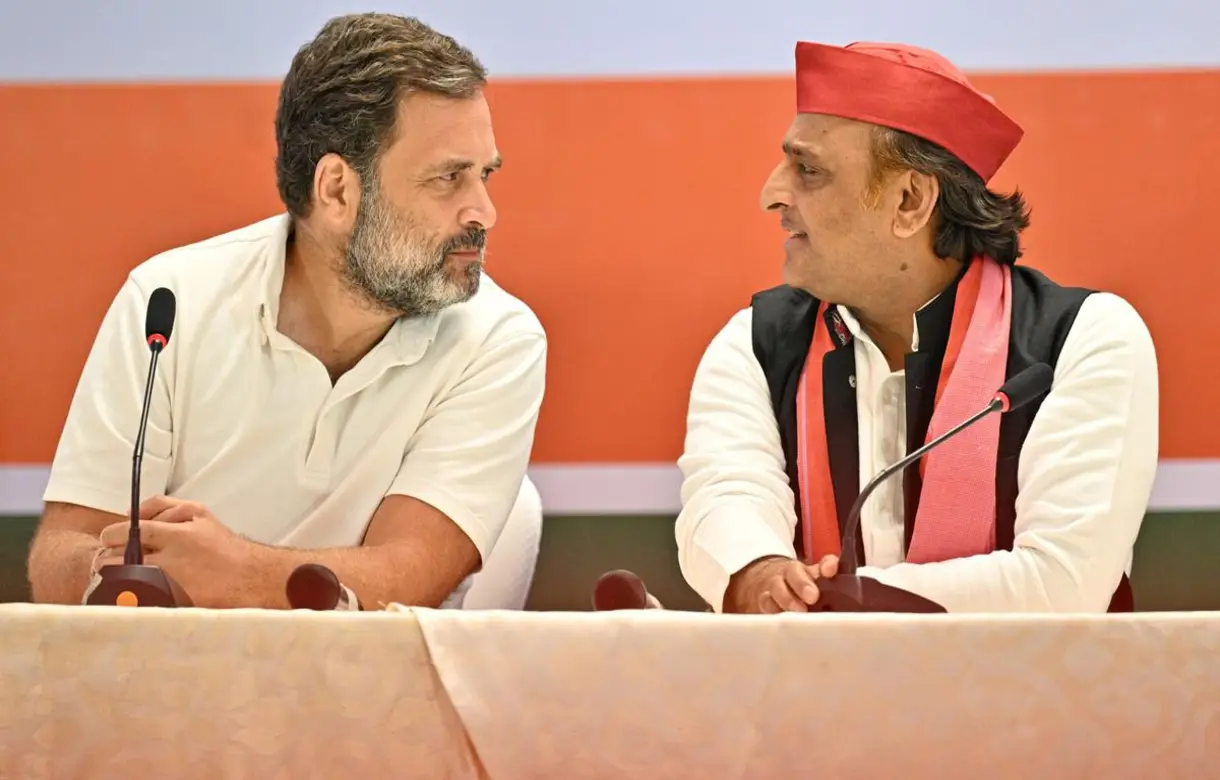
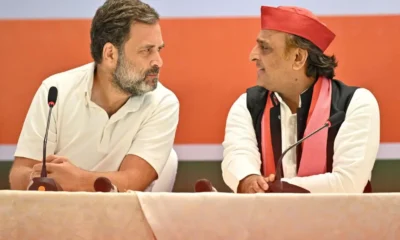
A heated exchange broke out in Parliament during discussions on the women’s reservation framework, with Union Home Minister Amit Shah and Samajwadi Party chief Akhilesh Yadav locking horns over the demand for a sub-quota for Muslim women.

The debate unfolded as the government pushed forward key legislative measures to implement 33% reservation for women in the Lok Sabha and state assemblies.

Akhilesh Yadav argued that the proposed reservation must ensure representation for women from marginalised communities, including Other Backward Classes (OBCs) and Muslim women. He said that without such provisions, large sections could remain excluded from political participation.

He also questioned the timing of the bill, alleging that the Centre was avoiding a caste census. According to him, a census would lead to renewed demands for caste-based reservations, which the government is reluctant to address.

Government rejects religion-based quota

Responding to the demand, Amit Shah made it clear that reservation based on religion is not permitted under the Constitution.

He stated that any proposal to provide quota to Muslims on religious grounds would be unconstitutional, firmly rejecting the idea of a separate sub-quota for Muslim women within the broader reservation framework.

The government has maintained that the existing framework already includes provisions for Scheduled Castes (SC) and Scheduled Tribes (ST) women within the overall reservation structure.

Wider political divide over implementation

The issue of sub-categorisation within the women’s quota has emerged as a major flashpoint, even as most opposition parties broadly support the idea of women’s reservation.

Samajwadi Party leaders reiterated that their support for the bill depends on inclusion of OBC and minority women, while the government continues to defend its constitutional position.

The debate is part of a broader discussion during the special Parliament session, where multiple bills linked to delimitation and implementation of the women’s quota are being taken up.

Continue Reading

India News

No state will lose a seat, Centre assures as delimitation debate takes centre stage in Parliament

Parliament’s special session begins with key focus on implementing women’s reservation and delimitation, setting the stage for major electoral changes.

Published

on

Parliament

A special session of Parliament commenced on Thursday, with the Centre set to take up crucial legislation related to women’s reservation and delimitation of constituencies. The session, scheduled over three days, is expected to witness intense debate as the government pushes forward its legislative agenda.

At the centre of discussions is the proposal to operationalise the women’s reservation law, which seeks to allocate 33 percent of seats in the Lok Sabha and state assemblies to women. The law, passed earlier, requires enabling provisions before it can be implemented.

The rollout of the reservation is closely tied to the delimitation exercise — a process that redraws parliamentary constituencies based on updated population data. The implementation is expected only after the next census and delimitation process are completed.

The government is aiming to put in place the framework so that the reservation can be enforced in future elections, likely around 2029.

Delimitation and numbers at play

Delimitation is a key aspect of the proposed changes, as it will determine how seats are redistributed and which constituencies are reserved. The exercise is expected to reflect population shifts and may also involve an increase in the total number of Lok Sabha seats.

This linkage has made the issue politically sensitive, with several opposition parties backing women’s reservation in principle but raising concerns over how and when delimitation will be carried out.

Political reactions and expected debate

The session is likely to see sharp exchanges between the government and opposition. While there is broad agreement on increasing women’s representation, disagreements remain over the timing, process, and potential political implications of the delimitation exercise.

Some leaders have argued that delimitation could significantly alter the balance of representation among states, making it a contentious issue beyond the women’s quota itself.

The government, however, has framed the move as a step toward strengthening women’s participation in governance and ensuring more inclusive policymaking.

Continue Reading

Trending

© Copyright 2022 APNLIVE.com