English हिन्दी
Connect with us

India News

No confidence vote: Outcome known, BJP & Opposition hope to score propaganda points

Published

on

No confidence vote: Outcome known, BJP & Opposition hope to score propaganda points

~By Rajesh Sinha

The four-year-old NDA government led by Prime Minister Narendra Modi faces its first motion of no-confidence on Friday, July 20.

Lok Sabha Speaker Sumitra Mahajan, who had repeatedly turned down notices for such a motion during the Budget session, on Wednesday admitted a notice moved by the Telugu Desam Party. While the outcome of a confidence vote was a foregone conclusion – even in the Budget session – the opposition parties intend to use it to make an all out attack on the government on a range of issues: In the normal course, they would have to give notice for a discussion on each of the topics separately. A no-confidence motion removes this limitation.

BJP was wary of having such a debate during Budget session, with the crucial Karnataka assembly election – for BJP under Amit Shah’s presidentship, every election is crucial – about to come up.

Now, the BJP leadership reckons, it suits the party. Media reports quoting BJP sources said that the change in the government’s approach to allow the no-confidence vote was driven by party president Amit Shah. He convinced the rest of the leadership that the debate on the no-confidence motion would afford the government the opportunity to expose the Opposition narrative and also its lack of unity.

The BJP felt that once the no-trust vote is debated and defeated, the Opposition would not have any excuse to disrupt proceedings of the House.

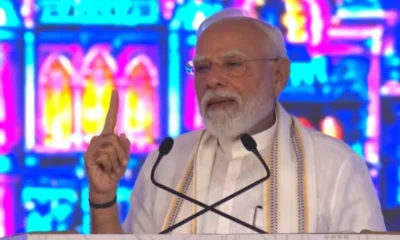
Prime Minister Narendra Modi, who will reply to the debate, is expected to use the occasion as a launching pad for the 2019 campaign.

“We will put the welfare schemes and development projects carried out by the government in last four years before the people,” said Parliamentary Affairs Minister Ananth Kumar.

A BJP leader said the government’s numbers would also work to its advantage as more lawmakers from the ruling coalition would get an opportunity to speak on the motion than the Opposition because of its sheer strength in the Lok Sabha: Parties are allocated time in debates according to their strength in parliament.

The debate on the motion is likely to go on beyond the normal time of 6 pm for the House. PM Narendra Modi, who will be the last speaker in the debate, will have people of the country watching him as they come home and sit down to watch TV.

The PM’s speech is expected to be a veritable launch of his Lok Sabha election campaign.

Some analysts wrote that the PM could use the no-confidence motion debate to call for an early election. Winning the vote to retain his projected image of being ‘unbeatable’ would be an opportune time, especially in view of the weak footing the BJP finds itself in for the assembly polls in Chhattisgarh, Rajasthan, Madhya Pradesh and Mizoram Assembly polls in November-December.

Modi-Shah led BJP, which has been rooting for simultaneous elections, would stand a better chance if the Lok Sabha polls are also called at the same time, argue these analysts.

The Opposition would hope its speakers succeed in conveying to the people why nearly all Opposition parties are against the Modi government. They will speak on a host of issues – price rise, lynchings, Jammu & Kashmir, foreign policy, flight of capital, increase in deposits by Indians in Swiss banks, fleeing of economic offenders from India, atrocities on Dalits and security of women.

The Congress was not too happy at TDP’s motion being admitted. Eight notices of no confidence in the Council of Ministers were received as the monsoon session of Parliament commenced. Three notices came from the TDP, two from the Congress, and one each from the NCP, CPM, and RSP.

The Speaker allowed TDP MP Kesineni Srinivas’ notice given to protest denial of a special package for Andhra Pradesh. She said Srinivas’ notice was the “first in point of time”, said some media reports (– though some others said it was done by lottery; the confusion remains).

Mallikarjun Kharge, Congress’ designated leader in Lok Sabha, reportedly made his party’s displeasure known on the floor of the House at the Speaker’s decision.

The reason is, it is the party which initiates the motion that will open the debate and get enough time to make its point. All other parties would get time as per their strength, and those parties would have to make adjustments accordingly, especially if they have more than one speaker.

The BJP and most of media hype is about the result of the no-confidence vote and the numbers game. That, however, is no secret. The 13-party NDA has 315 MPs in the House where the current effective strength is 536, instead of 545, there being nine vacancies. The government needs 269 votes to defeat the no-confidence motion.

The BJP has 274, including rebel MPs Shatrughan Sinha and Kirti Azad who stand to lose their membership if they defy the party whip to vote against the motion.

The UPA comprising the Congress, NCP, RJD, IUML, JMM and Kerala Congress Mani, has 64 MPs. The Congress has 48.

Other parties, including Independents, have 157 MPs.

The numbers explain the quickness with which the Speaker returned after lunch break to list discussions on the no-confidence motion on July 20. She said the entire business of the House, question hour, zero hour and private members’ Bills, will be suspended that day to take up the notice.

It was false confidence shown by Sonia Gandhi when she said: “Who told you the Opposition does not have the numbers?”

But then, one rarely ever says ‘we know are going to lose’.

India News

Suvendu Adhikari after Bengal win says Akhilesh Yadav is next

Suvendu Adhikari says Akhilesh Yadav is next after BJP’s Bengal win, shifts focus to Uttar Pradesh elections 2027.

Published

on

Suvendu-Adhikari

Following the Bharatiya Janata Party’s sweeping victory in the West Bengal Assembly elections 2026, senior leader Suvendu Adhikari made a strong political statement, indicating that the party’s next focus will be the Uttar Pradesh Assembly elections in 2027.

Riding on the momentum of the party’s performance in Bengal, Adhikari said that several opposition leaders have already lost political ground and added that Samajwadi Party chief Akhilesh Yadav would be “next” in line.

The BJP leader, who secured key victories in constituencies such as Bhabanipur and Nandigram, also claimed that the defeat of the ruling Trinamool Congress marked the beginning of a political decline for Chief Minister Mamata Banerjee. He asserted that her “political exile has started,” referring to her electoral losses in recent contests.

Adhikari further criticised the Trinamool Congress, comparing it with other opposition parties and alleging that it lacked ideology and was driven by family-based politics. He also suggested that several leaders and workers from the TMC could shift allegiance to the BJP in the coming period.

The BJP’s strong showing in West Bengal marks a major political shift in the state, where the party has managed to significantly expand its footprint. Political observers say the latest remarks underline the party’s intent to carry its electoral momentum into upcoming state elections, particularly in Uttar Pradesh, which is expected to be a key battleground in 2027.

Continue Reading

India News

PM Modi thanks voters of West Bengal, hails Syama Prasad Mookerjee dream

PM Narendra Modi welcomes BJP crossing majority in West Bengal, calling it a historic mandate by the people.

Published

on

PM Narendra Modi

Prime Minister Narendra Modi credited the BJP’s victory in the elections to the West Bengal Assembly elections 2026 to the people of the state and each and every party worker who has suffered in promoting the party and disseminating its message over the last 30-odd years. He thanked the people of Assam for re-electing the party.

Addressing party workers at the BJP headquarters, Modi invoked Jana Sangh found Syama Prasad Mookerjee, who worked for the purpose of a united Bengal, and Sri Aurobindo and said their spirits will be at peace at last. Paying paeans to the vision of Tagore, he recounted that the Nobel laureate had wished for a country where one can hold one’s head high without fear.
The PM said the people of Bengal have chosen the governance model of the party. He promised jobs for the youth, increased safety for women. He said the first cabinet meeting will implement Ayushman Bharat in the state. In the same breath, he promised to act against infiltrators decisively.
Pointing to the violence-less election this time, he said not one citizen has been hurt or killed while it many have died in previous polls.
He appealed to the workers of other parties to end the cycle of violence that had plagued the state for all this time and instead serve Bengal and its people.
The problems posed by the war in Iran found place in the PM’s speech. He noted that the whole country is at a disadvantage but people are soldiering on to achieve Viksit Bharat.
Referring to the importance of nari shakti in the development of India, he took potshots at the Congress and other opposition parties for opposing the women’s reservation bill. Modi reminded the audience that he had warned the Congress, Trinamool Congress and DMK for opposing it and they have been taught a lesson. Referring to Kerala, he said the BJP will see gains in the future. He mocked the Communist Party of India (Marxist) for not having any government left in the country after the loss of the Pinarayi Vijayan-led Left Democratic Front in Kerala.
Attacking the Congress, he said it has become the hub of urban naxals and said the people have thrown out communist thought in the country. The Congress has no understanding of the aspirations of the people. The BJP will continue to stand shoulder to shoulder with the people of Tamil Nadu and Kerala as well, he said.

Continue Reading

India News

BJP crosses majority in West Bengal, PM Narendra Modi says lotus blooms in first reaction

PM Modi hails BJP’s majority in West Bengal, calling it a historic mandate and thanking voters across the state.

Published

on

pm modi

Prime Minister Narendra Modi on Monday welcomed the Bharatiya Janata Party’s strong performance in the West Bengal Assembly elections 2026, saying the “lotus has bloomed” in the state as the party crossed the majority mark in early results.

In a post on X, Modi thanked the people of West Bengal and described the outcome as a reflection of public trust. He said he bows to every voter for their support, adding that the mandate reflects faith in governance and development-focused politics.

The BJP’s surge in the 294-seat assembly marks a significant political shift in the state, where the party has not previously formed a government. The results indicate a major challenge to the long-standing dominance of the Trinamool Congress.

The election is part of a broader round of state polls across India, where the BJP has shown strong momentum. The party’s performance in West Bengal is being seen as one of the most significant developments in this election cycle.

With counting trends favouring the BJP, focus now turns to final results and the formation of the new government in the state.

Continue Reading

Trending

© Copyright 2022 APNLIVE.com