English हिन्दी
Connect with us

India News

Noida fog tragedy techie’s final 90 minutes expose gaps in rescue response

A late-night drive through dense fog turned fatal for a Noida techie who waited 90 minutes for help after his car plunged into a water-filled construction ditch.

Published

on

Yuvraj Mehta

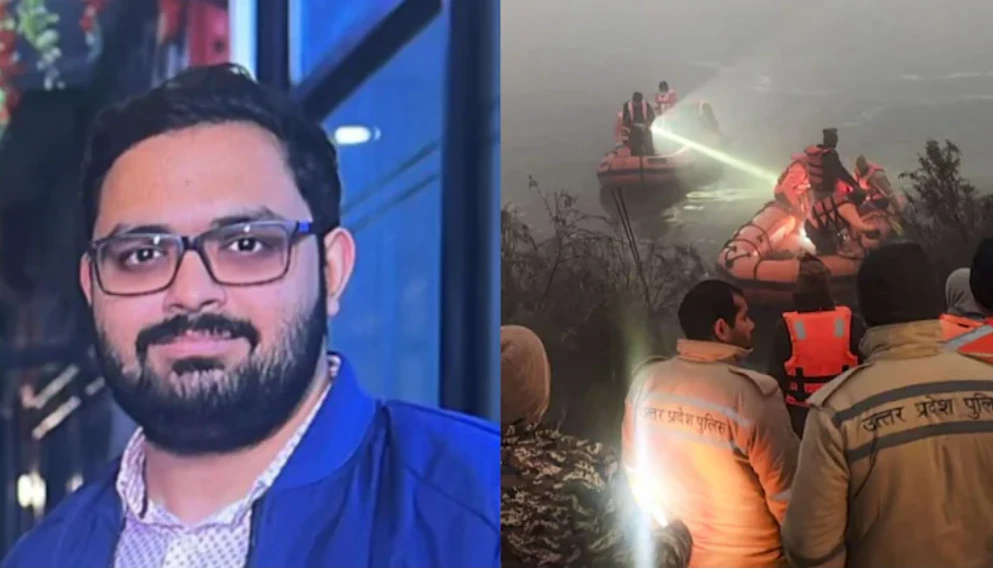
A dense fog and an unguarded construction site turned fatal for a 27-year-old software engineer in Noida, who waited nearly 90 minutes for help after his car slipped into a water-filled ditch late Friday night.

Yuvraj Mehta was driving home from Gurugram when the accident occurred close to midnight amid extremely poor visibility due to a severe cold wave affecting Delhi-NCR. He was barely a kilometre away from his residence in Sector 150 when his vehicle overshot a turn and plunged into a deep pit at a construction site.

Accident near home in low visibility

According to available information, the ditch was part of an under-construction project’s basement and was filled with water. Yuvraj lost control of his car at the final turn leading to his housing complex. Soon after the accident, he managed to call his father, Rajkumar Mehta, seeking urgent help.

The father immediately contacted emergency services. Police were alerted around 12.30 am, with the local police station informed shortly after. Emergency teams reached the spot within minutes, followed by specialised rescue units later in the night.

Pleas for help went unanswered

For nearly an hour and a half, Yuvraj remained trapped inside the submerged vehicle. He kept his phone’s torch switched on and repeatedly called out for help. Despite the presence of police and fire officials, the rescue effort was severely hampered by near-zero visibility caused by dense fog.

Rescue teams attempted to use ropes, ladders, cranes, searchlights and a makeshift boat. However, officials said the fog made it difficult to assess the depth of the water and locate the exact position of the car.

Yuvraj is believed to have drowned around 1.30 am. His body was recovered several hours later, around 4.30 am.

Why the rescue failed

Eyewitnesses claimed that sharp iron rods protruding inside the ditch discouraged responders from entering the water immediately. Police officials, however, denied hesitation and said all possible measures were taken under extremely challenging conditions.

Yuvraj’s father later said that even locating the car was difficult due to the fog. He maintained that trained divers could have made a difference and possibly saved his son.

Good Samaritan’s desperate attempt

A delivery worker named Mohinder attempted a last-ditch rescue after reaching the spot. He tied a rope around his waist and jumped into the water after saying he could swim. By the time he entered the ditch, Yuvraj had already drowned.

Mohinder searched for the victim for nearly 40 minutes but could not find him. He described the turn as extremely dangerous, especially for drivers unfamiliar with the area during foggy conditions, adding that there was no protective wall or warning sign.

Safety lapses under scanner

Residents revealed that a similar accident involving a truck had occurred at the same location days earlier. Despite this, basic safety measures such as barricades, reflectors or warning signs were not installed.

Following the incident, authorities have initiated action. The local junior engineer has been terminated, several officials have been issued notices, and work has begun to fill the ditch. Police have also registered a case against two construction companies linked to the site.

Officials said an investigation is underway and that a wider exercise has been launched to identify and secure similar accident-prone blind spots across the area.

India News

Delhi sees coldest March day in 6 years as air quality improves sharply

Delhi logs its coldest March day since 2020 as rainfall brings a sharp dip in temperature and significantly cleaner air.
Published

on

Delhi Records maximum temperature

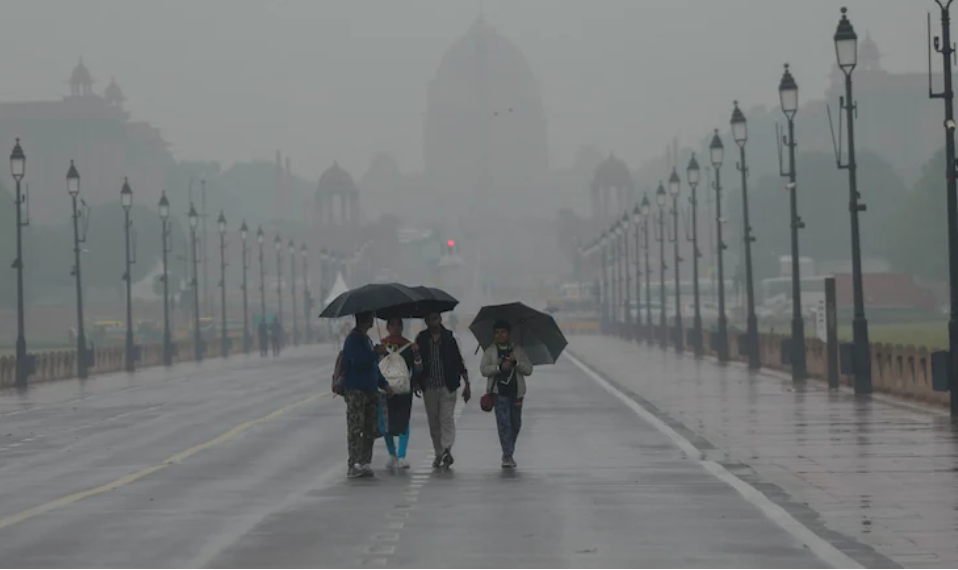
After days of continuous rainfall and gusty winds, Delhi experienced an unusual weather shift, recording its coldest March day in six years along with significantly improved air quality.

The maximum temperature at Safdarjung dropped to 21.7 degrees Celsius, which is 9.6 degrees below normal. This marks the lowest daytime temperature for March since March 8, 2020, when it had settled at 21.2 degrees Celsius.

At the same time, the city witnessed a notable improvement in air quality. The Air Quality Index (AQI) was recorded at 93, placing it in the ‘satisfactory’ category. This is the first such instance in around five months (161 days), with the previous similar reading recorded on October 9, 2025, when the AQI stood at 99.

According to standards set by the Central Pollution Control Board, AQI levels between 51 and 100 fall under the ‘satisfactory’ category.

Temperatures remain below normal across monitoring stations

Other parts of the city also reported significantly lower daytime temperatures. Palam recorded a maximum of 21.2 degrees Celsius, while Lodhi Road registered 21.0 degrees Celsius. Ridge and Ayanagar reported 21.1 degrees Celsius and 21.5 degrees Celsius respectively, all well below seasonal averages.

Minimum temperatures, however, showed less variation. Safdarjung recorded 16 degrees Celsius, while Palam logged 14.7 degrees Celsius. Lodhi Road, Ridge, and Ayanagar recorded temperatures close to normal levels.

Rainfall contributes to weather shift

The city received 7 mm of rainfall during the day, taking the monthly total to 16.2 mm so far. This makes it the wettest March since 2023.

Rainfall was recorded across multiple stations, including Safdarjung, Palam, Lodhi Road, Ridge, and Ayanagar, along with areas like Mayur Vihar, Pusa, and Janakpuri.

Cumulative rainfall between Thursday morning and Friday morning ranged between 5.4 mm and 7.4 mm across key monitoring stations.

Weather likely to stabilise

The recent spell of rain is expected to ease, with forecasts indicating a partly cloudy sky on Saturday. Temperatures are likely to rise slightly, with the maximum expected around 27 degrees Celsius and minimum around 14 degrees Celsius.

Air quality is also expected to move back into the ‘moderate’ category over the next couple of days, according to the Air Quality Early Warning System.

Continue Reading

India News

Late-March western disturbance brings 1,000-km rain band across India, Pakistan and Afghanistan

An unusual western disturbance has created a 1,000-km rain band, bringing widespread storms, rainfall and hail across parts of India and neighbouring countries.
Published

on

Weather

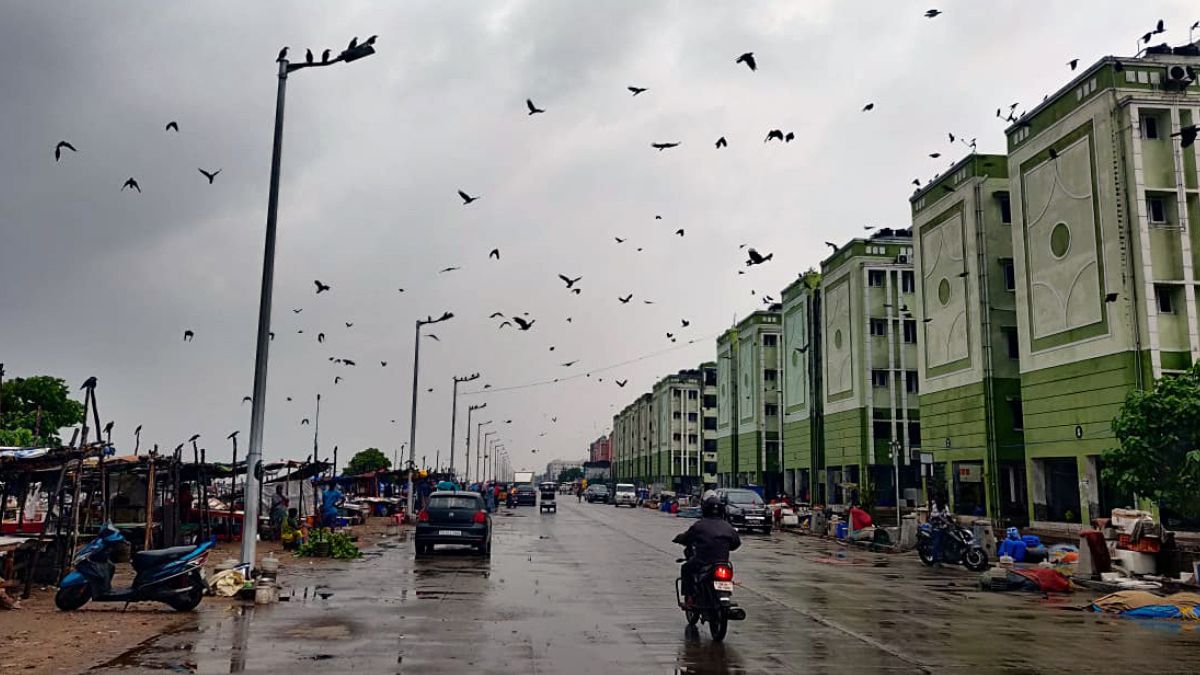
An unusual weather system is currently impacting large parts of India, Pakistan and Afghanistan, bringing widespread thunderstorms, gusty winds, rainfall and even hailstorms at a time when summer conditions typically begin to set in.

The ongoing event is being driven by an active western disturbance that has formed a nearly straight, linear low-pressure trough stretching about 1,000 kilometres—from Afghanistan, across Pakistan, and into India. This formation is considered atypical, as most western disturbances usually follow a curved path.

Western disturbances are generally extratropical systems originating near the Mediterranean region and are more common during winter months, when they bring snowfall and cold weather to northern India. However, this system stands out both for its timing in late March and its distinct structure.

Widespread weather activity across regions

The system is associated with an upper-air cyclonic circulation over northern Pakistan, which is leading to widespread thunderstorms and winds ranging between 40 and 80 kmph across northwest India. Isolated hailstorms and light-to-moderate rainfall or snowfall have also been reported.

Heavy to very heavy rainfall has already occurred in sub-Himalayan West Bengal and Sikkim, while southern states including Karnataka, Andhra Pradesh, Kerala and Tamil Nadu have received significant showers. Hailstorm activity has also been observed in multiple regions.

Meteorological conditions indicate that the western disturbance includes a trough in the middle and upper atmospheric levels. This is interacting with several low-level cyclonic circulations over regions such as north Madhya Pradesh, east Uttar Pradesh, west Rajasthan, Haryana, northeast Assam, coastal Andhra Pradesh, and parts of Tamil Nadu and Kerala, intensifying weather activity.

System likely to weaken, another disturbance ahead

The current disturbance is expected to remain active over the Western Himalayas and adjoining plains through Friday, after which its intensity is likely to decrease.

However, forecasts suggest that another weaker western disturbance may approach the region around March 22, potentially bringing further weather changes.

Moisture sources behind the system

The primary moisture feeding this system originates from evaporation over multiple water bodies, including the Mediterranean Sea, Caspian Sea, Black Sea, and the Persian Gulf.

As the system moves eastward, it gathers additional moisture from the Arabian Sea. This moisture is further enhanced due to orographic lifting along the Himalayas. Simultaneously, existing troughs and cyclonic features over regions such as Gujarat and the Mannar area are contributing to increased low-level convergence, leading to intensified rainfall and storm activity.

Delhi-NCR sees cooler conditions and rainfall

In Delhi-NCR, light-to-moderate rainfall accompanied by thunderstorms and winds of 30–50 kmph is expected to continue until Friday. Daytime temperatures are likely to remain between 25 and 28 degrees Celsius, which is below the seasonal average.

Why late-March disturbances are uncommon

Climatologically, western disturbances are most frequent between December and February, with India typically experiencing four to six such systems per month during winter.

By late March, their frequency usually declines sharply as the jet stream weakens and shifts northward. Historically, only one or two such systems occur during this period each year.

However, recent trends suggest a gradual extension of the western disturbance season into April. Experts attribute this to changes in atmospheric patterns, including stronger subtropical jet streams and broader climate variability.

Continue Reading

India News

Mamata Banerjee slams poll body over officials’ transfer, calls move unprecedented

Mamata Banerjee has criticised the Election Commission for transferring senior officials ahead of West Bengal elections, alleging bias and procedural overreach.

Published

on

Mamata Banerjee

West Bengal Chief Minister Mamata Banerjee has sharply criticised the Election Commission of India over the transfer of senior state officials ahead of the assembly elections, alleging bias and procedural overreach.

In a strongly worded letter to Chief Election Commissioner Gyanesh Kumar, Banerjee expressed “deep shock” at the poll panel’s functioning, stating that it had “crossed all boundaries of decency and constitutional propriety.”

Concerns over transfers and alleged bias

The chief minister objected to what she described as “unilateral” transfers of key officials, including the chief secretary, home secretary, director general of police, and several district-level officers. According to her, these decisions were taken without citing any violations of electoral rules or the Model Code of Conduct.

Banerjee further alleged that the Commission had shown “apparent bias” since the beginning of the Special Intensive Revision of electoral rolls, claiming that repeated concerns raised by the state government had been ignored.

She also questioned the timing of the transfers, noting that district election officers were shifted during an ongoing revision process, which she suggested could affect administrative continuity and pending cases.

Supreme Court reference and governance concerns

Referring to her government’s move to approach the Supreme Court of India, Banerjee said the court had acknowledged the concerns and issued directions that are currently being implemented.

The chief minister warned that the removal of senior officials at short notice could disrupt governance, law and order, and disaster preparedness, particularly during the storm-prone months of March and April.

She also criticised the deployment of state police officers as observers in other poll-bound regions, calling it “arbitrary” and a “misuse of authority.”

Warning on federal structure and democracy

Describing the decisions as “biased, hasty and unilateral,” Banerjee said such actions undermine cooperative federalism and could create conditions resembling “indirect central rule.”

She urged the Commission to reconsider its decisions, warning that such steps are “deeply concerning” for a healthy democratic process.

Elections to the 294-member West Bengal assembly are scheduled to be held in two phases on April 23 and April 29, with counting set for May 4.

Continue Reading

Trending

© Copyright 2022 APNLIVE.com