
India News
Padmaavat: Rajput Groups Continue To Deny Facts, Defy Country And Constitutional Institutions


Above: An Ahmedabad shopping mall vandalised by “Padmaavat” protesters on Jan 23, 2018.
By Rajesh Sinha
Mobs defied the nation’s Constitutionally established institutions and law to perpetrate violence over an imagined sense of hurt pride due to a wrongly assumed derogatory portrayal of the fictional character of Rani Padmini, claiming it amounts to ‘distortion of history’.
The film Padmaavat, based on a story by Malik Muhammad Jayasi, is in the eye of a storm with Rajput groups who persist in issuing threats and carrying them out in different parts of the country.
Strangely, none of the TV news channels, whose influence on moulding opinion is hugely disproportionate to the facts and reason they air, questioned this claim of Rajput leaders about alleged distortion of history. They did, however, ask these ‘custodians’ of their clan’s pride, if they had seen the film and knew what it shows. None had, so far. Others – journalists – who saw it on Tuesday said the film was all about Rajput valour and pride and villainy of Alauddin Khilji, both features in accordance with what Rajput groups claim to be facts: The review of the movie in The Indian Express says explicitly that the “entire film is a relentlessly opulent, magnificently-mounted paean to Rajput ‘aan baan shaan’.”
The Rajput character of valour and fairness portrayed in the film seemed to have evaporated as, refusing to relent, Rajput groups continued to issue threats and resort to violence over the release of ‘Padmaavat’ even after the Supreme Court rejected all appeals to prevent the film from being screened and ordering the state governments to ensure peace and order.
Padmaavat is scheduled to be released on Thursday, 25 January.
On Wednesay, January 24, a threat by a group of Rajasthani women to commit jauhar in Chittorgarh fizzled out with Rajasthan Police foiling their plans.
Groups of Rajput men and women that marched to the Chittorgarh Fort were stopped by Rajasthan Police, who had thrown a barricade around Chittorgarh Fort to stop the protesters from entering the fort premises. The women who managed to sneak in were escorted out by the police, said media reports.
In Prime Minister Narendra Modi’s home state of Gujarat, a protest against release of Padmaavat turned violent on Tuesday as a group went on the rampage vandalising theatres and multiplexes and shops and set more than three dozen vehicles ablaze in Ahmedabad.
The reason for their ire and the violence had no basis: the cinema halls association has decided to not to release movie in cinema halls.
A 2000 strong mob reportedly went on rampage, targeting three city malls with multiplexes and a cinema hall, and damaging more than 150 four-wheelers and two-wheelers.
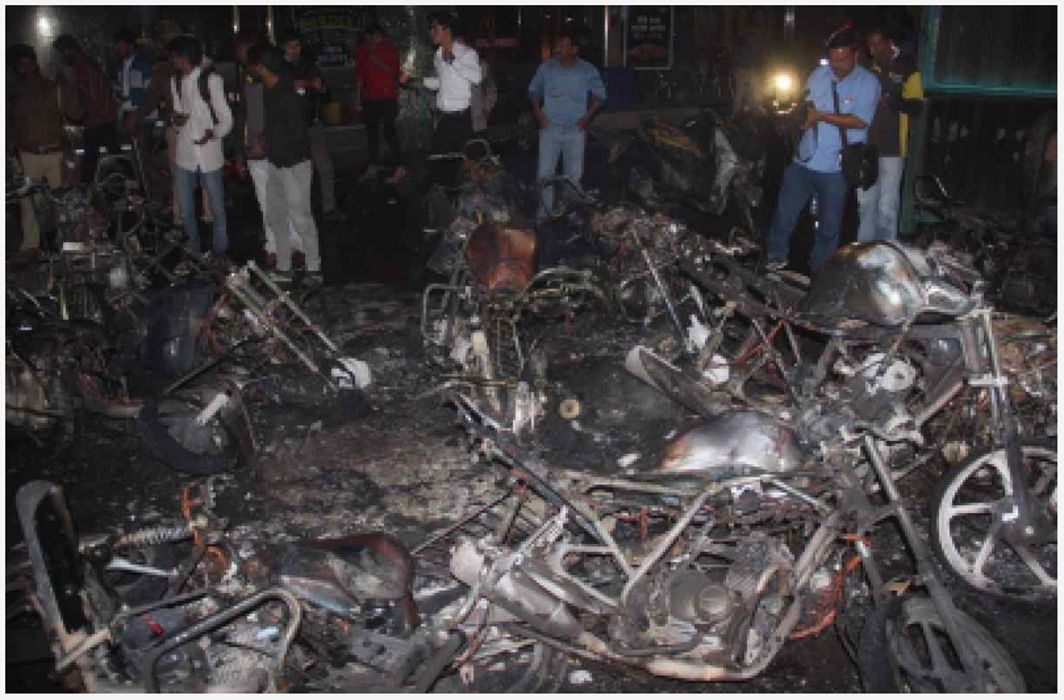 Media reports said two Rajput groups in Gujarat – Karni Sena and Mahakaal Sena – have been at the forefront of protests in the state which has also seen service on more than a 100 bus routes suspended.
The Shri Rajput Karni Sena, which has been at the forefront of protests against the film, was quick to deny involvement in the violent protests.
In Ujjain, Police had to fire in the air to disperse the mob and use force in some places in Ujjain where the protesters turned violent.
In Gurgaon, prohibitory orders have been imposed till Sunday to maintain law and order situation, in view of Shree Rajput Karni Sena threatening to target theatres screening the film. There are over 40 multiplexes and cinema halls in Gurgaon.
The Haryana government has said that it would implement the Supreme Court order that allows the screening of the movie. According to media reports, Gurgaon Deputy Commissioner Vinay Pratap Singh said, “Section 144 of the CrPC has been imposed in view of release of the ‘Padmaavat’ in various cinema halls and multiplexes on January 25 as there is likelihood of law and order disturbance.”
“Following imposition of Section 144, there is prohibition on presence of people carrying firearms and other articles capable of causing injury, raising slogans and exhibiting placards within 200 meters radius of the cinema halls and multiplexes from January 23 to January 28,” Singh said, according to reports.
In Bihar, several cinema halls cancelled ticket bookings for Hindi film ‘Padmavat’ to be released across the country from January 25, following protests from activists of Karni Sena, reported news agencies. A large number of activists of Karni Sena staged protest and forced PNA mall in Patna to stop the booking of tickets for Hindi film ‘Padmavat’, reported news agencies.
According to reports from several districts of Bihar including Gaya and Bhagalpur, ticket bookings have been cancelled for screening of the film in cinema halls there.
Karni Sena has been the most vociferous of the fringe groups opposing the period drama, alleging that historical facts were distorted in the movie.
The Supreme Court had earlier paved the way for the all- India release of “Padmaavat” on January 25 and stayed notifications and orders issued by Madhya Pradesh, Rajasthan and Gujarat — all ruled by the BJP — prohibiting exhibition of the film in their states.









India News
MEA responds after ITBP chief flags ongoing face-offs with China in Arunachal
India said deviations by Chinese forces from established patrolling patterns periodically disturb the situation along the Line of Actual Control, as the government addressed remarks by the ITBP chief about ongoing face-offs in Arunachal Pradesh.

India News
Delhi High Court rejects Neha Bora’s plea against peace bond notice
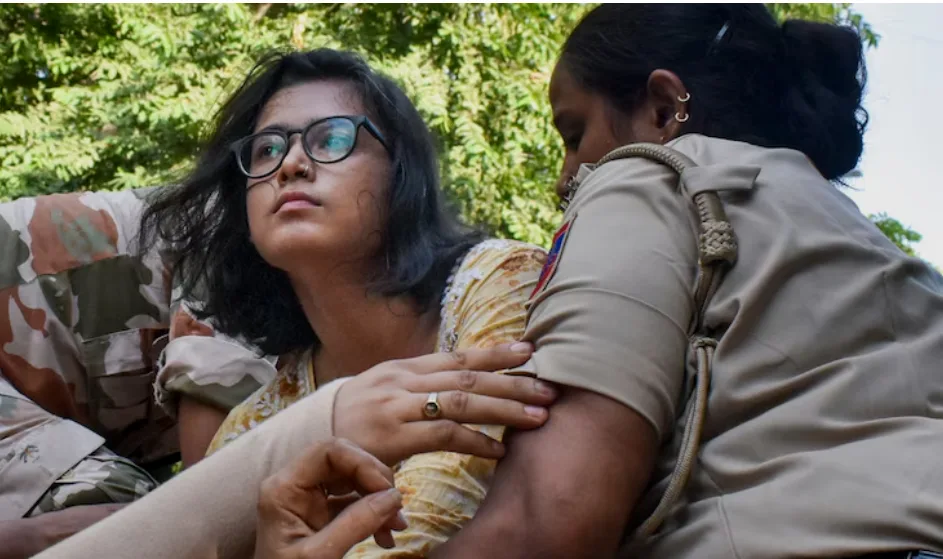
The Delhi High Court has rejected AISA president Neha Bora’s petition challenging a police notice requiring her to execute a peace bond following her participation in recent protests in the national capital.
India News
PM Modi to inaugurate Rs 169-crore RBI data centre in Odisha on October 25
Prime Minister Narendra Modi is scheduled to visit Odisha on October 25 to inaugurate the Reserve Bank of India’s Rs. 169-crore data centre in Jatni, near Bhubaneswar.


Om Prakash Mathur sworn in as Keralam Governor

PM Modi to inaugurate Rs 169-crore RBI data centre in Odisha on October 25

Delhi High Court rejects Neha Bora’s plea against peace bond notice

MEA responds after ITBP chief flags ongoing face-offs with China in Arunachal
MEA responds after ITBP chief flags ongoing face-offs with China in Arunachal
Delhi High Court rejects Neha Bora’s plea against peace bond notice
PM Modi to inaugurate Rs 169-crore RBI data centre in Odisha on October 25
Om Prakash Mathur sworn in as Keralam Governor

Two election commissioners complained against senior poll officer, RTI reveals

Afghan Men Try To Hang With The Jet Engine Of The Aircraft in Kabul- Afghanistan News – Kabul News
Trending Top 10 News: 10000 Crore Fine on Flipkart, Apple to Launch Unique Feature, Hdfc Bank Job Ad

Trending Top 10 News: Nokia 6310, Apple sales, Bachpan ka Pyar Video Kid, Dainik Bhaskar IT Raid

Trending Top 10 News: Canada bans Indian flights, Rain in Delhi NCR, AIMIM Twitter hacked, Raj Kundra case

Trending Top 10 News: Shein India, Apple New Service, Pocket Oxygen, Oppo Launched New Phone
-
 India News14 hours ago
Om Prakash Mathur sworn in as Keralam Governor
-
 India News14 hours ago
PM Modi to inaugurate Rs 169-crore RBI data centre in Odisha on October 25
-
 India News13 hours ago
Delhi High Court rejects Neha Bora’s plea against peace bond notice
-
 India News12 hours ago
MEA responds after ITBP chief flags ongoing face-offs with China in Arunachal
