English हिन्दी
Connect with us

India News

Parchment Publications hosts discussion on Devadasi

Published

on

Devadasi conversation

For centuries, the Devadasi tradition has been a subject of debate—often remembered for its later exploitation rather than its once-sacred origins. But was it always that way? This was the question at the heart of an engaging discussion hosted by Parchment Publications to mark the launch of Devadasi, the latest novel by Ambassador Sangeeta Bahadur.

The book reimagines the complex and once-revered Devadasi tradition, offering a fresh feminist perspective on a system that was both celebrated and later distorted. The conversation, moderated by Ajaybir Singh Garkal, featured renowned Odissi, Manipuri, and Chhau dancer & Guru Sharon Lowen, whose deep understanding of India’s classical arts provided invaluable historical insights. She highlighted how Devadasis were once regarded as auspicious figures—since they never married, they never became widows, a significant yet often overlooked aspect of their legacy.

Ambassador Sangeeta Bahadur spoke passionately about her book, which challenges conventional narratives. “The tradition didn’t turn into exploitation over night,”she explained.“It was a gradual shift—influenced by power, politics, and colonial interference.The Devadasis were once custodians of knowledge, culture, and devotion. Devadasi is my attempt to reimagine that power and reclaim their agency.”

Speaking about the importance of such conversations, Shubhi Arya, Publisher, Parchment Publications, remarked: “Understanding our cultural past is essential—not to glorify it, but to recognize its full complexity. The Devadasi tradition held both power and hardship. Even today, feminism is often misinterpreted, but at its heart, it is about agency, equality, and choice. Devadasi compels us to reexamine history through this lens—one that acknowledges resilience while questioning the structures that shaped it.”

The event concluded with an interactive Q&A, where attendees explored the book’s historical depth, feminist undertones, and its contemporary relevance.

Organized by Parchment Publications with the support of event manager Shivam, the discussion took place on March 1 at Kunzum Bookstore, GK2.

Continue Reading

India News

Diljit Dosanjh responds to CJP criticism, says don’t teach Punjabis how to fight

Diljit Dosanjh responded to criticism from the Cockroach Janata Party over his earlier comments on student protests and his film Satluj during a Delhi concert. Abhijeet Dipke later expressed his admiration for the singer and asked him to let the disagreement go.

Published

on

Punjabi singer and actor Diljit Dosanjh addressed criticism over his earlier remarks on student protests during his Delhi concert on Friday, October 30. Without directly naming the Cockroach Janata Party (CJP), he responded to comments made about his stance on protests and his film Satluj.

Speaking to the audience at the Jawaharlal Nehru Stadium, Dosanjh said that people should not teach Punjabis how to fight for a cause. He also expressed his displeasure over the film being mocked on stage, saying that considerable effort had gone into making it.

The singer’s remarks came amid an ongoing disagreement with CJP leader Abhijeet Dipke, who had previously criticised him over his response to the student protests.

What Diljit Dosanjh said at Delhi concert

During his performance, Dosanjh addressed the criticism surrounding his earlier statement that he was an artist and not a politician.

“I love all of you because I am an artist, bro. I am being quiet, so let me stay quiet. I support all of you. But don’t teach Punjabis how to fight,” he told the audience.

Referring to Satluj, a film based on human rights activist Jaswant Singh Khalra, the singer said that those making fun of the film had overlooked the struggle involved in bringing the project to the screen.

He reiterated that he loved everyone, adding that even if some people disliked him, he had no intention of responding with hatred.

Abhijeet Dipke responds with ‘Mitti Pao’ message

Following Dosanjh’s remarks, CJP leader Abhijeet Dipke shared a message addressed to the singer on Instagram.

Dipke explained that he had felt hurt by Dosanjh’s comments during the student protests in June. However, he clarified that his criticism was not driven by any personal disagreement with the singer.

He said he had always admired Dosanjh for speaking up on important issues and continued to respect him despite their differences.

Dipke also recalled attending the singer’s Chicago concert in May, saying that his admiration extended beyond Dosanjh’s music to the person he was.

Praising the singer’s courage, authenticity and contribution to taking India onto the global stage while remaining connected to his roots, Dipke said that one disagreement or misunderstanding would not change his respect for him.

He concluded his message with the Punjabi expression, “Baaki paaji, chhota bhai samajh ke mitti pao”, asking Dosanjh to consider him a younger brother and let the matter go.

What sparked the Diljit Dosanjh-Abhijeet Dipke controversy?

The disagreement dates back to June, when Dosanjh faced criticism over his response to questions about student protests at Jantar Mantar concerning alleged examination irregularities and the NEET paper leak controversy.

During an Instagram Live session, a fan asked the singer whether he would join the protests.

Responding to the question, Dosanjh said, “Keep me away from all this. Bro, I’m an artist. I’m no politician, I don’t know what you think I am.”

He also said that he did not know enough about the matter to comment on it.

His response drew criticism from some people, who questioned why he was not taking a more direct position on the protests. Some also compared his remarks with his public support for farmers during the 2020 farmers’ agitation.

Dipke was among those who criticised the singer, questioning his response in the context of his association with socially and politically sensitive projects such as Satluj.

What is Diljit Dosanjh’s film Satluj about?

Satluj is based on the life and work of human rights activist Jaswant Singh Khalra, who highlighted alleged illegal killings and secret cremations in Punjab during the late 1980s and early 1990s.

The film, originally titled Panjab 95, faced a prolonged delay over certification-related issues before its release on ZEE5 on July 3. However, it was removed from the streaming platform within two days.

The film’s removal also attracted criticism, particularly from those who had raised concerns about its delayed release.

Continue Reading

India News

Amit Shah challenges Rahul Gandhi, Akhilesh Yadav to debate SIR in Parliament

Union Home Minister Amit Shah challenged Rahul Gandhi and Akhilesh Yadav to discuss the voter roll controversy in a special session of Parliament, as the INDIA bloc prepares to hold a symbolic public impeachment of Chief Election Commissioner Gyanesh Kumar.
Published

on

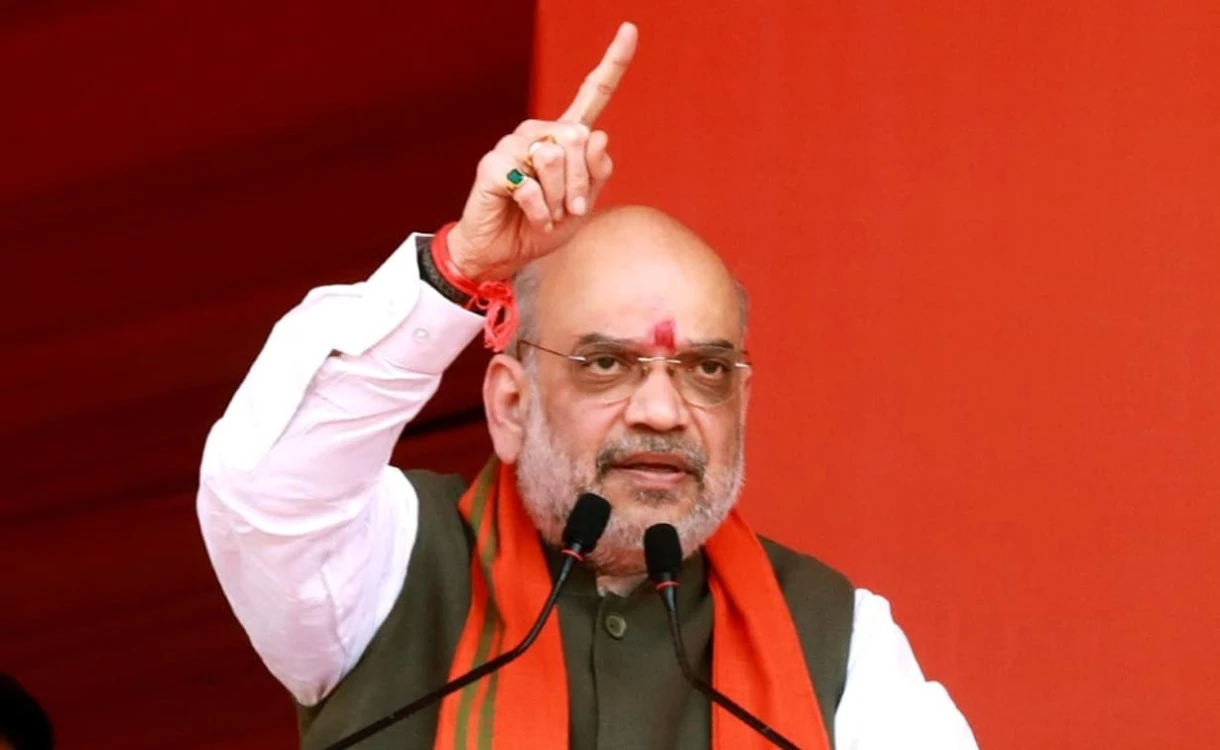
Amit Shah

Union Home Minister Amit Shah has challenged Congress leader Rahul Gandhi and Samajwadi Party chief Akhilesh Yadav to discuss the controversy surrounding electoral rolls in a special session of Parliament. The challenge came a day before the Opposition INDIA bloc’s planned symbolic public impeachment of Chief Election Commissioner (CEC) Gyanesh Kumar over the Special Intensive Revision (SIR) of voter lists.

Speaking at the Uttar Pradesh BJP state executive committee meeting in Lucknow on Friday, Shah said the BJP was prepared to discuss the issue in Parliament and had nothing to hide.

“I challenge both Rahul Gandhi and Akhilesh Yadav right here and now. The BJP is fully prepared to discuss this in Parliament. We have nothing to hide. Let us convene a special session,” Shah said.

He also accused the Opposition of preventing Parliament from functioning, alleging that its leaders preferred creating disruptions rather than discussing the matter inside the House.

Amit Shah targets Opposition over voter roll allegations

Taking aim at Rahul Gandhi, Shah said the Congress leader would not discuss the issue in Parliament but would instead raise it through street protests.

He also referred to the BJP’s electoral victories in Haryana, Maharashtra, Bihar, Delhi, Puducherry and Assam while responding to allegations of electoral irregularities.

Shah said the Opposition had started accusing the electoral system of wrongdoing instead of accepting its election defeats. Referring to a cricketing analogy, he said that a team that loses should practise harder rather than accuse the umpire of cheating.

INDIA bloc plans symbolic impeachment of Gyanesh Kumar

Shah’s remarks came ahead of the INDIA bloc’s planned public impeachment-style programme against Chief Election Commissioner Gyanesh Kumar.

The Opposition has been protesting against the SIR exercise and demanding Kumar’s resignation, suspension of the revision exercise and restoration of electoral rolls that existed before the revision.

The Congress had initially planned to organise a mock Parliament before changing the format to a symbolic public impeachment. However, the programme, scheduled for Friday, was postponed because of rain in Delhi. It is now scheduled to take place on Saturday, ahead of the INDIA bloc’s November 1 rally at Ramlila Ground.

Congress president Mallikarjun Kharge is expected to move the symbolic impeachment motion, while former Lok Sabha Speaker Meira Kumar is expected to preside over the proceedings. Rahul Gandhi is also expected to deliver the concluding remarks.

The proposed programme is a symbolic political protest and not a formal constitutional impeachment proceeding. Earlier notices seeking Gyanesh Kumar’s removal had been rejected by the Lok Sabha Speaker and Rajya Sabha Chairman.

SIR controversy has repeatedly disrupted Parliament

The Special Intensive Revision of electoral rolls has been a major point of confrontation between the government and Opposition parties.

The issue had also disrupted parliamentary proceedings during the 2025 Monsoon and Winter sessions, with repeated adjournments and Opposition protests.

During a debate on electoral reforms in December 2025, Rahul Gandhi had challenged Shah to respond to his allegations of vote theft. Shah had replied that he would decide the order of his own speech. Opposition MPs subsequently staged a walkout.

The Election Commission’s independent constitutional status had also been cited by the government during discussions on the issue.

The Opposition has continued to accuse the Election Commission of irregularities in the voter list revision process, while the BJP has rejected the allegations.

Continue Reading

India News

PM Modi announces projects worth over Rs 14,000 crore in Gujarat

Prime Minister Narendra Modi outlined development projects worth more than Rs 14,000 crore in Gujarat’s Banaskantha district. The initiatives include metro extensions, road infrastructure, railway services, Bio-CNG plants and agricultural facilities.
Published

on

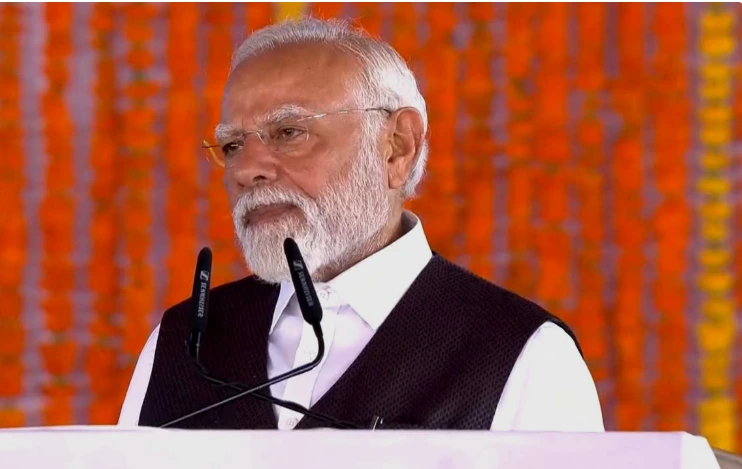
PM Narendra Modi

Prime Minister Narendra Modi on Friday announced development projects worth more than Rs 14,000 crore during his two-day visit to Gujarat, highlighting initiatives spanning infrastructure, agriculture, animal husbandry and rural development.

Beginning his visit with a roadshow in Banaskantha district, the Prime Minister addressed a public gathering in the presence of Gujarat Chief Minister Bhupendra Patel and Deputy Chief Minister Harsh Sanghavi.

During his address, PM Modi reflected on his journey from serving the people of Gujarat to leading the country. He credited the people for shaping his political journey and said his priorities had always remained public service and national development.

“I only knew two things – from serving the people to serving the nation, and from the development of Gujarat to the development of the country. The rest, how to do it and how to move forward, you have taught me,” he said.

The Prime Minister also reiterated his commitment to public service, saying he would continue working for the people until his last breath.

Major development projects announced in Gujarat

The development programme includes several initiatives across Banaskantha and other parts of Gujarat, covering transportation, agriculture, animal husbandry and rural infrastructure.

Among the key projects is the Bharat Bovine Breeding and Research Centre (BBBRC) at Bhildi in Banaskantha. Spread across 127 acres, the facility has been developed as a Centre of Excellence for bovine breeding, genetic improvement and advanced reproductive technologies.

The programme also includes the foundation stone laying for two Bio-CNG plants belonging to Banas Dairy at Tharad and Radhanpur. These facilities will process cattle dung at capacities of 75 metric tonnes and 100 metric tonnes per day, respectively.

Other major initiatives include the expansion of Ahmedabad Metro, improvements to road connectivity and the introduction of two railway services.

Ahmedabad Metro expansion and road infrastructure

The infrastructure programme includes the foundation stone laying for Ahmedabad Metro Phase-2A and Phase-2B.

Phase-2A will extend metro connectivity towards the airport, while Phase-2B will connect GIFT City.

Another major project involves widening the Ahmedabad-Mehsana Road, also known as State Highway-41, from four lanes to eight lanes. The project has an estimated cost of Rs 2,600 crore.

Two railway services will also be flagged off as part of the programme. These are the Ahmedabad (Sabarmati)-Varanasi Express and the Mehsana-Becharaji-Sabarmati MEMU service.

The initiatives are aimed at strengthening transportation infrastructure and connectivity across the state.

4,030 new Anganwadi centres and agricultural projects

The programme also places emphasis on child welfare and agricultural infrastructure.

The Prime Minister will lay the foundation stone for 4,030 new child-friendly Anganwadi centres in Gujarat. Additionally, 361 completed centres will be inaugurated.

The Agriculture Infrastructure Fund will also see the dedication of 521 completed projects to the nation. These projects include cold storage facilities, warehouses, processing facilities, greenhouses and other agricultural infrastructure.

The initiatives are intended to strengthen facilities supporting agricultural production, storage and processing.

PM Modi releases 24th PM-KISAN instalment

Farmers’ welfare was another major focus of the Prime Minister’s address.

During the Gujarat visit, PM Modi released the 24th instalment of the PM-KISAN Samman Nidhi scheme, amounting to approximately Rs 19,000 crore for eligible farmers across the country.

He highlighted the government’s financial assistance to small farmers, who account for more than 85 per cent of India’s farming community.

The Prime Minister also referred to the Soil Health Card scheme, stating that more than 26 crore cards had been provided to farmers.

He emphasised the importance of integrating agriculture and animal husbandry with science and technology to improve farmers’ incomes and strengthen rural economies.

PM Modi’s Gujarat visit to continue on October 31

Following the Banaskantha programme, the Prime Minister is scheduled to travel to Ekta Nagar in Kevadia.

His programme includes inaugurating Bharat Parv 2026, witnessing the Ekta Prakash Parv and attending the Narmada Aarti.

On October 31, PM Modi will pay floral tributes at the Statue of Unity and participate in Rashtriya Ekta Diwas celebrations marking the 151st birth anniversary of Sardar Vallabhbhai Patel.

The celebrations will feature the Ekta Parade, involving the Central Armed Police Forces, state police forces and Central Police Organisations.

A theatrical presentation titled “Naxal Mukt Bharat”, organised by the National School of Drama, will involve approximately 2,000 artists from 126 districts affected by Left-Wing Extremism.

A separate cultural presentation involving around 5,000 artists from across the country will showcase India’s classical and folk traditions.

Continue Reading

Trending

© Copyright 2022 APNLIVE.com