English हिन्दी
Connect with us

India News

PM Modi greets nation on 77th Republic Day, calls for renewed resolve towards Viksit Bharat

PM Modi greeted the nation on the 77th Republic Day, calling the occasion a symbol of India’s pride and urging citizens to renew their commitment towards a Viksit Bharat.

Published

on

PM Modi

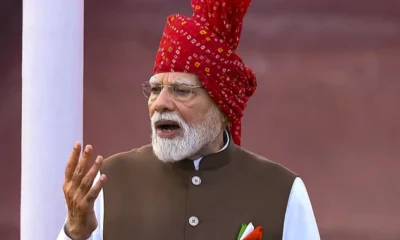
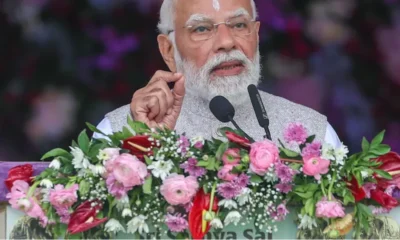
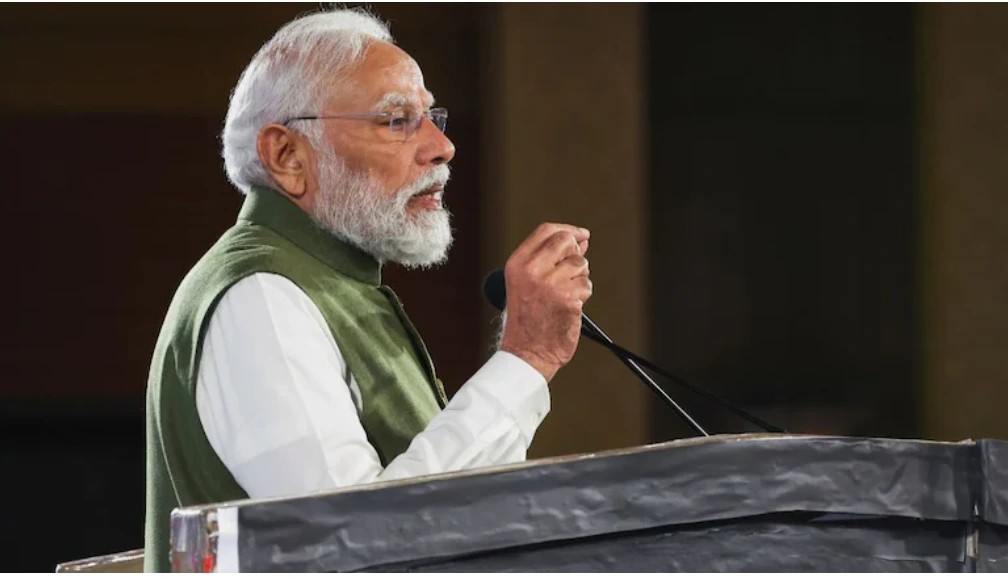
Prime Minister Narendra Modi extended greetings to the nation on the occasion of the 77th Republic Day, urging citizens to renew their collective resolve towards building a developed India.

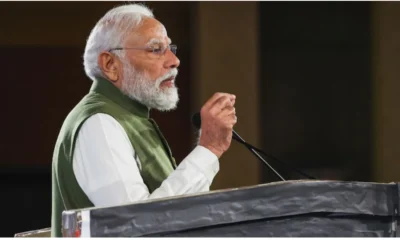
In a message shared on X, the Prime Minister said Republic Day symbolises India’s pride and honour and should infuse new enthusiasm among citizens. He added that the national festival must strengthen the resolve for a Viksit Bharat.

Republic Day is observed annually on January 26 to commemorate the adoption of the Constitution of India in 1950, marking the country’s formal transition into a sovereign, socialist, secular and democratic republic. The day holds historic importance as it reflects the culmination of India’s freedom struggle and the foundation of constitutional governance based on justice, liberty, equality and fraternity.

Grand celebrations at Kartavya Path

President Droupadi Murmu will preside over the Republic Day celebrations at Kartavya Path in New Delhi. The President of the European Council, Antonio Costa, and the President of the European Commission, Ursula von der Leyen, are attending the event as chief guests.

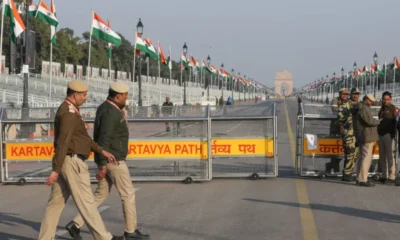
Kartavya Path, stretching from Rashtrapati Bhawan to the National War Memorial, has been extensively decorated to reflect India’s journey of progress and achievement.

According to the Ministry of Defence, this year’s celebrations will showcase a blend of the 150-year legacy of the national song Vande Mataram, India’s development journey, military strength, cultural diversity and participation from people across the country.

Parade highlights and ceremonial traditions

The ceremony will begin at 10:30 am and is expected to last around 90 minutes. Prime Minister Modi will first visit the National War Memorial to pay homage to fallen soldiers by laying a wreath. He will then proceed to Kartavya Path along with other dignitaries to witness the parade.

The President of India, along with the European Council and European Commission presidents, will arrive in the traditional buggy, escorted by the President’s Bodyguard, the senior-most regiment of the Indian Army.

As per tradition, the National Flag will be unfurled, followed by the National Anthem and a 21-gun salute using indigenously developed 105 mm Light Field Guns. The salute will be presented by the 1721 Ceremonial Battery of the 172 Field Regiment.

Tableaux reflect self-reliance and cultural heritage

A total of 30 tableaux — 17 from States and Union Territories and 13 from Ministries, Departments and Services — will roll down Kartavya Path. The themes include Swatantrata ka Mantra: Vande Mataram and Samriddhi ka Mantra: Aatmanirbhar Bharat.

The tableaux will present a visual narrative of the legacy of Vande Mataram, India’s rapid development and the spirit of self-reliance, along with the nation’s rich cultural diversity.

India News

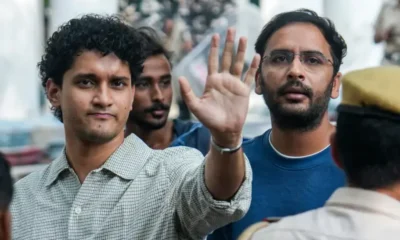
CJP leaders Saurav Das, Ashutosh Ranka, Ajinkya Shinde sent to 5-day judicial custody

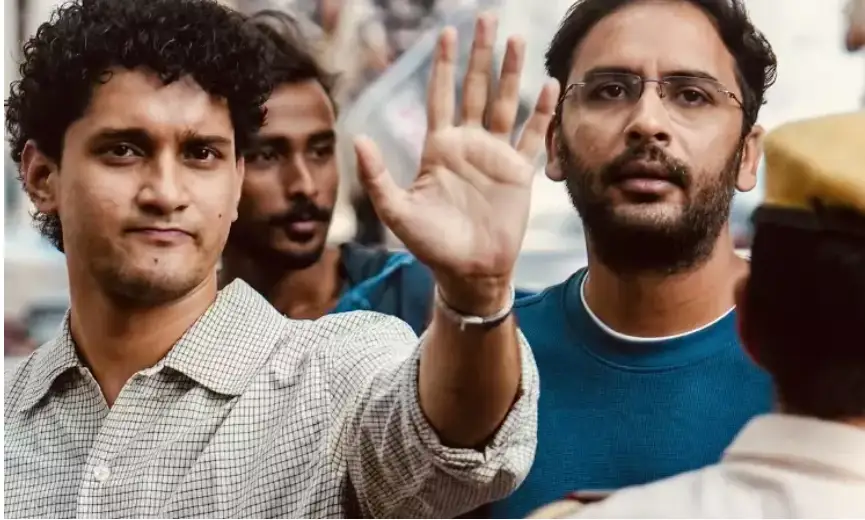
Three CJP leaders, Saurav Das, Ashutosh Ranka and Ajinkya Shinde, were placed under preventive arrest following a protest at Delhi’s Jantar Mantar over Chief Election Commissioner Gyanesh Kumar.

Published

on

Three leaders of the Cockroach Janata Party (CJP) — Saurav Das, Ashutosh Ranka and Ajinkya Shinde — have been placed under preventive arrest in connection with a protest at Delhi’s Jantar Mantar, where demonstrators demanded the resignation of Chief Election Commissioner Gyanesh Kumar.

The three were detained early Tuesday after crossing police barricades and entering Jantar Mantar, which was recently removed from the list of designated protest venues. A case was registered against them over their alleged actions.

According to the police case, the charges include trespassing, violation of a bond, and obstructing a public official from performing official duties.

The three leaders were produced before a Special Court of the Executive Magistrate on Wednesday and could be sent to judicial custody at Tihar Jail.

Why CJP leaders protested at Jantar Mantar

The protest comes amid demonstrations by the CJP and opposition groups over alleged irregularities in the Special Intensive Revision (SIR) of electoral rolls.

The protesters were demanding the resignation of Chief Election Commissioner Gyanesh Kumar. The controversy centres on allegations concerning the electoral roll revision exercise, which the Election Commission and the BJP have denied.

Jantar Mantar was recently removed from the list of designated protest venues in Delhi. The change followed an order naming alternative locations for demonstrations, prompting criticism from groups that want to hold protests at the established site.

CJP legal team raises concerns over detention

Ratna Singh, head of the CJP legal team, said in a post on X that Delhi Police had arrested Saurav Das, Ashutosh Ranka and Ajinkya Shinde at Parliament Street Police Station in connection with the Jantar Mantar case.

Singh alleged that the three were brought to the police station in a private van at around 3 am and were not allowed to meet their lawyers until late at night.

She also raised concerns about the legal process and the possibility of the leaders being sent to judicial custody.

The allegations regarding access to legal counsel were made by the CJP legal team and should be distinguished from the charges registered by the police.

The arrests mark another development in the ongoing dispute over protests at Jantar Mantar and the CJP’s campaign against the Chief Election Commissioner over the SIR exercise.

Continue Reading

India News

BJP focuses on religion as opposition pushes BDM strategy in UP

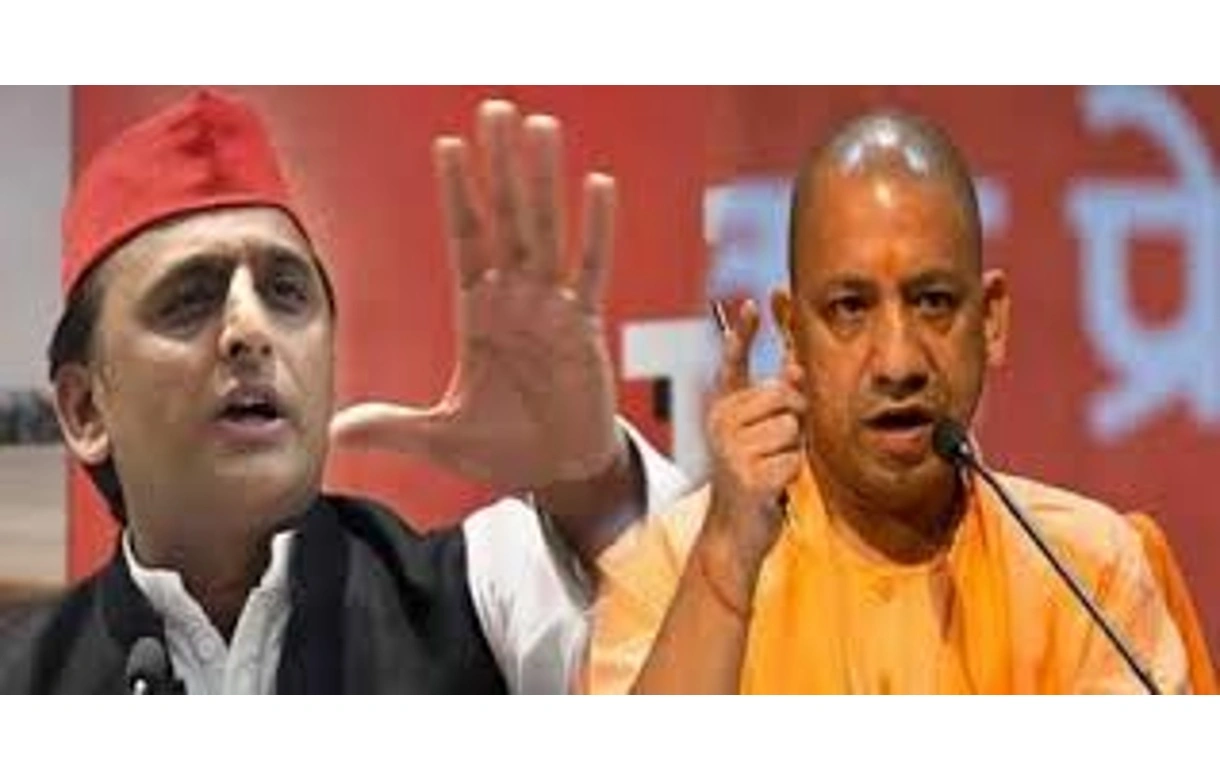
The BJP is emphasising religious issues ahead of the Uttar Pradesh Assembly elections, while opposition parties are seeking to consolidate Backward, Dalit and Minority voters. Recent exchanges involving Yogi Adityanath, Akhilesh Yadav and Asaduddin Owaisi have added to the political contest over the state’s electoral narrative.
Published

on

Ahead of the 2027 Uttar Pradesh Assembly elections, the BJP is emphasising religious issues, while opposition parties are seeking to build a coalition of Backward, Dalit and Minority voters. The competing approaches have brought caste representation and religious messaging to the forefront of the state’s political discourse.

Recent temple-related controversies in Kashi, Ayodhya, Mathura and Sambhal have brought religious messaging back into the political conversation. The developments have also coincided with exchanges between Chief Minister Yogi Adityanath and Samajwadi Party chief Akhilesh Yadav over possible electoral contests.

Yogi Adityanath, Akhilesh Yadav trade election challenges

The latest round of political exchanges followed Yogi Adityanath’s invocation of the “80-20” formula during the Rajya Sabha election. Akhilesh Yadav subsequently challenged the Chief Minister to contest from Ayodhya.

During his visit to Ayodhya, the Samajwadi Party president attended a Bhagwat Katha but did not visit the Ram Mandir for darshan. His visit, during which he attended a Bhagwat Katha but did not visit the Ram Mandir for darshan, became another point of political discussion.

The Chief Minister responded during a visit to Balrampur, asking Akhilesh Yadav to contest against him.

The exchanges continued as political leaders questioned the Samajwadi Party chief’s religious outreach. State minister Om Prakash Rajbhar asked why Yadav had not visited Mathura, while AIMIM chief Asaduddin Owaisi challenged him to contest from Sambhal.

Responding to questions about the challenges, Akhilesh Yadav said the Chief Minister does not decide which candidates the parties nominate.

At a press conference in Lucknow, Yadav also remarked, “What could be better than getting the Chief Minister’s chair without even contesting the election?” His comment suggested that Adityanath might not contest the Assembly elections.

Adityanath, meanwhile, said he was pleased to have several options available to him.

BJP works on its own caste coalition

Alongside its emphasis on religious issues, the BJP is also seeking to broaden its social support base through caste representation.

During the Rajya Sabha elections, the party fielded three candidates from Backward Classes, two Dalits, two Brahmins and one Rajput. The Backward Class candidates included representatives of the Pal, Kurmi and Lodh communities.

The report describes the BJP’s selection of candidates from the Sonkar and Rawat communities as an attempt to attract support among the Gaur and Jatav Dalit vote banks. Its selection of two Brahmins and one Rajput was also part of its outreach to upper-caste voters.

These choices reflect the BJP’s efforts to build a social coalition that extends beyond its religious messaging as the state approaches the next Assembly election.

Akhilesh Yadav balances caste outreach with temple politics

The Samajwadi Party is also combining its BDM approach with religious outreach, described in the report as “soft Hindutva”.

Akhilesh Yadav is overseeing the construction of the Kedareshwar Temple in Etawah. When questioned about not visiting the Ram Mandir during his Ayodhya trip, he said he was waiting for the temple’s “Pran Pratishtha”, or consecration ceremony, implying that the ceremony held in 2024 did not count.

Yadav has also raised the issue of alleged theft of offerings at the Ram Temple, a move the report interprets as an attempt to appeal to Hindu voters.

The competing strategies indicate that caste representation, religious issues and temple-related controversies are all featuring in political messaging ahead of the 2027 Uttar Pradesh Assembly elections.

Continue Reading

India News

L Murugan quits Union ministry to strengthen BJP in Tamil Nadu

L Murugan has resigned from his Union ministerial post and Rajya Sabha membership, saying he wants to return to grassroots politics and dedicate himself to strengthening the BJP in Tamil Nadu before the 2029 Lok Sabha elections.
Published

on

L Murugan

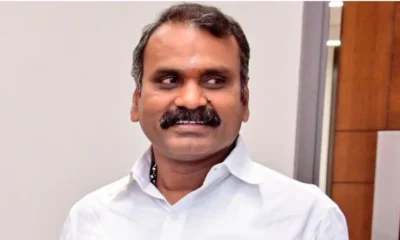
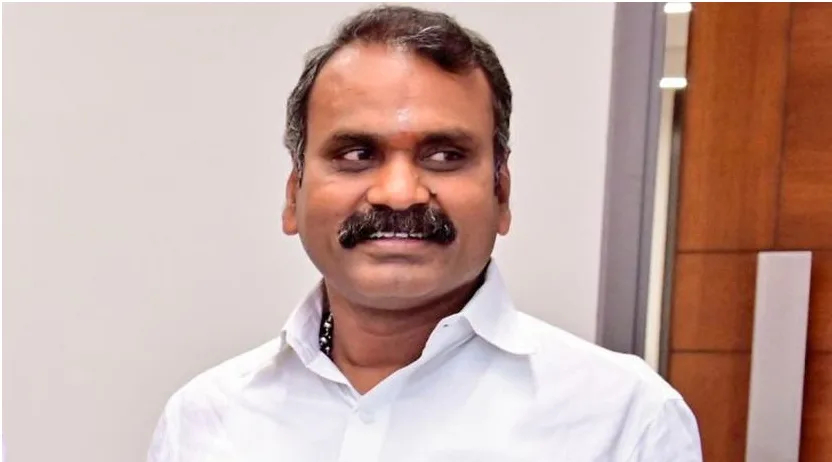
L Murugan has resigned from his position as Union Minister of State and his Rajya Sabha membership, saying he wants to return to grassroots politics and work towards strengthening the Bharatiya Janata Party (BJP) in Tamil Nadu ahead of the 2029 Lok Sabha elections.

Murugan, who held the portfolios of Information and Broadcasting and Parliamentary Affairs, announced his decision in a post on X on Tuesday, October 13. He described his time in the Union government under Prime Minister Narendra Modi’s leadership as a great honour and said he wanted to devote himself full-time to the party’s work in Tamil Nadu.

L Murugan says he wants to return to grassroots politics

In his post, Murugan expressed gratitude for the opportunity to serve in the Union Council of Ministers and highlighted his background as the son of daily-wage labourers.

He said he now wished to return to the grassroots, stand alongside BJP workers and dedicate his time to strengthening the party in Tamil Nadu before the next Lok Sabha elections.

Murugan’s stated objective is to help expand the BJP’s presence in the state and contribute to the party’s performance in the 2029 general elections.

Murugan’s resignation comes amid Cabinet reshuffle speculation

His decision comes amid speculation about a possible reshuffle in the Union government. The discussion gained momentum after several Rajya Sabha MPs and ministers, including Petroleum Minister Hardeep Singh Puri, were not renominated.

However, the report does not establish that the speculation about a Cabinet reshuffle was the reason for Murugan’s resignation. His publicly stated reason was his desire to return to grassroots work and strengthen the BJP in Tamil Nadu.

Murugan thanks PM Modi for the opportunity to serve

Murugan described serving India and Tamil Nadu under Modi’s leadership as one of the greatest privileges of his life. He also referred to his journey from a family of daily-wage labourers to the Union Council of Ministers.

His announcement places his immediate political focus on Tamil Nadu, with the BJP’s preparations for the 2029 Lok Sabha elections forming a central part of his stated plans.

Continue Reading

Trending

© Copyright 2022 APNLIVE.com