English हिन्दी
Connect with us

India News

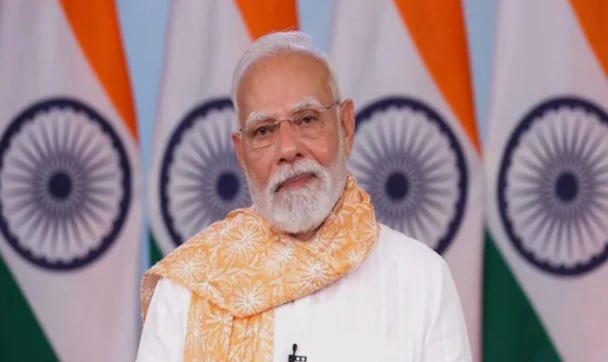
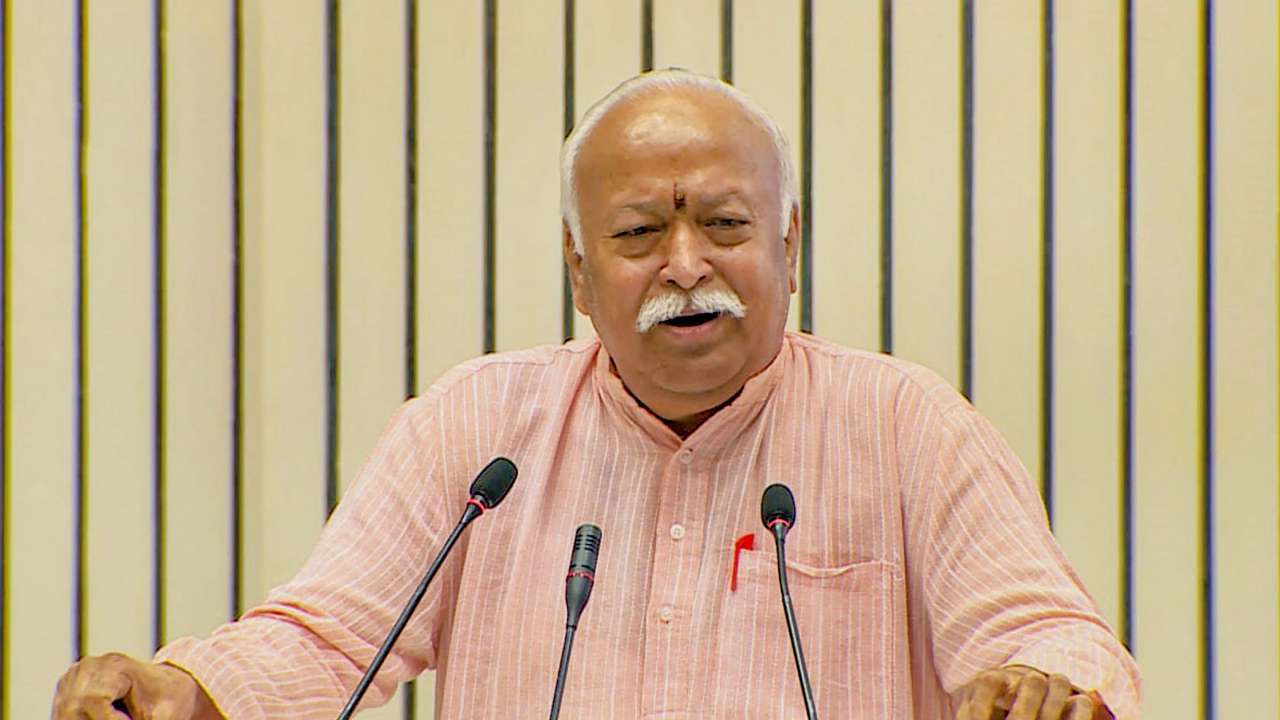
PM Modi hails Mohan Bhagwat’s leadership as most transformative phase in RSS history

Prime Minister Narendra Modi described Mohan Bhagwat’s tenure as the most transformative period in RSS’s 100-year history, highlighting his leadership, personal values, and national contributions.

Published

on

Narendra Modi 12345

Prime Minister Narendra Modi on Thursday extended warm wishes to Rashtriya Swayamsevak Sangh (RSS) chief Mohan Bhagwat on his 75th birthday, calling his leadership the “most transformative period” in the organisation’s 100-year journey.

In a detailed blog post and social media message, PM Modi highlighted Bhagwat’s life-long dedication to societal transformation, his leadership style, and his role in strengthening national harmony.

Modi recalls Bhagwat’s journey and leadership

PM Modi reflected on Bhagwat’s early years as a Pracharak during the Emergency, his grassroots work in Maharashtra and Bihar, and his rise through various positions before becoming the Sarsanghchalak in 2009. He described Bhagwat’s leadership as one that combined “continuity and adaptation” with a strong connect to the youth.

The Prime Minister said Bhagwat’s tenure has seen significant changes in the RSS, including structural reforms, transformation of training methods, and greater use of technology—particularly during the Covid-19 pandemic.

Tribute to family legacy

PM Modi also recalled his close association with Bhagwat’s family, noting the influence of Bhagwat’s father, Madhukarrao Bhagwat, in shaping his vision. “It is as if Parasmani Madhukarrao prepared another Parasmani in Mohanrao,” he wrote.

Praises for personal qualities and national role

Calling him soft-spoken and an attentive listener, PM Modi lauded Bhagwat’s ability to adapt, connect with people, and promote societal campaigns like Swachh Bharat and Beti Bachao Beti Padhao. He also highlighted Bhagwat’s framework of “Panch Parivartan,” which focuses on social harmony, family values, environment, national identity, and civic responsibility.

The Prime Minister concluded that Bhagwat remains “a living example of Vasudhaiva Kutumbakam,” and wished him a long, healthy life in service of the nation.

India News

Vijay signals political push with TVK rally as last film Jana Nayagan promotion aligns with 2026 polls

Vijay combined a major TVK rally with the promotion of his final film Jana Nayagan, signalling a carefully planned transition from cinema to politics ahead of the 2026 Tamil Nadu polls.

Published

on

Actor vijay

Tamil actor-turned-politician Vijay marked a significant moment in his political journey on December 18, combining a major public rally of his party Tamilaga Vettri Kazhagam (TVK) with a key promotional event for his final film Jana Nayagan. The twin developments underline his calibrated shift from cinema to full-time politics, with the 2026 Tamil Nadu Assembly elections clearly in focus.

Vijay addressed a large gathering near the Vijayamangalam toll plaza in Erode, marking his first major open rally after the Karur incident. Around 25,000 people were present at the venue, reflecting the sustained interest around his political entry and the mobilisation capacity of his fan base, now being encouraged to transition into party supporters.

Parallelly, the second single from Jana Nayagan was released online in the evening. The film, slated to hit theatres on January 9, has been announced as Vijay’s last cinematic outing before dedicating himself entirely to politics.

How Jana Nayagan fits into Vijay’s political strategy

Jana Nayagan, directed by H Vinoth, is positioned as more than just a farewell project to Vijay’s acting career. From its title, which translates to “People’s Leader”, to its narrative and music by Anirudh Ravichander, the film has been designed to mirror themes that Vijay has begun emphasising in his political speeches — governance, accountability and moral authority.

The actor has repeatedly projected himself in rallies as a leader who wants to serve the people of Tamil Nadu and raise issues affecting marginalised sections. The film’s tone appears to align with this image, aiming to present a restrained and serious persona without alienating his long-time fans.

By declaring Jana Nayagan as his final film, Vijay has attempted a gradual emotional transition for his supporters, with TVK hoping that this loyalty will convert into organisational strength and votes in the upcoming elections.

Analysts divided on electoral impact

Political analysts, however, remain cautious about the effectiveness of this approach. One analyst noted that while Vijay is clearly attempting to convert his massive fan following into party cadres, not every fan can realistically take on a political role. Another analyst pointed out that the film alone is unlikely to fetch votes, though messaging around issues such as corruption or dynastic politics could help Vijay gain some traction over time.

The analysts also flagged that Vijay is entering a crowded and competitive political space and that the impact of recent controversies has added to the challenges ahead. According to them, his current strategy appears to be aimed not only at 2026 but at building a longer-term political position.

Invoking legacy and symbolism

A recurring element in Vijay’s rallies has been his admiration for former Tamil Nadu Chief Minister and actor M G Ramachandran. The second single from Jana Nayagan, titled Oru Pere Varalaaru, reinforces this aspiration, with lyrics emphasising the idea of a name that makes history and the power of the people’s voice.

While invoking MGR remains a common political trope in Tamil Nadu, analysts underline that his journey remains unmatched. They stress that sustained electoral participation and organisational strength, rather than crowd sizes at rallies, will determine Vijay’s political future.

For now, Vijay’s rally in Erode and the simultaneous promotion of Jana Nayagan highlight a carefully timed blend of cinema and politics, as he prepares to test his popularity beyond the silver screen.

Continue Reading

India News

Parliament passes bill to allow 100% foreign investment in insurance sector

Parliament has cleared the Sabka Bima Sabki Raksha Bill, allowing 100% foreign investment in insurance companies, with the government assuring strong safeguards for policyholders.

Published

on

Nirmala Sitharaman

Parliament on Wednesday cleared a major amendment to insurance laws, paving the way for 100 per cent foreign direct investment (FDI) in insurance companies, up from the earlier cap of 74 per cent. The Rajya Sabha passed the Sabka Bima Sabki Raksha (Amendment of Insurance Laws) Bill, 2025, a day after it was approved by the Lok Sabha.

Replying to the debate, Finance Minister Nirmala Sitharaman said the move is aimed at attracting new insurers, intermediaries and allied service providers, which would expand the insurance ecosystem and lead to net employment generation.

Safeguards for policyholders highlighted

Addressing concerns over policyholder protection, Sitharaman said the Insurance Regulatory and Development Authority of India (IRDAI) has mandated a minimum solvency ratio of 1.5 for all insurance companies, meaning their assets must be at least one-and-a-half times their liabilities.

She added that insurers are also required to make provisions for liabilities classified as “incurred but not reported” and “incurred but not enough reported,” and profits can be calculated only after accounting for these obligations. According to the minister, these norms ensure adequate safeguards for policyholders.

LIC performance cited amid reforms

The finance minister said the government continues to strengthen the Life Insurance Corporation of India (LIC), citing its performance in the last financial year. LIC’s total assets under management rose by 6.45 per cent to ₹54.52 lakh crore in FY 2024-25, while its solvency margin improved to 2.11 from 1.98. The net value of new business also increased to ₹10,011 crore from ₹9,583 crore a year earlier.

Employment and consultation process

Sitharaman rejected claims that the amendments would hurt employment, stating that a deeper insurance market would benefit agents, brokers and intermediaries through wider outreach and more products.

She also countered opposition allegations that the bill was rushed, noting that consultations began in November 2024 with states and Union Territories. Inputs were also sought from insurers, regulators, industry bodies and the public, with over 13,000 responses received through the department’s website.

Wider changes under the bill

The legislation raises the FDI limit in insurance companies to 100 per cent and reduces the net-owned fund requirement for foreign reinsurance companies operating in India from ₹5,000 crore to ₹1,000 crore. It also broadens the definition of intermediaries to include managing general agents and insurance repositories.

The bill amends the Insurance Act, 1938, the LIC Act, 1956, and the IRDAI Act, 1999. Sitharaman said the changes align with the government’s long-term goal of achieving “Insurance for All by 2047” and improving ease of doing business.

Under the new framework, all insurance companies and intermediaries will be required to include the word “insurance” in their names for greater customer clarity. The amendments also introduce the provision for suspension of intermediary licences instead of immediate cancellation, allowing time for compliance.

Opposition voices concerns

Several opposition members opposed the bill in the Rajya Sabha, alleging it weakens accountability and prioritises shareholders over policyholders. They argued that insurance should primarily function as a social security mechanism rather than just an investment avenue.

Despite the criticism, the government maintained that the reforms would strengthen regulation, expand coverage, and support the growth of affordable insurance, especially in rural areas.

Continue Reading

India News

Rs 20,000 fine or forced return as Delhi turns away old vehicles at borders amid severe pollution

With Delhi’s air quality slipping into the hazardous zone, authorities have intensified GRAP Stage IV enforcement, turning back old and non-BS VI vehicles from the city’s borders or fining them heavily.

Published

on

Delhi air pollution

Delhi’s border points witnessed strict vehicle checks on Thursday as enforcement agencies intensified action under Stage IV of the Graded Response Action Plan (GRAP) following a sharp deterioration in air quality. A thick blanket of smog covered key entry points, including the Delhi-Noida Direct (DND) Flyway, with the Air Quality Index (AQI) near the Chilla border slipping to around 490, placing it in the hazardous category.

Officials from the Delhi transport department and traffic police were seen stopping vehicles registered outside the capital, particularly those that did not meet BS VI emission standards. Non-compliant vehicles were either fined Rs 20,000 or asked to turn back from the border.

According to transport department officials supervising the checks, teams are verifying vehicle compliance using portable devices that allow instant confirmation of registration details, emission norms and Pollution Under Control Certificate (PUCC) validity. Drivers without valid PUCCs are also being penalised.

Old and non-BS VI vehicles under scanner

Barricades were placed along key routes to slow traffic and enable thorough inspection. Enforcement teams are specifically targeting vehicles that appear old or do not carry blue stickers indicating BS VI compliance. Traffic personnel from neighbouring states are also part of the joint operation at border points.

Officers said that diesel vehicles older than 10 years and petrol vehicles older than 15 years, especially those meeting BS-III or lower emission standards, are being stopped and fined as per existing rules. Authorities maintained that these measures are part of emergency steps to limit vehicular pollution during the winter peak.

Commuters voice frustration over enforcement

Some motorists expressed dissatisfaction with the sudden enforcement drive. A commuter from Faridabad, whose BS-III vehicle was stopped at the border, questioned the fairness of the checks, arguing that ordinary drivers were being penalised while larger systemic issues remained unaddressed. He also raised concerns about the lack of uniform checks on public transport vehicles.

Officials, however, said awareness about vehicular pollution norms has been repeatedly communicated and that enforcement teams have been deployed across all major entry points to prevent violators from using alternate routes to enter the city.

Vehicles a major contributor to winter pollution

Data shared by officials indicates that transport accounts for over 20% of PM2.5 pollution during winter months in Delhi-NCR. Of the nearly 2.88 crore vehicles in the region, about 93% are light motor vehicles and two-wheelers, while nearly 37% fall under BS-III or older categories. These older vehicles emit significantly higher levels of particulate matter and nitrogen dioxide compared to newer models.

Experts cited in media reports have pointed out that while vehicle restrictions may offer temporary relief, long-term solutions are necessary. Concerns have also been raised about the effectiveness of the existing PUC system, which does not adequately measure particulate emissions, and the need for stronger scrappage policies and improved public transport to address cross-border pollution.

Former transport officials have criticised what they described as last-minute enforcement measures, calling for consistent tailpipe emission checks, better inter-state coordination and the creation of a dedicated pollution control task force to tackle vehicular emissions more sustainably.

Continue Reading

Trending

© Copyright 2022 APNLIVE.com