
India News
RaGa in Berkeley: Candour, gaffes and a scathing attack on Modi government

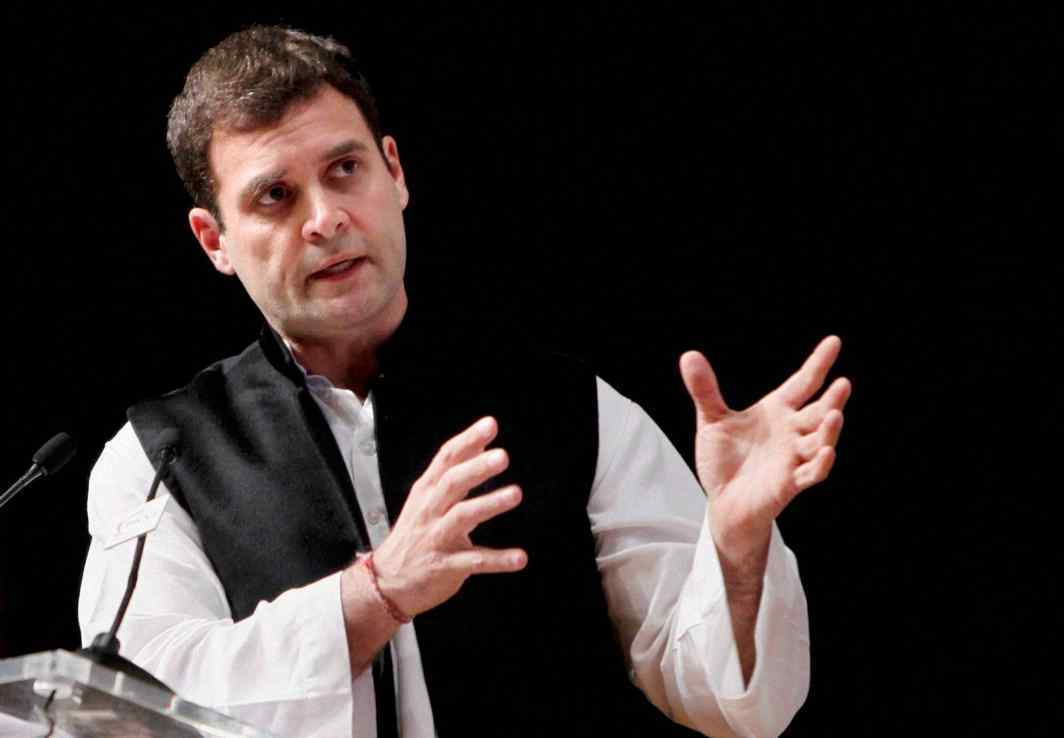
[vc_row][vc_column][vc_column_text]Congress vice president admits that Modi is a better communicator than him but hits out at PM for demonetisation, allowing hatred and violence to destroy India’s social fabric
Addressing students at the prestigious University of California, Berkeley, Congress vice president Rahul Gandhi, on Tuesday, hit out at Prime Minister Narendra Modi and his government while also speaking candidly on a range of other issues, including the existence of dynastic politics in India.
Expectedly, the BJP back home hasn’t reacted very warmly to the Nehru-Gandhi scion’s remarks, with union ministers and several party leaders asserting that Rahul was simply “venting his frustration” and that his comments that “slammed India” on foreign soil were “deplorable”.
However, the substance of Rahul’s speech and his remarks during an interactive session with the students portray a certain maturity that the Congress vice president is seldom credited to have. Expectedly, much has been made out against a minor gaffe – something that has come to be expected from Rahul owing to his previous public record – which the Congress MP made when he claimed that the Lok Sabha has 546 seats (it has 545).
In his short 18-minute address at the University – a place where his great-grandfather and India’s first Prime Minister Pandit Jawaharlal Nehru had also delivered a historic speech back in 1949 – Rahul slammed the economic policies of the Modi government, criticising the Prime Minister’s decision on demonetisation and the “hasty” implementation of the Goods and Services Tax (GST) regime in particular.[/vc_column_text][/vc_column][/vc_row][vc_row][vc_column][vc_raw_html]JTNDaWZyYW1lJTIwd2lkdGglM0QlMjI1NjAlMjIlMjBoZWlnaHQlM0QlMjIzMTUlMjIlMjBzcmMlM0QlMjJodHRwcyUzQSUyRiUyRnd3dy55b3V0dWJlLmNvbSUyRmVtYmVkJTJGUEk2MmgxWk5xMGclMjIlMjBmcmFtZWJvcmRlciUzRCUyMjAlMjIlMjBhbGxvd2Z1bGxzY3JlZW4lM0UlM0MlMkZpZnJhbWUlM0U=[/vc_raw_html][/vc_column][/vc_row][vc_row][vc_column][vc_column_text]“Decisions like demonetisation which removed 86 per cent of cash from circulation were taken unilaterally (by Modi), without asking the chief economic advisor or the Cabinet or even the Parliament, it (demonetisation) imposed a devastating cost… It cost us two percent loss in GDP. The government’s economic policies and the hastily applied GST can cause tremendous damage,” Rahul said.
The Congress vice president also outlined the Modi government’s failure in creating jobs for Indian youth and slammed the BJP regime for junking India’s ethos of peace and non-violence for “hatred, anger, violence and politics of polarisation”, which he said would “destroy India’s growth momentum” and “distract people from the task at hand”.
Gandhi also highlighted the lynching of Dalits, killing of Muslims over suspicion of them consuming beef and the shooting of liberal journalists (a reference to the recent murder of senior journalist Gauri Lankesh) to drive home his point about the rise in intolerance and hatred in India under Modi’s rule. All of this, Rahul said, was “new in India”.[/vc_column_text][/vc_column][/vc_row][vc_row][vc_column][vc_raw_html]JTNDYmxvY2txdW90ZSUyMGNsYXNzJTNEJTIydHdpdHRlci10d2VldCUyMiUyMGRhdGEtbGFuZyUzRCUyMmVuJTIyJTNFJTNDcCUyMGxhbmclM0QlMjJlbiUyMiUyMGRpciUzRCUyMmx0ciUyMiUzRUElMjBmYWlsZWQlMjBkeW5hc3QlMjB0b2RheSUyMGNob3NlJTIwdG8lMjBzcGVhayUyMGFib3V0JTIwaGlzJTIwZmFpbGVkJTIwcG9saXRpY2FsJTIwam91cm5leXMlMjBpbiUyMFVTQSUzQSUyMFNtcml0aSUyMElyYW5pJTIwb24lMjBSYWh1bCUyMEdhbmRoaSUyMCUzQ2ElMjBocmVmJTNEJTIyaHR0cHMlM0ElMkYlMkZ0LmNvJTJGMWhDb1hIeU1lWSUyMiUzRXBpYy50d2l0dGVyLmNvbSUyRjFoQ29YSHlNZVklM0MlMkZhJTNFJTNDJTJGcCUzRSUyNm1kYXNoJTNCJTIwQU5JJTIwJTI4JTQwQU5JJTI5JTIwJTNDYSUyMGhyZWYlM0QlMjJodHRwcyUzQSUyRiUyRnR3aXR0ZXIuY29tJTJGQU5JJTJGc3RhdHVzJTJGOTA3NDk4MTYzNjEwNjg5NTM3JTIyJTNFU2VwdGVtYmVyJTIwMTIlMkMlMjAyMDE3JTNDJTJGYSUzRSUzQyUyRmJsb2NrcXVvdGUlM0UlMEElM0NzY3JpcHQlMjBhc3luYyUyMHNyYyUzRCUyMiUyRiUyRnBsYXRmb3JtLnR3aXR0ZXIuY29tJTJGd2lkZ2V0cy5qcyUyMiUyMGNoYXJzZXQlM0QlMjJ1dGYtOCUyMiUzRSUzQyUyRnNjcmlwdCUzRQ==[/vc_raw_html][/vc_column][/vc_row][vc_row][vc_column][vc_column_text]While the BJP spokespersons Sambit Patra and GVL Narsimha Rao and union information and broadcasting minister Smriti Irani have expectedly hit out at Rahul for criticizing India on foreign soil, the party has conveniently forgotten that while the Congress president has made these remarks at an interactive session with students and while being an Opposition leader, Modi had himself repeatedly slammed India and previous Congress government on various counts at events of much greater significance – all in the capacity of India’s Prime Minister.
If Rahul’s comments during his address largely focused at slamming the Modi government’s perceived economic failures, his remarks during an interactive session were candid, even self-deprecating.
Often called out, especially by the BJP, for his poor oratory skills and for being the torchbearer of dynastic politics, Gandhi almost pleaded guilty on both counts and even asserted that Modi was a “much better communicator” than him.[/vc_column_text][/vc_column][/vc_row][vc_row][vc_column][vc_column_text]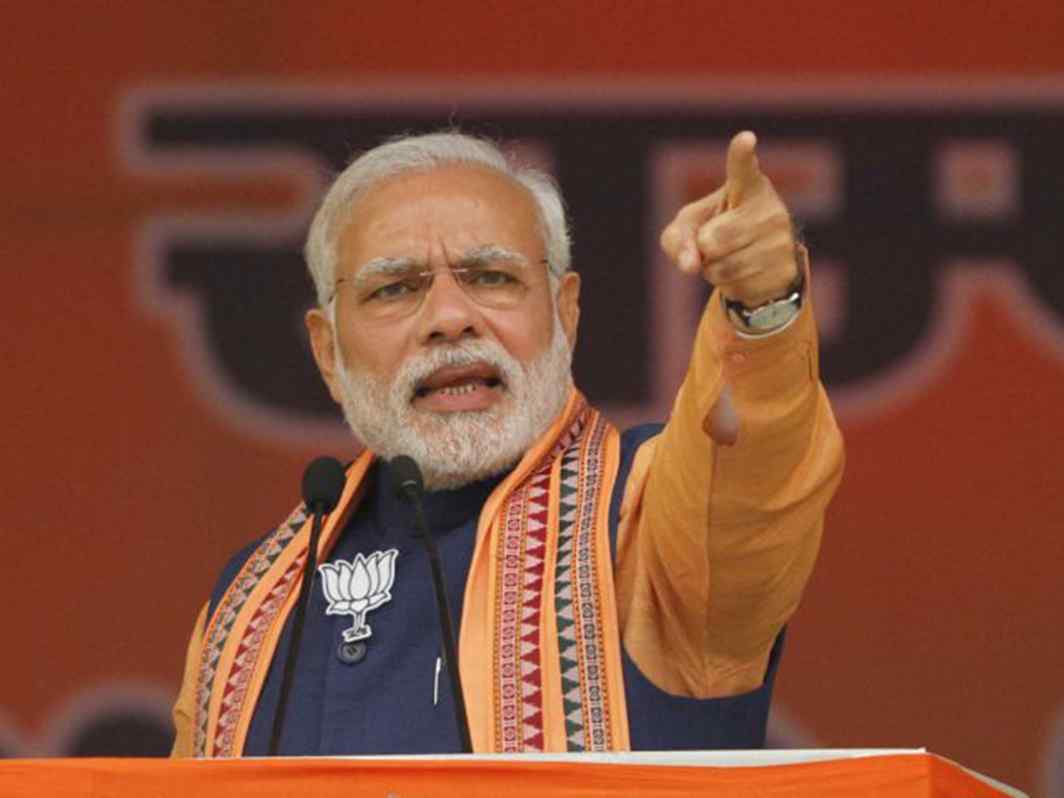 However, Rahul qualified his praise for Modi’s communication skills with an equal measure of criticism. “Modi has certain skills, he is a very good communicator, he’s much better than me. He knows how to give a message to 3-4 different groups in a crowd, so his messaging ability is very effective and subtle…but he doesn’t listen to people. What I sense is he doesn’t converse with the people he works with… members of Parliament and the BJP tell me that,” Rahul said
On the issue of “dynasts” in India, while Rahul conceded that he was a result of the phenomenon, he also cited leaders from other political parties – BJP MP Anurag Thakur (son of former Himachal CM Prem Kumar Dhumal), DMK working president MK Stalin, Samajwadi Party chief Akhilesh Yadav – while also naming Bollywood actor Abhishek Bachchan and Reliance group’s billionaire industrialist “Mr Ambani”, to claim that “most of India runs like this”. The Congress vice president’s assertion that dynasty is a reality in all spheres of India – be it politics, films or industry – has also been criticised by the BJP while he was also trolled on Twitter for these remarks.
The Nehru-Gandhi scion also made it a point to highlight the “BJP machine” with “1000 men sitting on computers” for what he called was an “operation run by the government that is running our country”. He said these 1000 men (a reference to social media trolls) “spread abuse about me, say that I’m a reluctant politician, I’m stupid… that’s all they do”.[/vc_column_text][/vc_column][/vc_row]



India News
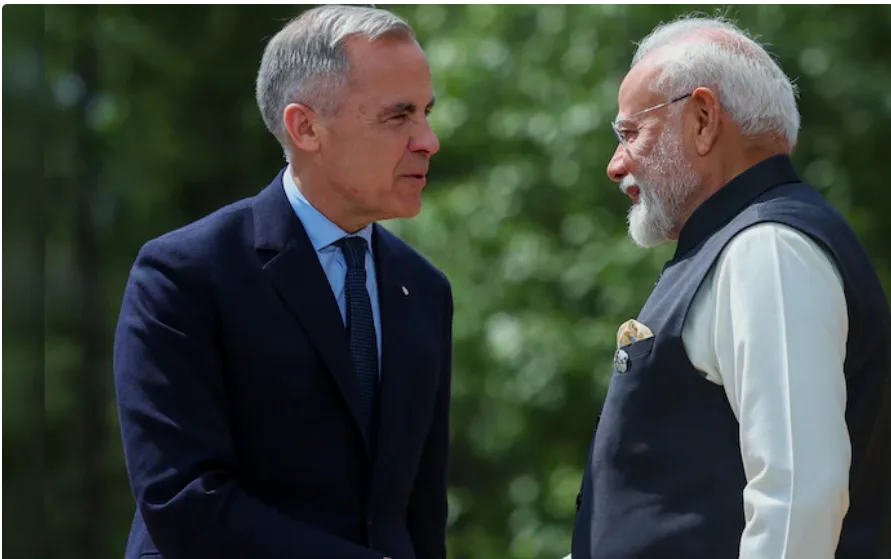
PM Modi speaks to Mark Carney as India and Canada push to strengthen ties
Prime Minister Narendra Modi held a telephone conversation with Canadian Prime Minister Mark Carney on October 13, with both leaders agreeing to strengthen India-Canada ties and pursue concrete outcomes across key areas of their strategic partnership.

India News
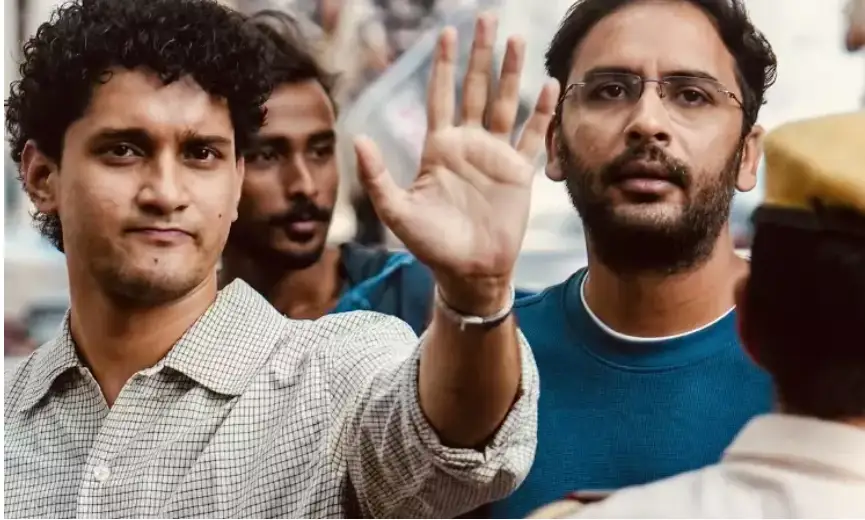
CJP leaders Saurav Das, Ashutosh Ranka, Ajinkya Shinde sent to 5-day judicial custody
Three CJP leaders, Saurav Das, Ashutosh Ranka and Ajinkya Shinde, were placed under preventive arrest following a protest at Delhi’s Jantar Mantar over Chief Election Commissioner Gyanesh Kumar.
India News
BJP focuses on religion as opposition pushes BDM strategy in UP
The BJP is emphasising religious issues ahead of the Uttar Pradesh Assembly elections, while opposition parties are seeking to consolidate Backward, Dalit and Minority voters. Recent exchanges involving Yogi Adityanath, Akhilesh Yadav and Asaduddin Owaisi have added to the political contest over the state’s electoral narrative.


Supreme Court stays defamation case against Rahul Gandhi over PM Modi remarks

CJP claims Saurav Das, Ashutosh Ranka detained at Jantar Mantar

Rahul Gandhi hosts high tea for INDIA bloc after Gyanesh Kumar protests

L Murugan quits Union ministry to strengthen BJP in Tamil Nadu

Amit Shah attacks Rahul Gandhi over Congress poll losses, questions SIR row

PM Modi speaks to Mark Carney as India and Canada push to strengthen ties

S Jaishankar says India is a natural option for Russia amid Europe tensions

CJP leaders Saurav Das, Ashutosh Ranka, Ajinkya Shinde sent to 5-day judicial custody

BJP focuses on religion as opposition pushes BDM strategy in UP
L Murugan quits Union ministry to strengthen BJP in Tamil Nadu

Afghan Men Try To Hang With The Jet Engine Of The Aircraft in Kabul- Afghanistan News – Kabul News
Trending Top 10 News: 10000 Crore Fine on Flipkart, Apple to Launch Unique Feature, Hdfc Bank Job Ad

Trending Top 10 News: Nokia 6310, Apple sales, Bachpan ka Pyar Video Kid, Dainik Bhaskar IT Raid

Trending Top 10 News: Canada bans Indian flights, Rain in Delhi NCR, AIMIM Twitter hacked, Raj Kundra case

Trending Top 10 News: Shein India, Apple New Service, Pocket Oxygen, Oppo Launched New Phone
-
 India News22 hours ago
Supreme Court stays defamation case against Rahul Gandhi over PM Modi remarks
-
 India News23 hours ago
CJP claims Saurav Das, Ashutosh Ranka detained at Jantar Mantar
-
 India News14 hours ago
Rahul Gandhi hosts high tea for INDIA bloc after Gyanesh Kumar protests
-
 India News13 hours ago
L Murugan quits Union ministry to strengthen BJP in Tamil Nadu
-
 India News13 hours ago
Amit Shah attacks Rahul Gandhi over Congress poll losses, questions SIR row
-
 India News12 hours ago
BJP focuses on religion as opposition pushes BDM strategy in UP
-
 India News59 mins ago
CJP leaders Saurav Das, Ashutosh Ranka, Ajinkya Shinde sent to 5-day judicial custody
-
 Latest world news46 mins ago
S Jaishankar says India is a natural option for Russia amid Europe tensions
