English हिन्दी
Connect with us

India News

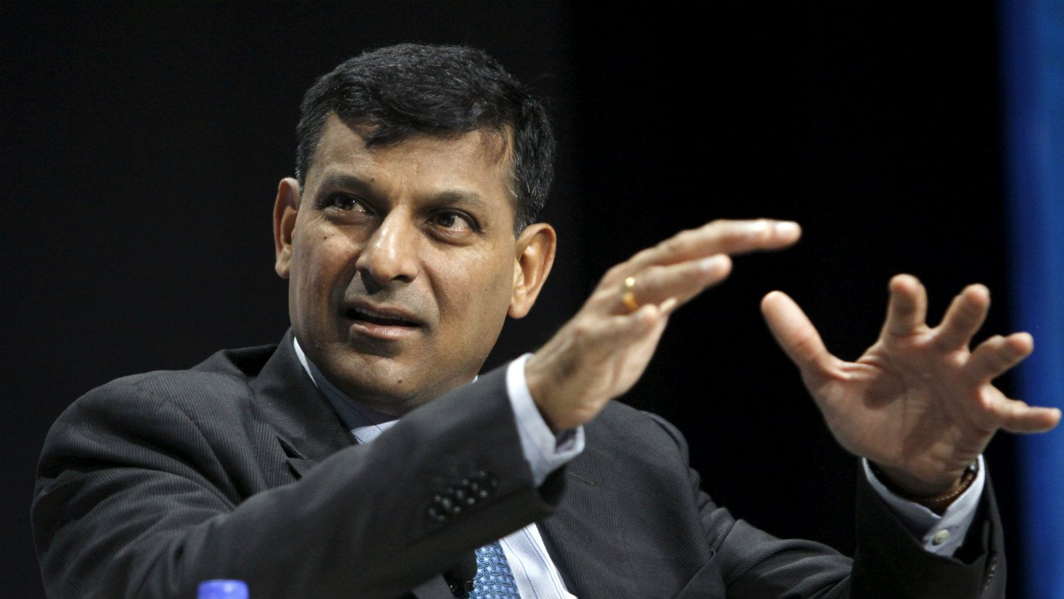
Raghuram Rajan: I Did Not Favour Demonetization

Published

on

Raghuram Rajan

[vc_row][vc_column][vc_column_text]Another jolt to Modi’s “success story”

Amid lot of controversy over why PM chose to go ahead for demonetization of big value currency notes in November last year, former Reserve Bank of India (RBI) governor Raghuram Rajan has triggered another debate by revealing that he did not favour the move as he felt the short term economic costs associated with “such a disruptive” decision would outweigh any longer term benefit.

Rajan made the revelation in his book “I do what I do” to be released next week. It contains Rajan’s speeches on wide range of issues as RBI governor. However, he maintains that the book does not tell-all. His uneasy relationship and differences with the present government were clearly indicated in the short introductions and postscripts along with the pieces.

Rajan set aside all speculation that preparations for scrapping high-value bank notes got underway many months before PM made surprise announcement on November 8.  He said, “At no point during my term was the RBI asked to make a decision on demonetization.” 

Rajan, demitted office on September 3 last year, precisely 35 days before PM announced for demonetization of rupees 1000 and 500 bank notes.  He says that he chose not to speak on India for a year because he didn’t want to “intrude on his successor’s initial engagement with the public”. Former RBI governor now teaches economics at Chicago University.

While deliberating on his initial response to the government’s proposal for demonetization, Rajan writes, “I was asked by the government in February 2016 for my view on demonetization, which I gave orally. Although there might be long-term benefits, I felt the likely short-term economic costs would outweigh them.”   He clearly said, “I made these views known in no uncertain terms.”

The lingering impact of demonetization on the economy is far and wide. The latest government data showed that the GDP growth sharply slowed from 7 percent in October-December (2016) quarter to 6.1 percent in January-March and 5.7 in Aril-June 2017. This was primarily caused by the cash squeeze weakening customer spending capacity discouraging new investments. However, the government insists that the economic slowdown was not entirely caused by demonetization.

But former RBI governor Raghuram Rajan, while responding to questions by a national daily described the GDP deceleration “as the costs of demonetization upfront.”

“Let us not mince words about it – GDP suffered. The estimates I have seen range from 1 to 2 percentage points, and that’s a lot of money – over Rs 2 lakh crore and may be approaching Rs 2.5 lakh crore,” he said.

After the demonetization, Nobel Laureate and eminent economist Amartya Sen had said, “The demonetisation of currency was a despotic act as the government broke the promise of compensation that comes with a promissory note.”

“Only an authoritarian government can calmly cause such misery to the people – with millions of innocent people being deprived of their money and being subjected to suffering, inconvenience and indignity in trying to get their own money back,” he had added.

Kaushik Basu, another prominent economist wrote in New York Times, Demonetization was ostensibly implemented to combat corruption, terrorism financing and inflation. But it was poorly designed, with scant attention paid to the laws of the market, and it is likely to fail. So far its effects have been disastrous for the middle- and lower-middle classes, as well as the poor. And the worst may be yet to come.” 

Former Prime Minister Dr. Manmohan Singh, who had earlier been RBI governor and country’s Finance Minister, said, “In my opinion that the way the scheme has been implemented will hurt agricultural growth in our country, will hurt small industry, will hurt all those people who are in the informal sector of the economy. And my own feeling is that the national income, that is the GDP, can decline by about 2 per cent as a result of what has been done. This is an underestimate.”[/vc_column_text][/vc_column][/vc_row]

India News

PM Modi marks Operation Sindoor anniversary, calls it India’s firm stand against terrorism

PM Modi said Operation Sindoor showcased India’s firm response against terrorism while paying tribute to the armed forces on the operation’s first anniversary.

Published

on

PM Modi

Prime Minister Narendra Modi on Thursday said Operation Sindoor demonstrated India’s firm response against terrorism and highlighted the country’s commitment to national security.

Marking one year of the operation, the Prime Minister praised the courage, precision and professionalism of the Indian armed forces. He said the military action was carried out in response to the Pahalgam terror attack that had claimed the lives of 26 civilians in 2025.

Operation Sindoor was launched on May 7, 2025, as a calibrated tri-services operation targeting terror infrastructure linked to cross-border terrorism. Reports said the operation showcased coordinated action by the armed forces and was seen as a major counter-terror response by India.

On the anniversary of the operation, PM Modi also changed the display pictures across his social media platforms, including X, Facebook, Instagram and WhatsApp. The image carried the text “Operation Sindoor” along with the Indian tricolour design.

The Indian Air Force also shared visuals and messages recalling the operation and highlighting India’s military response. A video released by the force described the operation as a strong message against terrorism and referred to the precision strikes carried out during the mission.

Operation Sindoor was launched following the Pahalgam terror attack, after which India carried out strikes on terror camps in Pakistan and Pakistan-occupied Kashmir, according to official statements and reports published at the time.

Continue Reading

India News

Vijay meets Tamil Nadu Governor again as TVK pushes to prove majority

TVK chief Vijay held another meeting with Tamil Nadu Governor Rajendra Vishwanath Arlekar as the party intensified efforts to secure majority support after emerging as the single-largest party in the Assembly elections.

Published

on

Actor vijay

Actor-turned-politician Vijay met Tamil Nadu Governor Rajendra Vishwanath Arlekar again on Thursday as his party, Tamilaga Vettri Kazhagam (TVK), continued efforts to prove it has enough support to form the next government in the state.

TVK emerged as the single-largest party in the 234-member Tamil Nadu Assembly after winning 108 seats, but it remains short of the majority mark of 118.

The Congress has extended support to TVK, adding five MLAs to Vijay’s side. However, the alliance still needs additional backing from other parties or independents to comfortably cross the halfway mark.

According to reports, the Governor has not yet been fully convinced that TVK currently has the required numbers to form a stable government. This has delayed clarity over the swearing-in ceremony and the formal invitation to form the government.

Political activity intensified after reports emerged that some AIADMK legislators were moved to a resort in Puducherry amid speculation over possible support to TVK. AIADMK leaders, however, publicly denied any internal crisis.

TVK sources have expressed confidence that the party will be able to demonstrate majority support during discussions with the Governor.

The Tamil Nadu election results marked a major political shift in the state, with TVK breaking the long-standing dominance of the DMK and AIADMK in its first Assembly election contest.

Continue Reading

India News

PM Modi changes social media profile pictures to mark Operation Sindoor anniversary

PM Modi changed his social media profile pictures to commemorate one year of Operation Sindoor, with several NDA leaders following the move.

Published

on

PM Modi speech

Prime Minister Narendra Modi on Thursday updated the display pictures of his social media accounts to mark the first anniversary of Operation Sindoor. The new image was seen across his profiles on X, Facebook, Instagram and WhatsApp channels.

The updated profile picture carries the text “Operation Sindoor” on a black background along with elements of the Indian tricolour. One of the letters in the word “Sindoor” has been stylised using vermilion, commonly associated with married Hindu women.

Operation Sindoor was launched a year ago by Indian defence forces and the Border Security Force along the western border. The anniversary was also marked by several Union ministers and NDA leaders, who changed their social media profile pictures in a similar manner.

External Affairs Minister S. Jaishankar and other senior leaders were among those who adopted the commemorative display image on social media platforms, according to reports.

Continue Reading

Trending

© Copyright 2022 APNLIVE.com