English हिन्दी
Connect with us

India News

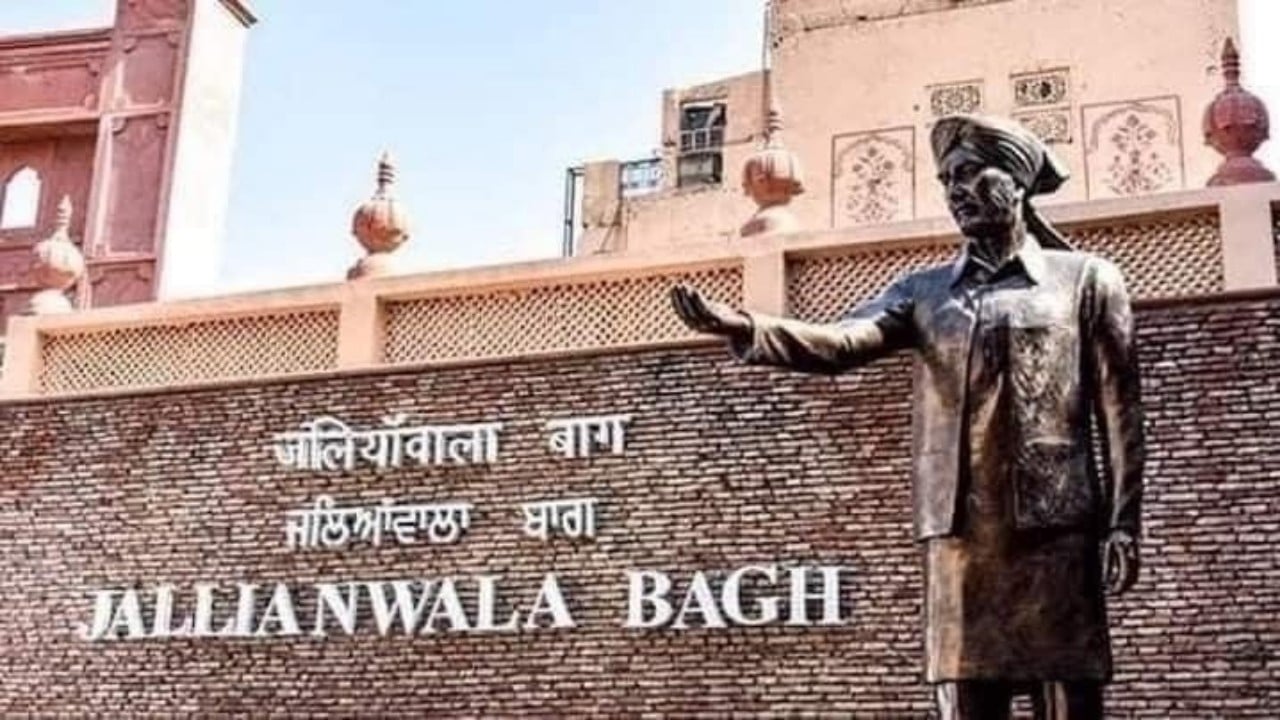
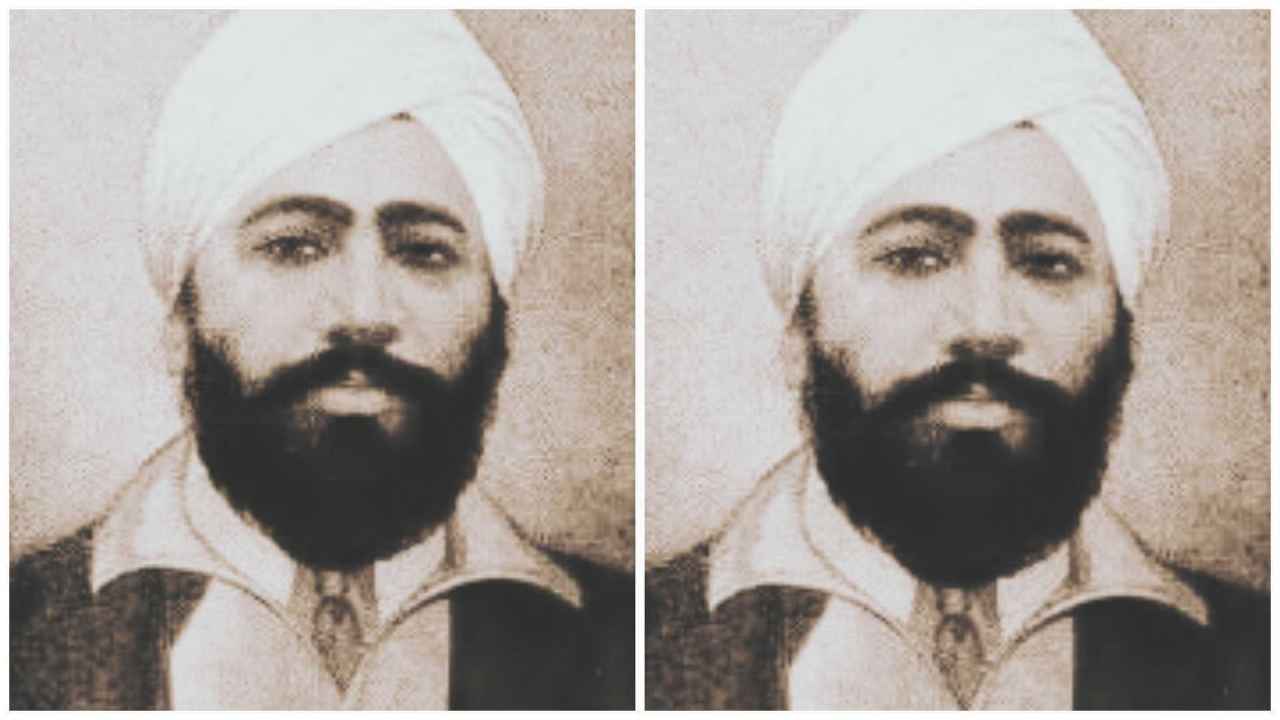
Shaheed Udham Singh death anniversary: All you need to know about freedom fighter who avenged Jallianwala Bagh massacre

Udham Singh was executed on July 31, 1940, after assassinating General Michael O’Dwyer, the former lieutenant governor of Punjab, as an act of revenge for the horrific Jallianwala Bagh massacre in 1919, which resulted in the deaths of hundreds and injuries to thousands of Indians.

Published

on

Shaheed Udham Singh death anniversary: All you need to know about freedom fighter who avenged Jallianwala Bagh massacre

On July 31, the death anniversary of Udham Singh, a prominent freedom fighter and revolutionary, is commemorated. Born as Sher Singh in a Kamboj Sikh family on December 26, 1899, he later became an Indian Revolutionary. After the passing of his parents, Udham Singh and his elder brother Mukta Singh resided in the Central Khalsa Orphanage Putlighar in Amritsar. During his time there, he underwent the Sikh initiatory rites and adopted the name Udham Singh. His sacrifice for the country earned him the title of Shaheed-i-Azam.

Udham Singh was executed on July 31, 1940, after assassinating General Michael O’Dwyer, the former lieutenant governor of Punjab, as an act of revenge for the horrific Jallianwala Bagh massacre in 1919, which resulted in the deaths of hundreds and injuries to thousands of Indians. Udham Singh planned the assassination as a lone avenger of the Jallianwala Bagh tragedy.
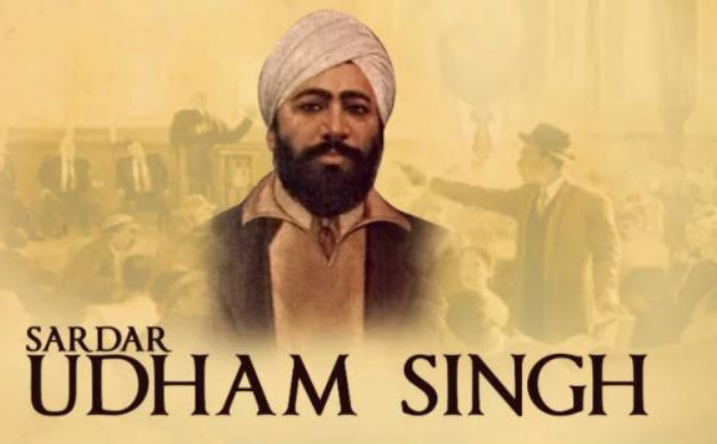
On March 13, 1940, during a meeting at Caxton Hall in London, Udham Singh concealed a revolver within a book and shot General O’Dwyer twice, killing him instantly. After the assassination, Singh surrendered and was imprisoned in Brixton. Throughout his incarceration, he followed the teachings of his ally, Shaheed Bhagat Singh, whom he considered his guru. Udham Singh became an immortal symbol of the Indian Independence Movement, revered as Shaheed-i-Azam Sardar Udham Singh.

https://twitter.com/MKharaud/status/1685871259329142785

During his custody following O’Dwyer’s assassination, Udham Singh used the alias Ram Mohammad Singh Azad, symbolizing the unity of India’s major religions at the time. In the Indian state of Uttarakhand, there is a district named Udham Singh Nagar in honour of the revolutionary freedom fighter. His mortal remains were repatriated to India in 1974 and are now preserved at Jallianwala Bagh in Amritsar.

The weapons he used in the assassination, including a knife, a diary, and bullets, are on display at the Black Museum, Scotland Yard. While awaiting trial, Singh undertook a 42-day hunger strike, and he had to be force-fed. On July 31, 1940, he was executed by hanging at Pentonville Prison.

India News

Nitin Gadkari flags Delhi air pollution, says two-day stay causes infection

Union minister Nitin Gadkari says spending two days in Delhi leads to infection, flags fossil fuel use as a major cause of pollution and calls for alternative energy solutions.

Published

on

Union Minister Nitin Gadkari

Delhi’s worsening air quality has drawn sharp criticism from within the ruling BJP, with Union minister Nitin Gadkari saying that even a brief stay in the national capital affects his health.

Speaking at a public event in Delhi, Gadkari remarked that spending just two days in the city results in an infection, raising questions over why the capital continues to struggle with severe pollution levels. His comments come at a time when the Air Quality Index has remained in the ‘very poor’ and ‘severe’ categories for weeks.

The Union minister, who handles the road transport and highways portfolio, acknowledged that the transport sector plays a major role in pollution. He said around 40 per cent of pollution is linked to fossil fuel usage and pointed out that India spends nearly Rs 22 lakh crore on importing fossil fuels, which also contributes to environmental damage.

Gadkari pushes for alternative fuels and exports

Gadkari stressed that promoting alternative fuel and biofuel technologies should be seen as a form of true nationalism. He argued that reducing imports and increasing exports would strengthen the country economically while also addressing pollution. According to him, resistance to eco-friendly technologies remains a major hurdle despite their long-term benefits.

Remarks on communal issues and secularism

During the same address, Gadkari said it was incorrect to label every Muslim as a terrorist, emphasising that there are varying degrees of extremism. He cited former President A P J Abdul Kalam as a national icon and underlined the importance of education, especially among marginalised sections.

He further claimed that Hindu-Muslim tensions in the country are a result of vote bank politics pursued by the Congress. Defining secularism as “justice for all”, Gadkari said policies driven by electoral considerations had created divisions. He asserted that Indian culture is neither communal nor casteist and described Hindutva as tolerant and inclusive.

Reiterating views earlier expressed by former prime minister Atal Bihari Vajpayee, Gadkari said India was, is, and will remain a secular country, rooted in its cultural traditions that advocate welfare for all.

Political reactions over pollution issue

The BJP-led governments at the Centre and in Delhi have faced criticism over their handling of air pollution. Congress leader Imran Masood responded to Gadkari’s remarks by saying that the minister had at least acknowledged the seriousness of the problem. He added that pollution cannot be attributed only to vehicles, noting that similar vehicles operate outside Delhi as well.

Continue Reading

India News

Over 24 lakh voters dropped from Kerala draft electoral roll after special revision

The Election Commission has removed over 24 lakh names from Kerala’s draft voter lists after verification during the Special Intensive Revision process.

Published

on

kerala voters delete

Over 24.08 lakh electors have been removed from the draft voter lists in Kerala following the completion of the Special Intensive Revision (SIR) exercise, with the Election Commission publishing the updated draft electoral roll on Tuesday.

As per official data, Kerala has a total of 2,78,50,855 registered electors. Of these, 2,54,42,352 electors submitted their Enumeration Forms during the revision process, which concluded on December 18.

The poll body said the deletions were carried out after verification and were linked to multiple factors, including electors shifting to other states or Union Territories, voters found to be non-existent, individuals who did not submit enumeration forms within the stipulated time, and those who chose not to continue their registration.

Break-up of deleted names

According to the Election Commission, the deleted entries include 6,49,885 names of deceased voters, accounting for 2.33 per cent of the electorate. Another 14,61,769 voters, or 5.25 per cent, were removed after being found shifted or absent, while 1,36,029 voters, around 0.49 per cent, were deleted for being enrolled at multiple locations.

Claims and objections window open

Although the enumeration phase has ended, eligible citizens can still seek corrections. The Commission has opened a claims and objections period from December 23 to January 22, 2026, allowing applications for inclusion of eligible voters or removal of ineligible names from the rolls.

The final electoral roll for Kerala is scheduled to be published on February 21, 2026.

Awareness drives and field-level efforts

The Election Commission said extensive awareness campaigns were conducted across the state to ensure maximum participation. Senior election officials held regular meetings with political parties at the state, district and assembly constituency levels to explain the revision process and share progress updates.

Booth Level Officers (BLOs) carried out house-to-house visits to all electors listed as of October 27, distributing Enumeration Forms and making at least three follow-up visits for collection. Booth Level Agents were permitted to submit up to 50 forms per day to strengthen coordination at the grassroots level.

To support field staff, BLOs were assisted by Anganwadi workers, students from NCC, NSS and election literacy clubs, volunteers, revenue officials and social work students. The poll body said more than 93 per cent mapping of collected forms was achieved through repeated training sessions, video tutorials and doubt-clearing programmes.

Special initiatives during SIR

During the exercise, the Chief Electoral Officer of Kerala launched motivational and outreach initiatives aimed at supporting election staff managing the heavy workload of digitising voter data. District-level programmes were also rolled out to recognise and motivate BLOs and supervisors completing digitisation targets.

In areas with weak network connectivity, a community-based digitisation model was adopted, where BLOs collectively digitised forms from locations with better internet access. Special urban camps were organised across all wards of urban local bodies to ensure comprehensive coverage of city voters.

Continue Reading

India News

India’s LVM3 Baahubali rocket launches heaviest satellite ever from Indian soil

India’s LVM3 ‘Baahubali’ rocket has successfully launched the heaviest satellite ever from Indian soil, placing the BlueBird 6 communication satellite into low Earth orbit.

Published

on

Bahubali Rocket

India has marked a major milestone in its space programme as the Launch Vehicle Mark-3 (LVM3), popularly known as the ‘Baahubali’ rocket, successfully placed the heaviest-ever satellite launched from Indian soil into orbit on Wednesday.

The mission, LVM3-M6, lifted off from the second launch pad at the Sriharikota spaceport in Andhra Pradesh, carrying BlueBird 6, a next-generation communication satellite developed by US-based company AST SpaceMobile.

Mission lifts off from Sriharikota

The 43.5-metre-tall LVM3 rocket, powered by two S200 solid strap-on boosters, took off at 8:55 am after the completion of a 24-hour countdown. The spaceport is located around 135 km east of Chennai.

After a flight lasting nearly 15 minutes, the BlueBird Block-2 satellite separated from the launch vehicle and was injected into its intended low Earth orbit at an altitude of about 520 km.

Confirming the success of the mission, ISRO Chairman and Secretary, Department of Space, Dr V Narayanan said the satellite had been placed “successfully and precisely” into the designated orbit.

Heaviest payload carried by an Indian launcher

According to ISRO, this mission marks the heaviest satellite ever launched from Indian soil using an Indian rocket. Dr Narayanan said the flight was also the third fully commercial mission of the LVM3.

He added that the mission demonstrated the strong performance record of the heavy-lift vehicle and highlighted its reliability in the global launch market.

Focus on space-based mobile broadband

BlueBird 6 is part of the BlueBird Block-2 series of communication satellites. These satellites are designed to provide space-based cellular broadband connectivity directly to standard mobile smartphones, without the need for any special hardware or equipment.

The aim of the technology is to enable broadband services straight from space, expanding connectivity to regions with limited or no terrestrial network coverage.

PM Modi calls launch a proud milestone

Prime Minister Narendra Modi congratulated the teams involved and described the launch as a significant achievement for India’s space sector.

In a statement, the Prime Minister said the successful placement of the US satellite into orbit strengthens India’s heavy-lift launch capability and reinforces the country’s growing role in the global commercial launch market.

Continue Reading

Trending

© Copyright 2022 APNLIVE.com

Left Menu Icon