English हिन्दी
Connect with us

India News

Supreme Court again refuses to stay amendments to SC/ST Act diluting its earlier order

Published

on

SC/ST Act

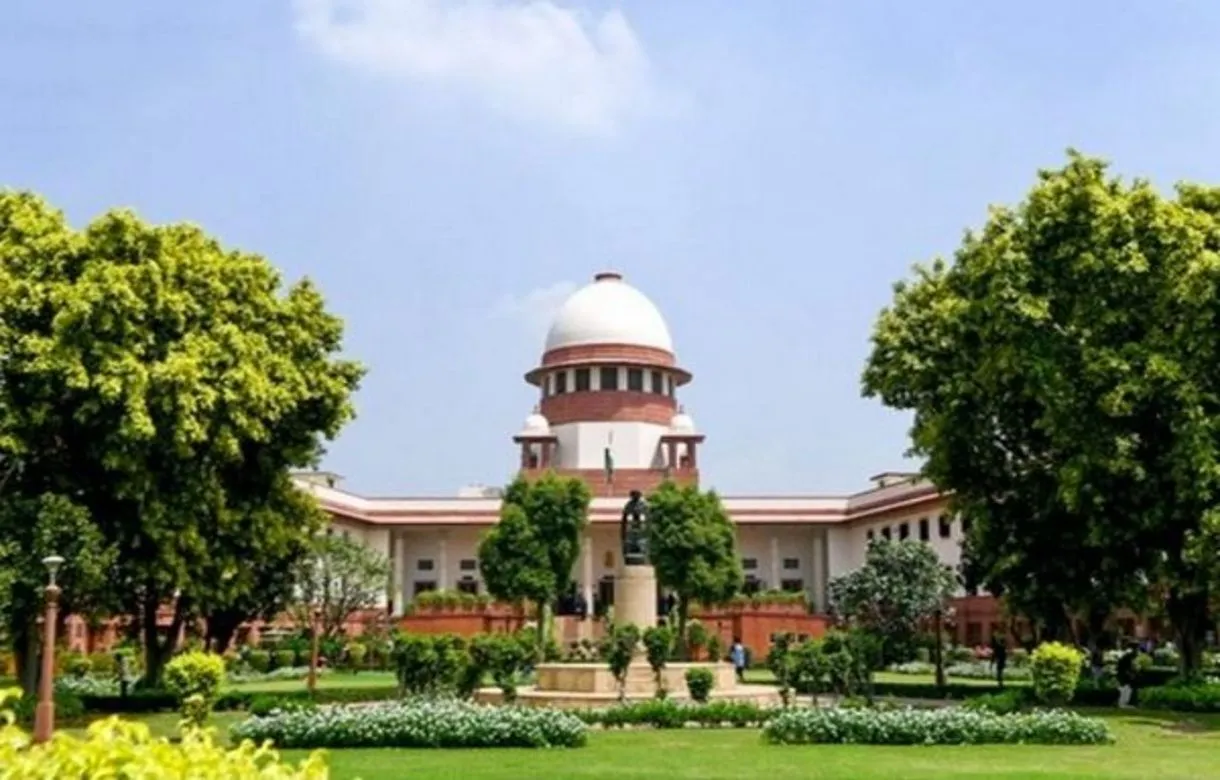
[vc_row][vc_column][vc_column_text]The Supreme Court today (Wednesday, Jan 30) once again refused to stay amendments to the Scheduled Castes and Scheduled Tribes (Prevention of Atrocities) Act that restored the no anticipatory bail provision.

The apex court Bench headed by Justice UU Lalit said all matters including the Center’s review petition will be heard on February 19.

Last Thursday, too, the apex court had declined to stay the amendments to the SC/ST Act, 2018 saying that petitions against the amendment and review pleas against the March 20 judgment should be tagged together.

The petitioners in the plea have referred the amendment as “arbitrary” by the Parliament as it overturned the top court decision to defend innocent people from misuse of the rigorous provisions of the Act.

“The government brought the amendment under influence from allies and for political mileage and its fears over antagonising massive vote-bank ahead of 2019 Lok Sabha elections,” the petitioners had said in the plea.

Today, the Supreme Court Bench said the issue requires hearing in detail and it will be appropriate if all matters are heard on February 19.

Vikas Singh, appearing for one of the petitioners who had challenged the changes made to the Act, had sought an immediate stay on the amended Act.

The top court had earlier said that the new amendments to the SC/ST law passed by Parliament cannot be stayed and had sought the Centre’s response on pleas challenging its provisions.

The Parliament had on August 9 last year passed a bill to overturn the apex court order relating to certain safeguards against arrest under the SC and ST law.

On March 20, 2018, the apex court had taken note of the rampant misuse of the stringent SC/ST Act against government servants and private individuals and said there would be no immediate arrest on any complaint filed under the law. It barred arrests without a preliminary inquiry to avoid false implication of innocent people under the Act.

Dalit organisations saw the ruling as a dilution of the provisions of the SC/ST Act. Violent protests erupted across the country following the verdict, killing seven people.

Then Parliament passed the amendments to the Act on August 9, overturning the Supreme Court order.  The amendments rule out any provision for anticipatory bail for a person accused of atrocities against SC/STs, notwithstanding any court order. They provide that no preliminary inquiry will be required for registering a criminal case and an arrest under this law would not be subject to any approval.

This incensed the upper castes and protests were held in Rajasthan, Madhya Pradesh, Uttar Pradesh and Bihar. They also moved the Supreme Court, seeking declaration of the new amendments to the Schedule Castes and Schedules Tribes (Prevention of Atrocities) Act as ultra vires.[/vc_column_text][/vc_column][/vc_row]

India News

Nepal flash floods kill 359, over 1,300 still missing, search continues for survivors

Nepal flash floods have killed at least 359 people and left more than 1,300 missing, with rescue and relief operations continuing across affected areas.

Published

on

The death toll from the deadly flash floods in Nepal has risen to at least 359, while more than 1,300 people remain missing, Nepali police said on Thursday as rescue teams continued searching for survivors.

The flash flood struck the Bhotekoshi River at around 9 am on Wednesday, causing widespread destruction across three districts. The disaster resulted in significant loss of life and left several people missing, including foreign tourists.

According to Nepalese officials, the flood rushed downstream after hitting the main market area, sweeping away people, animals, buildings and public infrastructure.

The powerful flow also damaged roads and bridges, disrupting key routes and complicating rescue and relief efforts.

288 Indians still missing

India’s Ministry of Foreign Affairs said 288 Indians remain missing following the disaster. Around 200 people undertaking the Mansarovar Yatra have also sought evacuation.

India has sent two military aircraft carrying 48 tonnes of relief supplies to flood-hit Nepal. The supplies include solar lamps, hygiene kits, more than eight tonnes of medicines and food.

Rescue and relief operations intensified

Nepal’s security forces have stepped up rescue and relief operations, deploying helicopters and ground teams to affected areas.

Authorities are providing medical assistance, temporary shelters, food, water and medicines to people affected by the floods.

The disaster has also highlighted the growing risks facing communities and infrastructure in the Himalayan region, where unstable ice systems can threaten settlements, infrastructure and water supplies.

A similar flash-flood disaster occurred in the region in August 2025 after a glacial lake in Tibet overflowed amid high temperatures. Nine people were killed in that incident, while critical infrastructure, including a bridge connecting Nepal and China, was damaged.

Continue Reading

India News

Nepal flash floods: Glacial collapse, not earthquake, triggered disaster clarifies USGS

The USGS clarified that seismic activity initially reported as an earthquake was caused by a glacial collapse and debris flow that triggered deadly flash floods in Nepal.

Published

on

The tremors associated with the deadly flash floods in Nepal on Wednesday morning were caused by a powerful landslide involving ice and rock, rather than an earthquake, the United States Geological Survey (USGS) clarified.

The agency said the seismic activity initially reported as an earthquake “was instead a glacial collapse and debris flow” that caused catastrophic impacts downstream.

The USGS had initially reported seismic activity along the Nepal-China border, north of Kathmandu. It later clarified that the event was not an earthquake.

“No earthquake had occurred,” the agency said.

Landslide triggered debris-laden flood

An initial study of satellite imagery from Planet Labs indicated that a landslide involving ice and rock triggered a debris-laden flood in the Lhende River.

The landslide occurred about 20 km northeast of the Nepal-China Rasuwagadhi border crossing.

The Lhende Khola River is a tributary of the Bhote Koshi River, which flows from China into Nepal. The powerful landslide sent debris and water downstream, triggering the flash floods.

The event was later registered as seismic activity equivalent to an earthquake measuring 5.2 in magnitude.

157 bodies recovered in Nepal

Relief and rescue operations are underway in Rasuwa and other affected areas following the floods.

Nepal Police have recovered 157 bodies, while authorities are working to move families living in flood-risk areas to safer locations.

At least 403 tourists, including 341 foreigners, were reported unaccounted for several hours after the disaster, according to the tourism ministry.

The missing foreigners included 142 Indians, along with nationals from Australia, Britain, Malaysia, the Netherlands, Portugal, South Africa, South Korea and the United States, according to the tourism board.

Rescue teams are searching for survivors and bodies buried under mud and debris. Prime Minister Balendra Shah has pledged government resources for relief and rescue operations.

Floods hit several districts

The flood surged through the Bhote Koshi River at around 9 am local time after crossing over from the Tibet side.

Rasuwa and Dhading, which border Tibet, along with Nuwakot, were among the affected districts.

In Tibet, China’s state broadcaster reported that three people were killed and 265 were missing in Gyirong. It said the deaths were still being verified and rescue operations were continuing.

Security footage from the Nepal-Tibet border showed people fleeing moments before a torrent of rock, mud and water swept through the area, destroying buildings and vehicles.

Families search for missing relatives

Residents from affected areas of Nuwakot and Dhading gathered outside a Nepali Army training centre that was being used as a base for helicopter rescue operations.

People sought information about relatives who remained missing after the floods. Police were recording the names of missing people outside the barracks as the area remained without electricity because of damage to hydropower infrastructure.

Across the affected areas, houses, trees and vehicles were submerged or buried beneath mud and debris.

Helicopters continued rescue operations, bringing survivors out of the flood-hit areas.

Continue Reading

India News

Haryanvi Singer Ankit Balyan shot dead outside Gym in Shamli

Haryanvi singer and YouTuber Ankit Balyan was shot dead by unidentified assailants outside a gym in Shamli, Uttar Pradesh.

Published

on

Ankit Balyan

Haryanvi singer and YouTuber Ankit Balyan was shot dead by unidentified assailants outside a gym in Uttar Pradesh’s Shamli district on Wednesday evening, police said.

The incident took place in the Kotwali police station area when Balyan was coming out of the gym. According to police, the attackers arrived on two motorcycles and opened several rounds of fire at him. Balyan died at the spot.

Police launch probe into killing

Following the shooting, police reached the spot and began an investigation into the killing.

Shamli Superintendent of Police M P Singh said the body had been sent for post-mortem examination. Police teams have also been formed to arrest the accused.

Investigators are examining CCTV footage from the area to identify the attackers and trace their movements.

Speculation over possible motive

There has been speculation that Balyan was planning to contest the upcoming panchayat polls. However, there was no official confirmation from authorities or his associates that this was connected to the killing.

Samajwadi Party chief Akhilesh Yadav condemned the murder and called for the possibility of political rivalry to be investigated. He also criticised the law-and-order situation in Uttar Pradesh and described the incident as an attack on the Jat community.

Ankit Balyan’s YouTube presence

Balyan was a singer and YouTuber with more than 3.66 lakh subscribers. He appeared in videos as a singer and performer alongside different collaborators.

Several of his videos featured guns, firearms and SUVs. His killing has prompted police to investigate the circumstances surrounding the shooting and identify those responsible.

Continue Reading

Trending

© Copyright 2022 APNLIVE.com