128th anniversary of Swami Vivekananda’s iconic speech at World’s Parliament of Religion in Chicago, a look at the entire speech
Swami Vivekananda is best known in the United States for his iconic speech in the World’s Parliament of Religions in 1893. Through his speech, he introduced Hinduism to America and called for an end to fanaticism.
Swami Vivekananda is best known in the United States for his iconic speech in the World’s Parliament of Religions in 1893. Through his speech, he introduced Hinduism to America and called for an end to fanaticism. September 11, 2021, marks the 128th anniversary of his groundbreaking speech in the US.
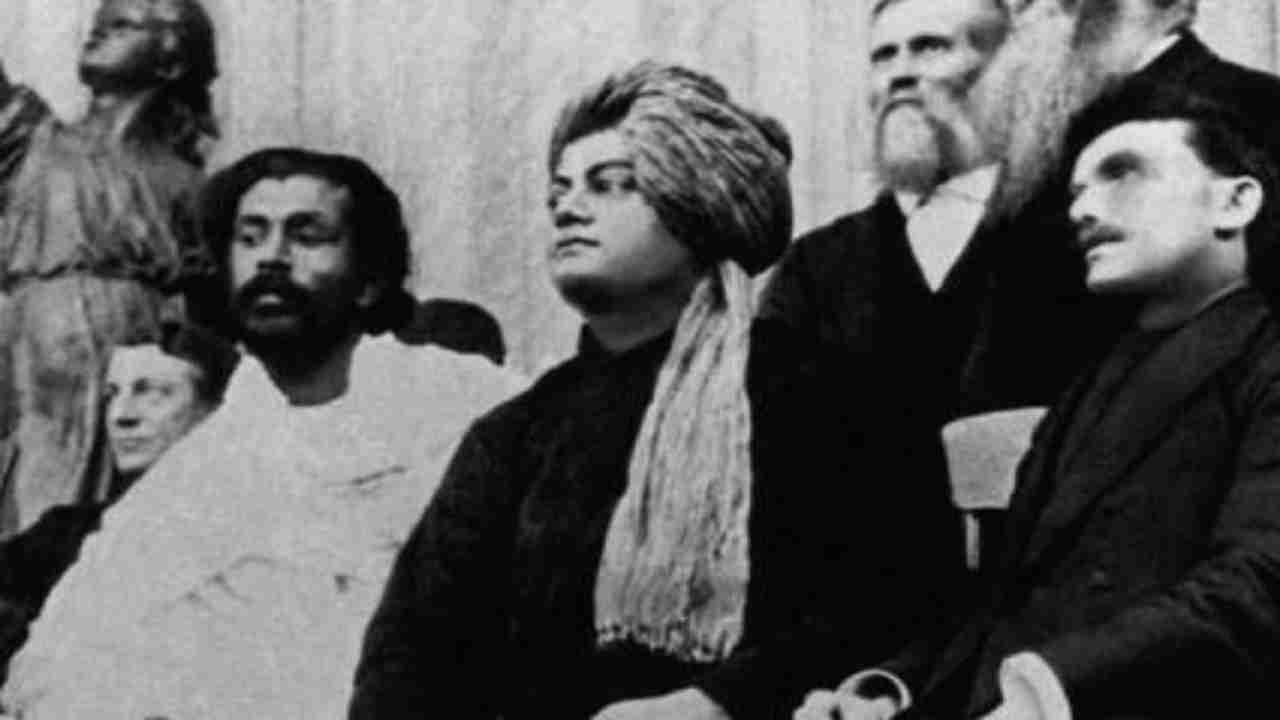
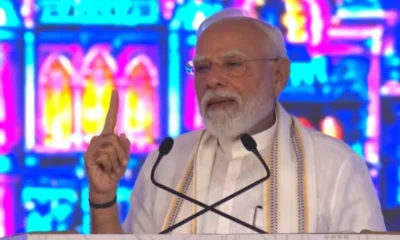
PM Modi recalls Swami Vivekanada’s speech:
Prime Minister of India, Narendra Modi, on Saturday recalled the speech and said that its spirit has the potential to create a more just, prosperous, and inclusive planet. “Recalling Swami Vivekananda’s iconic 1893 speech at Chicago, which beautifully demonstrated the salience of Indian culture. The spirit of his speech has the potential to create a more just, prosperous and inclusive planet”, he tweeted.
Recalling Swami Vivekananda’s iconic 1893 speech at Chicago, which beautifully demonstrated the salience of Indian culture. The spirit of his speech has the potential to create a more just, prosperous and inclusive planet. https://t.co/1iz7OgAWm3
In his speech at the World Religion Conference, Swami Vivekananda addressed the audience as Sisters and Brothers of America. They had spoken about the basic things to follow in life to make it worth living. He mentioned about country’s pride, love towards all religions, science and religion, roots of Hinduism, and other vital things.
On the anniversary 128th anniversary of Swami Vivekananda’s speech, let’s have a look at the entire speech:
Sisters and Brothers of America.
It fills my heart with joy unspeakable to rise in response to the warm and cordial welcome which you have given us. l thank you in the name of the most ancient order of monks in the world; I thank you in the name of the mother of religions, and I thank you in the name of the millions and millions of Hindu people of all classes and sects.
My thanks, also, to some of the speakers on this platform who, referring to the delegates from the Orient, have told you that these men from far-off nations may well claim the honor of bearing to different lands the idea of toleration.
I am proud to belong to a religion that has taught the world both tolerance and universal acceptance. We believe not only in universal toleration, but we accept all religions as true. I am proud to belong to a nation that has sheltered the persecuted and the refugees of all religions and all nations of the earth.
I am proud to tell you that we have gathered in our bosom the purest remnant of the Israelites, who came to southern India and took refuge with us in the very year in which their holy temple was shattered to pieces by Roman tyranny. I am proud to belong to the religion which has sheltered and is still fostering the remnant of the grand Zoroastrian nation.
I will quote to you, brethren, a few lines from a hymn which I remember to have repeated from my earliest boyhood, which is every day repeated by millions of human beings:
As the different streams having their sources in different places all mingle their water in the sea, so, O Lord, the different paths which men take through different tendencies, various though they appear, crooked or straight, all lead to thee.
The present convention, which is one of the most august assemblies ever held, is in itself a vindication, a declaration to the world, of the wonderful doctrine preached in the Gita:
Whosoever comes to Me, through whatsoever form, I reach him; all men are struggling through paths which in the end lead to me.
Sectarianism, bigotry, and its horrible descendant, fanaticism, have long possessed this beautiful earth. They have filled the earth with violence, drenched it often and often with human blood, destroyed civilization, and sent whole nations to despair.
Had it not been for these horrible demons, human society would be far more advanced than it is now. But their time comes; and I fervently hope that the bell that tolled this morning in honor of this convention may be the death-knell of all fanaticism, of all persecutions with the sword or with the pen, and of all uncharitable feelings between persons wending their way to the same goal.
The World’s Parliament of Religions has become an accomplished fact, and the merciful Father has helped those who labored to bring it into existence and crowned with success their most unselfish labor.
My thanks to those noble souls whose large hearts and love of truth first dreamed this wonderful dream and then realized it. My thanks to the shower of liberal sentiments that has overflowed this platform. My thanks to this enlightened audience for their uniform kindness to me and for their appreciation of every thought that tends to smooth the friction of religions.
A few jarring notes were heard from time to time in this harmony. My special thanks to them, for they have, by their striking contrast, made general harmony the sweeter.
Much has been said of the common ground of religious unity. I am not going just now to venture my own theory. But if anyone here hopes that this unity will come by the triumph of any one of the religions and the destruction of the others, to him I say, “Brother, yours is an impossible hope.”
Do I wish that the Christian would become Hindu? God forbid. Do I wish that the Hindu or Buddhist would become Christian? God forbid.
The seed is put in the ground, and earth and air, and water are placed around it. Does the seed become the earth, or the air, or the water? No. It becomes a plant. It develops after the law of its own growth, assimilates the air, the earth, and the water, converts them into plant substances, and grows into a plant.
Similar is the case with religion. The Christian is not to become a Hindu or a Buddhist, nor a Hindu or a Buddhist to become a Christian. But each must assimilate the spirit of the others and yet preserve his individuality and grow according to his own law of growth.
If the Parliament of Religions has shown anything to the world, it is this: It has proved to the world that holiness, purity, and charity are not the exclusive possessions of any church in the world and that every system has produced men and women of the most exalted character.
In the face of this evidence, if anybody dreams of the exclusive survival of his own religion and the destruction of the others, I pity him from the bottom of my heart, and point out to him that upon the banner of every religion will soon be written in spite of resistance- Help and not fight, Assimilation and not Destruction, Harmony and Peace and not Dissension.
Amit Shah counters delimitation concerns, says southern states to gain Lok Sabha seats
Amit Shah assures Parliament that southern states will gain Lok Sabha seats after delimitation, countering opposition criticism during the women’s reservation debate.
Union Home Minister Amit Shah on Thursday addressed concerns over the proposed delimitation exercise, asserting in the Lok Sabha that southern states will not lose representation but instead see an increase in their number of seats.
His remarks came during a heated debate linked to the implementation of women’s reservation, where opposition parties have raised fears that population-based delimitation could reduce the political weight of southern states.
Shah rejected these claims, calling them misleading, and said the proposed framework ensures fairness while expanding the overall strength of the Lok Sabha.
Seat count to rise with expansion of Lok Sabha
The government has indicated that the total number of Lok Sabha seats could increase significantly as part of the delimitation process. In this expanded House, the combined representation of southern states is expected to rise from 129 seats at present to around 195 seats.
Shah emphasised that no state will lose seats in absolute terms, and the exercise is designed to reflect population changes while maintaining balance across regions.
State-wise projections shared in Parliament
During his address, Shah also provided indicative figures for individual southern states, suggesting notable increases in representation. According to the projections:
Tamil Nadu could see its seats rise substantially
Kerala, Telangana, and Andhra Pradesh are also expected to gain additional seats
Karnataka’s representation may increase as well
These figures were presented to counter the argument that delimitation would disproportionately favour northern states.
Political debate intensifies over linkage with women’s quota
The delimitation exercise has been closely linked to the rollout of women’s reservation, which proposes one-third seats for women in Parliament and state assemblies.
Opposition leaders have questioned this linkage, arguing that tying reservation to delimitation could delay its implementation and raise federal concerns. Some leaders have also warned that the move could impact national unity if apprehensions among states are not addressed.
The government, however, maintains that the reforms are necessary to ensure equitable representation and to align the electoral system with demographic realities.
Centre dismisses ‘false narrative’ on southern states
Shah reiterated that concerns about southern states losing influence are unfounded. He said the delimitation process will increase representation across regions and described the criticism as a “false narrative” aimed at creating confusion.
The issue is expected to remain a key flashpoint as Parliament continues discussions on the women’s reservation framework and related legislative changes.
PM Modi assures no discrimination in women’s quota, delimitation debate intensifies in Parliament
PM Narendra Modi has assured that women’s reservation will be implemented without discrimination, amid a heated debate over delimitation in Parliament.
Prime Minister Narendra Modi has assured that there will be no discrimination in the implementation of women’s reservation, as Parliament witnessed a sharp debate over the proposed linkage between the quota and delimitation exercise.
During the ongoing special session, the government reiterated its commitment to ensuring fair representation while addressing concerns raised by opposition parties regarding the timing and structure of the legislation.
The proposed framework aims to reserve 33 percent of seats for women in the Lok Sabha and state assemblies. However, its implementation is tied to a fresh delimitation exercise, which is expected after the next census.
Opposition questions timing and intent
Opposition leaders have raised concerns that linking the women’s quota to delimitation could delay its implementation. They argue that the process of redrawing constituencies may push the actual rollout further into the future.
The issue has triggered a broader political confrontation, with multiple parties questioning whether the move could alter representation across states.
Some critics have also alleged that the delimitation exercise could disproportionately benefit certain regions based on population, a charge the government has rejected.
Government reiterates commitment to fair implementation
Responding to these concerns, the Centre has maintained that the reforms are necessary to ensure accurate and updated representation based on population data.
Leaders from the ruling side have repeatedly emphasized that the process will be carried out transparently and without bias. The assurance that there will be “no discrimination” is aimed at addressing fears among states and opposition parties.
The debate marks a key moment in Parliament, with both sides engaging in intense exchanges over one of the most significant electoral reforms in recent years.
Give all tickets to Muslim women, Amit Shah says, attacking Akhilesh Yadav on sub-quota demand
A sharp exchange between Amit Shah and Akhilesh Yadav in Parliament over sub-quota for Muslim women highlights key divisions on women’s reservation implementation.
A heated exchange broke out in Parliament during discussions on the women’s reservation framework, with Union Home Minister Amit Shah and Samajwadi Party chief Akhilesh Yadav locking horns over the demand for a sub-quota for Muslim women.
The debate unfolded as the government pushed forward key legislative measures to implement 33% reservation for women in the Lok Sabha and state assemblies.
Akhilesh Yadav argued that the proposed reservation must ensure representation for women from marginalised communities, including Other Backward Classes (OBCs) and Muslim women. He said that without such provisions, large sections could remain excluded from political participation.
He also questioned the timing of the bill, alleging that the Centre was avoiding a caste census. According to him, a census would lead to renewed demands for caste-based reservations, which the government is reluctant to address.
Government rejects religion-based quota
Responding to the demand, Amit Shah made it clear that reservation based on religion is not permitted under the Constitution.
He stated that any proposal to provide quota to Muslims on religious grounds would be unconstitutional, firmly rejecting the idea of a separate sub-quota for Muslim women within the broader reservation framework.
The government has maintained that the existing framework already includes provisions for Scheduled Castes (SC) and Scheduled Tribes (ST) women within the overall reservation structure.
Wider political divide over implementation
The issue of sub-categorisation within the women’s quota has emerged as a major flashpoint, even as most opposition parties broadly support the idea of women’s reservation.
Samajwadi Party leaders reiterated that their support for the bill depends on inclusion of OBC and minority women, while the government continues to defend its constitutional position.
The debate is part of a broader discussion during the special Parliament session, where multiple bills linked to delimitation and implementation of the women’s quota are being taken up.
APN News is today the most watched and the most credible and respected news channel in India. APN has been at the forefront of every single news revolution. The channel is being recognized for its in-depth, analytical reportage and hard hitting discussions on burning issues; without any bias or vested interests.