English हिन्दी
Connect with us

India News

Why do people love to hate?

Published

on

Bengal Riots

[vc_row][vc_column][vc_column_text]Ranjona Banerji

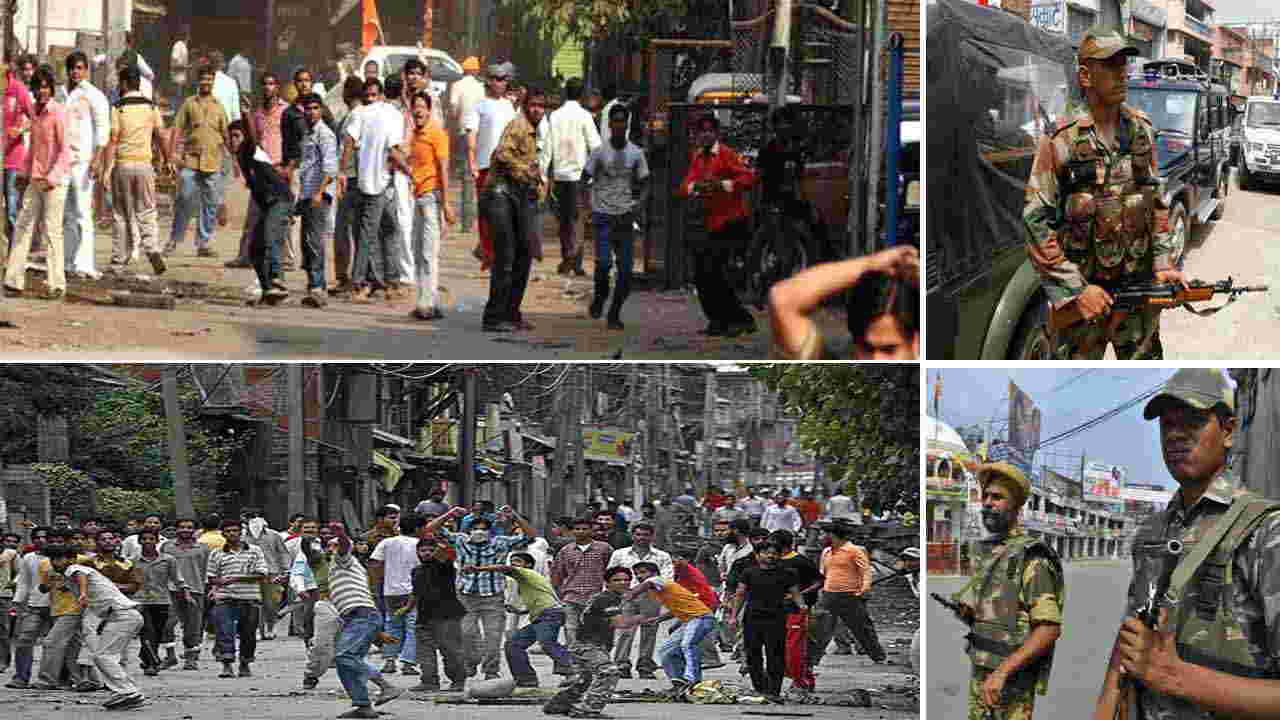
And once again, India is heading towards what journalists of old used to call a “communal tinderbox”. Sectarian hatred, which sadly simmers below the surface across pockets of India, has once again started to find violent expression. This expression is usually related to political patronage – some Hindus feel that majoritarian rule is the answer for India whenever the BJP is in power. And in Bengal, there are claims that Mamata Banerjee’s Muslim appeasement policy has given strength to Islamist feelings in some areas of Bengal. Kerala is also going through some churn between the CPM and the BJP and once again the accusation is that various Islamic groups have free rein there: Hatred growing on hatred to destroy us all.

It is convenient for us to get stuck in the politics of it. That as if, had politicians not existed or did not pit one cause against the other, we would have loved each other desperately. The politics of it allows us to escape from the reality: That there is hatred, there is fear, there is a sense of historical injustice and there is insecurity. Almost all of it is illogical and unreasonable, almost all of it stems from ignorance and bigotry and all of it makes a mockery of our humanity.

History will show us that there is no one answer, there is no easy answer. Anthropologists will point to ancient atavistic impulses. Archaeologists will find old bones with evidence of extreme violence. Sociologists and psychologists will examine chinks in our relationships with others and with ourselves. They will all be correct. There is hatred in us and it will continue.

Do upbringing and experience play a role? Yet there are people who have suffered after the Partition riots and have tried to build bridges and there are those who have suffered and become filled with thoughts of revenge. The way some soldiers who have seen fighting and death become pacifists and others become even more dogged about military solutions to a conflict over all other ones. Does education make a difference? Clearly it does not, when you consider the number of educated terrorists of all political hues. Does being religious make a difference? This is the most tragic of all human beliefs when you consider that most extremist behaviour is justified in the name of religion.

We can accept that this is how we are and move on. Let law and order take each individual case and let the human constructs of evidence and justice deal with the consequences of human iniquity. Small individual steps to offset our human flaws. But this does not work on any grand scale.

The only thing that will make a difference is if law is matched with societal determination. Look at how Germany has tackled its anti-Semitic past. It was not the only nation in Europe which has persecuted Jews. The word “pogrom”, used loosely today for rioting and ethnic cleansing, is a Russian word meaning to “wreak havoc, demolish violently”, was specifically used for attacks on Jews. Across Europe, Jews faced everything from social discrimination to outright violence. Every kind of justification and lie to persecute any minority group today was used then.

But what happened in Nazi Germany with the cruel genocide of 6 million Jews in concentration camps was so bad, so horrific, that it became too much for the collective conscience of the Germans and of much of the world. Germany more than any other nation follows a very strict policy when it comes to anti-Semitism because it is always aware of its past. No solution is perfect but this is the one solution which has stood out as a beacon of hope and so it must.

Racism has not found such an easy solution nor has gender equity. Here in India, apart from the anger with minority religions that some of the majority Hindus have, we have still not managed as a society to acknowledge the terrible damage done to our fellow humans by the strictures of caste. We still look for justifications for dehumanisation, against and above the law of the land.

There is no easy answer and as long as we don’t honestly search for some as a society, we shall continue to be victim to politicians, religious clerics and other vested interests, to those whose power flows from creating and fostering hatred amongst us. We have reached that crossroads yet again. The last time someone tried to appeal to our collective conscience, we killed him. There is no Mahatma Gandhi today. There is only us. And we don’t look pretty.[/vc_column_text][/vc_column][/vc_row]

India News

PM Modi assures no discrimination in women’s quota, delimitation debate intensifies in Parliament

PM Narendra Modi has assured that women’s reservation will be implemented without discrimination, amid a heated debate over delimitation in Parliament.

Published

on

PM modi

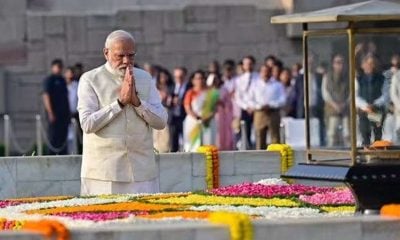
Prime Minister Narendra Modi has assured that there will be no discrimination in the implementation of women’s reservation, as Parliament witnessed a sharp debate over the proposed linkage between the quota and delimitation exercise.

During the ongoing special session, the government reiterated its commitment to ensuring fair representation while addressing concerns raised by opposition parties regarding the timing and structure of the legislation.

The proposed framework aims to reserve 33 percent of seats for women in the Lok Sabha and state assemblies. However, its implementation is tied to a fresh delimitation exercise, which is expected after the next census.

Opposition questions timing and intent

Opposition leaders have raised concerns that linking the women’s quota to delimitation could delay its implementation. They argue that the process of redrawing constituencies may push the actual rollout further into the future.

The issue has triggered a broader political confrontation, with multiple parties questioning whether the move could alter representation across states.

Some critics have also alleged that the delimitation exercise could disproportionately benefit certain regions based on population, a charge the government has rejected.

Government reiterates commitment to fair implementation

Responding to these concerns, the Centre has maintained that the reforms are necessary to ensure accurate and updated representation based on population data.

Leaders from the ruling side have repeatedly emphasized that the process will be carried out transparently and without bias. The assurance that there will be “no discrimination” is aimed at addressing fears among states and opposition parties.

The debate marks a key moment in Parliament, with both sides engaging in intense exchanges over one of the most significant electoral reforms in recent years.

Continue Reading

India News

Give all tickets to Muslim women, Amit Shah says, attacking Akhilesh Yadav on sub-quota demand

A sharp exchange between Amit Shah and Akhilesh Yadav in Parliament over sub-quota for Muslim women highlights key divisions on women’s reservation implementation.

Published

on

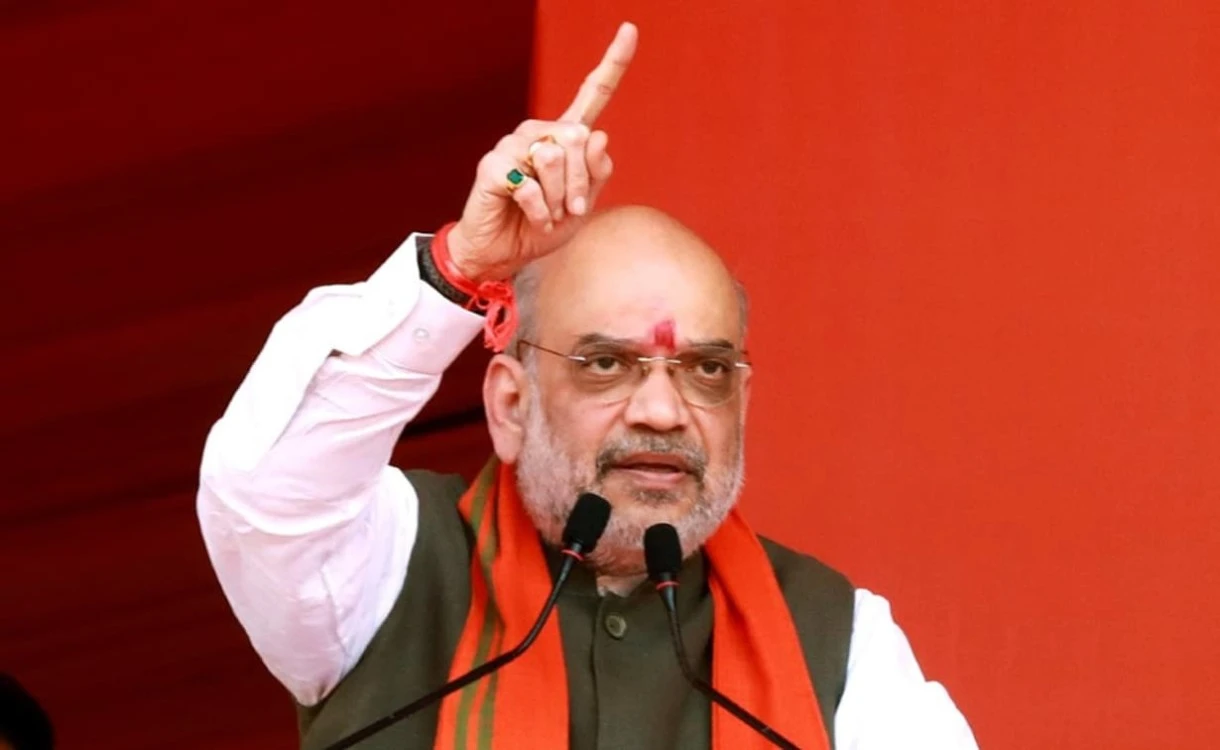
A heated exchange broke out in Parliament during discussions on the women’s reservation framework, with Union Home Minister Amit Shah and Samajwadi Party chief Akhilesh Yadav locking horns over the demand for a sub-quota for Muslim women.

The debate unfolded as the government pushed forward key legislative measures to implement 33% reservation for women in the Lok Sabha and state assemblies.

Akhilesh Yadav argued that the proposed reservation must ensure representation for women from marginalised communities, including Other Backward Classes (OBCs) and Muslim women. He said that without such provisions, large sections could remain excluded from political participation.

He also questioned the timing of the bill, alleging that the Centre was avoiding a caste census. According to him, a census would lead to renewed demands for caste-based reservations, which the government is reluctant to address.

Government rejects religion-based quota

Responding to the demand, Amit Shah made it clear that reservation based on religion is not permitted under the Constitution.

He stated that any proposal to provide quota to Muslims on religious grounds would be unconstitutional, firmly rejecting the idea of a separate sub-quota for Muslim women within the broader reservation framework.

The government has maintained that the existing framework already includes provisions for Scheduled Castes (SC) and Scheduled Tribes (ST) women within the overall reservation structure.

Wider political divide over implementation

The issue of sub-categorisation within the women’s quota has emerged as a major flashpoint, even as most opposition parties broadly support the idea of women’s reservation.

Samajwadi Party leaders reiterated that their support for the bill depends on inclusion of OBC and minority women, while the government continues to defend its constitutional position.

The debate is part of a broader discussion during the special Parliament session, where multiple bills linked to delimitation and implementation of the women’s quota are being taken up.

Continue Reading

India News

No state will lose a seat, Centre assures as delimitation debate takes centre stage in Parliament

Parliament’s special session begins with key focus on implementing women’s reservation and delimitation, setting the stage for major electoral changes.

Published

on

Parliament

A special session of Parliament commenced on Thursday, with the Centre set to take up crucial legislation related to women’s reservation and delimitation of constituencies. The session, scheduled over three days, is expected to witness intense debate as the government pushes forward its legislative agenda.

At the centre of discussions is the proposal to operationalise the women’s reservation law, which seeks to allocate 33 percent of seats in the Lok Sabha and state assemblies to women. The law, passed earlier, requires enabling provisions before it can be implemented.

The rollout of the reservation is closely tied to the delimitation exercise — a process that redraws parliamentary constituencies based on updated population data. The implementation is expected only after the next census and delimitation process are completed.

The government is aiming to put in place the framework so that the reservation can be enforced in future elections, likely around 2029.

Delimitation and numbers at play

Delimitation is a key aspect of the proposed changes, as it will determine how seats are redistributed and which constituencies are reserved. The exercise is expected to reflect population shifts and may also involve an increase in the total number of Lok Sabha seats.

This linkage has made the issue politically sensitive, with several opposition parties backing women’s reservation in principle but raising concerns over how and when delimitation will be carried out.

Political reactions and expected debate

The session is likely to see sharp exchanges between the government and opposition. While there is broad agreement on increasing women’s representation, disagreements remain over the timing, process, and potential political implications of the delimitation exercise.

Some leaders have argued that delimitation could significantly alter the balance of representation among states, making it a contentious issue beyond the women’s quota itself.

The government, however, has framed the move as a step toward strengthening women’s participation in governance and ensuring more inclusive policymaking.

Continue Reading

Trending

© Copyright 2022 APNLIVE.com