English हिन्दी
Connect with us

India News

US TO MOVE TROOPS TO ASIA

In the last 20 years, China has accounted for just 0.51% of the total foreign direct investment that has come into Indian companies, and ranks a lowly 18, according to Indian government data.

Published

on

Donald Trump

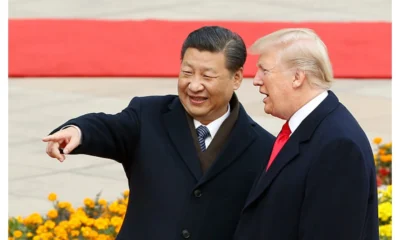
In a statement that pitches the US as a factor in the India-China military face-off, secretary of state Mike Pompeo said on Thursday that China’s “threats to India” and Southeast Asia were among the main reasons for the US’s move to reduce its troops in Europe.

The decision to draw down troops in Germany was part of a well-thought out strategy because they were being moved to other places, Pompeo told the Brussels Forum. US President Donald Trump recently announced that the US would be reducing troops from Germany, a decision that’s angered EU countries.

The actions of the Chinese Communist Party, Pompeo said, meant there were “threats to India” and countries like Vietnam, Indonesia, Malaysia, Philippines and the South China Sea. “We are going to make sure we are postured appropriately to counter the PLA. We think that is the challenge of our time and we are going to make sure we have resources in place to do that,” he said.

Pompeo’s marking out of China’s threats to its neighbours as a priority represents a significant policy statement and security posture.

Running through a list of aggressive Chinese actions, Pompeo spoke about the “bloody border confrontation with India”, Beijing’s activities in the South China Sea and its predatory economic policies. He also announced that the US and the EU would start a dialogue on China and the challenges it poses. It would help the trans-Atlantic alliance to build a “common understanding of the threat posed by China”. Pompeo said the two sides needed “a collective data set” on China’s actions so the two could take action together. Europe is often accused of being “naive” about China, taking a much more benevolent attitude to China’s designs.

Asked whether Huawei was part of the Chinese “surveillance state”, he said Chinese security forces personnel worked on the top floor of the company headquarters and Chinese law required Huawei to pass any data, including personal, to the Chinese Communist Party whenever the latter asked.

On Wednesday, Pompeo had flagged what he called “clean telcos”, that is, companies that were “free” of Chinese influence. “The tide is turning towards trusted 5G vendors and away from Huawei. The world’s leading telecom companies — Telefonica, Orange, Jio, Telstra and many more — are becoming ‘clean telcos’. They are rejecting doing business with tools of the CCP surveillance state, like Huawei,” he said.

India News

CBI moves Supreme Court against suspension of Kuldeep Sengar’s life sentence in Unnao rape case

The CBI has filed a Special Leave Petition in the Supreme Court challenging the Delhi High Court’s decision to suspend Kuldeep Sengar’s life sentence in the 2017 Unnao rape case.

Published

on

former BJP MLA Kuldeep Singh Sengar

The Central Bureau of Investigation (CBI) has approached the Supreme Court challenging the Delhi High Court’s decision to suspend the life sentence awarded to expelled BJP MLA Kuldeep Singh Sengar in the 2017 Unnao rape case. The agency has filed a Special Leave Petition (SLP) against the order that granted him bail while his appeal against conviction is pending.

According to officials, the decision to move the apex court was taken after a detailed examination of the order passed by a division bench of the Delhi High Court. The bench had suspended Sengar’s life imprisonment on the ground that he had already spent over seven years in jail.

Why the CBI has approached the apex court

In a statement, a CBI spokesperson said it was decided to challenge the high court’s order at the earliest. The agency maintained that it had strongly opposed the suspension of sentence during the hearing of Sengar’s appeal, along with the family of the survivor, who had raised concerns related to safety and threats.

The former legislator was convicted by a trial court in December 2019 for kidnapping and raping a minor girl in 2017. He later filed an appeal before the Delhi High Court seeking suspension of his sentence during the pendency of the case.

Sengar to remain in jail despite bail order

Despite the high court granting bail in the rape case, Sengar will continue to remain in prison as he is also serving a separate 10-year sentence in connection with the custodial death of the survivor’s father.

While granting bail, the high court imposed multiple conditions, including a personal bond of Rs 15 lakh with three sureties of the same amount. The court also directed Sengar not to enter within a five-kilometre radius of the survivor’s residence in Delhi and restrained him from issuing any threats to her or her mother.

The trial in the Unnao rape case, along with related matters, had earlier been shifted from Uttar Pradesh to Delhi on the directions of the Supreme Court in August 2019.

Continue Reading

India News

AAP targets Delhi LG with Ghajini dig over pollution row, BJP hits back

AAP’s ‘Ghajini’ dig at Delhi LG over air pollution has drawn a sharp response from the BJP, escalating the political blame game as the capital’s AQI remains poor.

Published

on

The political sparring over Delhi’s air pollution intensified after the Aam Aadmi Party (AAP) took a swipe at Lieutenant Governor Vinai Kumar Saxena using a film reference, prompting a sharp rebuttal from the Bharatiya Janata Party (BJP).

The exchange comes at a time when air quality in the national capital has shown marginal improvement but continues to remain in the “poor” category.

The trigger for the latest round of accusations was a letter written by LG Saxena to AAP’s national convener and former chief minister Arvind Kejriwal. In the letter, the LG claimed that when he had raised concerns about pollution during Kejriwal’s tenure as chief minister, the issue was played down. According to Saxena, Kejriwal had remarked that pollution becomes a topic of discussion only for a few days every year before fading from public attention.

AAP’s ‘Ghajini’ poster attack

Reacting to the letter, AAP accused the LG of shifting responsibility instead of addressing the ongoing pollution crisis. The party shared an edited image on X, portraying Saxena as the lead character from the film Ghajini, a role associated with short-term memory loss.

In the post, AAP alleged that the LG was ignoring the fact that the BJP is currently in power in Delhi and therefore accountable for managing the pollution situation. The caption accompanying the image read, “L – Low Quality; G – Ghajini,” while the poster claimed that the LG had “become Ghajini.” The visual also carried text suggesting blame being repeatedly placed on Arvind Kejriwal for rising AQI levels.

BJP’s response and counter-accusation

The BJP responded strongly to AAP’s jibe, asserting that while the present government is addressing pollution, responsibility for long-term damage cannot be ignored. Speaking to media, Delhi BJP chief Virendra Sachdeva said the party is answerable for current conditions but questioned whether it should also be held accountable for what he termed the failures of the previous AAP government over the past 12 years.

Sachdeva echoed the claims mentioned in the LG’s letter, stating that concerns over pollution were earlier dismissed as seasonal issues. He further argued that air pollution is a year-round problem and accused AAP of attempting to shift the entire burden onto a government that has been in office for only the past several months.

Referring to the ‘Ghajini’ poster, the BJP leader said that if forgetfulness was the theme, AAP should have used Kejriwal’s image instead, alleging that the former chief minister had distanced himself from his responsibilities after electoral setbacks. He added that the current administration would require time to correct what he described as mistakes made during the previous government’s tenure.

Continue Reading

India News

Traffic slows in Himachal Pradesh as year-end tourist rush chokes roads to Shimla, Manali

Heavy tourist inflow during the Christmas-New Year period has slowed traffic in Himachal Pradesh, with Shimla, Manali and Dharamshala witnessing long vehicle queues.

Published

on

Shimla traffic

Traffic movement across key hill destinations in Himachal Pradesh slowed to a crawl as a heavy influx of tourists marked the year-end holiday season. Long weekends around Christmas and New Year prompted travellers, particularly from Delhi-NCR, to head towards Shimla, Manali and Dharamshala, leading to long queues of vehicles on mountain roads.

A major attraction this season is the nine-day Winter Carnival being held at the historic Ridge Ground in Shimla. The event has drawn visitors from different parts of the country, with many attending it for the first time. Tourists described the carnival as lively and enjoyable, especially for families visiting during Christmas week.

Some visitors said the festive atmosphere exceeded their expectations, while others felt the absence of snowfall slightly dampened the experience. Tourists from states including Uttar Pradesh, Punjab and Mizoram shared that snowfall during Christmas would have added to the overall charm of the hill station.

Heavy inflow of vehicles, police step up arrangements

Apart from Shimla, popular destinations such as Kullu-Manali and Dharamshala are also witnessing a steady rise in tourist numbers. Gramphu has emerged as the only snow spot currently accessible to non-4×4 vehicles, adding to the pressure on limited routes.

Police officials estimate that between 8,000 and 10,000 vehicles are entering Shimla daily during the Christmas-to-New Year period. Over the next seven days, more than three lakh tourists are expected to visit the state capital alone.

To manage traffic and ensure safety, around 400 police personnel have been deployed across sensitive and high-footfall areas. The Shimla police administration has appealed to tourists to follow traffic rules and cooperate with authorities. Officials said preparations have been made for crowd management, security checks and traffic regulation at major junctions, as congestion continues to build across the hill town.

Continue Reading

Trending

© Copyright 2022 APNLIVE.com

Left Menu Icon