English हिन्दी
Connect with us

India News

Bhagwant Mann dismisses claims of Punjab leadership change amid AAP turmoil

Published

on

Bhagwant Mann dismisses claims of Punjab leadership change amid AAP turmoil
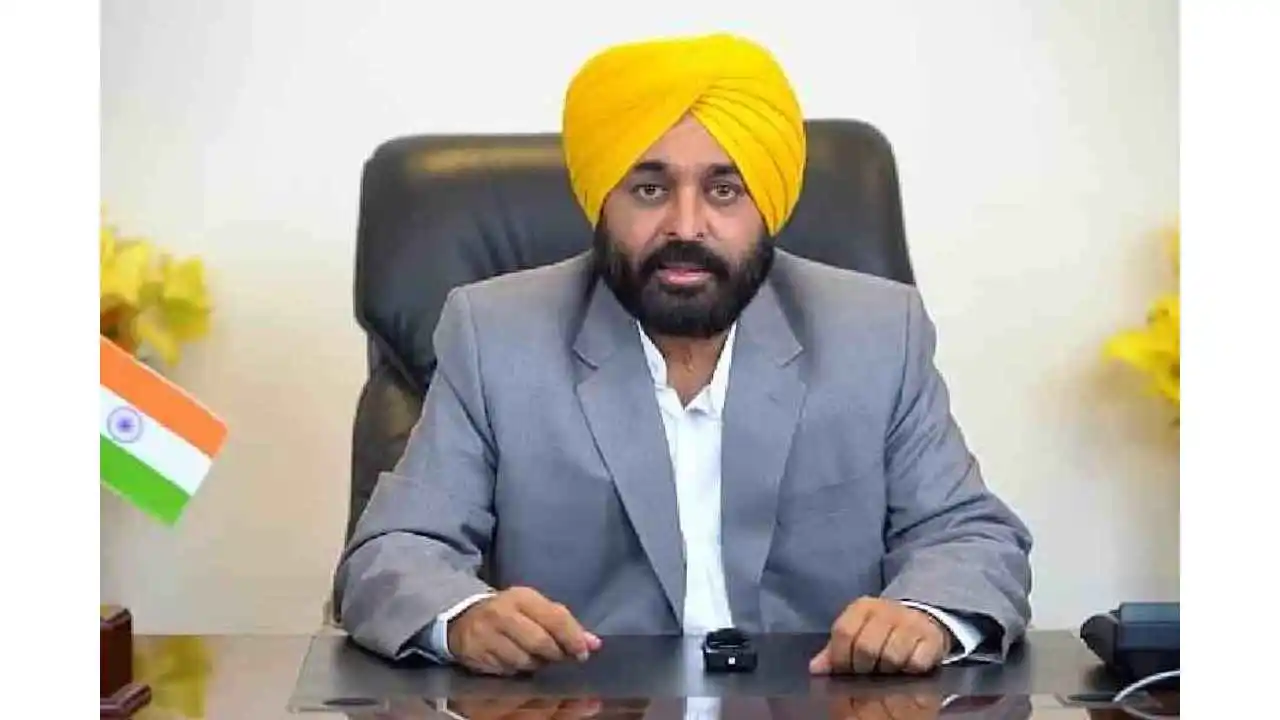
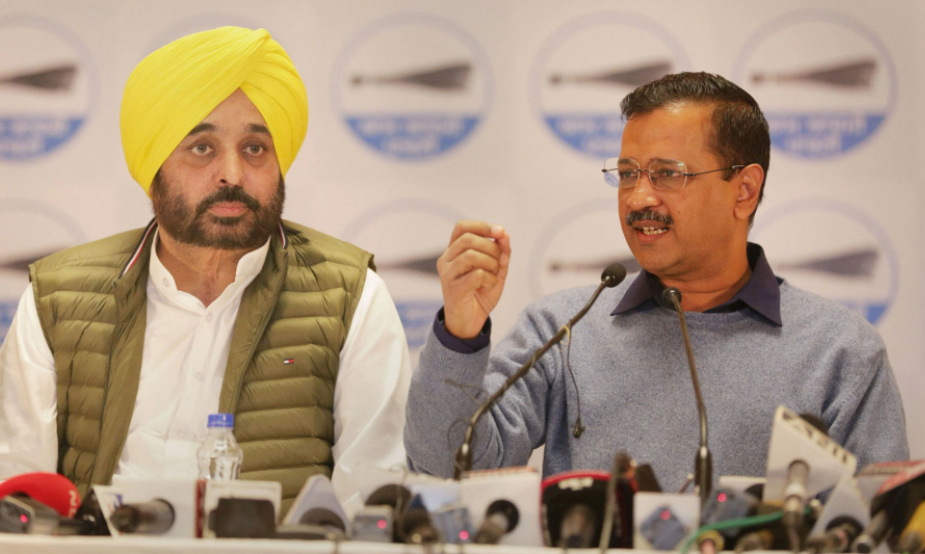
Punjab Chief Minister Bhagwant Mann has refuted speculations about a possible change in leadership following the Aam Aadmi Party’s (AAP) electoral setback in Delhi. Addressing the media after a crucial party meeting in Delhi, Mann laughed off claims that he may be replaced and assured that the party remains committed to its governance in Punjab.

The meeting, held at Kapurthala House in Delhi, was attended by AAP’s national convener Arvind Kejriwal, senior leader Manish Sisodia, all Punjab MLAs, and key functionaries. It sparked political controversy after BJP leader Manjinder Singh Sirsa alleged that Kejriwal was planning to remove Mann by portraying him as “incompetent.”

Sirsa claimed that Kejriwal, in an attempt to shift blame for AAP’s electoral defeat, was pressuring Punjab MLAs to support his leadership. He accused the AAP government in Punjab of failing to deliver on key promises, including the monthly stipend of Rs 1,000 for women and efforts to curb drug abuse.

Responding to these allegations, Mann brushed them aside, saying, “Let them say what they want.” He reiterated that the Punjab government is committed to fulfilling its promises, including financial aid for women.

Meanwhile, Congress leader Partap Singh Bajwa stirred another controversy by claiming that over 20 AAP MLAs in Punjab were in touch with him. Mann dismissed Bajwa’s remarks, stating, “He has been making these claims for nearly three years. Ask him to count how many Congress MLAs are left in Delhi.” Mann also mocked Congress’s poor electoral performance, referencing its repeated failure to secure seats in Delhi.

When asked about rumors of him leaving AAP, Mann said, “We have built this party with our hard work. It is their (Congress’s) culture to switch sides.” He further ridiculed Congress leaders, pointing out how some were seen celebrating AAP’s defeat despite their own party’s dismal performance.

AAP currently holds a dominant position in Punjab with 93 MLAs, while Congress has 16 in the 117-member assembly.

On the agenda of the Delhi meeting, Mann stated that Kejriwal expressed gratitude to party workers for their grassroots efforts in the Delhi campaign. He acknowledged the electoral loss but emphasized that politics is about wins and losses. “We respect the people’s mandate in Delhi and are now focused on making Punjab a model state,” Mann said. He also clarified that Punjab MLAs willingly attended the meeting to discuss the party’s future course.

Ludhiana Central MLA Ashok Prashar, who was also present at the meeting, reinforced Mann’s stance. “Kejriwal told us that we must take the party forward in Punjab. There will be no leadership change,” he said. Addressing Congress’s allegations regarding AAP MLAs switching sides, Prashar responded, “The Congress should be more concerned about their own members defecting to us.”

India News

ICAI announces CA Foundation May 2026 exam results, pass percentage at 20.09%

Published

on

The Institute of Chartered Accountants of India (ICAI) has declared the result of the CA Foundation exam conducted in May 2026, wherein the pass percentage is recorded as 20.09%. This is a landmark moment for the students who wish to make their careers as chartered accountants, which is the most competitive professional course in the country.

ICAI announced that 1,09,694 students had sat for the exam, of which over 22,000 passed. Officials said a large percentage of the passouts were male.

Students may check their result on the ICAI result portal website using the roll number along with the registration number/PIN allotted. The online result contains the marks scored in each subject and the total marks scored by the candidate. In order to clear the CA Foundation Exam, students need to get a minimum 40% marks in each paper and 50% marks overall in all papers.

Those who have cleared the Foundation exam are eligible to appear in the CA Intermediate exam, which is the next level of the CA course. The CA Foundation exam is the gateway to the CA course and has a tough evaluation system. In every examination cycle, a lot of candidates take this exam making it one of the toughest non-science exams in the country.

With the announcement of the results of May 2026, successful candidates are now in a position to prepare themselves for intermediate level, whereas those who could not pass the examination this time, have been asked to prepare themselves for their next attempt. ICAI has requested all candidates to download and save a copy of their marksheet for future use.


Continue Reading

India News

Centre plans stricter compliance rules for VPN providers, may mandate compliance officers

The Centre is exploring stricter compliance requirements for VPN providers, including designated compliance officers, to improve cybercrime investigations and regulatory accountability.

Published

on

The Centre is considering stricter compliance measures for virtual private network (VPN) service providers operating in India as part of its broader efforts to strengthen cybersecurity enforcement and improve cybercrime investigations. Officials are exploring a framework that could require VPN companies to appoint designated compliance officers or authorised representatives to coordinate with enforcement agencies and the Indian Computer Emergency Response Team (CERT-In).

The move comes amid growing concerns within the government over the alleged misuse of VPN services to conceal user identities, bypass law enforcement, and access websites or online platforms that have been blocked in the country.

Government seeks stronger compliance framework

According to government officials, the proposal is intended to ensure that VPN providers establish a clear compliance mechanism in India. Designated officials would be responsible for responding promptly to lawful requests from investigating agencies and CERT-In during cyber incident investigations.

Authorities have stressed that the objective is to improve accountability and facilitate quicker coordination during investigations involving cyber offences rather than monitor ordinary internet users.

Officials also noted that cybercriminals frequently use anonymisation tools, including VPN services, while carrying out ransomware attacks, financial fraud, phishing campaigns, and other online crimes. The proposed framework is aimed at helping investigators trace those involved in such offences through lawful procedures.

Proposal draws from existing IT Rules

The proposed compliance model is similar to the framework introduced under the Information Technology (Intermediary Guidelines and Digital Media Ethics Code) Rules, 2021.

Under those rules, significant social media intermediaries are required to appoint a Chief Compliance Officer, a Nodal Contact Person for round-the-clock coordination with law enforcement agencies, and a Resident Grievance Officer. Officials believe adopting a comparable structure for VPN providers would improve accountability, particularly for companies serving Indian users from outside the country.

Existing CERT-In directions remain in focus

The renewed discussions also highlight the cybersecurity directions issued by CERT-In in April 2022.

Under these directions, VPN providers, cloud service providers, virtual private server (VPS) providers, and data centres are required to collect and retain subscriber information for at least five years, even after a customer stops using the service.

The framework requires providers to maintain verified subscriber details, including names, physical addresses, contact numbers, email addresses, IP addresses, the duration of service usage, and the purpose for which the service was obtained. These records must be made available to authorities when sought as part of a lawful cybercrime investigation.

Government officials have maintained that access to subscriber information is limited to lawful investigations and is not intended for indiscriminate surveillance.

VPN industry had opposed data retention rules

When the CERT-In directions were introduced in 2022, several VPN companies and digital rights groups opposed the requirements. They argued that mandatory retention of customer information conflicted with their “no-logs” policies, which are designed to protect user privacy.

Some providers responded by changing their operational models. ExpressVPN, for instance, removed its physical servers from India and began serving Indian users through virtual server locations outside the country. Other VPN companies adopted similar arrangements while continuing to offer services in the Indian market.

Following representations from industry associations and technology companies, the government had extended the compliance deadline from June 27 to September 25, 2022, allowing providers additional time to implement the required changes.

Focus remains on cybercrime investigations

Officials said the latest initiative is intended to place VPN providers under compliance standards comparable to those applicable to other digital intermediaries operating in India. The government believes the proposed measures will strengthen its ability to investigate cybercrimes while further expanding the country’s digital regulatory framework.

Continue Reading

India News

Congress MP Manish Tewari says terror must end before India-Pakistan dialogue resumes

Congress MP Manish Tewari has questioned calls to restart India-Pakistan dialogue, arguing that meaningful talks cannot resume until Pakistan takes verifiable action against terrorism.

Published

on

Congress MP says decades of peace initiatives have repeatedly been followed by terror attacks and calls for verifiable action against terrorism before any engagement

Congress MP Manish Tewari has questioned renewed calls to resume dialogue between India and Pakistan, saying any discussion with Islamabad must first address the issue of cross-border terrorism. Responding to an appeal by 117 eminent personalities from both countries seeking the restoration of diplomatic engagement, Tewari asked whether such talks could be meaningful without concrete action against terror infrastructure.

Speaking on Friday, the Congress leader said successive Indian governments had consistently attempted to improve relations with Pakistan, but those efforts were repeatedly undermined by terrorist attacks.

According to Tewari, governments led by P.V. Narasimha Rao, H.D. Deve Gowda, I.K. Gujral, Atal Bihari Vajpayee, Manmohan Singh and Prime Minister Narendra Modi all pursued dialogue with Pakistan through formal negotiations or backchannel diplomacy. However, he claimed that each attempt was followed by acts of terrorism.

Calls for proof of dismantling terror infrastructure

Tewari said the key issue was whether Pakistan had provided any verifiable assurance that it had dismantled its terror infrastructure.

Referring to former Pakistan President Pervez Musharraf, he said a public commitment had been made after the Parliament attack to act against terrorism, but the assurance was later withdrawn. He added that similar commitments made during the tenures of former Prime Ministers Manmohan Singh and Narendra Modi also failed to produce lasting results.

Questioning the appeal for renewed engagement, Tewari said those advocating talks should clarify what specific issues they intended to discuss while the threat of terrorism remained unresolved.

References Pahalgam terror attack and Indus Waters Treaty

The Congress MP also referred to the Pahalgam terror attack in April 2025, saying it further reinforced India’s concerns regarding terrorism.

He noted that India’s position became even more firm following the attack, pointing to the suspension of the Indus Waters Treaty as part of the government’s response.

Commenting on the timing of the letter seeking renewed dialogue, Tewari said India had consistently maintained that terrorism and bilateral talks could not proceed simultaneously. He also reiterated the government’s position that it would not differentiate between terrorists and those responsible for directing such attacks.

Peace remains desirable, but security comes first

While acknowledging that millions of people across South Asia aspire for lasting peace, Tewari argued that meaningful dialogue was not possible as long as terrorism remained a continuing threat.

He said India must first receive credible assurances from Pakistan, beginning with an end to the export of terrorism, before considering any resumption of diplomatic engagement.

Continue Reading

Trending

© Copyright 2022 APNLIVE.com