English हिन्दी
Connect with us

Latest Politics News

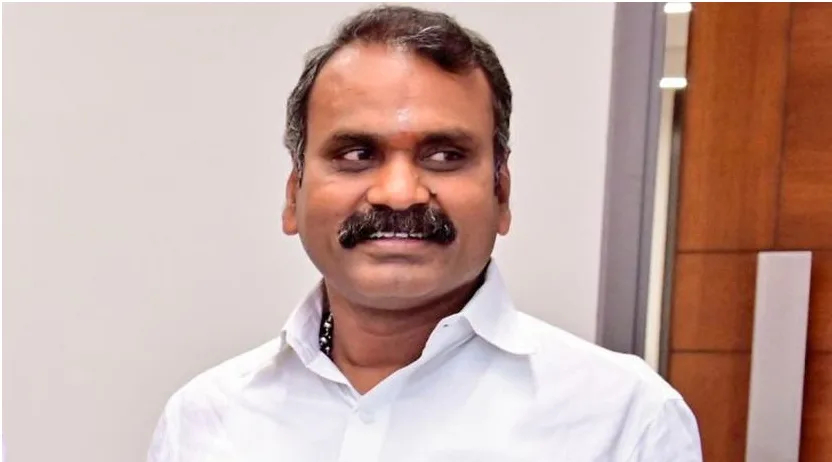
Bhupendra Patel: Journey from engineer, builder, councillor to CM, know the whole story of Bhupendra Patel in 10 points

Bhupendra Patel has been associated with the Rashtriya Swayam Sevak Sangh since the beginning of his political career.

Published

on

Bhupendra Patel: Journey from engineer, builder, councillor to CM, know the whole story of Bhupendra Patel in 10 points

Bhupendra Patel was once again elected as the Bharatiya Janata Party’s Legislature Party Leader in Gujarat. He will now take oath as Chief Minister again on Monday, December 12. The story of Bhupendra Patel, a close aide of PM Narendra Modi and Home Minister Amit Shah, is also very interesting. Engineer-turned-builder Bhupendra started his political innings by getting elected as a councillor.

Let’s know the full story of Bhupendra Patel

1. When was Bhupendra Patel born?

Bhupendra Patel was born on July 15, 1962 in Ahmedabad. Bhupendra Patel is also known among people as ‘Dada’.

2. Who all are in Bhupendra Patel’s family

The name of the father of Gujarat Chief Minister Bhupendra Patel is Rajnikant Bhai Patel. Bhupendra Patel’s wife’s name is Hetal Patel. His brother’s name is Ketan Patel. His son’s name is Anuj Patel. Bhupendra Patel’s daughter-in-law’s name is Devanshi Patel.

3. From which caste does the CM of Gujarat come?

Bhupendra Patel is a Patidar from Gujarat. Bhupendra also played an important role in ending the Patidar movement. Bhupendra is also the head of several Patidar organisations.

4. How educated is Bhupendra Patel?

Gujarat Chief Minister Bhupendra Patel has done Diploma in Civil Engineering.

5. How did Bhupendra Patel step into politics?

Bhupendra Patel has been associated with the Rashtriya Swayam Sevak Sangh since the beginning of his political career. After completing his diploma, he started working as a builder. In 1995, he was elected a member of the Memnagar Municipality of Ahmedabad for the first time. After this he was elected as a member in 1999 and again in 2004. He was also the chairman of the municipality from 1999 to 2004.

6. Which responsibility did Bhupendra Patel perform further?

From 2008 to 2010, he was the Vice President of Ahmedabad Municipal Corporation. From 2015 to 2017, he was the chairman of the Ahmedabad Urban Development Authority.

7. When was Bhupendra Patel elected as an MLA for the first time?

In 2017, Bhupendra Patel contested Ghatlodia assembly elections for the first time and won by a record 1.17 lakh votes. After this his name became a talk of the town. Vijaybhai Rupani was the then Chief Minister. This time also Patel contested from Ghatlodia seat and won the election by 1.92 lakh votes.

8. When and how did Bhupendra Patel become a CM?

Anandiben Patel was made the Chief Minister of Gujarat after Narendra Modi became the Prime Minister. She remained in this post from May 22, 2014 to August 7, 2016. After this, Vijay Bhai Rupani took over this responsibility. But in 2021 he too had to step down. During that time suddenly the name of Bhupendra Patel came to the fore. Bhupendra remained close to Anandiben Patel. Bhupendra became MLA for the first time from Anandi Ben’s seat.

9. Apart from politics, what does Bhupendra Patel like?

Apart from politics, Bhupendra Patel loves playing and watching cricket and badminton. Other than this, he does regular yoga.

10. How much property does Chief Minister Bhupenda Patel have?

In these elections Bhupendra Patel has mentioned his property in the affidavit given to the Election Commission. According to which, he has assets worth Rs 8.22 crore. There was no land mentioned in the name of Bhupendra Patel but there is land worth Rs 16.30 lakh in the name of his wife Hetalben. He has Rs 2.16 lakh in cash while his wife has Rs 3.52 lakh. The CM also owns jewelry worth Rs 25 lakh, while his wife has jewelry worth Rs 47.50 lakh.

India News

BJP hits back at opposition over EC row, says disagreement is democracy

The BJP has defended reported differences among Election Commissioners, saying internal deliberations are part of a healthy democratic process.

Published

on

The BJP has defended the Election Commission amid a political row over reported differences among Election Commissioners concerning decisions linked to the Special Intensive Revision (SIR) of electoral rolls.

BJP MP Sambit Patra said discussions and exchanges of views within the poll panel should be seen as part of the democratic process rather than as evidence of institutional dysfunction.

According to the BJP’s position, disagreement during official deliberations reflects the fact that members of an institution are able to put forward their views before decisions are taken.

BJP defends EC deliberations

Patra said that if the three Election Commissioners discuss and debate issues among themselves, such exchanges should not be characterised as dictatorship. He described such deliberations as a sign of a healthy democracy.

The BJP’s response came amid reports that Election Commissioners Sukhbir Singh Sandhu and Vivek Joshi had raised objections on multiple occasions over decisions and orders associated with the SIR exercise and electoral rolls.

The Election Commission has said that differences in views and observations are a normal part of deliberations within an institution. It has maintained that decisions, including those related to SIR, were taken unanimously.

Row centres on SIR process

The controversy comes against the backdrop of the ongoing political debate over the Special Intensive Revision of electoral rolls.

Opposition parties have raised concerns over the reported differences within the poll panel, while the BJP has sought to counter those arguments by pointing to the role of discussion and deliberation in institutional decision-making.

Patra also said the BJP’s understanding of the matter was based on media reports rather than access to the Election Commission’s internal documents. He said the documents, as reported, indicated that the SIR process was finalised after democratic deliberations and consensus.

What the Election Commission has said

The Election Commission has rejected the suggestion that the reported objections indicate a breakdown in its functioning.

It has maintained that differing opinions during deliberations are part of normal institutional functioning and that the decisions eventually taken by the commission were unanimous.

Continue Reading

India News

Asaduddin Owaisi offers Opposition alliance in UP, sets October 2 deadline

AIMIM chief Asaduddin Owaisi offered an alliance to Opposition parties in Uttar Pradesh ahead of the 2027 Assembly election and set October 2 as a deadline for a response.

Published

on

Asaduddin Owaisi

AIMIM chief Asaduddin Owaisi has offered to join hands with Opposition parties in Uttar Pradesh ahead of the 2027 Assembly election, saying his party is willing to work with those seeking to prevent the BJP from returning to power in the state.

Speaking at a public rally in Kanpur, Owaisi said the AIMIM would wait until October 2 for a response from Opposition parties before announcing any possible political alliance.

At the rally held at the Babupurwa Idgah ground in Kanpur’s cantonment area, Owaisi said the AIMIM did not want the BJP to form the government in Uttar Pradesh for a third time.

He invited parties seeking to prevent the BJP from returning to power to join hands with the AIMIM.

Owaisi targets Samajwadi Party

While making the alliance offer, Owaisi also criticised the Samajwadi Party and its chief Akhilesh Yadav.

Referring to the 2013 Muzaffarnagar riots, Owaisi questioned the record of the Samajwadi Party government during that period. He said around 50,000 people were displaced from their homes and villages during the riots.

Owaisi also alleged that political parties, including the Samajwadi Party, had failed to adequately address the social, economic and educational concerns of Muslims and had not provided sufficient political representation.

He said Muslims in Uttar Pradesh needed a political voice and urged voters to strengthen the AIMIM’s presence in the state Assembly.

AIMIM’s earlier alliance offer in Bihar

Owaisi also referred to the AIMIM’s earlier alliance proposal in Bihar ahead of the Assembly polls.

According to Owaisi, his party had offered to contest six seats as part of an alliance, but the proposal was not accepted. He alleged that “false allegations” were subsequently made against the AIMIM.

Opposition parties have previously accused Owaisi and the AIMIM of benefiting the BJP by dividing Muslim votes. Owaisi has rejected those allegations and has accused Opposition parties of fielding candidates who are unacceptable to minorities.

The latest alliance proposal comes ahead of the 2027 Uttar Pradesh Assembly election, with Owaisi setting October 2 as the date by which he expects a response from Opposition parties.

Continue Reading

India News

AAP takes Punjab report card door-to-door after BJP’s anti-drug yatra

AAP has taken its Punjab government report card door-to-door as the BJP conducts a statewide anti-drug yatra ahead of the 2027 Assembly election.

Published

on

Bhagwant Mann

The Aam Aadmi Party has taken its Punjab government report card directly to households as the BJP steps up its statewide campaign against drugs ahead of the 2027 Punjab Assembly election. Chief Minister Bhagwant Mann began the door-to-door outreach from Dhuri, his Assembly constituency.

The move comes after the BJP launched its “Nasha Mukt Punjab Yatra”, which is focused on the drug menace, law and order and corruption. The BJP’s yatra is planned to cover all 117 Assembly constituencies before concluding in Jalandhar.

AAP is using its “Yudh Nashean Virudh” campaign and the Mann government’s wider governance record as the focus of its grassroots outreach.

AAP’s anti-drug strategy

The Punjab government is highlighting a five-point approach covering police enforcement, prevention in schools, youth engagement, community vigilance and rehabilitation.

According to government figures cited in the report, the Anti-Narcotics Task Force registered 61,824 FIRs and arrested 81,433 people between March 2025 and September 2026.

The government said the seizures during this period included 3,918 kg of heroin, 991 kg of opium, 47 tonnes of poppy husk, 1,416 kg of ganja and 65 lakh tablets and capsules.

In schools, a 14-week anti-drug curriculum is being taught to around 7.5 lakh students across 3,600 schools. The government is also promoting sports, cultural activities, mental-health clubs and other youth programmes.

Village vigilance and rehabilitation

The government said around 1.25 lakh people have joined nearly 15,000 Village and Ward Defence Committees.

It also said more than 51,000 citizen tip-offs received through the Safe Punjab WhatsApp Helpline have contributed to over 25,000 drug-related arrests.

On treatment, Punjab currently has 547 OOAT (Outpatient Opioid Assisted Treatment) centres, 219 de-addiction centres and 91 rehabilitation centres, according to the figures cited by the government.

Admissions to government de-addiction and rehabilitation centres rose from more than 12,200 in 2024 to nearly 34,000 in 2025, the report said.

BJP’s anti-drug campaign

The BJP’s “Nasha Mukt Punjab Yatra” has placed the drug issue at the centre of its political outreach in the state. The campaign is also raising concerns related to law and order and corruption and is planned across all 117 Assembly constituencies.

AAP’s response is to take its own record directly to voters, with the party highlighting action against drugs alongside welfare and development initiatives.

The door-to-door campaign comes as political parties begin intensifying their grassroots mobilisation ahead of the 2027 Punjab Assembly election.

Continue Reading

Trending

© Copyright 2022 APNLIVE.com