English हिन्दी
Connect with us

Latest Politics News

Political Games

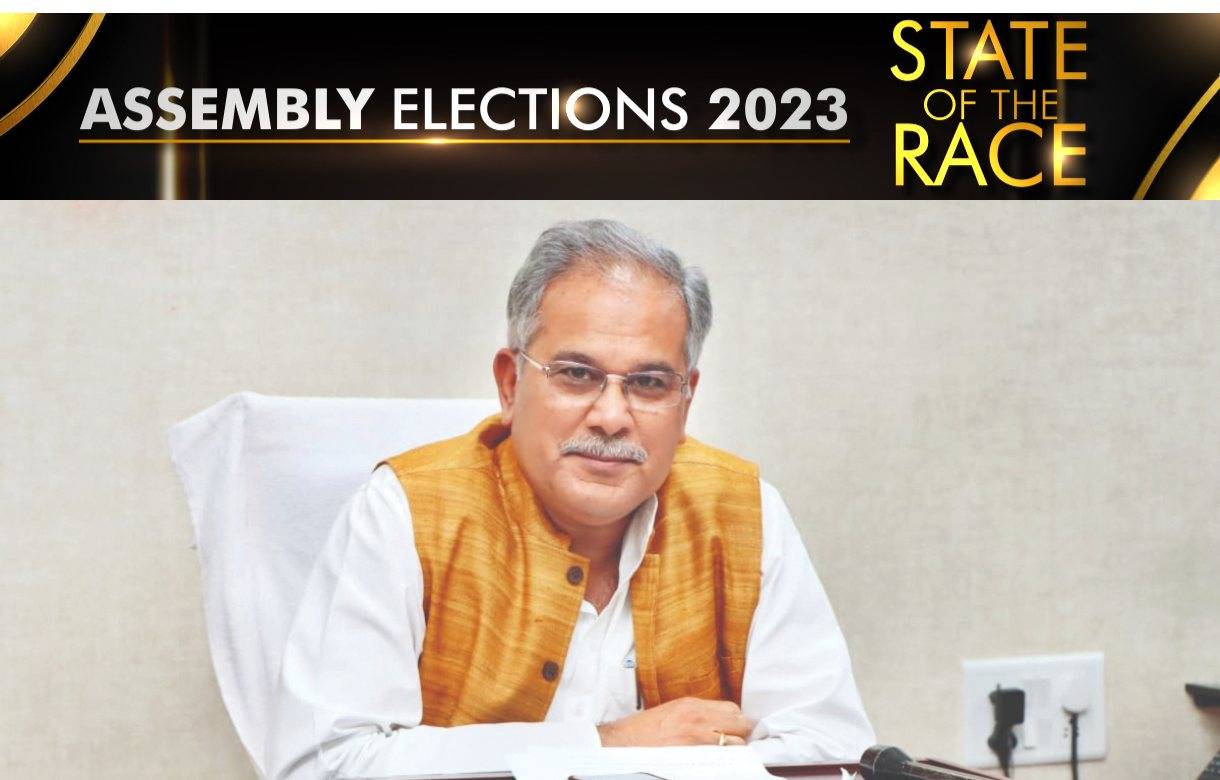
Two Delhi ministers, including the then Deputy Chief Minister Manish Sisodia, are in jail courtesy the Enforcement Directorate in the alleged liquor scam for which the agency has not produced a shred of evidence. Several Congressmen in Maharashtra, West Bengal, Karnataka, Jharkhand and Andhra Pradesh, etc, have changed sides fearing ED raids and exposure, but there is one state and its Congress leadership targeted by the ED for the past two years which has remained steadfastly beyond its tentacles. Chhattisgarh and its chief minister Bhupesh Baghel are living examples of how to beat the ED and still manage to win

Published

on

Bupesh Baghel

By Neeraj Mishra

There is more than meets the eye in the failure of searches and seizures in the Rs 2,000 crore liquor scam (Delhi in comparison is a mere Rs 100 crore) and alleged mining scam in Chhattisgarh. The Enforcement Directorate and Income Tax department have been operating relentlessly in the state for the past two years with the prime target being Bhupesh Baghel, euphemistically mentioned as “highest political authority” in its chargesheets. But till date, not only have the two government agencies miserably failed despite attaching properties worth over Rs 1,200 crore, but are now actually scraping the bottom of the barrel arresting and invading minor rice millers.

The major accused have all got bail or prevention from arrest orders from the Supreme Court unlike Delhi ministers. Anwar Dhebar, an alleged kingpin in the excise and mining game and alleged money bag of Baghel, first obtained bail from the High Court and then got it confirmed from the Supreme Court. Anil Tuteja, now a retired IAS officer, could never be arrested despite several raids and he finally obtained a prevention from arrest orders, somehow akin to anticipatory bail. The ED raids had begun with much fanfare early in 2022, with the mining department as the main target. Mining Director Bishnoi, IAS, was arrested and is still behind bars. Then several small fry in the mining department were raided and arrested, but nothing led to Baghel. Finally Ranu Sahu, IAS, was also arrested and is still in jail.

Meanwhile, businessman Surya Tiwari and Baghel’s OSD Saumya Chaurasia were also picked up with allegations that they were close to Baghel and had some unexplained cash and properties. Later, several liquor barons and dealers were raided and arrested, but nothing came of it. This whole drama kept playing out over months with much fanfare. The local BJP kept praying that ED and IT will manage something that they have not been able to dislodge Baghel from his chair.

After almost a year it turned out in Tuteja’s case in the Supreme Court that the ED did not even have the basic legal rights to proceed in the excise case. For the ED to jump into any case with its PMLA, there has to be a predicate offence or a case registered in a thana or a court under relevant sections of the IPC. It had been proceeding on the basis of information provided by the IT department about some WhatsApp conversations between the accused. The Supreme Court dismissed the case though some accused continue to be in custody due to other charges. After the Supreme Court’s judgment, the ED rapidly registered a case of fraudulent 3D stickers provided to the Excise department by a Noida manufacturer in which it named amongst others, Tuteja, excise commissioner and some bottlers. The proceeds of fake liquor bottles sold as excise paid liquor was frowned upon by the Supreme Court as an afterthought. Though the Supreme Court itself is still lingering over the case as it has been for the past two years under three different chief justices.

What is most mysterious, however, is the ease with which Baghel and company have got away so far in the current atmosphere of raids and counter allegations. There are two logical conclusions that come to mind. First, all accused have stood by Baghel and have refused to name him as a collaborator or recipient of benefits under either the excise or mining scams. It shows how he has built loyalty over his tenure. He has also steadfastly refused to order enquiries against all the officers arrested by the ED though they have been suspended under the DOPT rules. The second theory is that Baghel has some backers with the BJP system and despite Amit Shah’s obvious dislike for him, he has continued to thrive.

India News

Congress Dismisses Karnataka Leadership Transition Rumors After Six-Hour Delhi Meet

The Congress party has rejected ongoing rumors regarding a leadership change or a rotating Chief Minister formula in Karnataka, stating that a recent six-hour meeting in Delhi focused strictly on the upcoming Rajya Sabha and MLC elections.

Published

on

The Congress party has strongly downplayed the intense political buzz surrounding a potential leadership transition or a change in the Chief Minister’s post in Karnataka. Following a marathon six-hour meeting with the state’s top leadership in New Delhi, the party explicitly rejected the ongoing speculation, labeling it as having “no reality.”

A brief statement issued to the media after the high-level meeting advised against spreading rumors, clarifying that the discussions were entirely centered on upcoming electoral strategies rather than structural changes within the state government. The party stated that the deliberations solely revolved around the state’s three vacant Rajya Sabha seats and the upcoming Member of Legislative Council (MLC) elections.

Rajya Sabha and MLC Polls Take Center Stage

The high-stakes meeting was attended by Congress President Mallikarjun Kharge, senior leader Rahul Gandhi, and party General Secretary KC Venugopal, alongside Karnataka Chief Minister Siddaramaiah and Deputy Chief Minister DK Shivakumar.

Briefing the media post-meeting, KC Venugopal stated that conversations were strictly confined to the Rajya Sabha and MLC elections, emphasizing that there is no truth to any other political speculation. Chief Minister Siddaramaiah also confirmed that the agenda of a potential cabinet expansion or a leadership shift did not come up during the six-hour-long discussion.

Background of the Power Struggle

The question of leadership in Karnataka has remained a recurring theme for over a year. Supporters of Deputy Chief Minister DK Shivakumar have consistently maintained that the central leadership promised a rotating Chief Ministership arrangement when the government was formed after the 2023 assembly elections.

Speculation had intensified recently as the ruling government faced local anti-incumbency pressures alongside renewed political activity from the opposition bench. Some internal reports had even indicated a push from within certain sections of the high command, including Priyanka Gandhi Vadra, for a leadership revamp.

Balancing Caste Equations and Party Structure

The central leadership has navigated the situation cautiously to maintain political stability. Chief Minister Siddaramaiah, 80, commands a powerful “Ahinda” support base—a coalition comprising minority communities, backward classes, and Dalits. This social alliance was crucial in helping the party navigate the traditional Vokkaliga and Lingayat caste dynamics during the 2023 elections.

Although the rotation issue had previously gained significant momentum when the government completed two years in office, the party high command had chosen to maintain the status quo to avoid any adverse electoral impact in neighboring assembly elections, such as in Tamil Nadu. With those elections concluded, supporters of the 64-year-old Deputy Chief Minister had expressed optimism for a transition. Shivakumar currently holds the dual responsibility of being the Deputy Chief Minister as well as the state Congress chief, signaling his critical organizational value to the party. However, for the time being, the party high command has firmly signaled that the current leadership structure will remain unchanged.

Continue Reading

India News

Congress high command steps in to resolve Karnataka leadership impasse with crucial Delhi meeting

The Congress leadership, including Mallikarjun Kharge and Rahul Gandhi, is holding a vital meeting in Delhi with Karnataka Chief Minister Siddaramaiah to find a definitive solution to the state’s prolonged leadership impasse.

Published

on

The top leadership of the Congress party is scheduled to hold a high-level meeting at its headquarters in the national capital today morning to address the long-standing leadership dispute in Karnataka. Senior leaders, including party president Mallikarjun Kharge and MP Rahul Gandhi, will lead the discussions aimed at resolving the continuous friction between Chief Minister Siddaramaiah and Deputy Chief Minister DK Shivakumar.

The ongoing power struggle over the state’s top position has persisted since the party’s electoral victory in 2023. For the current session, only Chief Minister Siddaramaiah has been called to join the discussions in Delhi. When questioned about the agenda by reporters, the Chief Minister stated that he was unaware of the specific subjects to be discussed, noting that political speculation is inevitable.

Background of the internal division

The internal friction intensified significantly in November 2025 when the state government completed its two-and-a-half-year mark in office. Supporters of the Deputy Chief Minister pointed to a purported unacknowledged internal arrangement suggesting a rotational chief ministership split equally across the five-year term. Despite multiple prior interventions by central party leadership to manage the internal friction, a permanent resolution has remained elusive.

While Deputy Chief Minister DK Shivakumar has not been invited to this morning’s initial session, indications suggest that separate individual discussions and a potential joint meeting involving both leaders are planned as part of the broader resolution process. Observers note that several state ministers and legislators have also traveled to the national capital as the party leadership aims to settle the administrative roadmap and finalise leadership plans before the next assembly elections.

Continue Reading

India News

No uniform civil code provisions will be imposed on tribals, clarifies Amit Shah

Union Home Minister Amit Shah has assured tribal communities that the proposed Uniform Civil Code will not interfere with their customs, urging them not to be misled by misinformation.

Published

on

Union Home Minister Amit Shah on Sunday declared that the proposed Uniform Civil Code (UCC) will not impact tribal populations in any manner. He called upon the community to stay vigilant against “conspiracies” and misinformation circulating on the subject.

Addressing the Janjati Sanskritik Samagam—a tribal conclave organized by the Janjati Suraksha Manch at the Red Fort grounds to mark the 150th birth anniversary year of Birsa Munda—Shah stated that specific provisions have been implemented in states ruled by the ruling party to exclude tribal communities from the scope of the code.

Clarification on customs and traditions

The Home Minister highlighted that a deliberate narrative has emerged suggesting the proposed legislation would strip tribal societies of their distinct culture, traditions, and customary lifestyles.

He explicitly clarified that the central government has no intention of forcing UCC regulations upon tribal or Vanvasi communities. Shah pointed out that where regional administrations have initiated the code, care has been taken by the leadership to ensure that indigenous populations remain fully outside its jurisdiction. He requested attendees to disseminate this assurance deeply into forest zones and rural villages to erase lingering apprehensions.

Focus on security and community development

Beyond the legislative framework, Shah detailed the progress made toward curbing internal security threats, stating that the nation is steadily advancing toward eradicating Naxalism entirely. He noted that violent disruptions had severely restricted progress in these belts for decades, leading to the loss of thousands of tribal lives. According to the minister, regional stability will now pave the way for accelerated development across remote hills and forests.

The address also covered constitutional rights regarding personal faith. Shah mentioned that the original framework of the Constitution grants every citizen the dignity to practice their traditional beliefs without facing coercion, temptation, or material inducement for religious conversion.

Reflecting on financial allocations, the minister criticized earlier political administrations for keeping tribal welfare funding low. He underscored that the current administration under Prime Minister Narendra Modi significantly elevated the dedicated tribal budget from a previous Rs 28,000 crore to Rs 1.54 lakh crore. Terming the vast gathering a historical movement for cultural preservation, Shah described the societal awakening as a major step toward safeguarding tribal heritage for future generations.

Continue Reading

Trending

© Copyright 2022 APNLIVE.com