English हिन्दी
Connect with us

Latest Politics News

Centre moves Supreme Court for transfer of land near Ayodhya disputed site for access to it

Published

on

babri masjid supreme court

[vc_row][vc_column][vc_column_text]In a move that would help BJP enthuse its core Hindutva voters for the upcoming 2019 Lok Sabha elections, the Narendra Modi government today (Tuesday, Jan 29) moved the Supreme Court to allow it to return 67-acre acquired land around the disputed Ram Janmabhoomi-Babri Masjid site to the original owners, Ram Janmabhoomi Nyas.

The Centre said it had acquired 67 acres of land around the 2.77 acre disputed Ram Janmabhoomi-Babri Masjid site.

Ram Janmabhoomi Nyas is a trust founded by the Vishwa Hindu Parishad (VHP) to promote and oversee the construction of the Ram temple.

The Centre said that the excess land will be used to provide ingress and exit paths to the disputed site. It said that it doesn’t want that whosoever wins the title suit is impeded of entry and exit (to the disputed site) because of lack of release of the said land.

The move comes while BJP’s Sangh parivar affiliates mount pressure Supreme Court and the government to decide in favour of building Ram temple at Ayodhya. In what would perhaps be a brazen case of contempt of court, RSS leader Indresh Kumar went to the extent of accusing ‘two-three judges’ of stalling a decision on Ayodhya case and calling for a ‘halla bol’ at their houses.

Surprisingly, there was not a squeak from any section about this, and the Supreme Court chose to ignore it. Rather, the Union Law Minister joined the clamour in telling the Supreme Court to decide expeditiously in favour of Ram temple.

The Supreme Court is still to decide when it would start hearing the Ayodhya title dispute case – the petitions challenging the Allahabad high court verdict of 2010 that had ordered a three-way division of the disputed 2.77 acre area at Ayodhya among the parties: the Sunni Waqf Board, the Nirmohi Akhara and the Lord Ram Lalla.

The Supreme Court’s proposed sitting today to decide on it was put off earlier on Sunday due to unavailability of one of the judges on the bench designated to hear the case: Justice SA Bobde, was not available for medical reasons.

Now the Modi government has asked the Supreme Court to dilute its earlier order which had said that the Centre must maintain status quo on the 67.7 acres of land it had acquired at the site back in 1993.

The Centre wants the court to allow transfer of a major chunk of the land – except the 0.313 acres on which the Babri Masjid stood – to the Ram Janmabhoomi Nyas, one of the parties in the title suit which is leading the campaign for construction of the Ram Mandir.

The Modi government has said that the original landowners, which included 42 acre of acquired land of the Ram Janmabhoomi Nyas, were “entitled” to get their land back and the Centre is “duty bound” to return to Ram Janmabhoomi Nyas and other owners the land adjacent to the disputed site in Ayodhya.

“It is respectfully submitted that the acquisition took place in the year 1993 and 25 years have passed, the original landowners whose land, which were not in dispute but were still acquired, are entitled to get it back and the Central government is duty bound to restore/revert/hand over the same land,” reads the Centre’s application that was filed with the apex court registry, on Monday (January 28).

The prayer in the application reads: “Permit the Central government to restore/revert/hand over back superfluous/excess vacant land (other than the disputed land measuring 0.313 acres) to the owners/occupiers from whom the respective lands were acquired under the Act of 1993”. It may be recalled that the 67.7 acres of land at the Babri Masjid site and its vicinity was acquired by the Centre in 1993 through the controversial Acquisition of Certain Area at Ayodhya Act.

“The Hon’ble Court be pleased to modify the order dated 31.3.2003 passed in the captioned matter so as to enable the central government to determine the exact extent of land required from out of the superfluous/excess land to ensure that successful party in the dispute pending regarding the ‘disputed land’ can have proper access to and enjoyment of rights in the disputed land. This applicant undertakes that each and every concern expressed by this Hon’ble Court in Ismail Faruqui (supra) and other judgments referred to above will be scrupulously taken care of,” the application states further.

The application by the Centre comes at a time when the ruling BJP’s parent organization – the Rashtriya Swayamsevak Sangh (RSS) and its ideological allies like the Vishwa Hindu Parishad (VHP) and Bajrang Dal have been demanding that the Modi government by pass the legal proceedings in the pending Ayodhya title suit and bring in an ordinance to enable construction of the Ram Mandir at the disputed site.

Though Prime Minister Modi had, in a recent interview, claimed that his government would wait for a resolution of the dispute by the Supreme Court before taking any steps that allow construction of the Ram Mandir, his colleagues in the government do not seem to share the same view.

The application comes days after Union law minister Ravi Shankar Prasad nearly commanded the Supreme Court to rule favourably for construction of the Ram Mandir. Stating that the court must begin proceedings in the title suit without delay, Prasad had said: “The Ayodhya case has been pending for the last 70 years. The Allahabad High Court order was in favour of the temple (in 2010), but then it is on hold in the Supreme Court now. This matter should be cleared soon.”

The law minister’s comment came close on the heels of the hearing in the case by a Constitution Bench being delayed once again due to the “non availability” of Justice SA Bobde, one of the judges on the five-judge constitution bench headed by Chief Justice Ranjan Gogoi which was to begin proceedings in the case on January 29.

If the Supreme Court grants the Centre’s request and the Modi government hands over at least 42 acres of the 67.7 acres of acquired land to its original owners – the Ram Janmabhoomi Nyas, the preliminary groundwork for construction of the Ram Mandir may commence before the Lok Sabha polls begin in April-May.

At a time when it has failed to fulfil its promises on development front, this would be another ‘major’ instance after the Sardar Patel statue where the Modi government has been successful.[/vc_column_text][/vc_column][/vc_row]

India News

PM Modi assures no discrimination in women’s quota, delimitation debate intensifies in Parliament

PM Narendra Modi has assured that women’s reservation will be implemented without discrimination, amid a heated debate over delimitation in Parliament.

Published

on

PM modi

Prime Minister Narendra Modi has assured that there will be no discrimination in the implementation of women’s reservation, as Parliament witnessed a sharp debate over the proposed linkage between the quota and delimitation exercise.

During the ongoing special session, the government reiterated its commitment to ensuring fair representation while addressing concerns raised by opposition parties regarding the timing and structure of the legislation.

The proposed framework aims to reserve 33 percent of seats for women in the Lok Sabha and state assemblies. However, its implementation is tied to a fresh delimitation exercise, which is expected after the next census.

Opposition questions timing and intent

Opposition leaders have raised concerns that linking the women’s quota to delimitation could delay its implementation. They argue that the process of redrawing constituencies may push the actual rollout further into the future.

The issue has triggered a broader political confrontation, with multiple parties questioning whether the move could alter representation across states.

Some critics have also alleged that the delimitation exercise could disproportionately benefit certain regions based on population, a charge the government has rejected.

Government reiterates commitment to fair implementation

Responding to these concerns, the Centre has maintained that the reforms are necessary to ensure accurate and updated representation based on population data.

Leaders from the ruling side have repeatedly emphasized that the process will be carried out transparently and without bias. The assurance that there will be “no discrimination” is aimed at addressing fears among states and opposition parties.

The debate marks a key moment in Parliament, with both sides engaging in intense exchanges over one of the most significant electoral reforms in recent years.

Continue Reading

India News

Give all tickets to Muslim women, Amit Shah says, attacking Akhilesh Yadav on sub-quota demand

A sharp exchange between Amit Shah and Akhilesh Yadav in Parliament over sub-quota for Muslim women highlights key divisions on women’s reservation implementation.

Published

on

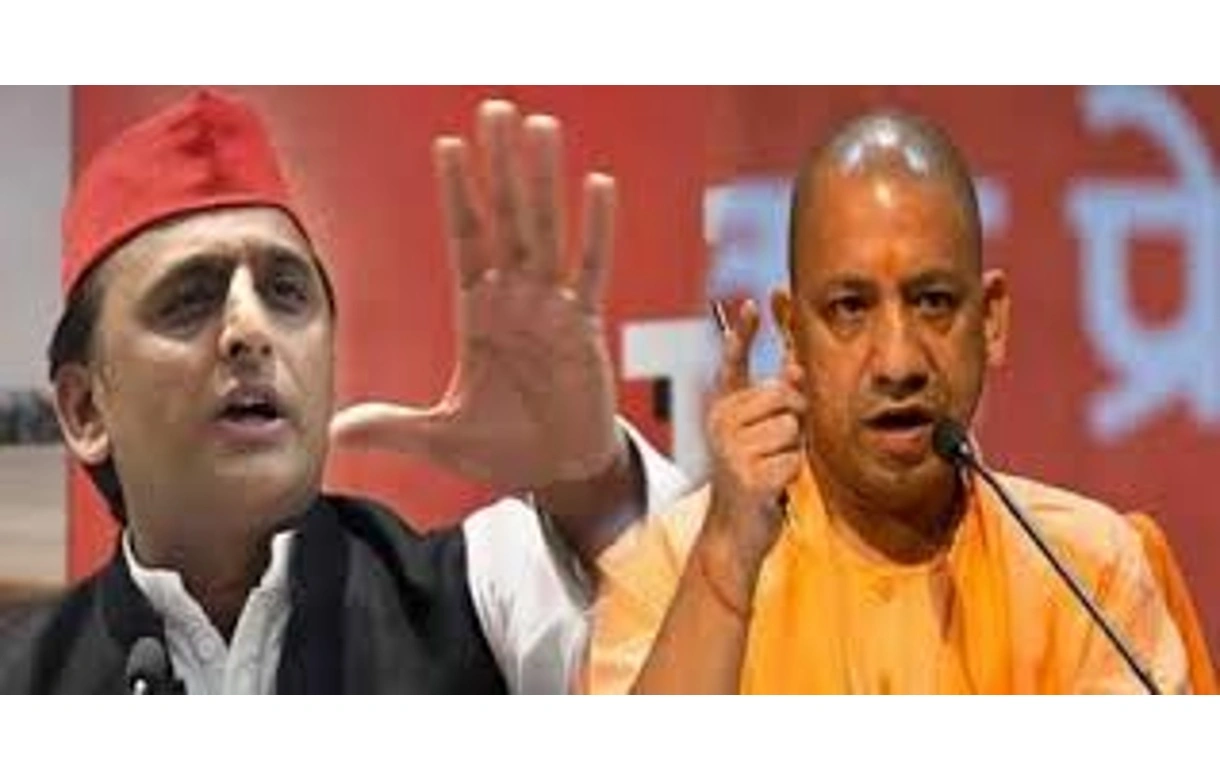
A heated exchange broke out in Parliament during discussions on the women’s reservation framework, with Union Home Minister Amit Shah and Samajwadi Party chief Akhilesh Yadav locking horns over the demand for a sub-quota for Muslim women.

The debate unfolded as the government pushed forward key legislative measures to implement 33% reservation for women in the Lok Sabha and state assemblies.

Akhilesh Yadav argued that the proposed reservation must ensure representation for women from marginalised communities, including Other Backward Classes (OBCs) and Muslim women. He said that without such provisions, large sections could remain excluded from political participation.

He also questioned the timing of the bill, alleging that the Centre was avoiding a caste census. According to him, a census would lead to renewed demands for caste-based reservations, which the government is reluctant to address.

Government rejects religion-based quota

Responding to the demand, Amit Shah made it clear that reservation based on religion is not permitted under the Constitution.

He stated that any proposal to provide quota to Muslims on religious grounds would be unconstitutional, firmly rejecting the idea of a separate sub-quota for Muslim women within the broader reservation framework.

The government has maintained that the existing framework already includes provisions for Scheduled Castes (SC) and Scheduled Tribes (ST) women within the overall reservation structure.

Wider political divide over implementation

The issue of sub-categorisation within the women’s quota has emerged as a major flashpoint, even as most opposition parties broadly support the idea of women’s reservation.

Samajwadi Party leaders reiterated that their support for the bill depends on inclusion of OBC and minority women, while the government continues to defend its constitutional position.

The debate is part of a broader discussion during the special Parliament session, where multiple bills linked to delimitation and implementation of the women’s quota are being taken up.

Continue Reading

India News

Raghav Chadha’s security withdrawn by Punjab amid AAP rift, Centre steps in with cover

Punjab withdraws Raghav Chadha’s security amid party tensions, Centre offers fresh protection.

Published

on

The Punjab government has withdrawn the Z+ category security cover provided to Raghav Chadha, amid an ongoing rift within the Aam Aadmi Party.

According to sources, the security personnel deployed by Punjab Police have been asked to report back, marking a significant development in the political dispute involving the Rajya Sabha MP.

The move comes shortly after Chadha was removed from his position as deputy leader of the party in the Rajya Sabha, signalling deepening differences between him and the party leadership.

Centre offers fresh security arrangement

Soon after the withdrawal, the Ministry of Home Affairs stepped in to provide security cover to Chadha.

Sources indicate that he will now receive Z-category security in Delhi and Punjab, while a Y-category cover may be provided in other parts of the country.

This shift ensures continued protection for the MP despite the withdrawal of state-provided security.

Fallout linked to political disagreement

The development is part of a broader fallout between Chadha and his party. He was recently replaced as deputy leader in the Rajya Sabha, with the party reportedly expressing dissatisfaction over his political approach and conduct in Parliament.

Chadha, however, has denied the allegations, calling them baseless and asserting that his focus has been on raising public issues rather than engaging in political confrontation.

Growing divide within party ranks

Once considered a close associate of Arvind Kejriwal and a prominent face of the party, Chadha’s recent removal from key roles and the withdrawal of his security underline a widening internal divide.

He is among the few leaders in the party who have recently found themselves at odds with the leadership, indicating shifting dynamics within the organisation.

Continue Reading

Trending

© Copyright 2022 APNLIVE.com