English हिन्दी
Connect with us

India News

Exit Polls 2022: Where to watch exit poll results for assembly elections in Uttar Pradesh, Uttarakhand, Punjab, Goa and Manipur?

The results of exit polls will be broadcast from 7 pm today after the ending of the high-stake poll season of five states. As per the EC guidelines, no person shall conduct any exit poll and publish or publicise by means of print or any other manner, the result of any exit poll.

Published

on

Exit Polls 2022

All eyes are on the results of Assembly elections in five states – Uttar Pradesh, Punjab, Goa, Uttarakhand and Manipur. The polling for the seventh and the final phase is underway in 9 districts of Poorvanchal region of Uttar Pradesh.

The results of exit polls will be broadcast from 7 pm today after the ending of the high-stake poll season of five states. As per the EC guidelines, no person shall conduct any exit poll and publish or publicise by means of print or any other manner, the result of any exit poll.
What is an exit poll and how is it conducted?

The Exit Poll are the survey of voters conducted by several media organisations outside the polling booths using random or systematic sampling methods to forecast the likely outcome of the elections before the results are declared. The Exit Polls are purely based upon the responses of the voters who have exercised their franchise.

Where to watch?

The most prominent exit polls in India are usually conducted by Chanakya, CVoter, and MyAxis India, among others, and shown on TV channels including ABP Network, Times Now, India Today, Aaj Tak, Zee News, TV9 Bharatvarsh and others. Along with the TV and leading media coverage, you can also read the Exit Poll-related news and the stories on other platforms like APN News.

Here’s are the five state general predictions

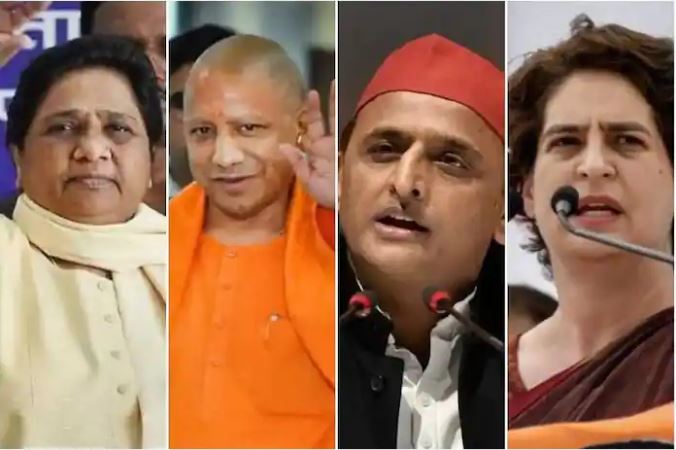
Uttar Pradesh: While the BJP won in Uttar Pradesh with a sweeping mandate in 2017, this election, the state is expected tough fight from its arch-rivals Akhilesh Yadav’s Samajwadi Party. It is also expected to be a referendum on the government of Chief Minister Yogi Adityanath, who was criticised over his handling of the Covid second wave as the images of bodies floating down the Ganga shocked the nation. In UP, Akhilesh Yadav’s Samajwadi Party and Priyanka Gandhi led Congress are the two opponent of the BJP while Mayawati’s BSP and Asaduddin Owaisi’s AIMIM could influence the result.

Punjab: After too many twist and turns, Punjab could witness a multi-cornered fight between the Congress, BJP, Punjab Lok Congress and the Sukhbir Singh Badal’s Shiromani Akali Dal. Meanwhile, the Aam Aadmi Party is confident to throw Congress out of power.

Uttarakhand: The hill state is expected a tight race between the incumbent BJP and its main challenger, the Congress. The hill state has always witnessed a close contest between the two parties, which corner nearly a third of total votes each, leaving a third for others.

Goa: Goa witnessed one of its tempestuous elections this year. However, nobody is able to claim that which party will touch the magic mark of 21 in the 40-member House. Amid anti-incumbency, the BJP is hoping for a third term, while the Congress has been able to regroup itself and is now the main challenger to the BJP. The presence of the AAP and TMC could divide the votes.

Read Also:Uttar Pradesh Assembly Election Phase-7 Live Updates: 35.51 percent voter turnout recorded till 1 pm, highest in Chandauli 

Manipur: There are no pre-poll alliances except for the Congress-CPI while the NPP, NPF, a part of the BJP-led coalition government, have expressed dissatisfaction with the Biren Singh government. All three parties have claimed that they will play a role of kingmaker. This will determine who forms the government and who sits in the chief minister’s chair.

However, nobody knows until Thursday if Congress manages to hold on to Punjab, or if the BJP retains power in UP, Goa, Uttarakhand, and Manipur or if Arvind Kejriwal’s Aam Aadmi Party pulls a surprise.

India News

Delhi records coolest day of June so far as rain and thunderstorms bring relief from heat

Delhi recorded its coolest day of June after rain and thunderstorms caused a sharp drop in temperatures. IMD has forecast more showers and gusty winds before temperatures begin rising again.

Published

on

Delhi weather today

Delhi witnessed its coolest day of June so far after widespread rain and thunderstorm activity caused temperatures to drop significantly across the national capital. The change in weather provided much-needed relief from the intense summer heat that had gripped the region in recent weeks.

According to the India Meteorological Department (IMD), rain and thunderstorms over the past 24 hours brought a noticeable decline in both maximum and minimum temperatures. Official weather observations showed that Delhi’s maximum temperatures fell well below normal levels, while several areas experienced strong winds and rainfall.

More rain and thunderstorms likely

The IMD has forecast additional thunderstorms, light to moderate rain and gusty winds for Delhi and nearby areas through Saturday. A yellow alert remains in place, with weather conditions expected to stay unsettled before gradually improving.

Weather experts have attributed the recent change to the influence of a western disturbance and associated weather systems affecting northwestern India. While the disturbance is gradually moving away, its impact is expected to continue for a short period.

Temperatures may rise again next week

Meteorologists expect the pleasant conditions to last for another couple of days. After that, temperatures are likely to begin rising again as rainfall activity decreases. The IMD’s latest forecast also indicates a gradual increase in temperatures by the middle of next week.

Recent weather systems have brought relief not only to Delhi but also to parts of Uttar Pradesh, Rajasthan and other northern states, where thunderstorms and rain have helped ease heatwave conditions.

Continue Reading

India News

Rajnath Singh says Indus waters will not flow to terror patrons as India maintains tough stance on Pakistan

Rajnath Singh said India would not allow Indus river waters to benefit countries that support terrorism, reinforcing New Delhi’s position on the future of the Indus Waters Treaty.

Published

on

Rajnath Singh

Defence Minister Rajnath Singh on Friday delivered a strong message to Pakistan, stating that India would not allow the waters of the Indus river system to benefit countries that support terrorism.

Addressing an event, Singh said the Narendra Modi-led government remains committed to protecting India’s interests and would ensure that water resources are not used in a manner that benefits what he described as “terror patrons.” His remarks come amid continuing tensions between India and Pakistan over the future of the Indus Waters Treaty (IWT).

The statement reflects India’s broader position that the treaty will remain in abeyance until Pakistan takes credible and irreversible steps to end support for cross-border terrorism. Officials have repeatedly maintained that terrorism and normal bilateral cooperation cannot go hand in hand.

India’s position on the Indus Waters Treaty

The Indus Waters Treaty, signed in 1960 with World Bank mediation, governs the sharing of waters from the Indus river system between India and Pakistan. For decades, it has been regarded as one of the most enduring agreements between the two neighbours.

However, India placed the treaty in abeyance after the April 2025 terror attack in Pahalgam, citing national security concerns and Pakistan’s alleged support for cross-border terrorism. Since then, Indian officials have consistently argued that Pakistan’s actions violate the spirit of goodwill and cooperation on which the agreement was based.

Government signals tougher approach on water sharing

Recent statements from senior ministers have indicated that New Delhi is exploring ways to maximise the use of water available to India under the Indus river system. Union Jal Shakti Minister C.R. Patil recently said the government is working to ensure that not a single drop of water that India can utilise goes to Pakistan in the coming years.

Rajnath Singh’s latest remarks add to that messaging, reinforcing the government’s view that issues related to water sharing cannot be separated from concerns about terrorism and national security.

Pakistan’s response and ongoing dispute

Pakistan has opposed India’s decision to keep the treaty in abeyance and has continued to raise concerns about water security and treaty obligations. The issue has also featured in international legal and diplomatic discussions, with India rejecting certain arbitration-related proceedings concerning the treaty.

The dispute remains a significant point of friction between the two countries, with both sides maintaining firm positions on the future of the water-sharing agreement.

Continue Reading

India News

Vijay meets PM Modi for second time as Tamil Nadu Chief Minister during Delhi visit

Tamil Nadu Chief Minister Vijay met Prime Minister Narendra Modi in New Delhi during his latest visit to the capital, marking their second interaction since Vijay became Chief Minister.

Published

on

Actor vijay

Tamil Nadu Chief Minister C. Joseph Vijay met Prime Minister Narendra Modi in New Delhi on Thursday, marking their second meeting since Vijay assumed office last month.

The meeting took place during Vijay’s visit to the national capital, where he has also been scheduled to attend the Governing Council meeting of NITI Aayog. Reports indicate that the interaction between the two leaders lasted around 20 minutes.

This follows Vijay’s first official meeting with the Prime Minister on May 27, shortly after taking charge as Tamil Nadu Chief Minister. During that meeting, Vijay submitted a memorandum on several issues concerning the state, including the Mekedatu dam project, Tamil Nadu fishermen detained in Sri Lanka, and other matters related to the state’s interests.

Vijay’s latest Delhi visit has included meetings with several national leaders as he continues engagements with the Centre and leaders from different political parties. Reports said he also met senior Congress leaders during the trip.

The Tamil Nadu Chief Minister took office on May 10 after his party, Tamilaga Vettri Kazhagam (TVK), emerged as a key force in the 2026 Assembly elections and formed the government with support from alliance partners.

While details of the latest discussion between Vijay and the Prime Minister were not immediately disclosed, the meeting is being viewed as part of ongoing Centre-state consultations on issues concerning Tamil Nadu.

Continue Reading

Trending

© Copyright 2022 APNLIVE.com