English हिन्दी
Connect with us

India News

Melody runs out of stock on quick-commerce apps as viral PM Modi-Meloni video triggers candy frenzy

A casual diplomatic gift has triggered an unprecedented consumer rush, leaving quick-commerce apps like Blinkit, Zepto, and Instamart completely out of stock of the iconic Melody candy.

Published

on

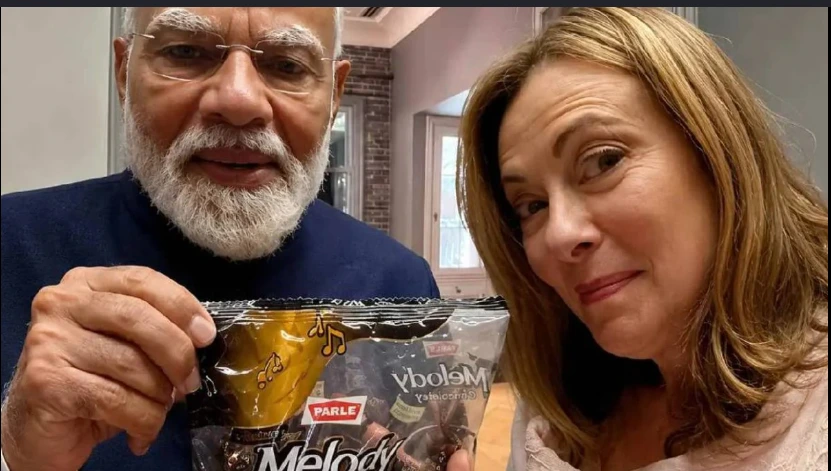
A simple packet of the classic chocolate-and-caramel toffee Melody has unexpectedly gone viral after a light-hearted diplomatic moment between Indian Prime Minister Narendra Modi and Italian Prime Minister Giorgia Meloni triggered a wave of online buzz and consumer interest in India.

Viral Modi-Meloni moment drives internet frenzy

The trend began after a video of PM Narendra Modi gifting a packet of Parle Melody to Italian Prime Minister Giorgia Meloni during his visit gained traction on social media. The clip shows the two leaders sharing a warm and informal exchange, which quickly caught the attention of users online.

Meloni’s positive reaction in the video and the friendly interaction between the two leaders helped fuel the popularity of the moment, which users soon began referring to as part of the “Melodi” meme trend.

Melody demand spikes on quick-commerce platforms

Following the viral spread of the video, demand for Melody toffees reportedly surged across India. Users on social media began sharing screenshots showing the candy listed as out of stock on quick-commerce platforms such as Blinkit and Zepto in several locations.

The sudden spike in interest led to widespread discussion online, with many users humorously linking the diplomatic moment to the sudden shortage of the nostalgic candy.

‘Melodi’ meme trend returns

Beyond the retail impact, the interaction once again revived the popular “Melodi” meme trend on social media. Users flooded platforms with memes, edits, and humorous posts referencing the friendly exchange between the two leaders.

The trend highlights how light-hearted diplomatic moments can quickly evolve into viral cultural phenomena in the digital age.

India News

Delhi records coolest day of June as rain brings relief from heat

Heavy rain and cloudy conditions helped Delhi record its coolest day of June, with the India Meteorological Department forecasting further relief from heat in the coming days.

Published

on

delhi-weather

Delhi experienced a significant break from the intense summer heat after rainfall and cloudy skies pushed temperatures down, making it the coolest day of June so far.

The change in weather brought much-needed relief to residents who had been dealing with high temperatures and humid conditions over the past several weeks. Rainfall was reported in several parts of the national capital and adjoining NCR regions, leading to a noticeable drop in daytime temperatures. Similar weather conditions have recently helped keep temperatures below normal across the city.

According to the India Meteorological Department (IMD), the combination of rain-bearing systems and cloud cover contributed to the cooler conditions. The weather department has indicated that pleasant weather is likely to continue, with chances of additional rainfall and thunderstorms over the next few days.

The rainfall not only lowered temperatures but also improved outdoor conditions after a prolonged spell of heat. Earlier this month, Delhi had experienced episodes of extreme weather, including heatwave conditions and dust storms, making the recent spell of rain a welcome change for residents.

IMD’s latest forecast suggests that while temperatures may gradually rise later in the week, intermittent rain and thunderstorms could continue to provide temporary relief from the summer heat.

Weather officials have advised people to stay updated on local forecasts as changing weather conditions could bring brief spells of rain, gusty winds and thunderstorms across Delhi-NCR.

Continue Reading

India News

Uddhav Sena MPs unreachable as Delhi meetings fuel fresh split speculation

Fresh uncertainty surrounds Shiv Sena (UBT) after several MPs reportedly became unreachable, with attention now focused on crucial meetings in Delhi.

Published

on

Fresh political uncertainty has gripped the Shiv Sena (UBT) after several of its Lok Sabha MPs reportedly became unreachable, prompting senior leaders to make personal efforts to contact them amid growing speculation of a possible rebellion within the party.

Party chief Uddhav Thackeray and other senior leaders are understood to be reaching out to MPs as concerns grow over potential defections. The developments come ahead of a parliamentary committee meeting in Delhi, where several MPs from the Uddhav Thackeray camp are expected to gather.

Reports suggest that some MPs from the Shiv Sena (UBT) faction could hold discussions in the national capital alongside leaders from the rival Shiv Sena led by Eknath Shinde. Sources have indicated that a group of MPs may explore forming a separate faction in Parliament before potentially aligning with the Shinde-led camp, although no official announcement has been made.

Names being discussed in political circles include MPs such as Sanjay Dina Patil, Sanjay Deshmukh, Nagesh Patil Ashtikar, Omraje Nimbalkar, Bhausaheb Wakchaure and Sanjay Jadhav. However, at least one MP, Sanjay Dina Patil, has publicly rejected reports linking him to any rebel group.

Meanwhile, senior Uddhav camp leaders including Arvind Sawant and Anil Desai are expected to remain actively engaged in efforts to maintain party unity. Rajya Sabha MP Sanjay Raut has also been in Delhi amid the unfolding developments.

The latest episode has revived memories of previous political upheavals in Maharashtra and intensified speculation over whether the Shiv Sena (UBT) could face another significant organisational challenge in the coming days. As meetings continue in Delhi, political observers will be closely watching for any formal announcements from either camp.

Continue Reading

India News

Telegram CEO Pavel Durov criticises India restriction, says leak networks shifted to other apps

Telegram founder Pavel Durov has responded to India’s temporary restriction on the platform ahead of the NEET-UG 2026 re-examination, arguing that the move affected ordinary users without stopping alleged leak networks.

Published

on

Telegram founder and CEO Pavel Durov has criticised India’s decision to temporarily restrict access to the messaging platform, arguing that the move failed to curb alleged exam leak operations and instead affected millions of legitimate users.

The restriction was imposed ahead of the NEET-UG 2026 re-examination as authorities sought to prevent the spread of leaked exam-related material and disrupt networks allegedly involved in malpractice.

In a public response, Durov said the action had inconvenienced a large number of users across India while those responsible for sharing leaked content had simply migrated to alternative platforms.

According to Durov, restricting access to Telegram did not eliminate the problem authorities were trying to address. He claimed that groups involved in distributing exam-related leaks quickly shifted their activities elsewhere, raising questions about the effectiveness of platform-specific restrictions.

The temporary curbs were announced by the government in the lead-up to the NEET-UG re-test scheduled for June 21. Officials said the move was aimed at safeguarding the integrity of the examination process following concerns about the circulation of leaked material online.

The restriction is currently expected to remain in place until June 22.

Durov also stressed that millions of Indian users rely on Telegram for communication, education, business activities and community engagement. He argued that measures targeting an entire platform can have wider consequences for users who have no connection to alleged wrongdoing.

The government’s action came amid broader efforts to prevent cheating and malpractice in competitive examinations. Authorities have been closely monitoring digital platforms and messaging services after reports that exam-related content was being circulated through online channels.

The debate has sparked discussions about how governments and technology platforms should balance examination security with access to digital communication services. While officials maintain that strong measures are necessary to protect the fairness of high-stakes examinations, critics argue that restrictions on entire platforms may not effectively stop determined offenders.

For now, Telegram remains at the centre of the discussion as authorities continue efforts to ensure a fair and secure conduct of the NEET-UG 2026 re-examination.

Continue Reading

Trending

© Copyright 2022 APNLIVE.com