English हिन्दी
Connect with us

Latest Politics News

Farooq bats for India-Pak dialogue to end terrorism in J&K; Don’t let tainted ones use Yatra to whitewash their past, warns Omar as Abdullahs join Bharat Jodo Yatra

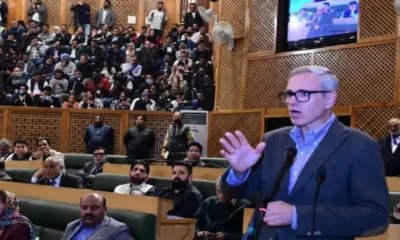
Former Jammu and Kashmir Chief Minister Farooq Abdullah has stressed for a bilateral between India and Pakistan as he stressed that terrorism is alive in the erstwhile state, and can only be ended if both neighbors sue for peace.

Published

on

Bharat Jodo Yatra

Former Jammu and Kashmir Chief Minister Farooq Abdullah has stressed for a bilateral between India and Pakistan as he stressed that terrorism is alive in the erstwhile state, and can only be ended if both neighbors sue for peace.
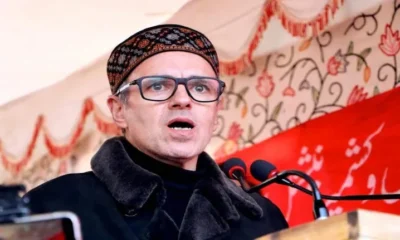
The National Conference (NC) chief lashed out at the ruling BJP for “spreading hatred” endangering the integrity of India.

Abdullah asked why the Narendra Modi-led BJP regime is “shying” away from talks with Pakistan if they can get China on the table, a country which has infiltrated into India 16 times, why not Islamabad.

“I am going to give you in writing with my blood that terrorism is alive and it will not finish till you start talking to Pakistan,” Abdullah was quoted as saying.

The former chief minister also said the Kashmiri Pandits need a balm for their wounds, which is possible when you replace hatred with love.

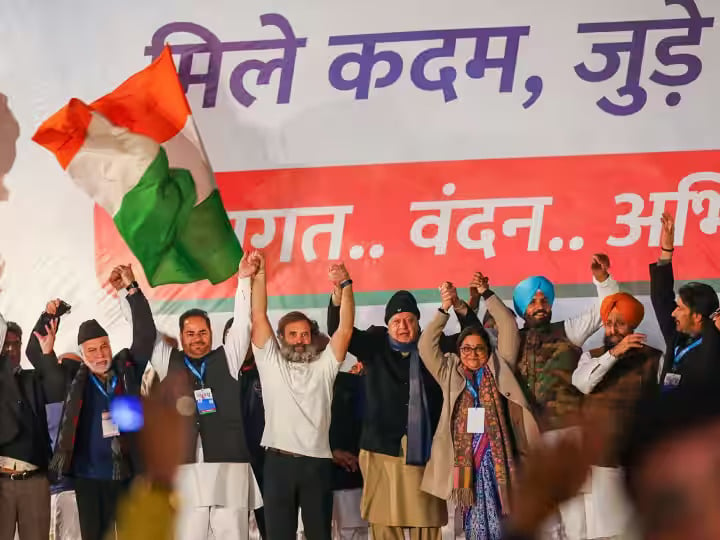
Abdullah reached Kathua by bus from Jammu and participated in the Rahul Gandhi-led Bharat Jodo Yatra which entered this entry point via Pathankot in Punjab Thursday evening to begin the Congress heir’s last leg of his foot march from Kanyakumari to Kashmir.

Abdullah, when asked, whether talking to Pakistan can end terrorism in the conflict-riddled region, alleged that the BJP government was reluctant because they’ve to keep Muslims and Hindus divided by hatred in order to cater to their vote bank.

Abdullah alleged that they (BJP) are “spreading hatred without caring for the safety of Pakistani Hindus or Indian Muslims.”

He said there is a need to soothe the wounds of Kashmiri pandits who have suffered a lot over the past 30 years.

Taking a dig at the controversial film Kashmir Files, Farooq Abdullah said the film was made only with the agenda to spread hatred and disrupt communal harmony.

Abdullah said both Kashmiri Pandits and Muslims suffered and even his workers and ministers were killed in large numbers since the eruption of terrorism.

“One of my ministers was blown to pieces by a bomb planted in his car. They were killed for hoisting the tricolor. We had a choice to choose between India and Pakistan in 1947 but we preferred India as we believed that we will live honorably and with rest in the country,” the NC leader said.

Don’t let tainted ones to use Bharat Jodo Yatra to whitewash themselves

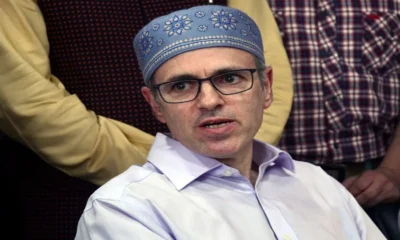
Meanwhile, Farooq’s son and former chief Minister Omar Abdullah, has cautioned the Congress to not let leaders with tainted recent records to join the march as some “might use” it to “whitewash themselves”. 

Read Also: Cop killed, 4 injured as pilot vehicle with Chhattisgarh BJP chief’s convoy overturns

Asked if leaders like alleged “rapist supporter” in Kathua rape case, Chaudhary Lal Singh, should be allowed to join the Yatra, Omar warned that Congress will have to see that some people “might use the yatra to whitewash their past”.

“We should not forget the role of those leaders who tried to save the rapist and played with the sentiments of the people. It is not hidden. These leaders will use the yatra to present themselves as secular. This is wrong. Congress leaders should see who is joining the yatra and what the recent track records have been of those leaders,” Abdullah was quoted as saying.

However, another former chief minister and People Democratic Party chief Mehbooba Mufti said that it doesn’t matter who joins the Yatra as the “motive” behind the march was more important.

Mufti said that thousands of people are joining Rahul Gandhi on the streets “trying to stitch back the fabric” of the country, and it hardly matters who joins as long as the motive is fulfilled.

On Tuesday, Jammu and Kashmir Congress spokesperson, Deepika Pushkar Nath resigned from the party after the grand-old party’s J&K unit gave a nod to let former minister Lal Singh to participate in the Bharat Jodo Yatra.

Singh had publicly defended the accused in Kathua rape case back in 2018.

Nath, a lawyer by profession, had also supported the family of Kathua rape victim with legal assistance.

The news of Nath’s resignation came to the fore after she tweeted about the same where she had written that she resigned from the party on ideological grounds.

The Congress spokesperson in a Tweet wrote and said that in lieu of Lal Singh’s proposal of joining the Bharat Jodo Yatra and the outfit allowing for the same, she is left with no other option but to resign from the Congress party.

In her Tweet, she alleged that Lal Singh was responsible for sabotaging the the Kathua rape case in 2018 by brazenly defending rapists. In the Tweet thread, she also added and said that Lal Singh divided the entire region of Jammu and Kashmir to protect the rapists whereas Bharat Jodo Yatra is working to unite. She also wrote and said that on ideological terms, she cannot share the party platform with such people.

Video shows DCW chief Swati Maliwal ,being harassed, dragged on Delhi streets | WATCH

UP man sentenced to 6 months imprisonment for selling adulterated milk 32 years ago

India News

PM Modi skips Lok Sabha reply as protests force repeated adjournments

PM Modi did not deliver his Lok Sabha reply today after sustained Opposition protests led to repeated adjournments over a dispute involving Rahul Gandhi’s proposed speech.

Published

on

PM Modi

Prime Minister Narendra Modi did not deliver his scheduled reply to the Motion of Thanks on the President’s address in the Lok Sabha today after sustained Opposition protests led to multiple adjournments of the House.

The disruption followed an escalation of tensions linked to Congress leader Rahul Gandhi’s proposed speech and the suspension of eight Opposition MPs a day earlier. The situation worsened after remarks made by BJP MP Nishikant Dubey during the proceedings.

Dispute over references to books sparks fresh ruckus

The controversy intensified when Nishikant Dubey responded to Rahul Gandhi’s demand to speak on national security and references to the unpublished memoirs of former Army chief General MM Naravane. Dubey said that while Gandhi wanted to quote from an unpublished book, he himself had brought several books that, according to him, made claims about the Gandhi family.

As Dubey began listing these books and their contents, strong protests erupted from Opposition members. Krishna Prasad Tenneti, who was presiding over the House at the time, cited Rule 349, which restricts members from reading out books, newspapers, or letters unless directly related to parliamentary business. Despite repeated warnings, the matter remained unresolved, leading to another adjournment.

Rahul Gandhi accuses government of silencing debate

Earlier in the day, Rahul Gandhi alleged that he was being prevented from speaking on an issue of national importance. He claimed the government was uncomfortable with references to General Naravane’s memoirs, which he said discussed the handling of the 2020 China border crisis.

In a social media post, Gandhi said he intended to present the Prime Minister with a book authored by the former Army chief, adding that some cabinet ministers had even questioned the existence of the book. He also wrote to Lok Sabha Speaker Om Birla after the suspension of eight Opposition MPs, alleging that parliamentary debate was being curtailed.

After it became clear that the Prime Minister would not speak in the House today, Gandhi posted that PM Modi had avoided Parliament because he was “scared” to face the truth. Congress MP Priyanka Gandhi Vadra echoed the allegation, claiming the Prime Minister was unwilling to enter the House.

Proceedings disrupted throughout the day

Lok Sabha proceedings were first adjourned until 2 pm amid loud protests over the issue linked to Naravane’s memoirs. Even after the House reconvened, disruptions continued, preventing normal business from resuming.

Later, Congress MPs staged a demonstration outside the Parliament complex, demanding that Rahul Gandhi be allowed to speak on the President’s address.

Continue Reading

India News

President’s Rule revoked in Manipur as NDA set to form new government

President’s Rule has been withdrawn in Manipur nearly a year after its imposition, paving the way for a new NDA-led government under Yumnam Khemchand Singh.

Published

on

President rule invoked in Manipur

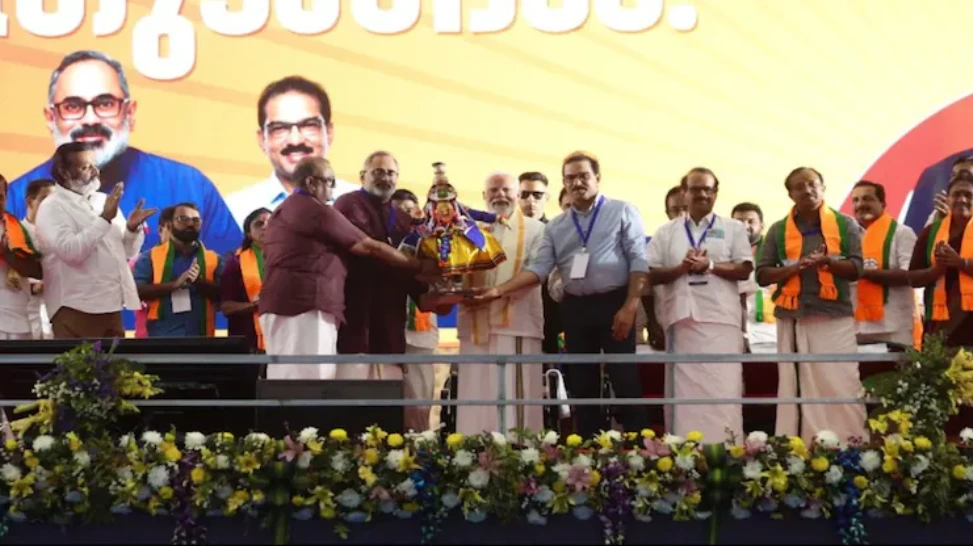
President’s Rule has been revoked in Manipur nearly a year after it was imposed, clearing the way for the formation of a new government led by the BJP-led National Democratic Alliance (NDA). The decision came hours before the scheduled oath ceremony of the new council of ministers.

Chief minister-designate Yumnam Khemchand Singh is set to take oath later this evening, along with other NDA legislators who will formally join the new government. The revocation brings an end to central rule that had been in place since February 2025, following the resignation of then chief minister N Biren Singh.

Assembly status during central rule

During the period of President’s Rule, the Manipur Legislative Assembly remained in suspended animation, meaning it was neither functioning nor dissolved. With the restoration of the elected government, legislative activity is expected to resume.

Khemchand Singh, 61, belongs to the Meitei community. Two deputy chief ministers have been named to reflect Manipur’s ethnic diversity. Nemcha Kipgen, from the Kuki community, and Losii Dikho, from the Naga community, are set to take charge as deputy chief ministers.

According to people with direct knowledge of the matter, Nemcha Kipgen is likely to take oath from a Manipur government guesthouse in Delhi.

Key portfolios and leadership choices

Seven-time MLA from Bishnupur district, Govindas Konthoujam, said he has been entrusted with the Home portfolio. Emphasising stability and law and order, he said he remains committed to serving the state with discipline and restraint.

Sources said Khemchand Singh is viewed within the party as a non-polarising leader who is acceptable across internal factions at a time of political transition. While he is yet to be tested in governance, he is seen as a steady administrative choice capable of providing organisational discipline and continuity amid uncertainty.

Uneasy peace continues in Manipur

The formation of the new government comes against the backdrop of continued tension in Manipur, nearly three years after violence erupted between the Meitei community in the valley areas and the Kuki tribes in several hill districts.

A section of Kuki groups has been demanding a separate administrative arrangement, with negotiations involving multiple insurgent groups operating under two umbrella organisations that are signatories to the suspension of operations agreement.

In recent weeks, some Kuki civil society organisations have stated they would not participate in the Manipur government and have distanced themselves from Kuki MLAs expected to join the new administration.

A day before the announcement of the new government, Kuki leader Paolienlal Haokip posted on X that representatives of the Kuki Zo people could not take part in leadership selection without justice and a written commitment for political settlement.

Diverging demands from communities

Meitei civil society groups have maintained that all internally displaced persons should be allowed to return home safely, even as dialogue continues. However, Kuki leaders have insisted that a political solution in the form of a separate administration must come first, before discussions on rehabilitation and return from relief camps.

Meitei leaders have countered this position, arguing that the demand reflects an ethnocentric territorial claim and that humanitarian issues should be addressed alongside negotiations, as no area is exclusively inhabited by a single community.

Continue Reading

India News

Mamata Banerjee alleges mass voter deletions in Bengal, targets Election Commission

Mamata Banerjee has accused the Election Commission of deleting thousands of voter names without due process, raising questions over the timing of the exercise ahead of elections.

Published

on

Mamata Banerjee

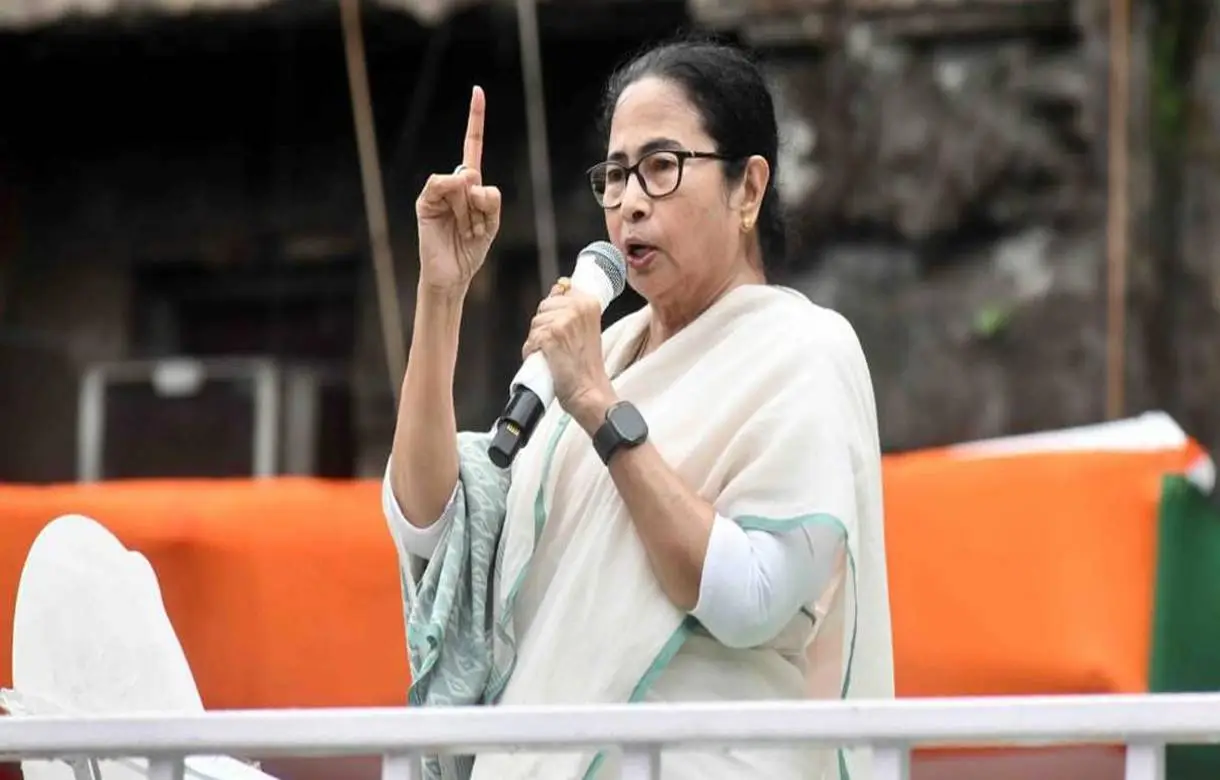
West Bengal Chief Minister Mamata Banerjee on Monday intensified her attack on the Election Commission over voter roll revisions, alleging that a large number of names have been deleted without due process as the state heads towards elections.

Addressing party workers, Banerjee claimed that 40,000 voters’ names were removed from her constituency alone, alleging that the deletions were carried out unilaterally and without giving voters a chance to be heard.

“In my constituency they have deleted 40,000 voters’ names unilaterally… Even a murderer gets a chance to defend himself,” she said.

Allegations against election officials

The chief minister directly accused an election official, alleging political bias and irregular conduct in the revision process. She claimed that voter names were being removed while officials sat in Election Commission offices, calling the process illegal.

“They cannot do it, it is illegal. 58 lakh names have been unilaterally deleted,” she said, echoing claims earlier made by Trinamool Congress leader Abhishek Banerjee.

Banerjee also alleged that individuals described as “micro-observers” had been appointed illegally, claiming they had no role under the Representation of the People Act and were linked to the BJP.

‘Alive but marked dead’

In a dramatic moment during her address, the chief minister asked those present who had been marked as deceased in the voter lists to raise their hands.

“See, they are alive but as per the Election Commission they are dead,” she said.

She further alleged that names were being deleted under the category of “logical discrepancy,” adding that even noted economist and Nobel laureate Amartya Sen had earlier been questioned regarding the age of his mother.

Questions over timing of voter roll exercise

While stating that she did not oppose the Special Intensive Revision process in principle, Banerjee questioned the timing of the exercise.

“I have no problem with SIR, but why do it on the eve of elections? Why not after elections?” she asked.

Reiterating confidence in her party’s organisational strength, the chief minister said she was prepared to fight the issue politically and democratically.

Continue Reading

Trending

© Copyright 2022 APNLIVE.com