English हिन्दी
Connect with us

India News

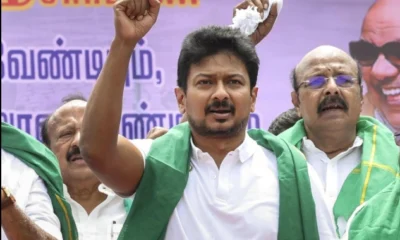
MK Stalin announces major DMK organisational Changes in Tamil Nadu

MK Stalin has announced a major DMK organisational overhaul, introducing age and term limits and expanding party districts from 77 to 110.

Published

on

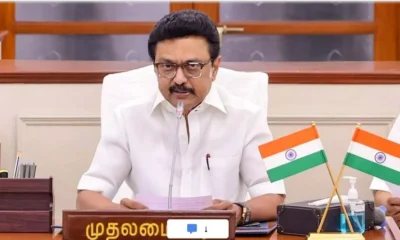
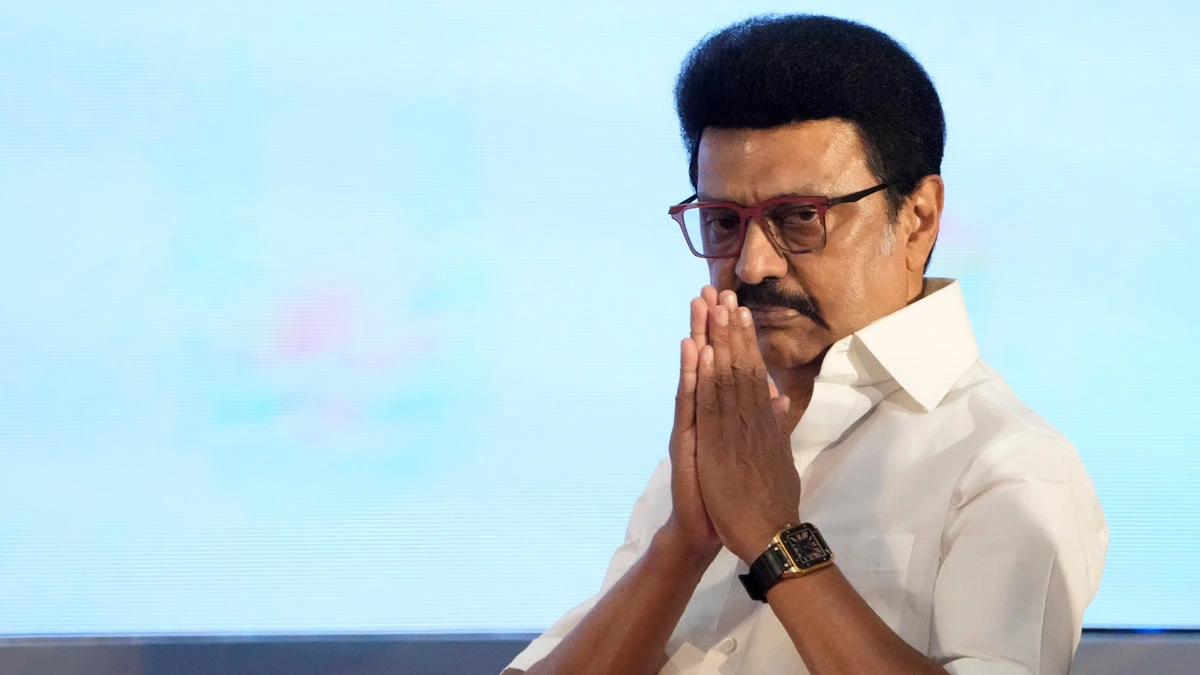
DMK chief MK Stalin has announced a major overhaul of the party’s organisational structure, months after the party lost the Tamil Nadu assembly election.

Acknowledging the defeat, Stalin said the party must openly recognise its mistakes. He also pointed to the functioning of party office-bearers as one of the factors behind the electoral loss.

“Although there are several reasons for our defeat, the functioning of our party office-bearers is also one of them,” Stalin said, stressing that the party must acknowledge its shortcomings and ensure better performance at every level.

Stalin also described the DMK as a “specialist” in making comebacks and said the party would return stronger.

Age and term limits for party posts

Among the major changes announced by Stalin are age and tenure limits for party positions.

Stalin said the changes would involve a significant restructuring of the DMK’s administrative system, with priority being given to new faces. He said the measures were intended to make the party sustainable for the next 100 years and help restore the trust of young people and women.

Under the new rules, branch secretaries must be aged 45 or below and can hold the position for a maximum of two terms.

District secretaries, meanwhile, must be below 70 years of age and can serve for a maximum of three terms.

DMK to increase party districts from 77 to 110

The DMK executive committee has approved increasing the number of party districts from 77 to 110.

The expansion will be implemented as part of the party’s 16th organisational elections. Revenue districts will generally be reorganised so that each party district covers two assembly constituencies.

Where only one constituency remains after the reorganisation, it will be attached to another suitable party district within the same revenue district as a third constituency.

Stalin has been authorised to determine and announce the constituencies that will form the 110 party districts.

New branch structure planned in urban areas

The DMK will also introduce a new branch-level structure in urban areas, along with the post of branch secretary.

The new system will initially be implemented in Chennai, Coimbatore, Madurai, Tiruchirappalli and Salem. It may subsequently be extended to other corporations.

Once the new party districts are announced, district executive committees will have to meet and establish the union, city, area, town, ward and branch-level units within 15 days.

The organisational changes come as the DMK seeks to restructure its party machinery and prepare for its political comeback following its assembly election defeat.

India News

PM Modi, Putin share car ride in Delhi after bilateral talks

PM Modi and Vladimir Putin shared a car ride to Bharat Mandapam after bilateral talks, marking their fourth joint journey by car.

Published

on

PM Modi putin

Prime Minister Narendra Modi and Russian President Vladimir Putin shared a car ride in New Delhi on Friday after holding bilateral talks, marking their fourth joint journey by car.

The two leaders travelled together in a limousine to the INNOPROM exhibition at Bharat Mandapam, where the 11-member BRICS Summit is scheduled to take place. Their joint ride came a day before the summit.

Modi and Putin’s fourth joint car ride

PM Modi and President Putin have shared a car on three previous occasions. Their first such ride took place during the Shanghai Cooperation Organisation (SCO) Summit in China last year.

The two leaders also met earlier this month at an SCO summit in Kyrgyzstan. Putin’s most recent visit to India before the current trip was in December 2025.

Their latest joint journey followed a bilateral meeting in which the two leaders discussed several areas of the India-Russia relationship.

India-Russia talks cover trade, energy and defence

According to the Ministry of External Affairs, PM Modi and Putin held wide-ranging discussions on the India-Russia Special and Privileged Strategic Partnership.

The talks covered cooperation in areas including trade, energy, defence, space and people-to-people ties. The two sides also exchanged views on regional and global issues, including conflicts in West Asia and the Black Sea region.

PM Modi reiterated that dialogue and diplomacy remain the way forward for resolving conflicts and said India is ready to assist in peace efforts, according to the Ministry.

Modi gifts Putin Russian translation of Thirukkural

During the bilateral meeting, PM Modi presented Putin with a Russian translation of the Thirukkural, the classical Tamil work associated with the poet and saint Thiruvalluvar.

Modi said the translation of the ancient text into Russian could help strengthen people-to-people ties between India and Russia.

The joint car ride added another notable moment to the two leaders’ interactions ahead of the BRICS Summit in New Delhi.

Continue Reading

India News

PM Modi calls for secure sea routes at BRICS event, references Hormuz

PM Modi highlighted the need for secure sea lanes, open supply routes and seafarer safety at the BRICS Business Forum amid tensions in the Strait of Hormuz.

Published

on

PM Modi

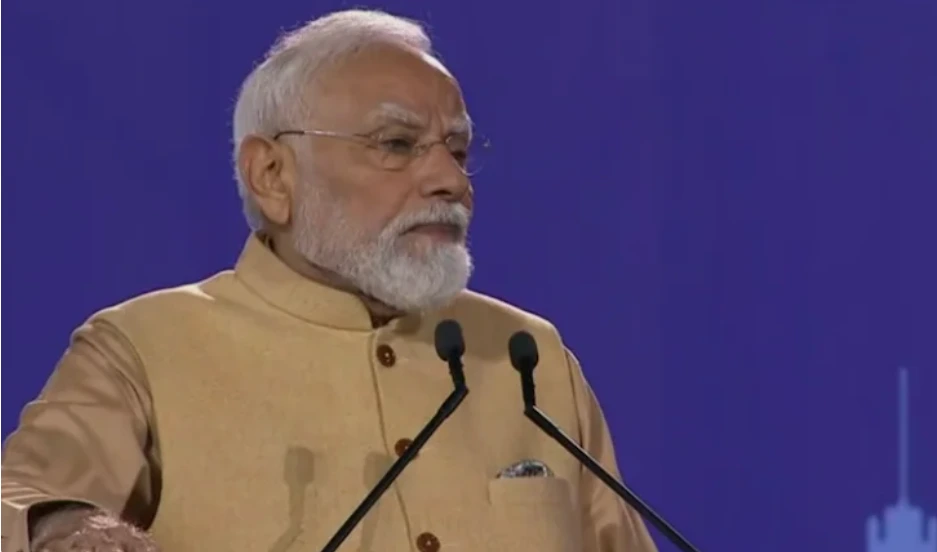
Prime Minister Narendra Modi on Friday stressed the importance of secure maritime routes and the safety of seafarers while addressing the BRICS Business Forum in New Delhi.

Speaking at the forum, which was also attended by Iranian President Masoud Pezeshkian, PM Modi linked the growth of global trade with the need to keep sea lanes secure, supply routes open and seafarers safe.

PM Modi stresses freedom of navigation

PM Modi said that global trade can progress only when maritime routes remain secure and supply lines stay open. He also reaffirmed India’s support for freedom of navigation and the safety of seafarers.

The remarks came against the backdrop of recent attacks on ships, particularly in and around the Strait of Hormuz. The strategically important waterway has been affected by the ongoing conflict involving the United States and Iran.

The issue of maritime security is also significant for India because disruptions to shipping routes can affect trade and the safety of Indian seafarers.

PM Modi highlights BRICS economic growth

During his address, PM Modi also highlighted the expanding economic importance of the BRICS grouping.

He said BRICS countries now account for around 50 per cent of the world’s population, 40 per cent of global GDP and more than 25 per cent of global trade. According to the Prime Minister, the combined GDP of BRICS nations has expanded nearly four-and-a-half times, compared with global GDP growth of about two-and-a-half times.

PM Modi described BRICS countries as emerging centres for innovation and said the business forum being hosted by India was the largest BRICS Business Forum so far.

Focus on trade and business cooperation

The Prime Minister also spoke about India’s efforts to reduce trade barriers and expand opportunities for businesses.

He said India has entered into free trade agreements with 40 countries and highlighted new cooperation networks established under India’s BRICS presidency in areas including agriculture, healthcare, skills and smart grids.

PM Modi also referred to initiatives such as the BRICS Incubator Network, BRICS MSME Portal and BRICS Startup Innovation Fund, aimed at connecting startups and small businesses with markets and finance.

Iran highlights global economic uncertainty

Iranian President Masoud Pezeshkian, who was present at the forum, spoke about the impact of geopolitical uncertainty and supply-chain disruptions on the global economy.

He said geopolitical tensions and the use of economic measures as political instruments had made the environment for countries and businesses more complicated. Pezeshkian argued that BRICS should turn its economic potential into practical cooperation in trade, investment and joint financing.

Russian President Vladimir Putin also spoke about major structural changes taking place in the global economy, saying new engines of growth were emerging.

PM Modi separately held bilateral meetings with Russian President Vladimir Putin and President Pezeshkian on the sidelines of the 18th BRICS Summit. During his meeting with Putin, Modi said dialogue and diplomacy were the way forward for resolving conflicts.

Continue Reading

India News

Shashi Tharoor lists BRICS benefits after P Chidambaram questions gains

Shashi Tharoor highlighted BRICS’ diplomatic value and role for the Global South after P Chidambaram questioned the tangible benefits India has gained from recent summits.

Published

on

Shashi Tharoor

Congress MP Shashi Tharoor has highlighted the diplomatic and global significance of BRICS after senior party leader P Chidambaram questioned the tangible benefits India has received from recent meetings of the grouping.

Speaking ahead of the BRICS summit in Delhi, Tharoor described BRICS as an important platform for the Global South and said hosting the summit was a matter of prestige for India. He also acknowledged challenges within the grouping, including differences among member countries and India’s trade imbalance with BRICS nations.

What Shashi Tharoor said about BRICS benefits

Tharoor said BRICS provides an important platform for the Global South. He pointed out that the grouping has 11 countries representing a majority of the world’s population and 41% of global GDP.

According to Tharoor, the size and diversity of the grouping make it significant on the global stage. He said the platform should therefore be taken seriously by other countries.

He also highlighted the importance of India hosting the BRICS summit. Tharoor said the presence of several heads of state and government, along with observers attending at the presidential and prime ministerial level, was a matter of prestige for India.

He linked the summit to India’s diplomatic convening power, saying that its value extends beyond immediate outcomes.

Tharoor flags challenges for BRICS

While listing the benefits, Tharoor also acknowledged that BRICS faces several challenges.

One of the key issues, according to him, is the difficulty of reaching a common position on major international developments. He pointed to differences over the Iran war and the Russia-Ukraine conflict.

Tharoor noted that when BRICS foreign ministers met in New Delhi in May, the countries were unable to agree on a joint statement. India, as the chair, instead issued a chair’s declaration.

He said the ability of the grouping to reach consensus would remain an important challenge for diplomats.

India faces trade imbalance with BRICS countries

Tharoor also raised concerns about the economic side of BRICS.

He said trade among BRICS countries has been growing but argued that the trend has been disadvantageous for India. According to him, India’s exports to BRICS countries have declined while imports from those countries have increased.

This trade imbalance was presented as one of the practical concerns that India needs to consider while assessing its engagement with the grouping.

What P Chidambaram said about BRICS

Tharoor’s comments came a day after former Union minister and Congress leader P Chidambaram questioned the tangible benefits India has received from recent BRICS summits.

Chidambaram said he did not think the last two or three BRICS meetings had produced significant tangible benefits or results for India.

He also pointed out that India participates in several multilateral groupings, including BRICS, the Shanghai Cooperation Organisation, the G20 and the Quad, and questioned what concrete benefits the country had received from them.

The BJP criticised Chidambaram’s remarks and described him as part of the “naraaz phupha” group that, according to the party, could not accept India’s progress.

Why are BRICS benefits being debated?

The latest exchange highlights two sides of the BRICS debate.

Chidambaram has questioned whether the grouping has delivered enough concrete outcomes for India, while Tharoor has emphasised its diplomatic importance, its representation of the Global South and India’s ability to bring major countries together.

At the same time, Tharoor has acknowledged challenges related to consensus and India’s trade position within the grouping.

Continue Reading

Trending

© Copyright 2022 APNLIVE.com