English हिन्दी
Connect with us

India News

MK Stalin sets up panel to push for Tamil Nadu’s autonomy amid NEET, Governor challenges move

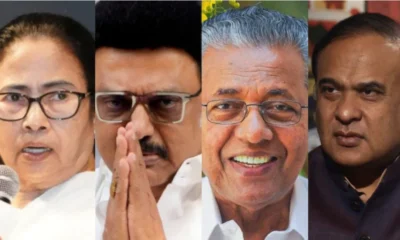
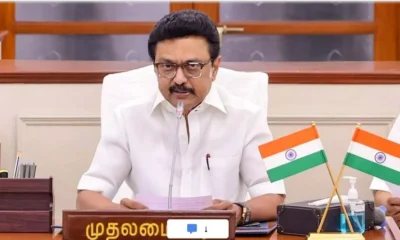
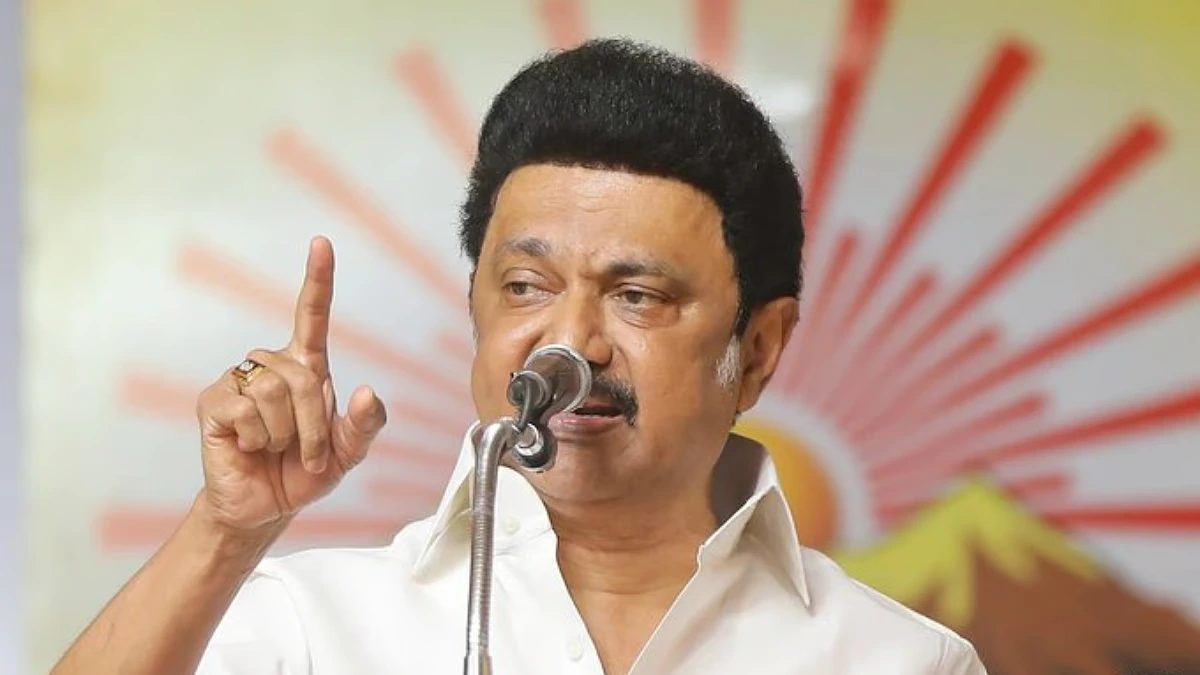
Tamil Nadu Chief Minister MK Stalin has launched a high-level committee to recommend measures for enhancing state autonomy, with a focus on retrieving powers moved to the concurrent list and addressing disputes over NEET and the Governor’s authority.

Published

on

In a significant move aimed at asserting Tamil Nadu’s rights within the Indian federal structure, Chief Minister MK Stalin has constituted a high-level committee to examine and propose measures to enhance state autonomy. This step comes amid intensifying disputes between the Dravida Munnetra Kazhagam (DMK)-led state government and the BJP-led central government, particularly over the administration of education and the role of the Governor.

The committee will be headed by retired Supreme Court Chief Justice Kurien Joseph and includes former civil servants Ashok Shetty and Mu Nagarajan. The primary objective is to review existing laws and suggest how powers once exclusively under state control—but later moved to the concurrent list—can be reclaimed. The aim, as declared by Stalin in the Assembly, is to uphold the rights of all Indian states while ensuring cooperative federalism.

Interim report by 2026, final recommendations by 2028

The panel is expected to deliver an interim report by January 2026 and its final recommendations by 2028. The scope includes recommending frameworks that enhance the functioning of state governments without compromising the unity of the nation.

Standoff over NEET and Governor’s actions

This initiative gains importance in the backdrop of Tamil Nadu’s ongoing resistance to the National Eligibility cum Entrance Test (NEET). The DMK has consistently opposed NEET, demanding the right to admit students to medical courses based on Class XII marks alone. The Assembly had twice passed a bill to this effect, only for it to be rejected by President Droupadi Murmu earlier this month.

The tension further escalated as the Supreme Court recently criticized Governor RN Ravi for withholding ten bills passed by the Tamil Nadu Assembly, calling his delays “arbitrary” and “illegal.” These bills, now signed into law, include provisions limiting the Governor’s role in appointing Vice Chancellors to state universities.

Education autonomy and language policy dispute

Tamil Nadu has also demanded that education be removed from the concurrent list and reinstated as a state subject, reversing changes made via the 42nd Constitutional Amendment. The DMK argues that central control over education undermines regional diversity and federal values.

Another flashpoint is the three-language policy under the National Education Policy (NEP), which the DMK views as an attempt to impose Hindi. The state has historically followed a two-language policy, comprising Tamil and English. The DMK has also accused the central government of attempting to “blackmail” the state by threatening to withhold Rs 2,500 crore in education funds—a charge denied by Union Education Minister Dharmendra Pradhan.

Political backdrop ahead of elections

These confrontations are unfolding as Tamil Nadu prepares for Assembly elections next year. The BJP, which has renewed its alliance with the main opposition AIADMK, is seeking to expand its presence in the state. Meanwhile, the DMK has voiced concern over the upcoming delimitation exercise, fearing it may reduce southern states’ parliamentary representation in favor of the Hindi-speaking north.

India News

PM Modi urges people to read Tirukkural on Thiruvalluvar Day

Prime Minister Narendra Modi on Thiruvalluvar Day appealed to people to read the Tirukkural, calling it a reflection of the humane and harmonious ideals of Tamil philosopher-poet Thiruvalluvar.

Published

on

pm modi

Prime Minister Narendra Modi on Friday urged people across the country to read the Tirukkural, highlighting its enduring relevance and the intellectual legacy of Tamil philosopher-poet Thiruvalluvar.

Marking Thiruvalluvar Day, which coincides with the Pongal celebrations every year, the prime minister paid tribute to the revered scholar, describing him as a symbol of harmony, compassion and Tamil cultural excellence.

In a message shared on social media platform X, Modi said Thiruvalluvar’s works and ideals continue to inspire countless people even today. He noted that the philosopher envisioned a society rooted in compassion and balance.

The prime minister encouraged citizens to engage with the Tirukkural, a classical Tamil text that deals with various aspects of human life, ethics and governance, calling it a window into the profound intellect of Thiruvalluvar.

Thiruvalluvar Day is observed annually to honour the philosopher-poet, whose literary contributions remain central to Tamil culture and thought.

Continue Reading

India News

BJP, Thackerays or Pawars: Maharashtra civic body poll results awaited today

Counting of votes for 29 municipal corporations in Maharashtra, including the key BMC and Pune civic bodies, begins today, with BJP, Thackerays and Pawars awaiting crucial results.

Published

on

The political balance in Maharashtra’s urban centres will become clearer today as votes are counted for elections to 29 municipal corporations across the state. The results are keenly awaited amid high-stakes contests involving the BJP, the Thackeray cousins and the reunited Pawar factions.

Polling was held for 2,869 seats across 893 wards, with 3.48 crore eligible voters deciding the fate of 15,931 candidates. Counting is scheduled to begin at 10 am.

Mumbai and Pune in sharp focus

All eyes are on Mumbai, where the contest for the Brihanmumbai Municipal Corporation (BMC) has drawn statewide attention. Shiv Sena (UBT) chief Uddhav Thackeray and Maharashtra Navnirman Sena chief Raj Thackeray joined hands after more than two decades in a bid to reclaim control of the country’s richest civic body.

The BMC, which has an annual budget of over Rs 74,400 crore, went to polls after a nine-year gap, following a four-year delay. A total of 1,700 candidates contested the 227 seats.

Exit polls suggest a strong performance by the BJP–Shiv Sena (Eknath Shinde faction) alliance in Mumbai. An aggregate of multiple surveys projects the ruling alliance ahead, with the Shiv Sena (UBT) and allies trailing, while the Congress is expected to secure a limited number of seats. Exit polls have also indicated possible voting consolidation among Maratha and Muslim voters behind the Thackeray-led alliance, while women and young voters may tilt towards the BJP.

The last BMC election in 2017 saw the undivided Shiv Sena retain control of the civic body it had dominated for decades.

In Pune, the spotlight is on the unusual alliance between rival NCP factions led by Ajit Pawar and Sharad Pawar. Exit polls indicate the BJP could emerge as the largest party in the Pune Municipal Corporation (PMC), with both NCP factions and the Shiv Sena also expected to secure a share of seats.

Statewide counting underway

Apart from Mumbai and Pune, counting will take place in several other key municipal corporations, including Thane, Navi Mumbai, Kalyan-Dombivli, Nagpur, Nashik, Pimpri-Chinchwad, Mira-Bhayandar, Vasai-Virar, Solapur, Kolhapur, Amravati, Akola, Jalgaon, Malegaon, Latur, Dhule, Jalna, Sangli-Miraj-Kupwad, Nanded-Waghala, Chandrapur, Parbhani, Panvel, Bhiwandi-Nizampur, Ulhasnagar, Ahilyanagar and Ichalkaranji.

With major parties treating these civic polls as a referendum on their urban appeal ahead of future state and national elections, today’s results are expected to shape Maharashtra’s political narrative in the months to come.

Continue Reading

India News

Supreme Court flags risk of lawlessness, pauses FIRs against ED officers in Bengal case

The Supreme Court paused FIRs against ED officers in the Bengal I-PAC raid case, warning that obstruction of central probes could lead to lawlessness and seeking responses from the Centre and state.

Published

on

Supreme Court

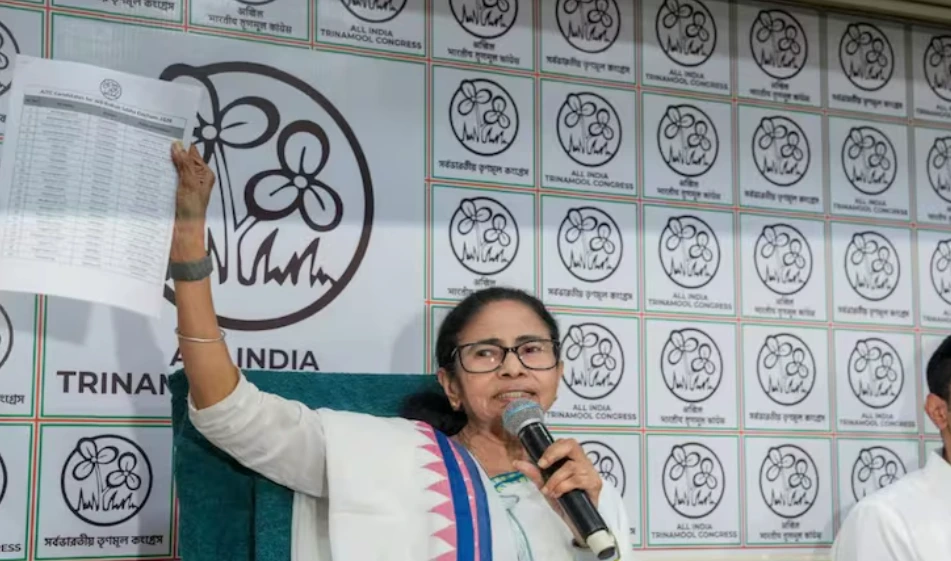
The Supreme Court on Wednesday delivered a sharp rebuke to the Mamata Banerjee-led West Bengal government, pausing FIRs lodged against officers of the Enforcement Directorate over searches linked to political consultancy I-PAC. The court said the case raises serious questions about interference in investigations and warned that failure to address them could lead to “lawlessness”.

A bench of Justice Prashant Mishra and Justice Vipul Pancholi sought replies from the Ministry of Home Affairs, the Department of Personnel and Training, Chief Minister Mamata Banerjee and the Trinamool Congress government on the ED’s plea. The central agency has also sought the suspension of Bengal Director General of Police Rajeev Kumar and Kolkata Police Commissioner Manoj Kumar Verma, and a probe by the CBI. The matter will be heard next on February 3.

The ruling follows a standoff between the ED and the Bengal government after the agency conducted searches at premises linked to I-PAC, which manages election campaigns for the Trinamool Congress, in connection with a corruption case.

Court questions obstruction of central probes

Recording its prima facie view, the Supreme Court said the petition raised a “serious issue” concerning investigations by central agencies and possible obstruction by state authorities.

“There are larger questions which emerge and if not answered shall lead to lawlessness. If central agencies are working bona fide to probe a serious offence, a question arises: Can they be obstructed by party activities?” the bench observed.

Earlier in the day, the court also expressed disturbance over scenes of chaos in the Calcutta High Court during a hearing related to the same dispute.

ED alleges interference, seeks action against top cops

The Enforcement Directorate accused the West Bengal administration of interfering with its searches and investigation. Appearing for the agency, Solicitor General Tushar Mehta alleged that evidence was removed from the residence of an I-PAC co-founder and argued that such actions could encourage state police officers to aid and abet obstruction. He sought suspension of senior police officials.

Describing the disruption in the Calcutta High Court on January 9, Mehta called it “mobocracy”, saying a group of lawyers unconnected to the case disrupted proceedings, forcing an adjournment. The bench asked whether the high court had been turned into a protest site, to which Mehta responded that messages had circulated calling lawyers to gather at a specific time.

Banerjee’s counsel defends move, cites election confidentiality

Senior advocate Kapil Sibal, appearing for Mamata Banerjee, questioned the timing of the ED’s presence in Bengal ahead of Assembly elections. He said the last development in the coal scam case dated back to February 2024 and argued that I-PAC handled election-related work under a formal contract with the Trinamool Congress.

According to Sibal, election data stored at the premises was confidential and critical to campaign strategy. He said the party leadership had a right to protect such information.

Representing the Bengal government and the DGP, senior advocate Abhishek Singhvi referred to the January 9 disruption but argued it could not justify parallel proceedings in different courts. The bench responded that emotions “cannot go out of hand repeatedly”.

Continue Reading

Trending

© Copyright 2022 APNLIVE.com