English हिन्दी
Connect with us

Latest Politics News

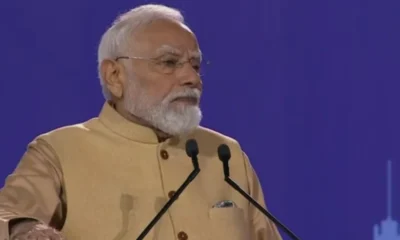
Modi blames Congress for Partition, injustice to Sardar Patel, muzzling democracy

Published

on

PM Narendra Modi

A veiled attack on Mahatma Gandhi without naming him, blaming Nehru for Partition and attributing much of what is wrong in the country to Congress rule marked Prime Minister Narendra Modi‘s 90 minute speech in reply to the motion of thanks to President’s address in Parliament on Wednesday, January 7.

He later moved on make claims of achievements under his government terming them, typically, ‘unprecedented’.

Amid constant sloganeering by the opposition of ‘jhutha bhashan bandh karo’ and ‘jhuthe ashwasan bandh karo’ (stop telling lies in speech and stop giving false assurances), Modi started by saying that the President’s speech does not belong to any one party. The Presidential address should be respected and it should not be opposed just for the sake of opposition, he said.

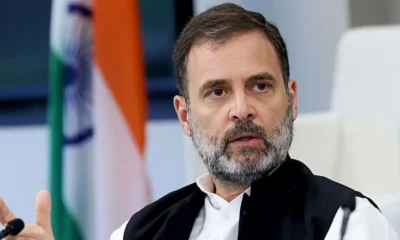
In what was more of a ‘campaign speech’, as later alleged by Congress president Rahul Gandhi, Modi began his speech by directly blaming the Nehru-Gandhi family for Partition.

“This is the same party that divided India. For decades, one party devoted all their energies in singing paeans to one family. The interests of the nation were over-looked just for the interests of one family,” he said.

“To this day, 125 crore Indians are paying the price for your sins, you divided India keeping elections in mind, you closed Parliament’s doors without heeding the people’s wishes, the seeds you sowed at that time, its ramifications are being felt to this day. Not a single day has passed when the country has not suffered due to poison sowed by you,” Modi alleged.

He accused the Congress for brainwashing people into thinking the Congress, especially Jawaharlal Nehru, brought democracy to India. He said that democracy “is in the blood of Indians” and cited the golden age of Lichchavi rule in eastern India and of Kannada social reformer Basava’s teachings.

“It is the country’s misfortune that Congress leaders feel ‘Bharat’ the country was born on August 15, 1947, as if there was no country before this. I’m shocked, do I call it ignorance, or lack of understanding, when it is said Nehru and the Congress gave India democracy,” he said.

Modi explained democracy to the Lok Sabha and informed it that democracy isn’t a preserve of the Congress – far from it, he said, the Congress has destroyed democracy.

Modi asked, “How did the Congress act in Kerala, how did they treat the Akali Dal in Punjab, how did they behave in Tamil Nadu? Why did Congress dismiss so many state governments at their will? This is no commitment to democracy.”

Referring to Karnataka Congress MP Mallikarjun Kharge’s speech in Parliament, Modi said: “Kharge ji aren’t you from Karnataka, at least remember Basava. You should know him, he established the Anubhav Mandap in the 12th century. Everything he did was done democratically and women’s empowerment was his top priority, this was democracy in India in the 12th century. Have you forgotten that, Kharge ji?”

The reference to Karnataka was significant in view of the upcoming assembly polls in the state. Next was Andhra Pradesh, where the BJP ally TDP has been miffed with it after the Union Budget 2018.

Modi said the TDP was born due to humiliation of Andhra leaders like Neelam Sanjeeva Reddy by Congress. He alleged that former Congress PM Rajiv Gandhi insulted a Congress CM at Hyderabad airport and “stabbed in the back the party’s own Presidential choice” Reddy.

“NT Rama Rao’s Telugu Desam Party was born out of those insults to the people of Andhra Pradesh,” said Modi, using it to underscore his point about the Congress being undemocratic though claiming to have brought democracy to India.

“We cannot forget how the Congress insulted Shri Neelam Sanjiva Reddy, a proud son of Andhra Pradesh. They humiliated him. Nobody in India needs lessons on democracy from the Congress Party,” said Modi.

The PM also had words about what he said is the lack of democracy within the Congress party. He claimed that “out of 15 Congress committees, 12 had voted for Sardar Patel while three had rejected both”, yet Jawaharlal Nehru was made the Prime Minister, at the time of Independence.He also claimed India wouldn’t have lost what is now Pakistan-occupied-Kashmir if Patel has been made Prime Minister.

This was a veiled reference to Mahatma Gandhi, who had preferred Nehru for the post of prime minister since he was more acceptable and preferred leader for a secular India for which Kashmir had opted. Patel, who himself – along with most other leaders – was in agreement with this choice, was also old and passed away even before the first elections were held.

Having said that, the PM also went on to cite the Congress party’s recent internal elections as an example of what he claimed is the lack of democracy in the grand old party – a malady ailing almost every India political party, including the BJP where the leader going to be ‘elected’ as chief is decided by RSS and is known beforehand.

Modi said: “In December, did we witness an ‘election’ or a coronation for the post of Congress president? One youngster raised his voice about this as well, but he was ignored.” He was alluding to a minor revolt by one Shehzad Poonawalla.

The BJP is nothing like the Congress and the BJP-led NDA government is nothing like the previous Congress governments, the PM said, moving on to detail what he called his government’s achievements since assuming power in May 2014.

“The NDA Government has changed the work culture in the nation. Projects are not only thought about well but also executed in a timely manner,” said the PM.

He also claimed that his government is building more roads and a faster rate than the previous one – a claim that had been proved false earlier by some websites such as Alt News which did a fact check.

Further, he said, “Since Kharge Ji spoke about railways and Karnataka, let me tell the truth about the Bidar-Kalburgi rail line. The project was approved by the Vajpayee Government and from 2004 till 2013 nothing was done. It is when a government under BSY/BJP gave approvals work could begin,” referring to BJP leader and former Karnataka CM BS Yeddyurappa (BSY).

He said that it was his government that got work done while Congress only laid foundation stones. He mentioned the example of the Barmer refinery to demonstrate his point. “The way people of Rajasthan were misled about the Barmer refinery was appalling. Just for votes, lies were said. It is in the last three years that the government of India and the Rajasthan government worked together to sort out the pending issues,” he claimed. Rajasthan has a BJP government currently.

India News

PM Modi assures no discrimination in women’s quota, delimitation debate intensifies in Parliament

PM Narendra Modi has assured that women’s reservation will be implemented without discrimination, amid a heated debate over delimitation in Parliament.

Published

on

PM modi

Prime Minister Narendra Modi has assured that there will be no discrimination in the implementation of women’s reservation, as Parliament witnessed a sharp debate over the proposed linkage between the quota and delimitation exercise.

During the ongoing special session, the government reiterated its commitment to ensuring fair representation while addressing concerns raised by opposition parties regarding the timing and structure of the legislation.

The proposed framework aims to reserve 33 percent of seats for women in the Lok Sabha and state assemblies. However, its implementation is tied to a fresh delimitation exercise, which is expected after the next census.

Opposition questions timing and intent

Opposition leaders have raised concerns that linking the women’s quota to delimitation could delay its implementation. They argue that the process of redrawing constituencies may push the actual rollout further into the future.

The issue has triggered a broader political confrontation, with multiple parties questioning whether the move could alter representation across states.

Some critics have also alleged that the delimitation exercise could disproportionately benefit certain regions based on population, a charge the government has rejected.

Government reiterates commitment to fair implementation

Responding to these concerns, the Centre has maintained that the reforms are necessary to ensure accurate and updated representation based on population data.

Leaders from the ruling side have repeatedly emphasized that the process will be carried out transparently and without bias. The assurance that there will be “no discrimination” is aimed at addressing fears among states and opposition parties.

The debate marks a key moment in Parliament, with both sides engaging in intense exchanges over one of the most significant electoral reforms in recent years.

Continue Reading

India News

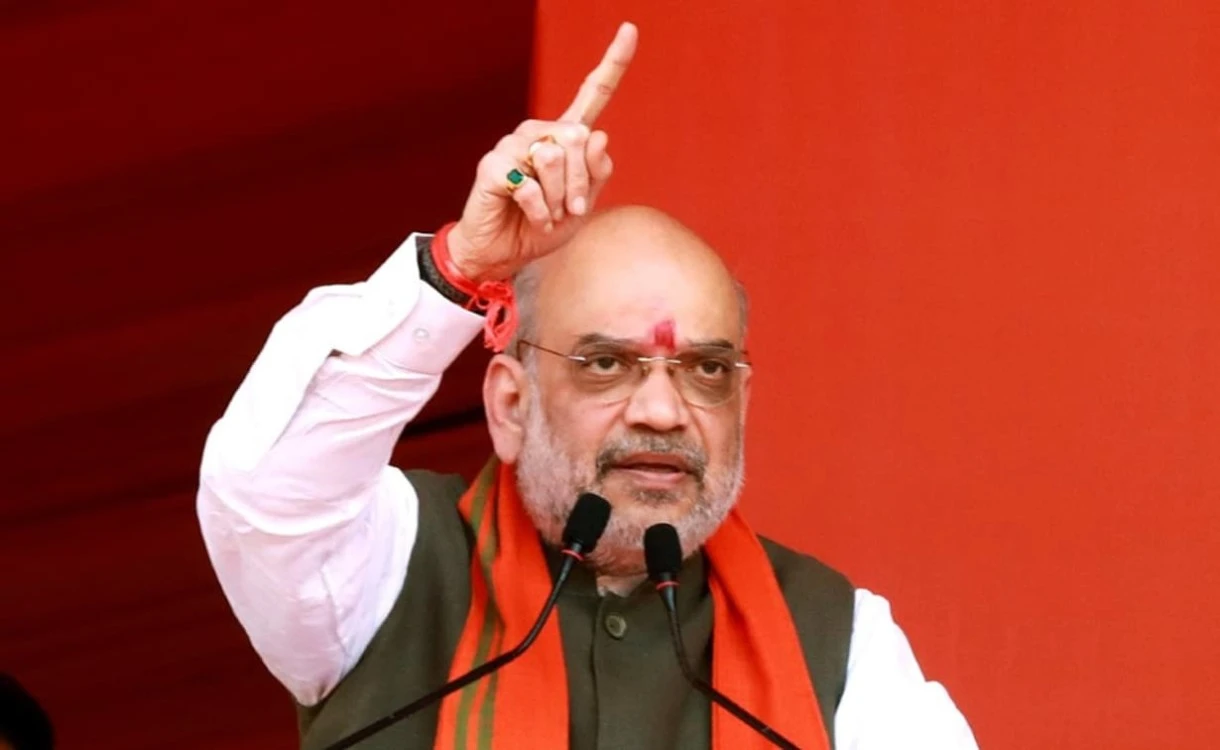
Give all tickets to Muslim women, Amit Shah says, attacking Akhilesh Yadav on sub-quota demand

A sharp exchange between Amit Shah and Akhilesh Yadav in Parliament over sub-quota for Muslim women highlights key divisions on women’s reservation implementation.

Published

on

A heated exchange broke out in Parliament during discussions on the women’s reservation framework, with Union Home Minister Amit Shah and Samajwadi Party chief Akhilesh Yadav locking horns over the demand for a sub-quota for Muslim women.

The debate unfolded as the government pushed forward key legislative measures to implement 33% reservation for women in the Lok Sabha and state assemblies.

Akhilesh Yadav argued that the proposed reservation must ensure representation for women from marginalised communities, including Other Backward Classes (OBCs) and Muslim women. He said that without such provisions, large sections could remain excluded from political participation.

He also questioned the timing of the bill, alleging that the Centre was avoiding a caste census. According to him, a census would lead to renewed demands for caste-based reservations, which the government is reluctant to address.

Government rejects religion-based quota

Responding to the demand, Amit Shah made it clear that reservation based on religion is not permitted under the Constitution.

He stated that any proposal to provide quota to Muslims on religious grounds would be unconstitutional, firmly rejecting the idea of a separate sub-quota for Muslim women within the broader reservation framework.

The government has maintained that the existing framework already includes provisions for Scheduled Castes (SC) and Scheduled Tribes (ST) women within the overall reservation structure.

Wider political divide over implementation

The issue of sub-categorisation within the women’s quota has emerged as a major flashpoint, even as most opposition parties broadly support the idea of women’s reservation.

Samajwadi Party leaders reiterated that their support for the bill depends on inclusion of OBC and minority women, while the government continues to defend its constitutional position.

The debate is part of a broader discussion during the special Parliament session, where multiple bills linked to delimitation and implementation of the women’s quota are being taken up.

Continue Reading

India News

Raghav Chadha’s security withdrawn by Punjab amid AAP rift, Centre steps in with cover

Punjab withdraws Raghav Chadha’s security amid party tensions, Centre offers fresh protection.

Published

on

The Punjab government has withdrawn the Z+ category security cover provided to Raghav Chadha, amid an ongoing rift within the Aam Aadmi Party.

According to sources, the security personnel deployed by Punjab Police have been asked to report back, marking a significant development in the political dispute involving the Rajya Sabha MP.

The move comes shortly after Chadha was removed from his position as deputy leader of the party in the Rajya Sabha, signalling deepening differences between him and the party leadership.

Centre offers fresh security arrangement

Soon after the withdrawal, the Ministry of Home Affairs stepped in to provide security cover to Chadha.

Sources indicate that he will now receive Z-category security in Delhi and Punjab, while a Y-category cover may be provided in other parts of the country.

This shift ensures continued protection for the MP despite the withdrawal of state-provided security.

Fallout linked to political disagreement

The development is part of a broader fallout between Chadha and his party. He was recently replaced as deputy leader in the Rajya Sabha, with the party reportedly expressing dissatisfaction over his political approach and conduct in Parliament.

Chadha, however, has denied the allegations, calling them baseless and asserting that his focus has been on raising public issues rather than engaging in political confrontation.

Growing divide within party ranks

Once considered a close associate of Arvind Kejriwal and a prominent face of the party, Chadha’s recent removal from key roles and the withdrawal of his security underline a widening internal divide.

He is among the few leaders in the party who have recently found themselves at odds with the leadership, indicating shifting dynamics within the organisation.

Continue Reading

Trending

© Copyright 2022 APNLIVE.com