English हिन्दी
Connect with us

India News

Bihar CM Nitish Kumar to not participate in Rahul Gandhi’s Bharat Jodo Yatra, says it is Congress’ internal matter

Recently, Kumar stated that he has no problems with Congress, his ally in the state, promoting Rahul Gandhi as the opposition’s PM face in the 2024 Lok Sabha elections.

Published

on

Bihar CM Nitish Kumar

Amid Congress’ Bharat Jodo Yatra in Uttar Pradesh, the state’s Chief Minister Nitish Kumar said that it will not participate in the ongoing mass movement led by Rahul Gandhi. Kumar referred to the Congress’ Bharat Jodo Yatra as an internal matter.

Speaking to reporters in Patna, Kumar said Bharat Jodo Yatra is its internal matter. We will not join this yatra. Let them (Congress) complete their programme, then we will sit together and discuss about the opposition unity.

Nitish Kumar’s comment comes days after several leaders of the Janata Dal (United) announced that they would join the Congress’ Bharat Jodo Yatra in Uttar Pradesh.

Read Also: Gujarat: Bajrang Dal workers vandalise theatre, tear posters during promotion of Pathaan in Ahmedabad | WATCH

Meanwhile, Congress leader Kamal Nath has proposed the name of Rahul Gandhi for the post of Prime Minister in 2024 from the opposition.

Responding to Nath’s statement, Kumar said he had no problem with Congress, its ally in the state, promoting Rahul Gandhi as the face of the opposition for prime minister in the 2024 Lok Sabha polls.

He said he does not aspire for the post of Prime Minister and has no objection to Rahul Gandhi’s candidature for PM.

The Chief Minister stated that the JD(U) will decide the next steps for the Opposition’s participation in the Congress party’s Bharat Jodo Yatra. He said later they will talk and decide what needs to be done.

India News

Satellite imagery shows major cloud surge across India, weather alerts issued for multiple states

A massive collision between hot summer air and shifting moisture zones has triggered a yellow weather alert across India’s northern states, while southern regions prepare for an early monsoon burst.

Published

on

The weather dynamics over the Indian subcontinent are experiencing a dramatic shift. Recent thermal infrared space data has captured a massive atmospheric disturbance moving over the upper regions of Northern India, prompting weather authorities to declare warning alerts for several regions. Simultaneously, signs of seasonal wind shifts are rapidly accelerating in the southern parts of the country.

Himalayan states on alert for heavy downpours

According to data released by the state meteorological body, a yellow alert has been activated across various Himalayan states due to an eastward-moving weather system that is triggering unstable atmospheric conditions. Advanced INSAT-3DS tracking imagery shows a giant, spiral-shaped cloud cover spreading extensively over Jammu & Kashmir, Himachal Pradesh, and Uttarakhand.

Media reports confirm that these dense, cold cloud formations are the result of an active western disturbance colliding with hot pre-monsoon air masses over Northern India. The distinct bright white bands observed in the satellite visuals represent heavily developed thunderclouds. Experts warn that these formations have the capacity to trigger severe localized rain, heavy lightning, and intense hailstorms in the affected mountain zones.

Southern India braces for early monsoon arrival

While the northern mountains handle shifting cloud patterns, a completely different weather system is gathering strength in Southern India. Deep convective cloud formations are accumulating rapidly over the Arabian Sea, specifically near Lakshadweep and the Kerala coastline.

This specific cloud pattern points to an active surge of moisture moving from the equatorial Indian Ocean directly into the southern mainland, which serves as a major indicator that the southwest monsoon is arriving ahead of schedule. Official forecasts note that the onset of the seasonal rains could happen as early as May 26, bypassing the traditional June 1 timeline. This would stand out as one of the earliest recorded monsoon arrivals in recent years.

Intense heatwave collides with incoming moist air

The upcoming seasonal transition has sparked a complex environmental situation. Even as these rain systems intensify, large areas of Central and Northwest India continue to struggle under severe heatwave conditions.

This severe clash between the scorching, dry continental air over the central plains and the incoming moist marine currents is actively fueling violent, sudden thunderstorm activities further north. Analysts monitoring the real-time satellite maps observe a massive atmospheric tug-of-war, with heavy cloud shields expanding over both the Himalayan range and the Arabian Sea, signaling the official end of peak summer conditions across the nation. Looking ahead, authorities have issued warnings for isolated heavy to very heavy precipitation over Kerala between May 28 and June 3 as the moisture currents consolidate.

Continue Reading

India News

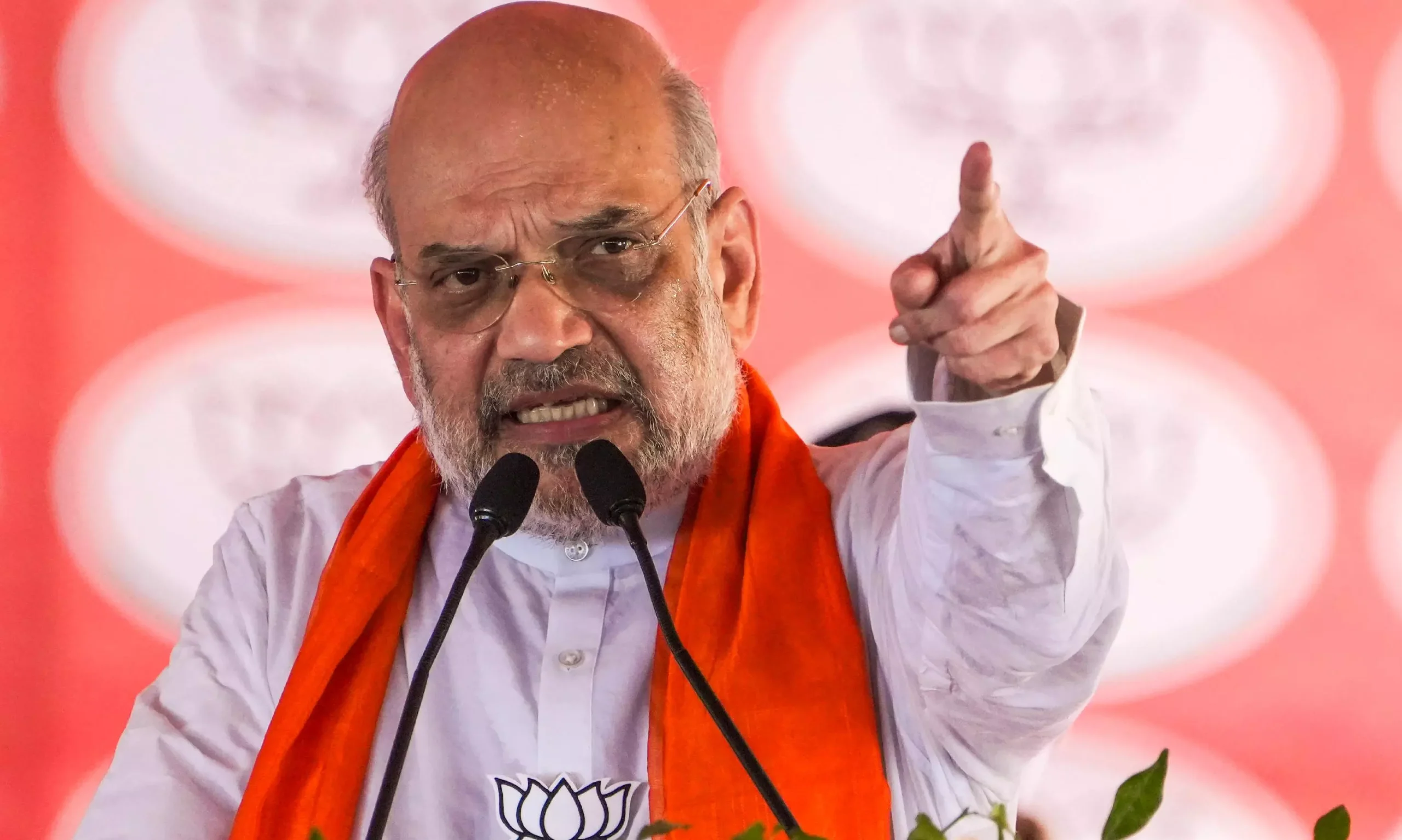
No uniform civil code provisions will be imposed on tribals, clarifies Amit Shah

Union Home Minister Amit Shah has assured tribal communities that the proposed Uniform Civil Code will not interfere with their customs, urging them not to be misled by misinformation.

Published

on

Union Home Minister Amit Shah on Sunday declared that the proposed Uniform Civil Code (UCC) will not impact tribal populations in any manner. He called upon the community to stay vigilant against “conspiracies” and misinformation circulating on the subject.

Addressing the Janjati Sanskritik Samagam—a tribal conclave organized by the Janjati Suraksha Manch at the Red Fort grounds to mark the 150th birth anniversary year of Birsa Munda—Shah stated that specific provisions have been implemented in states ruled by the ruling party to exclude tribal communities from the scope of the code.

Clarification on customs and traditions

The Home Minister highlighted that a deliberate narrative has emerged suggesting the proposed legislation would strip tribal societies of their distinct culture, traditions, and customary lifestyles.

He explicitly clarified that the central government has no intention of forcing UCC regulations upon tribal or Vanvasi communities. Shah pointed out that where regional administrations have initiated the code, care has been taken by the leadership to ensure that indigenous populations remain fully outside its jurisdiction. He requested attendees to disseminate this assurance deeply into forest zones and rural villages to erase lingering apprehensions.

Focus on security and community development

Beyond the legislative framework, Shah detailed the progress made toward curbing internal security threats, stating that the nation is steadily advancing toward eradicating Naxalism entirely. He noted that violent disruptions had severely restricted progress in these belts for decades, leading to the loss of thousands of tribal lives. According to the minister, regional stability will now pave the way for accelerated development across remote hills and forests.

The address also covered constitutional rights regarding personal faith. Shah mentioned that the original framework of the Constitution grants every citizen the dignity to practice their traditional beliefs without facing coercion, temptation, or material inducement for religious conversion.

Reflecting on financial allocations, the minister criticized earlier political administrations for keeping tribal welfare funding low. He underscored that the current administration under Prime Minister Narendra Modi significantly elevated the dedicated tribal budget from a previous Rs 28,000 crore to Rs 1.54 lakh crore. Terming the vast gathering a historical movement for cultural preservation, Shah described the societal awakening as a major step toward safeguarding tribal heritage for future generations.

Continue Reading

India News

DU’s Hansraj College ties up with APN News to launch future-ready AI media courses

The collaboration aims to create a future-ready academic ecosystem by integrating emerging technologies with professional education in mass communication, content creation, legal studies, advertising, marketing and digital media.

Published

on

Hansraj College, University of Delhi, has signed a landmark Memorandum of Understanding (MoU) with the Global Foundation for Media & Innovation Institute, an initiative of Balaji Foundation, in association with APN News, to introduce industry-oriented programmes in Artificial Intelligence, media, communication and digital innovation.

The collaboration aims to create a future-ready academic ecosystem by integrating emerging technologies with professional education in mass communication, content creation, legal studies, advertising, marketing and digital media.

As part of the initiative, students will receive specialised training in areas such as AI-powered journalism, digital branding, OTT production, new-age content creation, media technologies and strategic communication. The programmes are designed to bridge the growing gap between academic learning and industry requirements in the rapidly evolving digital landscape.

Hansraj College Principal Prof Rama said, “Hansraj College has always believed in academic innovation and future-focused learning. Through this partnership, we aim to provide our students with practical exposure, emerging technology skills and meaningful industry engagement aligned with the evolving global landscape. The new AI-integrated media and communication courses are scheduled to commence in July 2026.”

The courses will be offered in both online and offline formats, enabling wider access for students across the country. Officials associated with the partnership said the initiative seeks to democratise professional education by bringing industry-led learning opportunities to aspiring students nationwide.

APN News Editor-in-Chief and Balaji Foundation Chairperson Rajshri Rai said, “The future of media lies at the intersection of technology, creativity and credible communication. This collaboration is a significant step towards equipping students with industry-relevant AI and digital media skills that will shape the next generation of media professionals.”

Beyond classroom learning, the collaboration will also focus on internships, mentorship, career counselling, live industry exposure, placement assistance and research opportunities. The programme aims to prepare students for careers in media, innovation, legal communication and the digital economy.

Representatives of the partnering institutions described the agreement as a significant step towards building an innovation-driven education model that combines technology, creativity, employability and practical industry exposure.

The partnership is expected to emerge as a pioneering model in AI-integrated media and communication education in India, while strengthening industry-academia collaboration in future-oriented professional learning.

Continue Reading

Trending

© Copyright 2022 APNLIVE.com