
Latest Politics News
Tharoor send legal notice to Law Minister RS Prasad for calling him murder accused


The soft-spoken Congress MP who has been the target of harsh comments from various BJP leaders, including Narendra Modi before he became PM, and taken it in his stride gamely, has decided that Union Law Minister Ravi Shankar Prasad crossed the line when he called him a ‘murder accused’.
Accusing Prasad of intentionally harming and destroying his reputation, Tharoor asked the minister to tender an unconditional and written apology within 48 hours of the receipt of the notice. Tharoor also asked Prasad to delete the clip of his press conference where he made the remarks against him along with the “false, untrue and highly defamatory statements on Twitter”.
“When India’s Law Minister falsely invents a murder case against a political opponent, what hope for justice & democracy?” he wrote on Twitter.
The notice points out that the prosecution in the Sunanda Puskhar case hasn’t accused Tharoor of murder.
“You are well aware that in the ongoing criminal case against Shashi Tharoor in relation to the death of his late wife Sunanda Pushkar, the offence alleged by the prosecution against him is not that of murder and the trial court is yet to frame any charges against him,” read the legal notice sent by law firm Suraj Krishna and Associates on behalf of Tharoor.
“Even the police charge sheet against Shashi Tharoor does not contain any allegations of murder. Your purposeful comment that Shashi Tharoor is chargesheeted in a serious allegation of murder seems to have some oblique motives,” it added.
Accusing Prasad of defaming Tharoor, the notice said, “In the above circumstances, you have clearly committed the offence of defamation for which you are liable to be tried before a court of law.”
The Congress leader has also demanded that videos of the law minister making these remarks must be taken down from social media.
“You are hereby called upon to tender an unconditional and written apology within 48 hours of the receipt of this notice for making such an untrue, false and baseless imputation against Shashi Tharoor… to avoid the consequences of a litigation,” it said.
Sunanda Pushkar was found dead in a suite of a luxury hotel in Delhi on the night of January 17, 2014. The couple was staying in the hotel as Shashi Tharoor’s official bungalow was being renovated at that time.
Shashi Tharoor has been charged under sections 498A (husband or his relative subjecting a woman to cruelty) and 306 (abetment of suicide) of the Indian Penal Code (IPC), but has not been arrested in the case.
Prasad had said in a tweet on October 28 evening: “Shashi Tharoor who is accused in a murder case has attempted to disrespect Lord Shiva. I seek a reply from Rahul Gandhi who claims himself to be a Bhakt of Lord Shiva on this horrific denunciation of Hindu gods by a Congress MP. Rahul Gandhi must apologize to all Hindus.”
Shashi Tharoor who is accused in a murder case has attempted to disrespect Lord Shiva.
I seek a reply from Rahul Gandhi who claims himself to be a Bhakt of Lord Shiva on this horrific denunciation of Hindu gods by a Congress MP.
Rahul Gandhi must apologize to all Hindus. pic.twitter.com/QeShJoCHDZ
— Ravi Shankar Prasad (@rsprasad) October 28, 2018
Prasad made the remarks after Tharoor, while promoting his new book ‘The Paradoxical Prime Minister’, at the Bengaluru Literature Festival quoted an unnamed RSS leader who spoke to journalist Vinod Jose of The Caravan as part of his extensive profile on Narendra Modi before he became prime minister.
“There is an extraordinarily striking metaphor expressed by an unnamed RSS source to a journalist, that, ‘Modi is like a scorpion sitting on a Shivling, you can’t remove him with your hand & you cannot hit it with a chappal either’,” Tharoor said at the event on Sunday.






India News
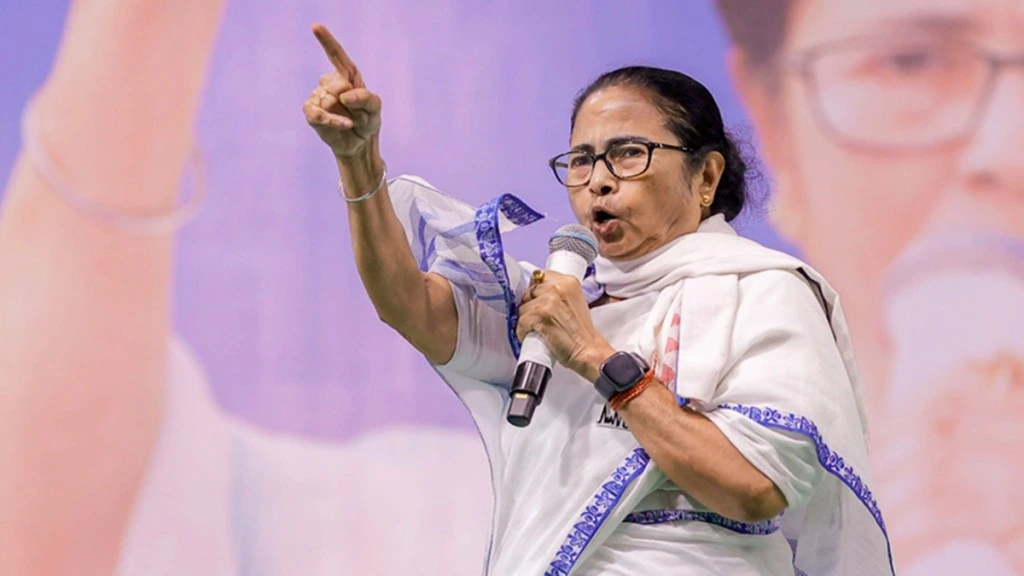
Mamata Banerjee slams poll body over officials’ transfer, calls move unprecedented
Mamata Banerjee has criticised the Election Commission for transferring senior officials ahead of West Bengal elections, alleging bias and procedural overreach.

India News
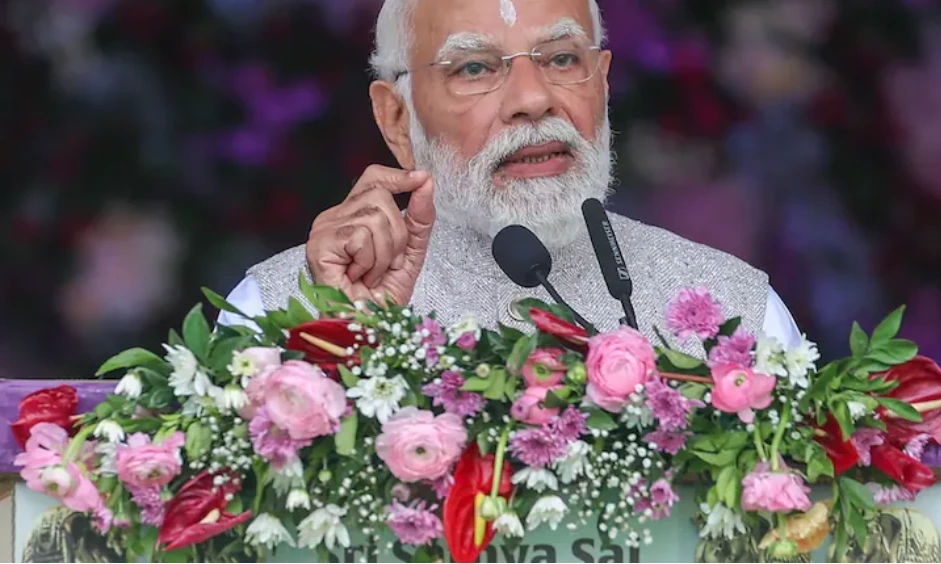
BJP seals Assam seat-sharing pact, Modi to hold 3 rallies in April
BJP has finalised its Assam seat-sharing plan with allies and is gearing up for an intense campaign led by PM Modi and Amit Shah.
India News
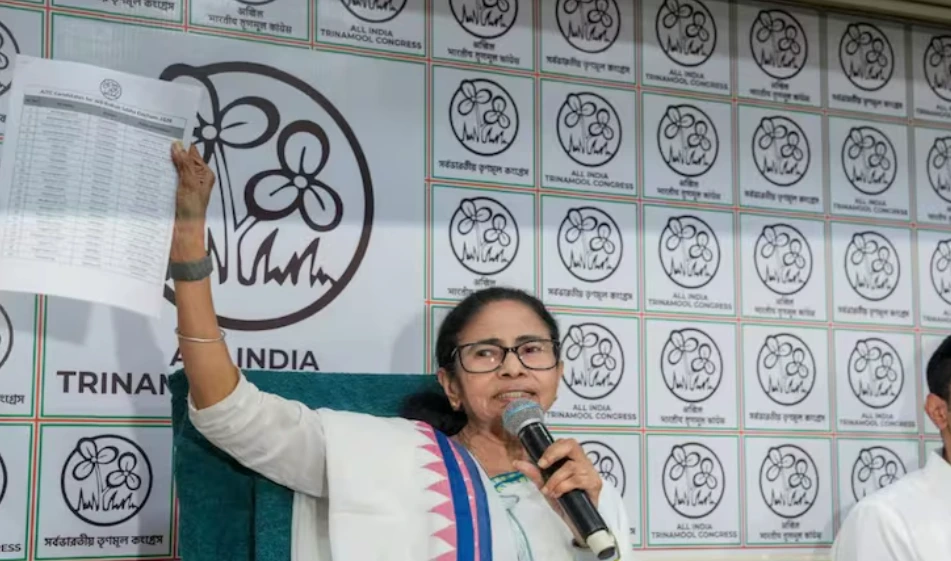
Mamata Banerjee warns BJP, EC over Bengal polls, says they will be accountable
Mamata Banerjee holds BJP and Election Commission responsible for any incidents during Bengal polls, raising concerns over officer transfers.

Mamata Banerjee slams poll body over officials’ transfer, calls move unprecedented

PM Modi speaks to Qatar, France, Jordan, Oman and Malaysia leaders on Middle East tensions

AIADMK-BJP seat-sharing talks to be finalised soon, says Edappadi K Palaniswami after Amit Shah meet

Oppo K14 5G launched in India with 7000mAh battery, starts at Rs 17,999

Late-March western disturbance brings 1,000-km rain band across India, Pakistan and Afghanistan

Eid Mubarak 2026 wishes and greetings highlight joy and togetherness

Bangladesh envoy meets S Jaishankar, Dhaka foreign minister may visit India in April
Late-March western disturbance brings 1,000-km rain band across India, Pakistan and Afghanistan
Oppo K14 5G launched in India with 7000mAh battery, starts at Rs 17,999
Mamata Banerjee slams poll body over officials’ transfer, calls move unprecedented

Afghan Men Try To Hang With The Jet Engine Of The Aircraft in Kabul- Afghanistan News – Kabul News
Trending Top 10 News: 10000 Crore Fine on Flipkart, Apple to Launch Unique Feature, Hdfc Bank Job Ad

Trending Top 10 News: Nokia 6310, Apple sales, Bachpan ka Pyar Video Kid, Dainik Bhaskar IT Raid

Trending Top 10 News: Canada bans Indian flights, Rain in Delhi NCR, AIMIM Twitter hacked, Raj Kundra case

Trending Top 10 News: Shein India, Apple New Service, Pocket Oxygen, Oppo Launched New Phone
-
 India News19 hours ago
Mamata Banerjee slams poll body over officials’ transfer, calls move unprecedented
-
 Latest world news19 hours ago
PM Modi speaks to Qatar, France, Jordan, Oman and Malaysia leaders on Middle East tensions
-
 India News19 hours ago
AIADMK-BJP seat-sharing talks to be finalised soon, says Edappadi K Palaniswami after Amit Shah meet
-
 Gadgets18 hours ago
Oppo K14 5G launched in India with 7000mAh battery, starts at Rs 17,999
-
 India News13 hours ago
Late-March western disturbance brings 1,000-km rain band across India, Pakistan and Afghanistan
-
 Latest world news9 hours ago
Bangladesh envoy meets S Jaishankar, Dhaka foreign minister may visit India in April
-
 Festivals8 hours ago
Eid Mubarak 2026 wishes and greetings highlight joy and togetherness
