English हिन्दी
Connect with us

India News

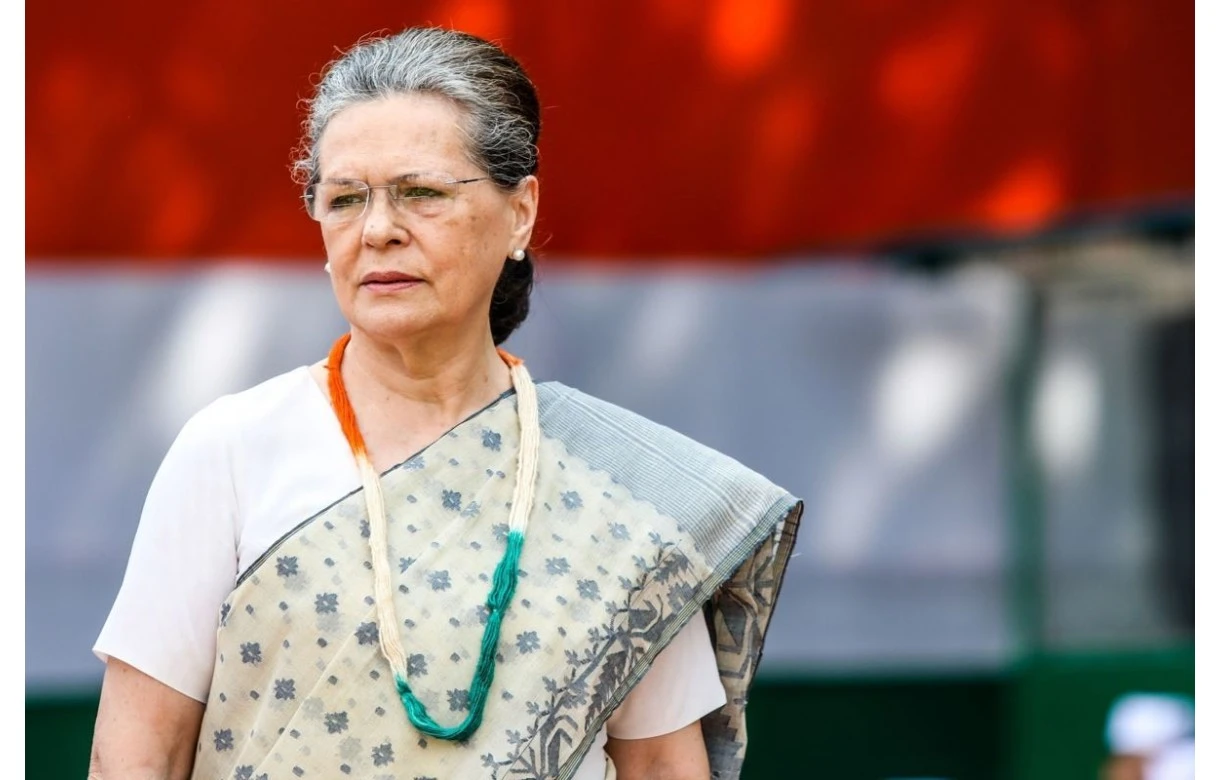
Sonia Gandhi questions Centre’s silence on Khamenei killing, cites Iran’s past support on Kashmir

Published

on

sonia

Senior Congress leader Sonia Gandhi has criticised the Centre for not issuing a direct statement on the reported killing of Iran’s Supreme Leader Ayatollah Ali Khamenei, saying that silence in such a situation amounts to an “abdication” rather than neutrality.

In a column published in media, Gandhi argued that India’s relationship with Tehran is rooted in both civilisational and strategic interests and said the government should have responded more clearly to the development.

Centre calls for restraint, avoids direct comment

While the government has not issued a specific statement on Khamenei’s death, it has urged restraint and de-escalation in the Middle East. Sources have indicated that India’s calibrated response is in line with that of major global powers and reflects a diplomatic approach guided by national interest.

Gandhi, however, questioned this position. Referring to Iran’s confirmation on March 1 that Khamenei was assassinated in targeted strikes allegedly carried out by the United States and Israel, she described the episode as a “grave rupture” in international relations, particularly as it occurred during ongoing negotiations.

She also criticised Prime Minister Narendra Modi for initially condemning Iran’s retaliatory strike on the UAE without addressing what she called the preceding US-Israeli actions. Later remarks expressing “deep concern” and advocating dialogue and diplomacy, she suggested, did not sufficiently acknowledge the broader context.

Questions over foreign policy direction

According to Gandhi, failing to clearly defend sovereignty and international law in the face of such an incident could weaken India’s credibility on the global stage. She argued that if the targeted killing of a foreign leader during a diplomatic process passes without principled objection, it risks normalising the erosion of international norms.

She further noted that the timing of the episode — shortly after the Prime Minister’s visit to Israel, where he reiterated support for the government led by Benjamin Netanyahu — adds to the unease, especially amid ongoing global criticism over civilian casualties in Gaza.

Kashmir reference and strategic ties

Gandhi also invoked a past diplomatic episode related to Kashmir. She recalled that in 1994, when sections within the Organisation of Islamic Cooperation sought to advance a resolution against India at the UN Commission on Human Rights over Kashmir, Iran played a significant role in blocking the move. According to her, that intervention helped prevent the internationalisation of the issue at a sensitive time for India.

She further pointed to Iran’s role in facilitating India’s diplomatic presence in Zahedan, near the Pakistan border, describing it as strategically relevant in the context of the development of Gwadar port and the China-Pakistan Economic Corridor.

Gandhi also referred to former Prime Minister Atal Bihari Vajpayee’s 2001 visit to Tehran, during which he had reaffirmed India’s longstanding ties with Iran.

Balancing ties in West Asia

Acknowledging that India’s relations with Israel have expanded in recent years across defence, agriculture and technology, Gandhi said that New Delhi’s ability to maintain ties with both Tehran and Tel Aviv gives it diplomatic space to urge restraint. However, she added, such space depends on credibility and a perception of principled engagement.

Highlighting the presence of nearly 10 million Indians in the Gulf region, she argued that India’s ability to safeguard its citizens during past crises — including conflicts in Iraq, Syria and Yemen — has depended on being viewed as an independent actor.

For a country that aspires to represent the Global South, Gandhi said, perceptions matter. Invoking the principle of “vasudhaiva kutumbakam”, she maintained that India’s civilisational ethos calls for justice, restraint and dialogue, especially at a time when the rules-based international order is under strain.

India News

Mamata Banerjee questions PM Modi’s respect for President Murmu using 2024 photograph

Mamata Banerjee criticised Prime Minister Narendra Modi using a 2024 photograph during a rally as political tensions grow over President Droupadi Murmu’s visit to West Bengal.

Published

on

mamta banerjee

West Bengal Chief Minister Mamata Banerjee has intensified her attack on Prime Minister Narendra Modi amid a growing dispute over President Droupadi Murmu’s recent visit to the state.

Speaking at a public rally, Banerjee referred to a photograph from March 2024 that shows the President standing while the Prime Minister is seated during a meeting with veteran leader Lal Krishna Advani. The Trinamool Congress leader questioned the government’s claims about respecting the office of the President.

According to a video shared by the Trinamool Congress, two party leaders displayed the photograph while Banerjee addressed the gathering. She argued that while leaders often speak about honouring the President’s office, such visual moments raise questions about whether that respect is truly reflected in conduct.

The photograph referenced by Banerjee was taken on March 31, 2024, when President Murmu and Prime Minister Modi visited Advani to present him with the Bharat Ratna.

Banerjee said the image showed the President standing while the Prime Minister remained seated. She asked whether the government truly respected the country’s first tribal woman President, adding that the picture demonstrated “who respects and who does not”.

President’s visit to Bengal triggers controversy

The political exchange began after President Murmu visited West Bengal on Saturday to attend the ninth International Santal Conference in Darjeeling.

While addressing the event, the President publicly noted that neither the chief minister nor other state ministers were present to receive her. She said that usually the chief minister welcomes the President during such visits but that did not happen in this case.

Murmu added that Banerjee is like a “younger sister” to her and said she did not know whether the chief minister was upset.

The President also raised concerns about the change in the event venue and suggested that the new location made it difficult for people to attend. She said she did not know why the state administration had not permitted the programme at the earlier venue.

Prime minister criticises Bengal government

Reacting to the developments, Prime Minister Modi described the situation as “shameful and unprecedented”. In a post on social media, he said the incident had saddened people who believe in democracy and in empowering tribal communities.

He added that the pain expressed by President Murmu had caused widespread concern and accused the West Bengal government of disrespecting the office of the President. The Prime Minister also said the dignity of the President’s position should remain above political disputes.

Speaking at a public event later, Modi said the developments were particularly unfortunate as they occurred on International Women’s Day. He alleged that the Trinamool Congress government had boycotted both the tribal event and the President.

Mamata Banerjee denies protocol violation

Banerjee rejected the allegations, saying no protocol lapse occurred during the visit.

According to the chief minister, the event had been organised by a private body, the International Santal Council, which invited the President to attend the conference in Siliguri. She said the district administration had warned the President’s Secretariat that the organisers lacked adequate arrangements to host such a programme.

Banerjee also stated that the advance team from the President’s Secretariat visited the site earlier in March and was informed about the shortcomings but the event continued as scheduled.

She added that officials including the mayor of Siliguri Municipal Corporation, the Darjeeling district magistrate and the Siliguri police commissioner received and saw off the President according to the approved protocol lineup.

The chief minister said she was not part of the official lineup or the event’s dais plan and accused the BJP of using the country’s highest constitutional office for political purposes.

Centre seeks report from state

The issue escalated further after Union Home Secretary Govind Mohan wrote to West Bengal Chief Secretary Nandini Chakravorty seeking a report on alleged lapses during the President’s visit.

According to sources, the letter asked why senior state officials such as the chief minister, the chief secretary and the director general of police were not present to receive the President. It also raised concerns about reports of poor arrangements at the venue, including the absence of water in a washroom designated for the President and garbage along the route.

Officials from the Darjeeling district administration and Siliguri police were also mentioned in the communication, with the Centre seeking details of any action taken.

The controversy has now turned into a sharp political confrontation between the Centre and the West Bengal government.

Continue Reading

India News

President Murmu questions tribal development in Bengal, Mamata Banerjee calls remarks political

President Droupadi Murmu raised concerns about tribal development in West Bengal and questioned the absence of state representatives during her north Bengal visit. Mamata Banerjee called the remarks political and said they were based on misinformation.

Published

on

mamta banerjee

President Droupadi Murmu on Saturday raised questions about the development of tribal communities in West Bengal and also expressed surprise over the absence of state government representatives during her visit to north Bengal.

Speaking at the International Santhal Conference, an event organised for the tribal community, the President wondered whether Chief Minister Mamata Banerjee was upset with her, as neither the chief minister nor any minister from the state cabinet was present to receive her.

Murmu also referred to the decision to shift the venue of the conference from Bidhannagar to Goshaipur. She questioned why the programme was not allowed at the earlier venue despite adequate space being available.

Addressing the gathering, the President said she did not know whether Banerjee was upset with her and remarked that she also considers herself a daughter of Bengal. She added that Banerjee was like a younger sister to her but the reason behind shifting the programme location remained unclear.

During her speech, Murmu also raised broader concerns about the condition of tribal communities in the region. She questioned whether development and facilities intended for Santhals and other tribal groups were actually reaching them.

According to the President, the Centre has worked over the past decade to strengthen tribal identity and accelerate development for tribal communities. However, she said it did not appear that the benefits were reaching people in the region.

Murmu also suggested that some individuals might have been prevented from attending the event and said it appeared that certain groups did not want the Santhal community to unite, progress, or gain access to education and strength.

The remarks triggered a political response, with Prime Minister Narendra Modi criticising the situation. Sharing a video of the President’s speech, he said the incident was shameful and expressed concern over what he described as an insult to the President and to Santhal culture.

The BJP also criticised the West Bengal government, alleging that the lack of preparation and protocol during the President’s visit reflected administrative failure and disrespect for constitutional offices.

Responding to the President’s remarks, Mamata Banerjee said the statements were political in nature. Speaking during a protest in Kolkata against the Special Intensive Revision of voter rolls, the chief minister urged the President to avoid making remarks that could affect the dignity of the office.

Banerjee said the President had spoken about only one community and not about others in the state. She also asked her party’s MPs to seek an appointment with Rashtrapati Bhavan to present details of the state government’s work for Scheduled Tribe and Scheduled Caste communities.

The Trinamool Congress also rejected the suggestion that there had been no development for tribal communities in the state. In a statement, the party said the President appeared to have been misinformed.

The party highlighted several welfare initiatives, including financial assistance under the Lakshmir Bhandar scheme. It said women from Scheduled Tribe communities now receive Rs 1,700 per month, amounting to Rs 20,400 annually.

The Trinamool Congress also referred to scholarships for tribal students, the establishment of schools and other development programmes aimed at improving conditions in tribal areas.

According to the party, these measures represent concrete initiatives designed to improve opportunities, dignity and development for Adivasi communities across West Bengal.

Continue Reading

India News

Gurmeet Ram Rahim acquitted in 2002 journalist Ram Chander Chhatrapati murder case

The Punjab and Haryana High Court has acquitted Dera Sacha Sauda chief Gurmeet Ram Rahim Singh in the 2002 murder case of journalist Ram Chander Chhatrapati.

Published

on

Dera Sacha Sauda chief Gurmeet Ram Rahim Singh has been acquitted by the Punjab and Haryana High Court in the 2002 murder case of journalist Ram Chander Chhatrapati.

The decision comes more than seven years after the sect leader was convicted and sentenced to life imprisonment in the case.

According to Singh’s lawyer Jitender Khurana, the high court set aside the earlier conviction and acquitted the Dera chief in the killing of the journalist.

Ram Rahim and three others had been convicted in 2019 for the murder of Chhatrapati, who was shot outside his residence in Haryana’s Sirsa in October 2002.

The journalist had published an anonymous letter in his newspaper Poora Sach, which alleged sexual exploitation of women followers at the Dera Sacha Sauda headquarters in Sirsa. The attack on Chhatrapati occurred after the publication of the letter.

Despite the acquittal in the murder case, Ram Rahim continues to serve a 20-year prison sentence handed down in 2017 for the rape of two of his disciples.

Following that conviction, he was lodged in Sunaria jail in Rohtak, Haryana.

Continue Reading

Trending

© Copyright 2022 APNLIVE.com