English हिन्दी
Connect with us

Latest Politics News

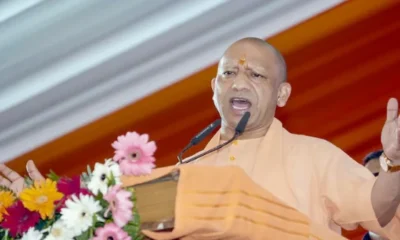
23,512 people died due to Covid, Uttar Pradesh government replies in assembly during question hour

The ruling party members had walked out from the assembly when another Samajwadi Party member Manoj Pandey asked how many ministers, MLAs and former ministers died due to Covid-19.

Published

on

up covid

In response to the question asked by the Samajwadi Party member Manoj Paras, the Yogi Adityanath-led Uttar Pradesh govt replied that total of 23,512 people died due to Covid-19 in the state.

The SP leader had the asked the government about the number of deaths during the question hour in Lucknow assembly.

Around 18.17 lakh people had died in the state due to Covid-19, the Samajwadi Party member Ravidas Mehrotra had claimed earlier in the day.

Rejecting the opposition’s claim and accusing the opposition of doing politics over the deaths, the Deputy Chief Minister Brajesh Pathak, who also holds the health portfolio, said 23,512 people died in hospitals, home isolation and in quarantine centres since Covid outbreak in India till May 12 this year.

Within 30 days after testing positive, the government has given compensation of Rs 50,000 each to those who died due to Covid-19, Pathak said.

Pathak informed the floor that a total of 41,871 applications were received and payment was made to 39,267 of them. While 23,512 people died as per the states’ health ministry data, taking note of the compensation paid, the figure is 39,267, he said.

The ruling party members had decided to walk out when another SP member Manoj Pandey asked how many ministers, MLAs and former ministers died due to Covid-19.
Hundreds of dead bodies were seen floating in the Ganges in the northern Indian states of Uttar Pradesh and Bihar after a ferocious Covid second wave hit India last year in March. Apart from this, several photos of semi-buried bodies, most of them wrapped in traditional saffron cloth, at riverbank in Unnao and Prayagraj districts of Uttar Pradesh had also gone viral on social media. For which, the Indian government had faced the criticism from International media over the Modi government’s Covid handling during second wave.

India News

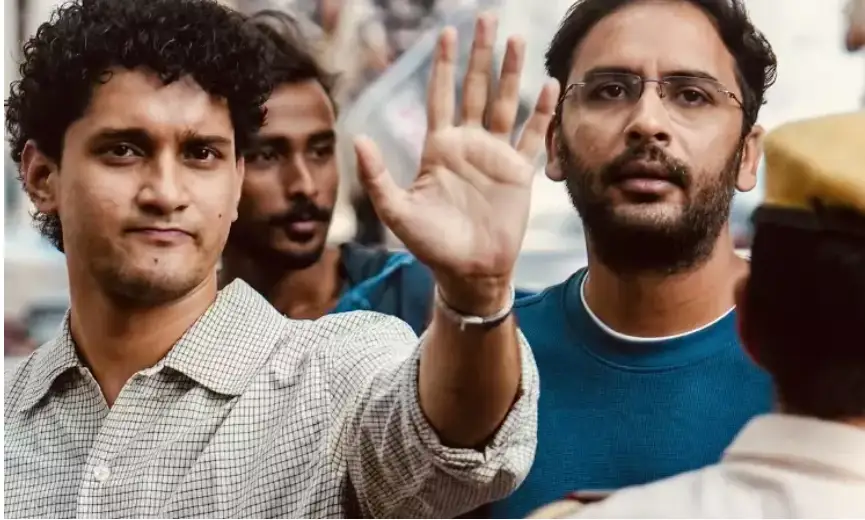
Congress suspends 5 Haryana MLAs over cross-voting in Rajya Sabha polls

Congress suspends five Haryana MLAs for cross-voting in Rajya Sabha elections, citing serious indiscipline and anti-party activities.

Published

on

The Congress has suspended five of its MLAs in Haryana for cross-voting during the recent Rajya Sabha elections, taking disciplinary action over what it described as “anti-party activities”.

The move came after the state unit reviewed the conduct of certain legislators during the polls, where some were found to have voted against the party’s authorised candidate.

Five MLAs suspended after disciplinary process

According to party sources, the MLAs were issued show-cause notices seeking an explanation for their actions. After reviewing their responses, the Congress disciplinary committee recommended suspension.

The decision was approved by the party leadership, including Congress president Mallikarjun Kharge, and has been implemented with immediate effect.

Party calls it ‘grave indiscipline’

Haryana Congress chief Udai Bhan said the action was necessary to uphold party discipline, stressing that defying the official party line during elections weakens organisational unity.

He said the party takes such violations seriously and will continue to act against any form of indiscipline.

Leadership backs strict action

Senior Congress leader and Leader of Opposition Bhupinder Singh Hooda supported the decision, saying it was taken after due consideration.

He noted that while Rajya Sabha elections are conducted through an open ballot system, allowing legislators some flexibility, the party retains the authority to initiate internal disciplinary action in cases of deviation.

Background

The action follows cross-voting reported during the recent Rajya Sabha elections in Haryana, which led to internal concerns within the party. The development has highlighted organisational challenges and prompted the leadership to take corrective steps to reinforce discipline.

Continue Reading

India News

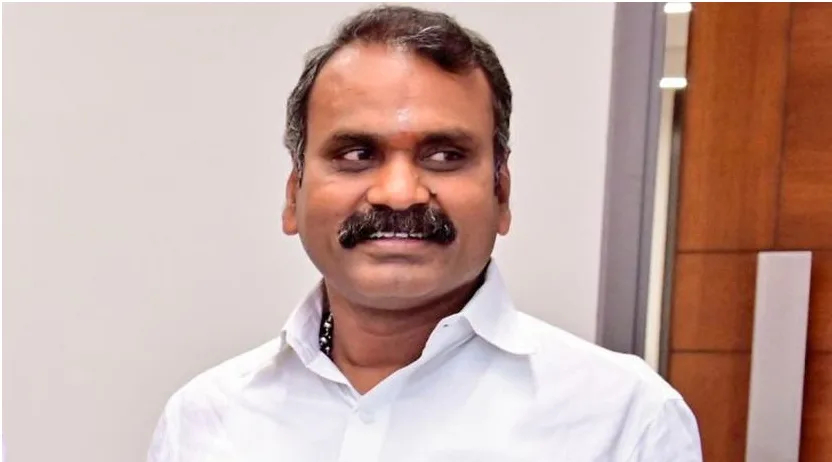
PM Modi assures no discrimination in women’s quota, delimitation debate intensifies in Parliament

PM Narendra Modi has assured that women’s reservation will be implemented without discrimination, amid a heated debate over delimitation in Parliament.

Published

on

PM modi

Prime Minister Narendra Modi has assured that there will be no discrimination in the implementation of women’s reservation, as Parliament witnessed a sharp debate over the proposed linkage between the quota and delimitation exercise.

During the ongoing special session, the government reiterated its commitment to ensuring fair representation while addressing concerns raised by opposition parties regarding the timing and structure of the legislation.

The proposed framework aims to reserve 33 percent of seats for women in the Lok Sabha and state assemblies. However, its implementation is tied to a fresh delimitation exercise, which is expected after the next census.

Opposition questions timing and intent

Opposition leaders have raised concerns that linking the women’s quota to delimitation could delay its implementation. They argue that the process of redrawing constituencies may push the actual rollout further into the future.

The issue has triggered a broader political confrontation, with multiple parties questioning whether the move could alter representation across states.

Some critics have also alleged that the delimitation exercise could disproportionately benefit certain regions based on population, a charge the government has rejected.

Government reiterates commitment to fair implementation

Responding to these concerns, the Centre has maintained that the reforms are necessary to ensure accurate and updated representation based on population data.

Leaders from the ruling side have repeatedly emphasized that the process will be carried out transparently and without bias. The assurance that there will be “no discrimination” is aimed at addressing fears among states and opposition parties.

The debate marks a key moment in Parliament, with both sides engaging in intense exchanges over one of the most significant electoral reforms in recent years.

Continue Reading

India News

Give all tickets to Muslim women, Amit Shah says, attacking Akhilesh Yadav on sub-quota demand

A sharp exchange between Amit Shah and Akhilesh Yadav in Parliament over sub-quota for Muslim women highlights key divisions on women’s reservation implementation.

Published

on

A heated exchange broke out in Parliament during discussions on the women’s reservation framework, with Union Home Minister Amit Shah and Samajwadi Party chief Akhilesh Yadav locking horns over the demand for a sub-quota for Muslim women.

The debate unfolded as the government pushed forward key legislative measures to implement 33% reservation for women in the Lok Sabha and state assemblies.

Akhilesh Yadav argued that the proposed reservation must ensure representation for women from marginalised communities, including Other Backward Classes (OBCs) and Muslim women. He said that without such provisions, large sections could remain excluded from political participation.

He also questioned the timing of the bill, alleging that the Centre was avoiding a caste census. According to him, a census would lead to renewed demands for caste-based reservations, which the government is reluctant to address.

Government rejects religion-based quota

Responding to the demand, Amit Shah made it clear that reservation based on religion is not permitted under the Constitution.

He stated that any proposal to provide quota to Muslims on religious grounds would be unconstitutional, firmly rejecting the idea of a separate sub-quota for Muslim women within the broader reservation framework.

The government has maintained that the existing framework already includes provisions for Scheduled Castes (SC) and Scheduled Tribes (ST) women within the overall reservation structure.

Wider political divide over implementation

The issue of sub-categorisation within the women’s quota has emerged as a major flashpoint, even as most opposition parties broadly support the idea of women’s reservation.

Samajwadi Party leaders reiterated that their support for the bill depends on inclusion of OBC and minority women, while the government continues to defend its constitutional position.

The debate is part of a broader discussion during the special Parliament session, where multiple bills linked to delimitation and implementation of the women’s quota are being taken up.

Continue Reading

Trending

© Copyright 2022 APNLIVE.com