English हिन्दी
Connect with us

Latest Politics News

Will AAP succeed in getting Raghuram Rajan to accept RS nomination?

Published

on

[vc_row][vc_column][vc_column_text]Arvind Kejriwal’s Aam Aadmi Party wants to field professionals, not its own leaders for Rajya Sabha polls; former RBI governor Rajan also on its wish-list

Amid the shrill and often frivolous war of words that have become the hallmark of Indian politics in recent years, here’s a political development that is worth monitoring.

If the political grapevine in New Delhi is anything to go by, chief minister Arvind Kejriwal’s Aam Aadmi Party is considering deviating from conventional political practice and nominating professionals and field experts to the three Rajya Sabha seats from Delhi that will go to polls in January 2018. And if the AAP manages to deliver on what currently is only an ambitious plan, the Rajya Sabha may among its members former Reserve Bank of India governor Raghuram Rajan!

According to some media reports, the AAP is in the process of reaching out to some professionals from diverse fields with the proposal of having them elected as Rajya Sabha candidates as the party’s nominees. With 66 seats in the 70-member Delhi Assembly, AAP can effectively ensure the election of its candidates to all three Rajya Sabha seats – currently held by Congress’ Karan Singh, Janardhan Dwivedi and Parvez Hashmi – from the state.

The AAP’s wish-list, party sources say, included Raghuram Rajan, an economist of global repute who combines sense, sensibility and style with enormous ease and who, during his stint as Governor of the Reserve Bank of India, had earned a huge fan following in the country – not only for his understanding of the serious issues of finance, economics and policy frameworks but also for his élan and attitude.

Reports in some media publications, on Wednesday, quoted anonymous AAP sources as saying that the Arvind Kejriwal-led party has decided to not field its own leaders for the Rajya Sabha seats from Delhi that will fall vacant early next year. Instead, the party has decided to try its luck at convincing Rajan, an eminent jurist and another prominent social activist to accept the proposal of contesting the polls to the Upper House as AAP candidates.

Rajan, who abruptly left India to take up a teaching role at the University of Chicago following a purported falling out with Prime Minister Narendra Modi on the latter’s infamous demonetisation decision, is yet to revert to AAP leaders on their proposal.

Aam Aadmi Party leaders say they are in talks with some other professionals too for the Rajya Sabha elections but that these individuals have asked the party to not leak their names to the media until they formally convey their desire to the party leadership over contesting the polls.

If Rajan does agree to AAP’s proposal, his presence in the Rajya Sabha could add to the troubles of the Narendra Modi-led government. The Modi government has been under fire for its economic policies – particularly the Prime Minister’s demonetisation decision and the Goods and Services Tax rollout. Rajan’s opposition to the demonetisation initiative is now publicly known and is also touted to be the reason behind his unceremonial departure from the RBI, shortly after Modi forced the note ban on Indians.

Rajan has a keen sense of economic and financial issues. Along with former finance minister P Chidambaram, Rajan could be a major cause of concern for the BJP when the Centre wishes to or is forced to discuss economic issues in Parliament. With the other celebrated orator on issues of economy and social sector, CPM leader Sitaram Yechury, no longer a member of the Rajya Sabha (his term ended earlier this year), the Upper House of Parliament is desperately in need of a member who doesn’t indulge in mere political rhetoric to take on the government but also makes a sound, balanced and not over-the-top argument.

Of course, the AAP’s decision to give away all of its three potential Rajya Sabha seats to ‘outsiders’ instead of obliging its own leaders is likely to create some friction within its top leadership. AAP leader Kumar Vishwas is already upset at Kejriwal and his close aide, deputy chief minister of Delhi Manish Sisodia, trying to sideline him within the party. Vishwas has been vocal about his political ambitions and the desire to be elected as a Rajya Sabha member. Is Kejriwal doesn’t oblige Vishwas, then the poet-politician could rebel, causing some embarrassing moments for the AAP.[/vc_column_text][/vc_column][/vc_row]

India News

Congress suspends 5 Haryana MLAs over cross-voting in Rajya Sabha polls

Congress suspends five Haryana MLAs for cross-voting in Rajya Sabha elections, citing serious indiscipline and anti-party activities.

Published

on

The Congress has suspended five of its MLAs in Haryana for cross-voting during the recent Rajya Sabha elections, taking disciplinary action over what it described as “anti-party activities”.

The move came after the state unit reviewed the conduct of certain legislators during the polls, where some were found to have voted against the party’s authorised candidate.

Five MLAs suspended after disciplinary process

According to party sources, the MLAs were issued show-cause notices seeking an explanation for their actions. After reviewing their responses, the Congress disciplinary committee recommended suspension.

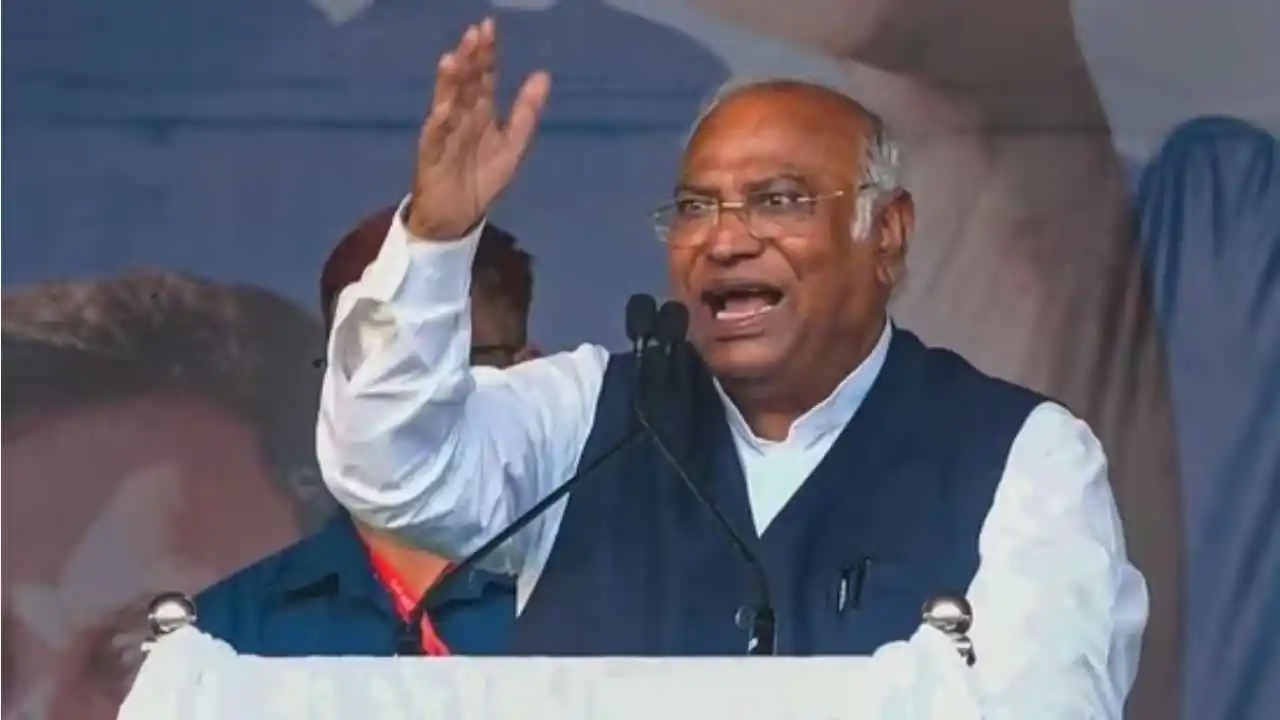
The decision was approved by the party leadership, including Congress president Mallikarjun Kharge, and has been implemented with immediate effect.

Party calls it ‘grave indiscipline’

Haryana Congress chief Udai Bhan said the action was necessary to uphold party discipline, stressing that defying the official party line during elections weakens organisational unity.

He said the party takes such violations seriously and will continue to act against any form of indiscipline.

Leadership backs strict action

Senior Congress leader and Leader of Opposition Bhupinder Singh Hooda supported the decision, saying it was taken after due consideration.

He noted that while Rajya Sabha elections are conducted through an open ballot system, allowing legislators some flexibility, the party retains the authority to initiate internal disciplinary action in cases of deviation.

Background

The action follows cross-voting reported during the recent Rajya Sabha elections in Haryana, which led to internal concerns within the party. The development has highlighted organisational challenges and prompted the leadership to take corrective steps to reinforce discipline.

Continue Reading

India News

PM Modi assures no discrimination in women’s quota, delimitation debate intensifies in Parliament

PM Narendra Modi has assured that women’s reservation will be implemented without discrimination, amid a heated debate over delimitation in Parliament.

Published

on

PM modi

Prime Minister Narendra Modi has assured that there will be no discrimination in the implementation of women’s reservation, as Parliament witnessed a sharp debate over the proposed linkage between the quota and delimitation exercise.

During the ongoing special session, the government reiterated its commitment to ensuring fair representation while addressing concerns raised by opposition parties regarding the timing and structure of the legislation.

The proposed framework aims to reserve 33 percent of seats for women in the Lok Sabha and state assemblies. However, its implementation is tied to a fresh delimitation exercise, which is expected after the next census.

Opposition questions timing and intent

Opposition leaders have raised concerns that linking the women’s quota to delimitation could delay its implementation. They argue that the process of redrawing constituencies may push the actual rollout further into the future.

The issue has triggered a broader political confrontation, with multiple parties questioning whether the move could alter representation across states.

Some critics have also alleged that the delimitation exercise could disproportionately benefit certain regions based on population, a charge the government has rejected.

Government reiterates commitment to fair implementation

Responding to these concerns, the Centre has maintained that the reforms are necessary to ensure accurate and updated representation based on population data.

Leaders from the ruling side have repeatedly emphasized that the process will be carried out transparently and without bias. The assurance that there will be “no discrimination” is aimed at addressing fears among states and opposition parties.

The debate marks a key moment in Parliament, with both sides engaging in intense exchanges over one of the most significant electoral reforms in recent years.

Continue Reading

India News

Give all tickets to Muslim women, Amit Shah says, attacking Akhilesh Yadav on sub-quota demand

A sharp exchange between Amit Shah and Akhilesh Yadav in Parliament over sub-quota for Muslim women highlights key divisions on women’s reservation implementation.

Published

on

A heated exchange broke out in Parliament during discussions on the women’s reservation framework, with Union Home Minister Amit Shah and Samajwadi Party chief Akhilesh Yadav locking horns over the demand for a sub-quota for Muslim women.

The debate unfolded as the government pushed forward key legislative measures to implement 33% reservation for women in the Lok Sabha and state assemblies.

Akhilesh Yadav argued that the proposed reservation must ensure representation for women from marginalised communities, including Other Backward Classes (OBCs) and Muslim women. He said that without such provisions, large sections could remain excluded from political participation.

He also questioned the timing of the bill, alleging that the Centre was avoiding a caste census. According to him, a census would lead to renewed demands for caste-based reservations, which the government is reluctant to address.

Government rejects religion-based quota

Responding to the demand, Amit Shah made it clear that reservation based on religion is not permitted under the Constitution.

He stated that any proposal to provide quota to Muslims on religious grounds would be unconstitutional, firmly rejecting the idea of a separate sub-quota for Muslim women within the broader reservation framework.

The government has maintained that the existing framework already includes provisions for Scheduled Castes (SC) and Scheduled Tribes (ST) women within the overall reservation structure.

Wider political divide over implementation

The issue of sub-categorisation within the women’s quota has emerged as a major flashpoint, even as most opposition parties broadly support the idea of women’s reservation.

Samajwadi Party leaders reiterated that their support for the bill depends on inclusion of OBC and minority women, while the government continues to defend its constitutional position.

The debate is part of a broader discussion during the special Parliament session, where multiple bills linked to delimitation and implementation of the women’s quota are being taken up.

Continue Reading

Trending

© Copyright 2022 APNLIVE.com