English हिन्दी
Connect with us

Cricket news

BCCI hints at Asia Cup 2025 exit amid growing Indo-Pak tensions

With tensions rising between India and Pakistan, BCCI is reportedly set to withdraw from Asia Cup 2025, challenging the tournament’s viability.

Published

on

Pakistan

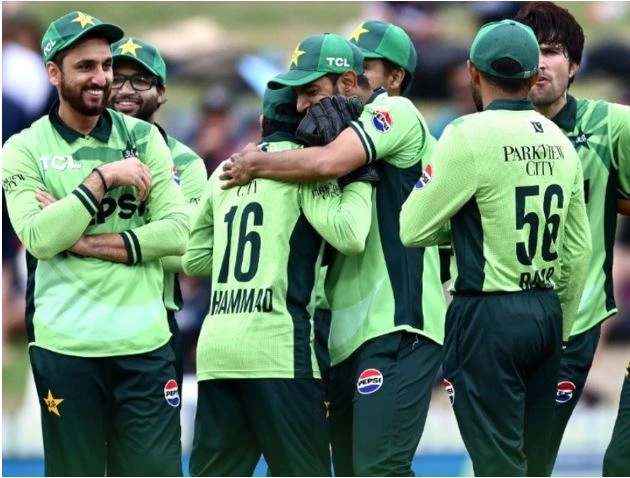
Amid escalating border tensions between India and Pakistan, the Board of Control for Cricket in India (BCCI) is reportedly considering pulling out of the Asia Cup 2025. This strategic decision could further sideline Pakistan in the cricketing world and significantly impact the structure and financial viability of the continental tournament.

Political climate overshadows cricketing ties

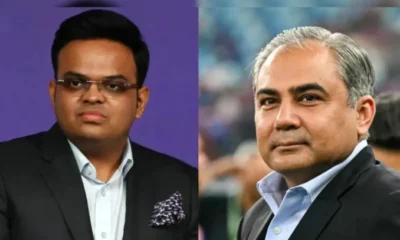
The relationship between the two nations remains fraught, with no bilateral series played in recent years. The situation has deteriorated further, making it difficult for the BCCI to engage in multi-nation tournaments where Pakistan is involved, especially when a Pakistani minister, Mohsin Naqvi, currently heads the Asian Cricket Council (ACC). Naqvi also serves as the chairman of the Pakistan Cricket Board.

Sources indicate that the BCCI has expressed strong reservations about participating in ACC-organised tournaments. An official reportedly stated that it is against national sentiment to compete in events overseen by a body led by a Pakistani government representative. As a result, India’s participation in future ACC events, including the Women’s Emerging Teams Asia Cup, has been put on hold.

Financial impact and media rights concerns

The potential withdrawal from Asia Cup 2025 could deal a significant blow to the event’s commercial success. India versus Pakistan matches draw massive global viewership, making them the biggest revenue drivers for the tournament. Without India’s presence, the event may lose considerable interest from both sponsors and broadcasters.

In 2024, the broadcasting rights for the Asia Cup were secured by Sony Pictures Networks India for approximately USD 170 million. However, that agreement may need to be renegotiated or scrapped if the tournament does not proceed as scheduled or loses its marquee matchups.

Regional fallout and future implications

The Asia Cup is scheduled to be hosted in India this year. However, with India refusing to face Pakistan, the tournament risks losing its competitive edge and financial appeal. Other participating nations such as Bangladesh, Afghanistan, and Sri Lanka also stand to lose revenue and exposure.

In 2023, a hybrid hosting model was used, with matches held in both Sri Lanka and Pakistan. India eventually won the title in Colombo, while Pakistan failed to reach the final. Given the current situation, such models may no longer be feasible.

This unfolding development raises serious questions about the future of the Asia Cup and the broader implications for cricket in the region.

Cricket news

India’s T20 World Cup triumph validates Gautam Gambhir’s approach, coach dedicates win to Dravid and Laxman

Gautam Gambhir said he is accountable only to the team dressing room after India defeated New Zealand by 96 runs to win the 2026 T20 World Cup and dedicated the title to Rahul Dravid and VVS Laxman.
Published

on

Gautam Gambhir (1)

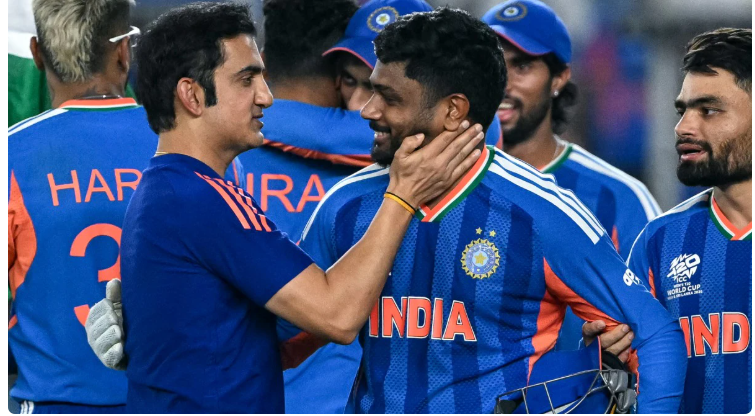
India’s victory in the 2026 T20 World Cup has become a moment of redemption for head coach Gautam Gambhir, who had faced heavy criticism after a series of Test defeats earlier in his tenure.

India defeated New Zealand national cricket team by 96 runs in the final to clinch their third T20 World Cup title, becoming the first team to achieve the feat. The win also marked the first time a team successfully defended the trophy after lifting it in the previous edition.

Gambhir says accountability lies within the dressing room

Speaking after the final, Gambhir said he does not measure his work based on public opinion or social media reactions.

“My accountability is not for people on social media. My accountability is to those 30 people in that change room,” Gambhir said during the post-match press conference.

The former India opener added that a coach’s success ultimately depends on the players.

“A coach is as good as his team. Players made me the coach I am,” he said.

Trophy dedicated to Dravid and Laxman

Despite celebrating a major triumph, Gambhir chose to acknowledge the contributions of two former India greats — Rahul Dravid and VVS Laxman.

Dravid had guided India to the T20 World Cup title in 2024 before Gambhir took over the role, while Laxman currently heads the BCCI’s Centre of Excellence.

“I would dedicate this trophy to Rahul Dravid and VVS Laxman. To Rahul bhai for putting the Indian team in a place and Laxman for creating the pipeline at the CoE,” Gambhir said.

He also expressed gratitude to chief selector Ajit Agarkar and ICC chairman Jay Shah, recalling their support during difficult phases.

“Ajit Agarkar took a lot of flak and worked with honesty. And Jay bhai called me during my lowest ebb after the losses to New Zealand and South Africa,” he noted.

India dominate final with bat and ball

India produced a commanding performance in the final. Batting first, the team posted a massive total of 255 for five.

Sanju Samson led the charge with a blistering 89, while Abhishek Sharma (52) and Ishan Kishan (54) struck quick half-centuries to put New Zealand under pressure.

Defending the total, India bowled out New Zealand for 159. Jasprit Bumrah starred with figures of 4 for 15, while Axar Patel claimed three wickets.

Suryakumar backs Gambhir’s philosophy

India captain Suryakumar Yadav praised Gambhir’s leadership and said the pair share a strong understanding built during their time at Kolkata Knight Riders.

“I played four years under GG’s captaincy. We have never had arguments because the goal has always been how the team can win,” Suryakumar said.

He also stressed that the team’s focus remains on collective success rather than individual milestones.

Looking ahead, the captain said India would now aim for gold when cricket makes its Olympic appearance at the 2028 Los Angeles Olympics.

Continue Reading

Cricket news

India win record third T20 World Cup after thrashing New Zealand in 2026 final

India defeated New Zealand by 96 runs in the T20 World Cup 2026 final in Ahmedabad, becoming the first team to win the tournament three times and defend the title.
Published

on

india wins worldcup 2026

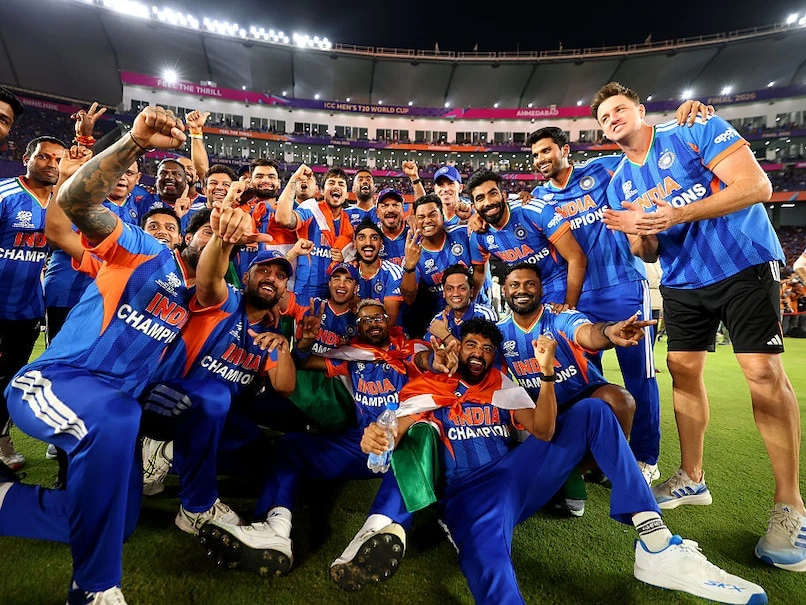
India scripted history by defeating New Zealand by 96 runs in the ICC Men’s T20 World Cup 2026 final at the Narendra Modi Stadium in Ahmedabad on Sunday, becoming the first team to win the tournament three times and also the first to successfully defend the title.

Batting first after being put in, India produced a powerful performance with the bat to post 255 for 5 in 20 overs, the highest total ever recorded in a T20 World Cup final.

Sanju Samson led the charge with an impressive 89, while Abhishek Sharma played a stunning cameo, smashing the fastest half-century of the tournament off just 18 balls. Ishan Kishan added 54 from 25 balls and Shivam Dube provided late momentum with a quick 26 off only eight deliveries.

New Zealand fall short in steep chase

Chasing a daunting target of 256, New Zealand struggled to keep pace with the required run rate and were eventually bowled out for 159 in 19 overs.

Jasprit Bumrah delivered a match-winning spell, taking four wickets while conceding just 15 runs in his four overs. Axar Patel also made a strong impact with three wickets.

With the emphatic victory, India secured their third T20 World Cup title after previous triumphs in 2007 and 2024.

Historic achievement for India

The victory marked several milestones for the Indian team. They became the first side to:

  • Win the T20 World Cup three times
  • Defend the T20 World Cup title
  • Win the tournament on home soil

The triumph also capped a successful era under captain Suryakumar Yadav and head coach Gautam Gambhir, with India continuing their dominance in the shortest format of the game.

Continue Reading

Cricket news

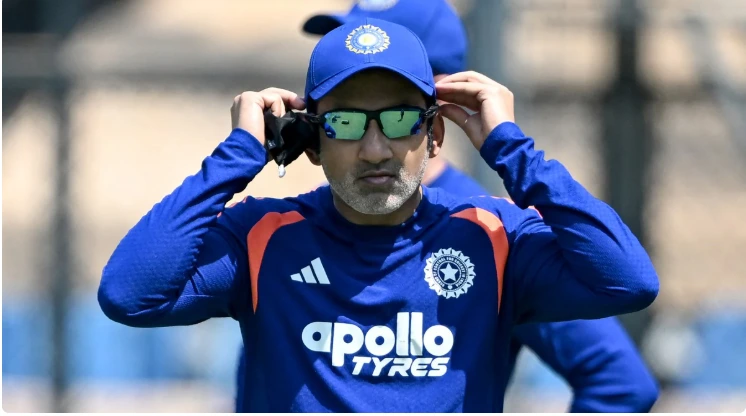
Gautam Gambhir’s tactical calls help India edge past England to reach T20 World Cup final

India defeated England by seven runs in the T20 World Cup 2026 semifinal in Mumbai as tactical decisions and a flexible batting order helped secure a place in the final.

Published

on

India’s flexible approach and tactical decisions under head coach Gautam Gambhir played a key role in the team’s dramatic seven-run win over England in the T20 World Cup 2026 semifinal at Mumbai’s Wankhede Stadium. The victory sealed India’s place in the final, where they will face New Zealand.

A few months earlier, Gambhir had sparked debate by saying batting orders in white-ball cricket are “overrated”. India’s approach in the semifinal reflected that philosophy, with the team using a fluid batting order and specific match-ups to counter England’s bowling plans.

England captain Harry Brook won the toss and chose to bowl first, while India captain Suryakumar Yadav admitted later he would have preferred to bat. India made the most of the opportunity, putting up a huge total that kept pressure on England throughout the chase.

Tactical batting moves disrupt England’s plans

India’s tactical thinking became evident during the innings when Ishan Kishan was dismissed by leg-spinner Adil Rashid in the 10th over. Instead of sending in Suryakumar Yadav, India promoted left-hander Shivam Dube to No. 4.

The move worked effectively against Rashid. While Sanju Samson played cautiously against the leg-spinner, Dube attacked him and scored 22 runs from just eight deliveries, including three sixes. The aggressive approach shifted momentum back in India’s favour.

After Samson’s dismissal, India continued to maintain a left-right combination by sending Hardik Pandya to partner Dube. The strategy ensured England’s bowlers constantly had to adjust their lines and field placements.

The pressure created by the quick scoring forced Brook to reintroduce Jofra Archer earlier than planned. India continued to rotate their batting options based on match situations, even holding Tilak Varma back for the death overs where his ability against pace could be more effective.

Bowling strategy keeps England in check

India’s tactical planning was also visible in the bowling department. Anticipating that the Wankhede pitch would remain favourable for batting under lights, the team focused on picking up early wickets to slow England’s momentum.

Hardik Pandya provided the early breakthrough, dismissing Phil Salt with his first delivery. Later, Jasprit Bumrah was used strategically during the innings and delivered crucial overs in the latter stages.

Despite a brilliant century from Jacob Bethell, England fell just short of the target as India managed to defend their total and secure a place in the final.

Continue Reading

Trending

© Copyright 2022 APNLIVE.com