English हिन्दी
Connect with us

Cricket news

ICC likely to approve four-day Tests for smaller nations, India, England, Australia exempted

The ICC is planning a major shift in Test cricket by approving four-day matches for smaller nations in the 2027-29 WTC cycle, while keeping five-day Tests intact for India, England, and Australia.

Published

on

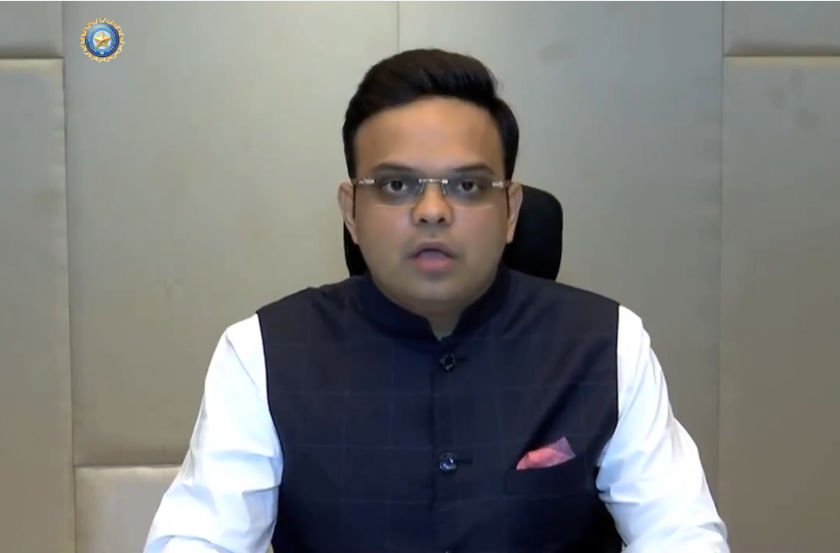
jay shah

In a significant development for the future of Test cricket, the International Cricket Council (ICC) is preparing to permit four-day Test matches for smaller cricketing nations in the 2027-2029 World Test Championship (WTC) cycle. However, cricket heavyweights India, Australia, and England will be allowed to continue playing traditional five-day Tests, particularly for marquee series like the Ashes, the Border-Gavaskar Trophy, and the new Anderson-Tendulkar Trophy.

Shift to four-day format aims to support smaller nations

The ICC’s move is aimed at revitalizing Test cricket for emerging nations, where hosting five-day matches often poses financial and logistical challenges. The introduction of four-day Tests, which were initially approved in 2017 for bilateral series, could pave the way for more frequent and longer series among lower-ranked teams by reducing scheduling burdens and associated costs.

The shorter format allows for a minimum of 98 overs per day, compared to 90 in five-day matches, mitigating the reduction in total match time. This format has already been trialed, most recently when England played Zimbabwe in a four-day Test at Trent Bridge. They had also hosted Ireland under similar terms in 2019 and 2023.

Jay Shah backs four-day Tests initiative

According to a report, the ICC Chair Jay Shah showed support for this initiative during discussions at the recent WTC final held at Lord’s. The proposal, if formalized, is expected to apply from the 2027-29 WTC cycle. However, the upcoming 2025-27 WTC edition will maintain the five-day format, starting with a two-Test series between Sri Lanka and Bangladesh.

Currently, of the 27 scheduled Test series in the 2025-27 cycle, 17 are only two-match affairs, while just six are scheduled for three matches. Only India, England, and Australia will play five-match series against each other, emphasizing the disparity in scheduling between the top-tier and lower-ranked teams.

South Africa’s limited Test calendar highlights concern

South Africa’s sparse Test schedule, despite being recent WTC champions, has underscored the necessity for reform. The suggestion is that four-day Tests could help balance the calendar and bring more consistent exposure to red-ball cricket for nations outside the traditional big three.

Cricket news

Pakistan’s India boycott at T20 World Cup 2026 puts team at risk of ICC action

Pakistan’s boycott of its India clash at the T20 World Cup 2026 has sparked a major row, with the ICC warning of sanctions that could impact the team’s future.

Published

on

Pakistan

Pakistan’s decision to boycott its group-stage match against India at the T20 World Cup 2026 has triggered a major controversy, with the International Cricket Council (ICC) warning of possible punitive action that could impact Pakistan’s participation in global cricket.

The Pakistan cricket team is set to take part in the tournament but will not take the field against India in the February 15 match scheduled in Colombo. The move was approved by the Pakistan government and announced publicly through a social media post, which confirmed participation in the event while excluding the India fixture.

Why Pakistan decided to boycott the India match

The decision follows the ICC’s removal of Bangladesh from the T20 World Cup 2026. Bangladesh had requested a venue change for their matches citing security concerns, but the request was turned down by the ICC, eventually leading to their exclusion from the tournament. Pakistan’s government cited this development while taking the call to skip the India game.

ICC responds with strong warning

Reacting to Pakistan’s stance, the ICC said selective participation undermines the integrity and fairness of global tournaments. In its official statement, the governing body stressed that ICC events are built on sporting integrity, competitiveness and consistency, adding that such decisions are not in the interest of the global game or fans, including those in Pakistan.

The ICC also clarified that it has not yet received any formal communication from the Pakistan Cricket Board regarding the boycott decision.

Sanctions Pakistan could face

According to developments surrounding the issue, Pakistan could face a range of consequences if the boycott is enforced. These may include financial penalties, a possible ban from the current or future ICC events, and resistance from top cricketing nations in scheduling bilateral series. There is also a risk that overseas players could be barred from participating in the Pakistan Super League if sanctions escalate.

The situation remains fluid as the ICC is expected to take a final call after official communication from Pakistan’s cricket board.

Continue Reading

Cricket news

India predicted XI for 5th T20I vs New Zealand as Kishan set for return

India are expected to bring back Ishan Kishan and Axar Patel for the 5th T20I vs New Zealand as the hosts aim to end the series on a high.

Published

on

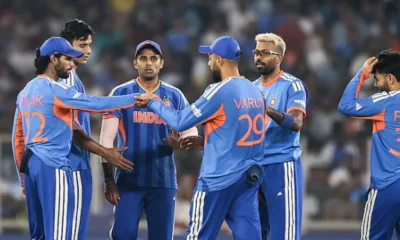
India will look to end their T20I series against New Zealand on a positive note when the two sides meet in the fifth and final match in Thiruvananthapuram on Saturday. Although the hosts have already secured the five-match series by winning the first three games, they suffered a 50-run defeat in the fourth T20I.

New Zealand posted a challenging total of 215 for 7 in the previous match, with Tim Seifert striking an aggressive half-century. Devon Conway and Daryl Mitchell added valuable contributions to push the visitors to a commanding score. In response, Shivam Dube provided resistance with a powerful knock, but India failed to keep up with the required run rate and fell well short.

With this match being India’s final T20I before the upcoming T20 World Cup, the team management is expected to field players who are likely to feature in the global tournament.

Sanju Samson is set for a crucial outing in front of his home crowd. The wicketkeeper-batter has managed just 40 runs across four matches in the series and will be keen to regain form. He is expected to open the batting alongside the in-form Abhishek Sharma.

Ishan Kishan is likely to return to the XI and slot in at No. 3, while captain Suryakumar Yadav is expected to move back to his preferred No. 4 position. Shivam Dube is set to retain his place following his recent performance and is also expected to provide a bowling option if required.

Axar Patel, who missed games earlier due to a finger injury sustained in the opening T20I, is expected to make his comeback. India’s spin attack is likely to feature Varun Chakaravarthy and Kuldeep Yadav as specialist spinners.

In the pace department, Jasprit Bumrah and Arshdeep Singh are expected to lead the attack. All-rounder Hardik Pandya is likely to be rested after featuring in the first four matches of the series.

India predicted XI for 5th T20I vs New Zealand

Abhishek Sharma, Sanju Samson, Ishan Kishan, Suryakumar Yadav (c), Shivam Dube, Rinku Singh, Axar Patel, Varun Chakaravarthy, Kuldeep Yadav, Jasprit Bumrah, Arshdeep Singh

Continue Reading

Cricket news

Shivam Dube’s blazing fifty not enough as New Zealand defeat India by 50 runs in 4th T20I

Shivam Dube’s explosive fifty was not enough as India collapsed in a tough chase, losing the fourth T20I to New Zealand by 50 runs in Visakhapatnam.

Published

on

Shivam Dube produced a sensational counter-attacking half-century, but India suffered a comprehensive 50-run defeat against New Zealand in the fourth T20I at Visakhapatnam on Wednesday, as the visitors narrowed the series margin to 3-1.

Chasing a stiff target of 216, India’s innings never gathered momentum after losing early wickets. Dube’s blistering knock of 65 off just 23 balls briefly lifted hopes, but the hosts were eventually dismissed for 165.

India’s chase got off to a disastrous start with Abhishek Sharma falling to the very first ball, mistiming Matt Henry to deep point. Suryakumar Yadav followed soon after, undone by a sharp return catch from Jacob Duffy, leaving India reeling at 9 for two.

Rinku Singh and Sanju Samson attempted to stabilise the innings, but both struggled to accelerate against disciplined New Zealand bowling. Rinku scored 39 before being trapped leg-before by Zak Foulkes, while Samson’s promising stay ended when Mitchell Santner beat him with a straight delivery.

Hardik Pandya failed to make an impact, and India slipped further to 82 for five in the 11th over. It was then that Dube launched a fierce counter-attack, displaying remarkable power and composure despite the rising asking rate.

Dube survived a leg-before decision on 46 via DRS and punished leg-spinner Ish Sodhi with a stunning 29-run over, including five boundaries and three sixes. He brought up his fifty in just 15 balls, clearing the ropes off Duffy, but lacked support from the other end. The sixth-wicket stand added 63 runs, though Harshit Rana contributed only four.

Dube’s innings came to an unfortunate end when Rana’s straight drive deflected off Henry’s hand and crashed into the stumps at the non-striker’s end, effectively ending India’s chase.

Earlier, New Zealand laid the foundation for their imposing total through an explosive opening stand between Tim Seifert and Devon Conway. Seifert top-scored with 62 off 36 balls, striking seven fours and three sixes, while Conway made 44.

The pair raced to 71 without loss in the Power Play and stitched together a 100-run opening partnership. Though India managed to pull things back in the middle overs by taking quick wickets, Daryl Mitchell’s unbeaten 39 off 18 balls powered New Zealand past the 200-run mark.

Despite a brief slowdown, the visitors finished with a commanding total that proved too much for India on the night.

Continue Reading

Trending

© Copyright 2022 APNLIVE.com