English हिन्दी
Connect with us

LATEST SPORTS NEWS

Pakistan spinner Saeed Ajmal hits out at ICC on his way out of international cricket

Published

on

Pakistan spinner Saeed Ajmal hits out at ICC on his way out of international cricket

[vc_row][vc_column][vc_column_text]Despite having taken 178 wickets in 35 Test matches, Ajmal got into controversies because of objections on his bowling action.

After declaring his retirement from international cricket on Wednesday, ace Pakistan spinner Saeed Ajmal took a dig at the International Cricket Council (ICC)’s protocol to asses bowling actions.

Speaking to the media, the right-arm off spinner said, “I am retiring today and at 40 years of age I thought it is now time for me to make way for younger players. I got this feeling I was being considered extra baggage even in domestic teams and I didn’t want to go out losing my respect.”

With 178 wickets in 35 Test matches, Ajmal’s career marked many successes – but at the same time the spinner got into controversies too, because of objections on his bowling action. Having reported first during an ODI series against Australia in the UAE in 2009, Ajmal’s bowling action also came under scanner in his last match – which was at Galle in Sri Lanka in 2014. However, after a temporary ban for chucking, the Pakistani bowler returned on field in 2015 – but failed to clinch the limelight even after that.

“I am retiring with a heavy heart because firstly I think the ICC’s protocol is too harsh and if all bowlers today playing international cricket are tested I am sure at least 90 percent will fail to clear this protocol,” said Ajmal.

Ajmal further hit out at the Pakistan Cricket Board for not fighting his case enough vociferously, making his end his career in dismay.

Blaming the board for not challenging the ICC’s protocol to assess bowling actions, he said, “The board did support me after my bowling action was declared illegal but I think they could have done more at least using my case to challenge this protocol at the ICC level.”

Speaking on the ICC protocol the Pakistani cricketer said that the council didn’t take into account the fact that not all bowlers are physically well-formed – while some had natural medical issues with their arms, other might have developed problems after an accident. Ajmal also claimed that he has a deformity in his right arm following an accident – and this makes his arm to bend at some extent.

“To be honest if you talk about the current extension of the elbow allowed I don’t think many of the current bowlers meet the ICC standards all the time. Some relaxation has to be allowed on medical grounds,” said Ajmal.

Expressing his to have ended his career at the international arena, instead of the National T20 Championship – in which he lead the Faisalabad squad – Azmal said, “I always enjoyed the challenge of international cricket and it would have been ideal to retire with a match for Pakistan.”

Further suggesting the PCB to save spinners in the country from extinction, he said, “This ICC rule threatens the careers of spinners and in Pakistan the board needs to do extensive work on helping and assisting bowlers with any problems. I am willing to offer my services if they ask me to do something.”

“We are struggling to find off-spinners in Pakistan and that is because since 2014 even in our domestic cricket our authorities have just panicked and reported and banned bowlers by dozens. Some of these bowlers had potential to become great bowlers but no one has bothered to even see where they are and some of them have even left cricket,” he added.[/vc_column_text][/vc_column][/vc_row]

Cricket news

Rinku Singh returns home from T20 World Cup camp due to family emergency

Rinku Singh has flown back home from the T20 World Cup camp after his father’s health deteriorated. Team management is yet to confirm his return.

Published

on

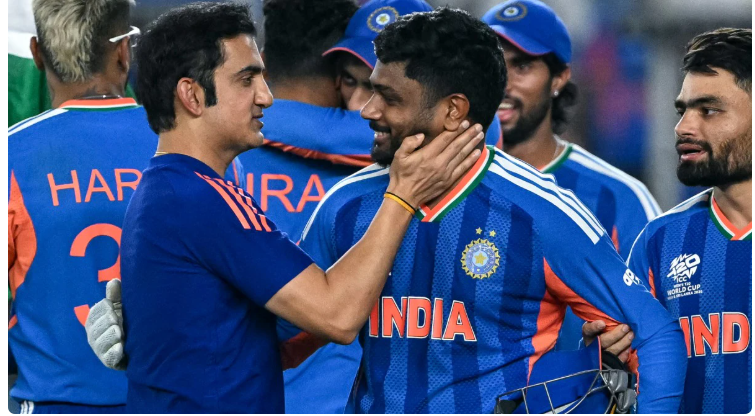
Indian middle-order batter Rinku Singh has flown back home from the ICC Men’s T20 World Cup camp following a medical emergency in his family.

According to sources, the left-handed batter left the team environment after his father’s health condition worsened. It is learnt that his father is battling stage-4 liver cancer and is currently on ventilator support. Rinku decided to return home to be with his family during this critical period.

There is no official confirmation yet on whether the cricketer will rejoin the squad for the remainder of the tournament. Team management is closely monitoring the situation, and a further update is awaited.

Rinku has emerged as a key member of India’s white-ball setup in recent years, particularly known for his finishing abilities under pressure. Any prolonged absence could influence India’s combination in the crucial Super 8 stage of the competition.

For now, the focus remains on his family, with support expected from the cricketing fraternity as he navigates this difficult time.

Continue Reading

LATEST SPORTS NEWS

ICC Men’s T20 World Cup 2026: South Africa outclass India with smart slower-ball strategy in Super 8

South Africa registered a commanding 76-run win over India in the T20 World Cup 2026 Super 8 match, using disciplined slower deliveries and a key Miller-Brevis partnership.

Published

on

South Africa delivered a clinical performance to defeat India by 76 runs in the Super 8 stage of the T20 World Cup 2026, exposing tactical gaps in Suryakumar Yadav’s side. At the Narendra Modi Stadium, the much-anticipated clash turned into a lesson in adaptability as the Proteas executed their plans to near perfection.

Despite the home support, India struggled to counter South Africa’s disciplined bowling attack, particularly the consistent use of slower deliveries on a pitch that offered grip and uneven bounce.

The slower-ball ploy that stalled India

If one bowler embodied South Africa’s methodical approach, it was Lungi Ngidi. Though his figures of 4-0-15-0 did not include wickets, his spell applied relentless pressure. Recognising that the black-soil surface was holding up, Ngidi shifted away from outright pace and relied heavily on off-cutters and slower bouncers without altering his arm speed.

Indian batters found it difficult to time the ball, and boundaries dried up. Forced to manufacture shots, they took risks that failed to pay off, leading to a collapse against a disciplined attack.

Complementing Ngidi’s control was Marco Jansen, who used his height to extract uneven bounce. Jansen’s 4/22 came from a heavy length that proved hard to negotiate, particularly with slower balls dropping sharply from a higher release point. South Africa’s sharp fielding further tightened the screws, with minimal errors in the field.

Former India spinner Ravichandran Ashwin said the team appeared underprepared for South Africa’s strategy. He noted that Suryakumar Yadav faced a majority of slower deliveries and highlighted the absence of back-of-a-length balls, crediting South Africa’s execution with both bat and ball.

Miller and Brevis rebuild after early setback

South Africa’s innings had begun shakily at 20/3, but David Miller and Dewald Brevis steadied the ship with a calculated partnership. The duo focused on rotating strike and exploiting gaps before accelerating.

They targeted spinners Washington Sundar and Varun Chakaravarthy during the middle overs, with Chakaravarthy conceding 47 runs in his four overs.

Proteas captain Aiden Markram later said the pair put aside individual ambition to focus on partnerships and running between the wickets. Miller, who struck 63 off 35 balls, explained that they had planned to attack Chakaravarthy if he erred, adding that the surface did not offer excessive turn, allowing them to trust the line and play with intent.

The 97-run stand shifted momentum decisively in South Africa’s favour, setting up a commanding total that India ultimately failed to chase.

The emphatic win not only strengthened South Africa’s campaign but also underlined the importance of preparation and tactical flexibility at the highest level of T20 cricket.

Continue Reading

Cricket news

Shadab Khan lands in trouble after ‘we’ve beaten India’ remark, PCB issues warning: Report

Shadab Khan has reportedly been advised by the PCB to mind his language after his remarks on former players following Pakistan’s loss to India stirred controversy.

Published

on

pakistan cricket team

Pakistan all-rounder Shadab Khan has reportedly been cautioned by the Pakistan Cricket Board (PCB) after his remarks about former cricketers triggered controversy during the ongoing ICC T20 World Cup.

The issue surfaced after Pakistan suffered a 61-run defeat to India earlier in the tournament. Speaking to the media later, Shadab responded to criticism from former players and said that while they were legends, they “could not do what we have done,” referring to Pakistan’s win over India in the 2021 T20 World Cup.

PCB conveys displeasure over comments

According to reports, the PCB expressed its dissatisfaction with Shadab’s post-match comments and advised him to be mindful of his language during media interactions. Team manager Naveed Cheema reportedly conveyed the board’s concerns to the all-rounder.

Sources were quoted as saying that Shadab had crossed the line during the press conference and was reminded to show respect to former cricketers, including his father-in-law, former Pakistan spinner Saqlain Mushtaq.

The board has also reportedly instructed the team management to ensure that players limit their comments strictly to match-related matters. It is understood that further action could follow if similar instances occur.

Remarks came after Namibia match

Shadab’s statement came after Pakistan’s 102-run win over Namibia in Colombo, where he scored 36 off 22 balls and returned figures of 3 for 13. The comments were seen as a response to criticism directed at the current squad following their defeat to India.

Former wicketkeeper-batter Kamran Akmal described Shadab’s remarks as unnecessary, saying such words against former players warranted caution.

Media interactions under tighter control

The Pakistan team management has reportedly adopted a cautious approach regarding player interactions with the media. No players were made available for two days prior to the high-profile India clash.

In a separate instance, when Usman Tariq appeared for a pre-match interaction ahead of the Namibia fixture, the team’s media manager intervened to prevent him from responding to a tactical question. The manager stated that head coach Mike Hesson had already addressed the matter after the India match.

Pakistan are scheduled to face New Zealand in their first Super Eight fixture in Colombo on Saturday, followed by matches against England and Sri Lanka in Pallekele later in the tournament.

Continue Reading

Trending

© Copyright 2022 APNLIVE.com