English हिन्दी
Connect with us

Cricket news

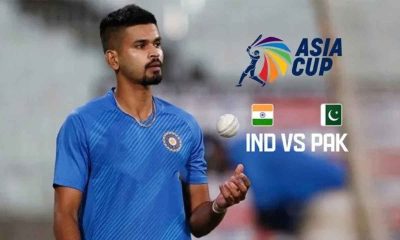
Asia Cup 2022: Clash breaks out during PAK vs AFG match, fans damaged Sharjah Cricket Stadium

In a nail biting fight, Pakistan defeated Afghanistan by 1 run and has entered the finals. Now Sri Lanka and Pakistan will play the Asia Cup 2022 final.

Published

on

Asia Cup 2022

When Asia Cup 2022 was announced, the audience was expecting a tough fight between the six Asian countries but the tournament was also giving the right amount of entertainment dose until yesterday when fight broke out on and off field during the Pakistan vs Afghanistan match.

Currently, Social media is flooded with videos of Pakistan and Afghanistan fans mocking, abusing and taunting each other during the match. The game was being played at UAE’s Sharjah stadium, and riots-like situational videos have surfaced on the internet where fans from both side can also be seen being violent towards each other and damaging the stadium.

The clash began off field after a fight between Afghanistan’s fast bowler Fareed Khan and Pakistan’s batsman Asif Ali shocked the world. In the 19th over Fareed dismissed Asif at 16 runs and reduced Pakistan at 118-9. But in the nail biting fight Asif could not handle the pressure of exchanged few words with Fareed Khan and things turned ugly when he raised his bat close to Khan’s face. Later, they were separated by Afghanistan players.

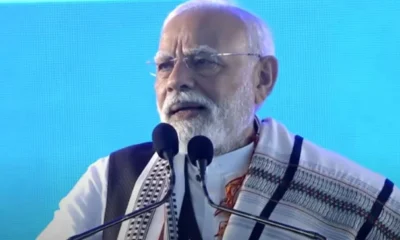
Read Also: Prime Minister Narendra Modi to unveil Central Vista today

And while the world was dealing with these on and off- filed fights, a social media banter also grabbed out attention. Pakistan speedster Shoaib Akhtar took to Twitter and shared some videos where Afghanistan fans were throwing chairs at Pakistan fans. He also wrote that Afghanistan fans have done this multiple times in the past years. And they need to take the sport in the right spirit.

Akhtar also tagged Shafiq Stanikzai, the former chief executive of Afghanistan Cricket Board and said, “your crowd & your players both need to learn a few things if you guys want to grow in the sport.”

However, Shafiq Stanikzai didn’t hold back and wrote that one should watch the video and photos again to judge properly over who was at fault. He also urged Akhtar to let the match referee decide in accordance to the Cricket law before using any humiliating words for the entire nation. He also called out Shoaib Akhtar for doing this twice and asked him to gather courage to apologize to him and his country.

Uttar Pradesh: Teacher beats 14-year-old boy with sticks for coming to school 5 minutes late, legs fractured

Tamil Nadu NEET aspirant dies by suicide in Chennai after failing to clear NEET examination

Cricket news

T20 2026 World Cup tickets go on sale with prices starting at Rs 100

Tickets for the 2026 T20 World Cup go on sale from December 11, with phase one prices starting at Rs100 in India.

Published

on

Ticket sales for the ICC Men’s T20 World Cup 2026 have been announced, with the first phase opening on December 11. The tournament will be hosted jointly by India and Sri Lanka, beginning February 7, and will feature 20 teams competing across 55 matches.

Affordable pricing in first phase

According to media, tickets in phase one will be available at highly accessible rates. Prices start from Rs100 at select venues in India, while tickets in Sri Lanka will be priced from LKR 1000. The ticket window opens at 6.45 pm IST and Sri Lanka time. Details for the second phase of ticket sales are expected to be announced at a later date.

Officials said the pricing strategy is aimed at ensuring wider access to the tournament for fans across different regions and income groups.

Tournament schedule and format

The 2026 edition of the T20 World Cup will follow the same format as the previous tournament. The 20 teams have been divided into four first-round groups, with the top two sides from each group advancing to the Super Eight stage.

Matches will be played in three time slots — morning, afternoon and evening — across venues in both host nations.

First-round groups

  • Group A: India, Pakistan, USA, Netherlands, Namibia
  • Group B: Sri Lanka, Australia, Ireland, Zimbabwe, Oman
  • Group C: England, West Indies, Bangladesh, Nepal, Italy
  • Group D: New Zealand, South Africa, Afghanistan, Canada, UAE

Super Eight and knockout stage

The Super Eight stage will consist of two groups of four teams each, based on first-round qualification. Each team will face the other three sides in its group, with the top two progressing to the semi-finals.

The semi-finals are scheduled for March 4 and March 5, while the final will be played on March 8. Venue arrangements for the knockout matches include Indian cities and Colombo, depending on team qualification scenarios.

Continue Reading

Cricket news

India’s batting reshuffle under Gautam Gambhir draws sharp criticism after 2nd T20I loss

Former players Robin Uthappa and Dale Steyn criticised Gautam Gambhir’s batting shuffle after India’s 51-run defeat in the second T20I against South Africa.

Published

on

Gautam Gambhir

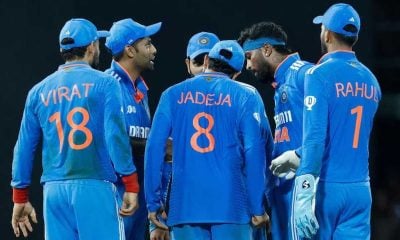
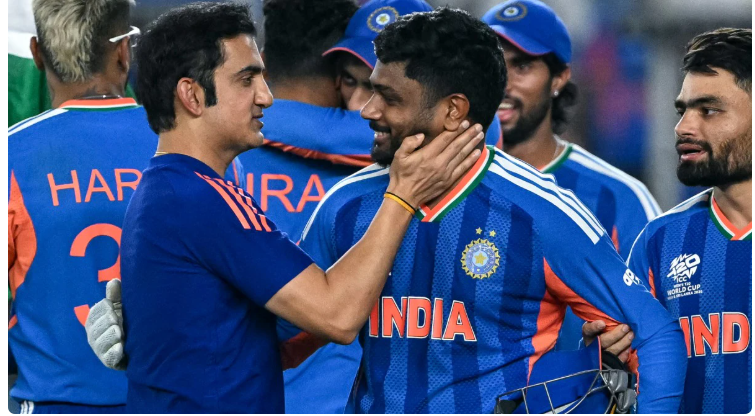
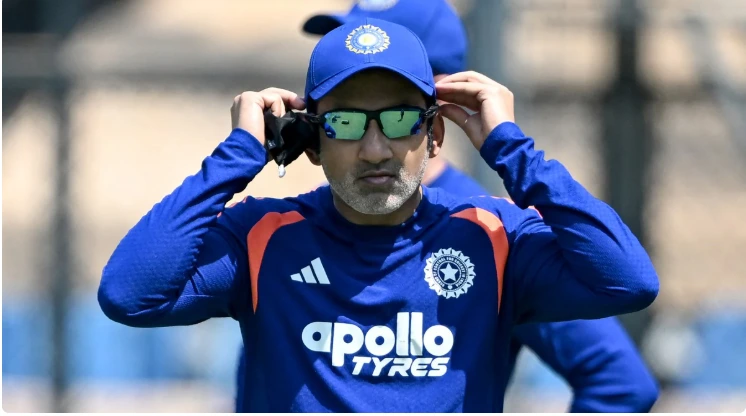
India’s heavy 51-run defeat against South Africa in the second T20I at Mullanpur has sparked intense scrutiny of head coach Gautam Gambhir’s tactical calls, particularly the decision to reshuffle the batting order. Former cricketers Robin Uthappa and Dale Steyn openly questioned the move, calling it a significant error that unsettled the Indian batting line-up

Experts question changes in India’s batting order

India’s chase of a daunting target never gained momentum after early wickets. Captain Suryakumar Yadav did not come in at his usual position, instead walking in after Axar Patel, and managed only five runs. The experiment raised eyebrows among experts, who felt India lost stability at a crucial phase of the innings.

Speaking during the post-match analysis, Robin Uthappa recalled Gambhir’s earlier comments about flexibility in the batting order but said the approach did not suit a high-pressure chase. He argued that when pursuing a big total, the team’s most dependable batters should take responsibility early rather than being pushed down the order.

Uthappa also pointed out that if Axar Patel was used as a pinch-hitter, the role demanded a far more aggressive approach. According to him, India needed calm and assurance after early setbacks, something the shuffled order failed to provide.

Dale Steyn calls decision a ‘major mistake’

Former South Africa pacer Dale Steyn echoed similar concerns, terming the move a “major mistake”. He stressed that Suryakumar Yadav is among India’s best batters and should not be treated as part of a trial-and-error strategy in a competitive T20I.

Steyn questioned the logic behind the left-right combination, noting that a right-handed batter had been dismissed, yet India ended up with two left-handers at the crease. He suggested that experimentation might be understandable in less critical situations, but not in a match where India had a chance to take a 2-1 lead in the series.

Call for clarity in top-order roles

Concluding his analysis, Uthappa urged Gambhir to settle on a fixed top three in the batting order. He emphasised that clarity of roles is essential in T20 cricket, especially during the powerplay overs. While flexibility can work later in the innings, constant changes at the top could harm the team’s rhythm.

Uthappa warned that prolonged experimentation might backfire at crucial moments in major tournaments, stressing that India cannot afford such uncertainty heading into high-stakes events.

Continue Reading

Cricket news

India vs South Africa 2nd T20I: Early collapse leaves India in trouble during 214 chase

India’s chase of 214 faltered early in the 2nd T20I as Shubman Gill and Abhishek Sharma fell inside two overs after South Africa posted 213/4, led by Quinton de Kock’s explosive 90.

Published

on

India’s chase of 214 began on a disastrous note in the second T20I in Mullanpur, with Shubman Gill and Abhishek Sharma falling inside two overs, putting immense pressure on skipper Suryakumar Yadav and the middle order.

India’s run chase unravelled quickly after South Africa posted 213/4, powered by a blistering 90 from Quinton de Kock, supported by Donovan Ferreira and David Miller’s late cameos. Varun Chakravarthy stood out with two wickets, while Jasprit Bumrah and Arshdeep Singh endured difficult spells, conceding 99 runs between them.

India stumbled early when Shubman Gill departed for a golden duck, edging one to slip. Abhishek Sharma tried counter-attacking with two sixes but soon fell to Marco Jansen’s sharp swing, leaving India at 19/2.

In a surprising move, Axar Patel walked in at No. 3—an aggressive tactical decision from the management. He struck a boundary but India remained under pressure at 25/2 after three overs.

Suryakumar Yadav, battling a lean patch, opened his account with a stylish four through backward point, trying to steady the chase.

South Africa, meanwhile, used Lungi Ngidi and Jansen effectively, tightening control after the early breakthroughs. India reached 32/3 by 3.5 overs and still needed 182 off 97 deliveries at 11.25 runs per over.

South Africa’s batting dominance sets India a stiff target

Quinton de Kock headlined the innings with 90 off 46 balls, smashing seven sixes. Ferreira and Miller capitalised late, while Bumrah’s last over leaked 18 runs. Arshdeep, struggling with his rhythm, bowled seven wides in a single over and finished with nine wides overall.

South Africa crossed 200 in the 20th over, closing on 213/4 and putting India under immense scoreboard pressure.

Continue Reading

Trending

© Copyright 2022 APNLIVE.com