English हिन्दी
Connect with us

Top Stories

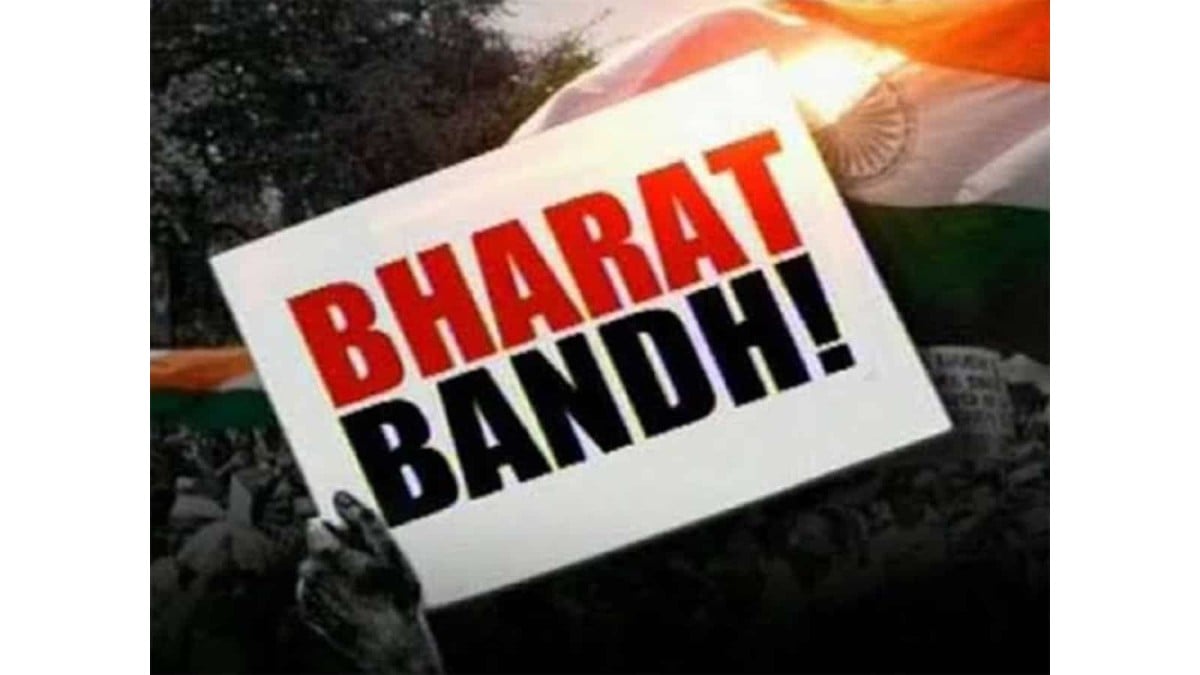
Is there Bharat Bandh on May 25? Here’s why people are calling for shutdown of India?

The All India Backward And Minority Communities Employees Federation has called for a Bharat Bandh on May 25. DP Singh, acting state president of the Bahujan Mukti Party, called upon the people to make Bharat Bandh a success.

Published

on

Bharat Bandh
The All India Backward And Minority Communities Employees Federation has called for a Bharat Bandh on May 25.

The All India Backward And Minority Communities Employees Federation has called for a Bharat Bandh on May 25. DP Singh, acting state president of the Bahujan Mukti Party, called upon the people to make Bharat Bandh a success.

The organization’s District President, Neeraj Dhiman, stated that the Centre did not conduct an OBC census based on caste. He also brought up concerns about the EVMs. Waman Meshram Sir, the National convener of Bahujan Kranti Morcha is also supporting Bharat Bandh on May 25.

The organization has announced Bharat Bandh for these reasons:

Read Also: Uttarakhand: Safety wall collapses on Yamunotri highway, 10,000 people stranded

  1. The Centre did not conduct an OBC census based on caste
  2. EVM scandal
  3. SC, ST, and OBC reservations in the private sector
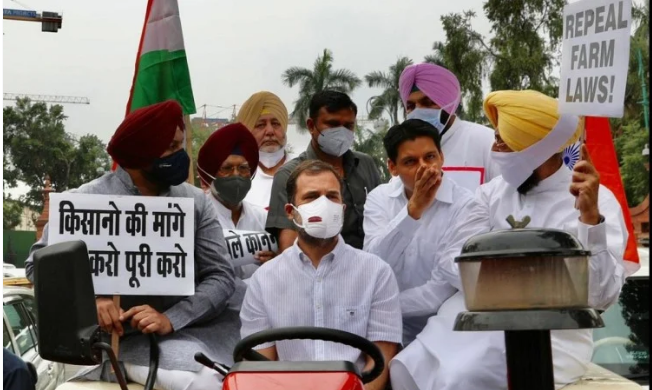
  4. A law should be made to guarantee MSP to farmers
  5. Against NRC/CAA/NPR
  6. Resume old pension scheme
  7. Separate electorates should be implemented in OBC reservation in Panchayat elections in Madhya Pradesh and Odisha
  8. Against displacement of tribals in the name of environmental protection
  9. Against forcible pressure on vaccination
  10. Protest against the labour laws that were made against the workers secretly in lockdown

People are running a campaign on social media to shut down India on May 25. One of the users wrote, that since 2014 we are demanding for OBC caste census. But the government didn’t listen to our voice.

Another user said that he strongly supports the 25th May Bharat Bandh due to the highest unemployment all over India people should join this Bharat Bandh. Many people alleged that the government is forcefully capturing the tribals’ land in the name of development.

Rashtriya Pichda Varg Morcha claimed that these demands for Bharat Bandh are to protect their constitutional rights.

Rahul Gandhi takes a dig at the ruling government, says BJP has spread kerosene all over the country and it needs one spark

Rajiv Gandhi death anniversary: 7 pictures that showcase the timeline of India’s youngest Prime Minister

Latest world news

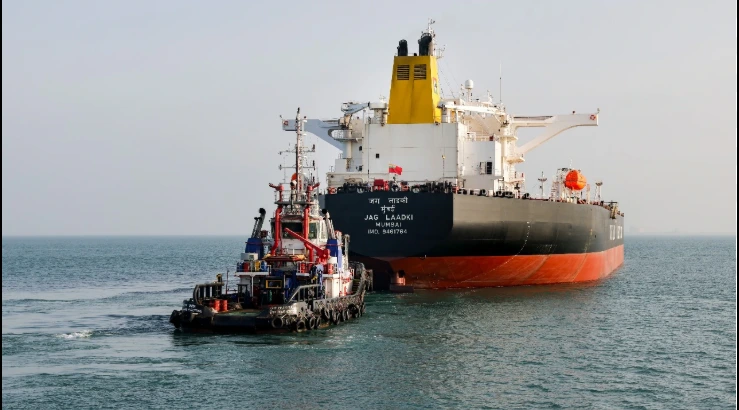
Russian oil tanker rerouted to India amid Middle East crisis, to reach Mangaluru on March 21

A Russian oil tanker bound for China has been diverted to India as Middle East tensions disrupt global energy supply chains.

Published

on

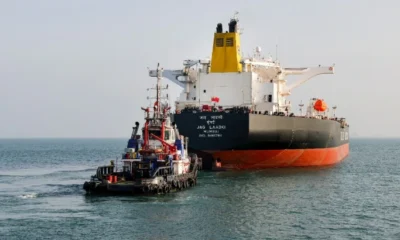
A Russian oil tanker carrying around 7.7 lakh barrels of crude oil is set to arrive at India’s New Mangalore port on March 21 after changing its original route to China, a senior government official said on Thursday.

The vessel, Aqua Titan, which sails under the Cameroon flag, departed from a Russian port on January 18. It altered its course while in the South China Sea and is now heading towards India, reflecting shifting global oil trade patterns amid ongoing geopolitical tensions.

Middle East conflict disrupts global supply

The diversion comes against the backdrop of escalating conflict in the Middle East. The ongoing war involving Iran, along with its retaliatory strikes on Gulf nations, has significantly disrupted oil and natural gas exports from the region. These disruptions have also led to temporary production halts in key energy facilities.

Since the conflict began on February 28, at least four Indian-flagged vessels carrying oil and gas cargo have already reached Indian ports safely.

Indian vessels stranded near Strait of Hormuz

According to the Ministry of Ports, Shipping and Waterways, a large number of Indian vessels remain stuck near the Strait of Hormuz, a critical global oil transit route.

Currently, 22 Indian-flagged cargo ships, along with 611 seafarers, are stranded in the western part of the Persian Gulf. Additionally, two loaded Indian vessels are positioned in the eastern section of the Strait.

Officials confirmed that authorities, including the Directorate General of Shipping, are closely monitoring the situation in coordination with shipowners, recruitment agencies, and Indian embassies. All Indian crew members in the region are reported to be safe, with no incidents recorded in the past 24 hours.

Global shipping crisis deepens

The disruption is not limited to Indian vessels. Around 700 ships from various countries have reportedly been stranded near the Strait of Hormuz for nearly 20 days. This has impacted global oil flows, with nearly 20 percent of crude supplies from the Middle East failing to reach international markets.

India, which imports about 85 percent of its crude oil needs from over 40 countries, is among the nations most affected by the crisis.

Oil prices surge amid attacks on energy infrastructure

Amid rising tensions, global crude prices have surged sharply, with Brent crude crossing $115 per barrel. Iran has threatened further strikes on regional energy installations following attacks linked to Israeli actions.

Recent incidents include missile strikes on Qatar’s Ras Laffan LNG facility, drone attacks on a Saudi refinery along the Red Sea, and fires reported at oil installations in Kuwait.

Government steps up monitoring and response

Authorities have stepped up efforts to manage the situation. The Directorate General of Shipping has facilitated the return of over 472 Indian seafarers so far, including 25 repatriated in the last 24 hours.

Despite the global disruption, India’s ports continue to operate without congestion. Officials confirmed that ports have sufficient storage capacity and are maintaining strict monitoring of vessel movement and cargo handling operations.

Continue Reading

Latest world news

Iran strike on Qatar LNG hub raises concerns for India’s energy security

Iran’s missile strike on Qatar’s LNG facility has disrupted global supply chains, posing risks for India’s energy imports and pricing.

Published

on

Heightened tensions in the Middle East have begun to ripple across global energy markets after Iran launched a missile strike on Ras Laffan, Qatar’s largest liquefied natural gas (LNG) facility. The attack has intensified fears of prolonged supply disruptions and rising fuel costs, with countries like India expected to feel the impact sharply.

The Gulf region has emerged as the focal point of escalating hostilities, with Iran targeting energy infrastructure and US-linked assets following strikes by the United States and Israel. The latest attack on Qatar’s key LNG hub has reportedly forced a complete halt in production at the facility, which is among the largest of its kind globally.

Qatar is a major LNG exporter and ranks alongside the United States, Australia and Russia in global supply. The disruption is not an isolated incident. Earlier in March, missile strikes on Qatari gas fields had already compelled QatarEnergy to suspend operations temporarily. These developments are linked to retaliatory actions following an Israeli strike on Iran’s South Pars gas field, part of the world’s largest natural gas reserve.

The broader conflict has also affected maritime activity in the Strait of Hormuz, a critical route that carries nearly one-fifth of the world’s oil supply. With rising threats to shipping, tanker movement has slowed significantly, pushing global oil and gas prices higher.

The situation has further escalated with continued strikes and counterstrikes across the region. Reports indicate heavy casualties in Iran, while missile and drone attacks continue to target strategic assets. The conflict, now in its third week, has effectively turned key shipping lanes into high-risk zones, with hundreds of cargo vessels stranded near major Gulf ports.

Impact on India

India is particularly vulnerable to these disruptions due to its reliance on imported natural gas. Around 50 percent of the country’s gas demand is met through imports, with Qatar accounting for a significant share.

According to energy economist Kirit Parikh, India sources roughly 40 percent of its LNG imports from Qatar, translating to about 20 percent of its total gas consumption. Any prolonged disruption could therefore strain domestic supply.

India’s current daily natural gas consumption stands at about 189 million metric standard cubic meters per day (MMSCMD), with nearly half met through domestic production. However, a portion of imported supply—estimated at 47.4 MMSCMD—has already been affected due to force majeure conditions.

In response, state-run gas companies have started sourcing LNG cargoes from alternative suppliers. However, such arrangements are likely to come at higher costs, adding pressure on industries dependent on gas, particularly the power sector.

Experts suggest that if the crisis persists, India may need to rationalise gas consumption, prioritising essential sectors while cutting usage in others.

Continue Reading

India News

Deve Gowda hits back at Kharge’s married PM jibe, calls congress tie-up abusive relationship

HD Deve Gowda rebuts Mallikarjun Kharge’s remarks, saying JD(S) did not desert Congress and was forced to exit an “abusive” alliance.
Published

on

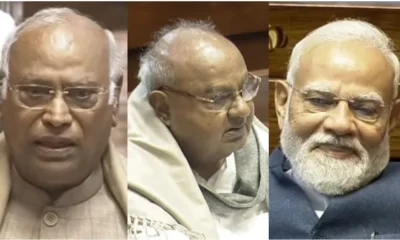
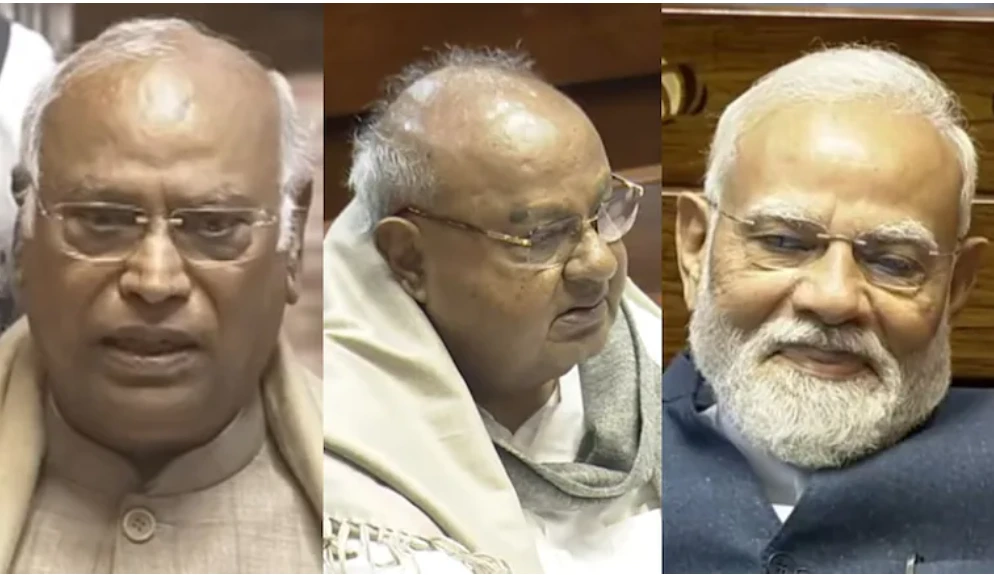
Former Prime Minister H. D. Deve Gowda has responded sharply to remarks made by Congress president Mallikarjun Kharge in the Rajya Sabha, rejecting the suggestion that he chose to align with Prime Minister Narendra Modi over the Congress.

War of words in rajya sabha

During his farewell speech in the Upper House, Kharge made a light-hearted remark about Deve Gowda’s political journey, saying he had “dated” the Congress but ultimately “married” Modi. The comment drew laughter across the House, including from the Prime Minister, who was present at the time.

Kharge also noted his long association with Deve Gowda, saying he had known him for over five decades but was unsure why the Janata Dal (Secular) leader shifted alliances.

Deve gowda’s ‘forced marriage’ reply

In a statement issued later, Deve Gowda said he was not present in the House when the comment was made as he had left for Bengaluru for Ugadi celebrations. Responding in similar metaphorical language, he said his association with the Congress was a “forced marriage” that eventually turned into an “abusive relationship.”

He asserted that his party did not leave the Congress alliance, but was instead compelled to move on after being sidelined.

Reference to 2018 karnataka alliance

Deve Gowda also revisited the 2018 Karnataka political developments, stating that the Congress leadership, including Ghulam Nabi Azad, had proposed his son H. D. Kumaraswamy as Chief Minister. He claimed he had instead suggested Kharge’s name, in the presence of leaders like Siddaramaiah.

Despite this, Kumaraswamy eventually took charge as Chief Minister after the Congress-JD(S) alliance formed the government.

Alliance collapse and aftermath

The coalition government collapsed in 2019 after multiple MLAs from both parties defected, leading to the fall of the government. Deve Gowda alleged that the Congress failed to act against those responsible for triggering the defections.

He maintained that the breakdown of the alliance left JD(S) with no option but to seek a “more stable” political partnership later.

Political context

Deve Gowda briefly served as Prime Minister following the 1996 Lok Sabha elections, heading a United Front government supported by the Congress. His party later allied with the Congress in Karnataka in 2018 before parting ways after the coalition government’s collapse.

Continue Reading

Trending

© Copyright 2022 APNLIVE.com