English हिन्दी
Connect with us

Top Stories

Gujarat Assembly Elections: BJP releases manifesto, promises AIIMS level medical facilities, uniform civil code, anti-radicalization cell

The elections for the 182-member State Assembly will be held in two phases on December 1 and 5. The counting of votes will take place on December 8.

Published

on

Gujarat Assembly Elections: BJP releases manifesto, promises AIIMS level medical facilities, uniform civil code, anti-radicalization cell

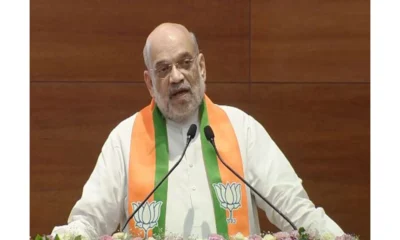
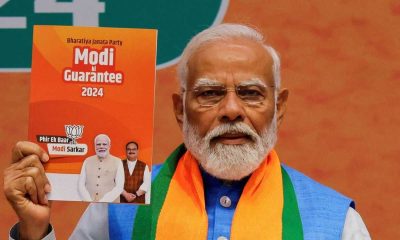
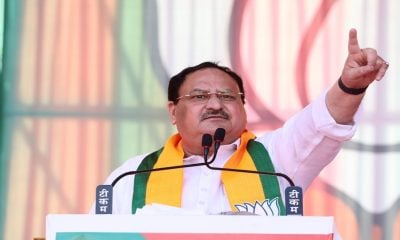
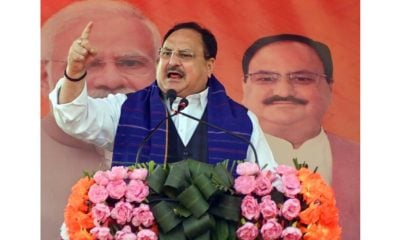
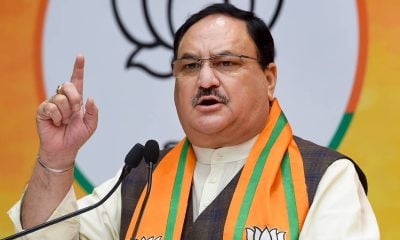
Bharatiya Janata Party (BJP) released its Sankalp Patra or manifesto in Gandhinagar on Saturday ahead of Gujarat Assembly Elections. Gujarat Chief Minister M Bhupendra Patel, BJP national president JP Nadda and state party president CR Paatil presented the saffron party’s manifesto.

Under its Sankalp Patra, the BJP has made several promises, such as one lakh government jobs for women, Rs 10,000 crore for Agri-marketing infrastructure, Uniform Civil Code implementation, blue economy industries corridor, financial assistance to EWS/OBC students and also assured 20 lakh new jobs generation in the state.

Apart from these, the ruling party has also ensured separate funds for poor people, education, AIIMS-level medical facilities, and irrigation in South Gujarat along with Saurashtra.

JP Nadda said for the progress of Gujarat, the party will make Gujarat’s economy equal to that of a 1 trillion economy by making the state a foreign direct investment destination. While releasing the manifesto, he called Gujarat the land of change-makers and stated that Gujarat has given political direction to the country.

He also said that the saffron party will create an anti-radicalization cell to identify and eliminate potential threats, and sleeper cells of the terrorist organizations and anti-India forces.

BJP has been ruling in Gujarat for the past 27 years. In the last elections in 2017, BJP won 99 seats and the Congress came close with 77 seats. This year, Aam Aadmi Party (AAP) has also entered the state to contest elections.

The elections for the 182-member State Assembly will be held in two phases on December 1 and 5. The counting of votes will take place on December 8.
Latest world news

Trump signals possible wind-down of Iran war as oil tensions rattle global markets

Trump indicates the US may scale down military operations against Iran as oil market concerns intensify.

Published

on

Donald Trump

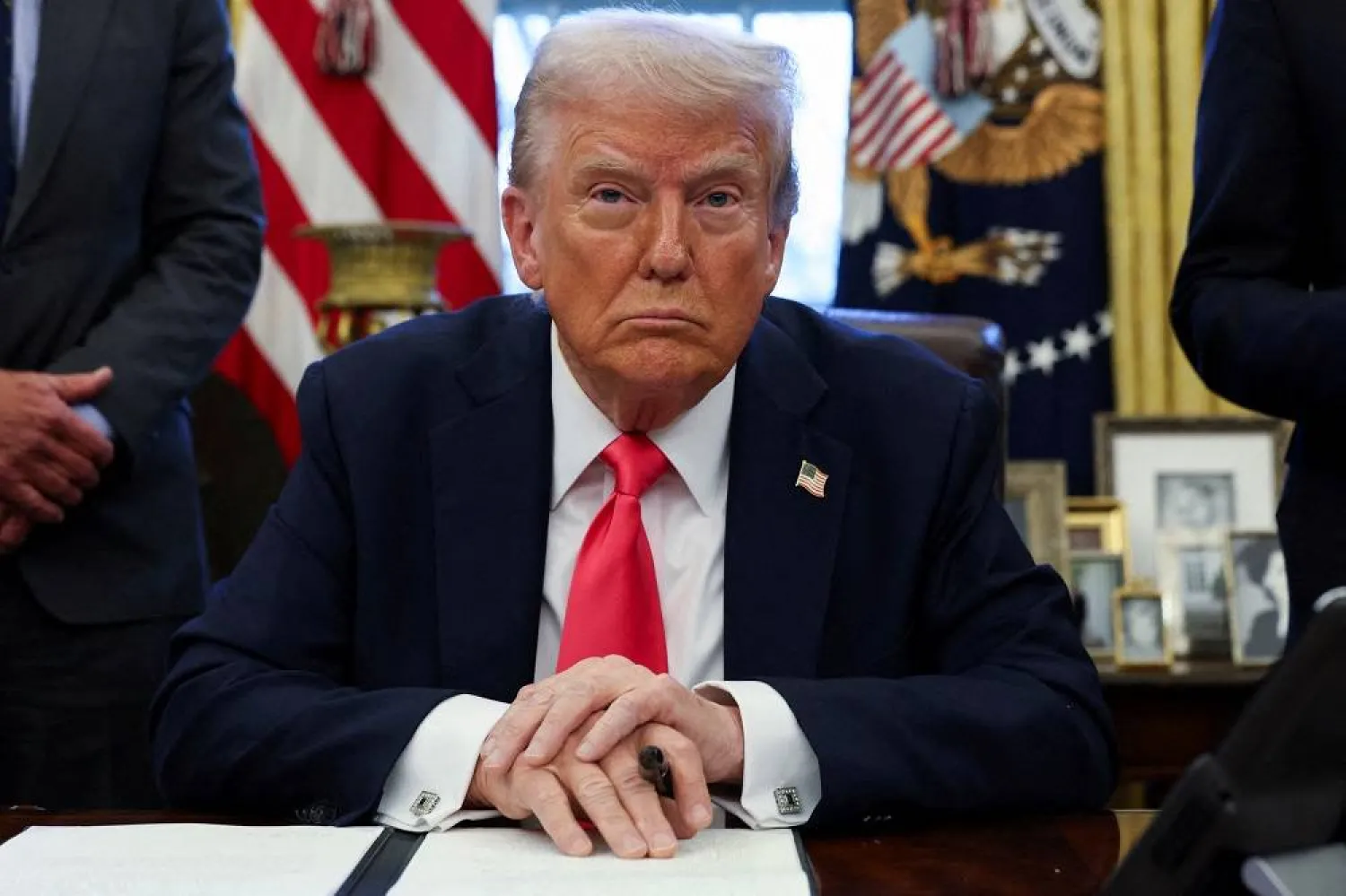
Donald Trump has indicated that the United States may consider scaling down its military operations against Iran, saying the country is “getting very close” to achieving its objectives in the ongoing conflict in West Asia.

In a post on Truth Social, Trump highlighted the progress made by US forces and suggested that a potential wind-down of operations could be under consideration. His remarks are among the clearest signals so far that Washington may be looking at reducing its military engagement.

The statement comes at a time when the US has temporarily eased restrictions on Iranian oil shipments. The move is aimed at addressing concerns over global supply disruptions and stabilising rising oil prices amid continued tensions in the region.

White House Press Secretary Karoline Leavitt said the administration had anticipated a timeline of around four to six weeks for the operation. With the conflict now entering its third week, she noted that developments were being closely monitored.

Oil markets in focus

Global oil markets have come under pressure due to the ongoing tensions. The temporary relaxation allows certain Iranian oil shipments that were already in transit to reach markets, helping ease supply concerns.

The situation has contributed to volatility in oil prices, with investors closely watching developments in the Middle East for further signals on supply stability.

Rising regional tensions

The conflict continues to see exchanges of attacks in parts of the region. Iran has carried out drone and missile strikes targeting Israel and Saudi Arabia, contributing to the escalation.

At the same time, concerns remain high over the security of key energy routes.

Strait of Hormuz concerns

The Strait of Hormuz, a crucial global oil transit route, remains a focal point of concern. A significant portion of the world’s oil supply passes through the strait, making it highly sensitive to any disruption.

Trump suggested that countries dependent on the route should also take responsibility for its security, while indicating that the US could assist if required.

No ceasefire signal

Despite hinting at a possible wind-down of operations, Trump said he is not currently seeking a ceasefire, indicating that the US position remains firm as the situation evolves.

The developments highlight the close link between geopolitical tensions, global energy markets, and the broader economic outlook.

Continue Reading

Latest world news

PM Modi discusses West Asia tensions with Bahrain King, condemns attacks on infrastructure

PM Modi and Bahrain King discuss West Asia tensions, condemn attacks on infrastructure, and stress need for secure shipping and diplomacy.
Published

on

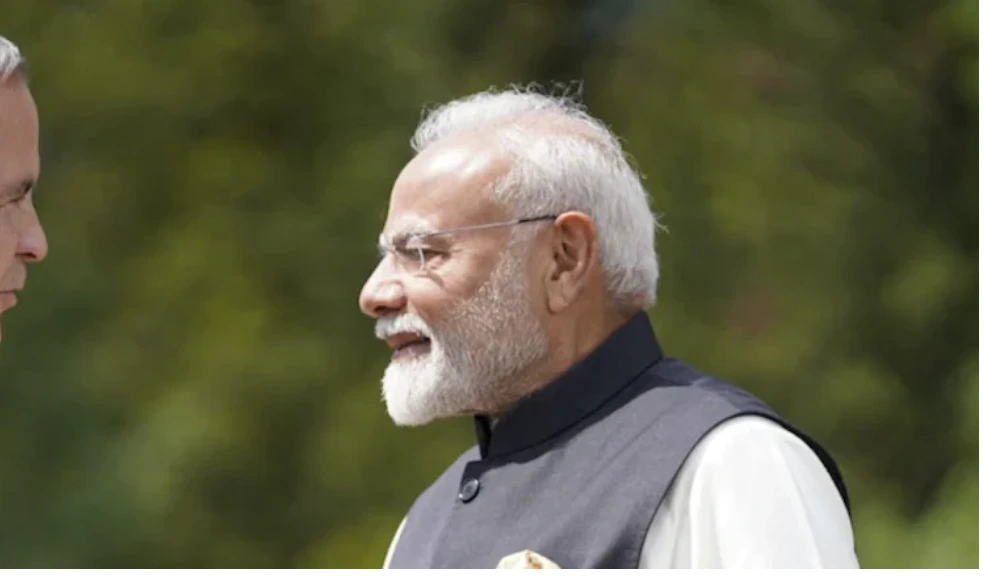
Prime Minister Narendra Modi on Friday held a telephonic conversation with Bahrain’s King Hamad bin Isa Al Khalifa, focusing on the evolving situation in West Asia and condemning recent attacks on energy and civilian infrastructure in the region.

During the call, PM Modi extended Eid al-Fitr greetings to the King and the people of Bahrain. He also expressed appreciation for Bahrain’s continued support towards the welfare of the Indian community residing in the Gulf nation.

Sharing details of the conversation, the Prime Minister said both leaders discussed regional developments and raised concerns over the impact of attacks on critical infrastructure. He noted that such incidents could adversely affect global food, fuel, and fertiliser security.

PM Modi also underlined the importance of ensuring freedom of navigation and keeping key shipping routes open and secure, amid rising tensions in the region.

The conversation comes against the backdrop of ongoing conflict in West Asia following reported US-Israeli strikes on Iran on February 28, which allegedly resulted in the death of Iran’s Supreme Leader Ali Khamenei and senior military officials. Iran subsequently launched drone and missile attacks targeting US and Israeli-linked assets across the region.

India has been actively engaging with multiple global and regional leaders in recent days. PM Modi has held discussions with leaders from several countries, including Malaysia, Oman, France, Kuwait, the UAE, Israel, Iran, Saudi Arabia, and Qatar, as part of ongoing diplomatic efforts.

Earlier, the Prime Minister also spoke with Jordan’s King Abdullah II, where both leaders expressed concern over the situation and emphasised the need for dialogue and diplomacy to restore peace and stability.

In another conversation, PM Modi spoke with French President Emmanuel Macron, reiterating the urgent need for de-escalation. He also held talks with Oman’s Sultan Haitham bin Tariq, condemning the violation of Oman’s sovereignty and stressing peaceful resolution through diplomatic channels.

The Prime Minister further highlighted the importance of secure maritime routes, particularly through the Strait of Hormuz, a critical global energy corridor.

Continue Reading

Latest world news

Bangladesh envoy meets S Jaishankar, Dhaka foreign minister may visit India in April

India and Bangladesh are stepping up diplomatic engagement as S Jaishankar meets envoy Riaz Hamidullah and discussions begin on a possible visit by Dhaka’s foreign minister.
Published

on

Bangladesh envoy meets S jayshankar

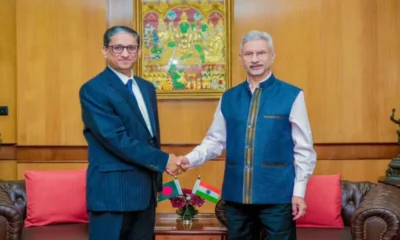
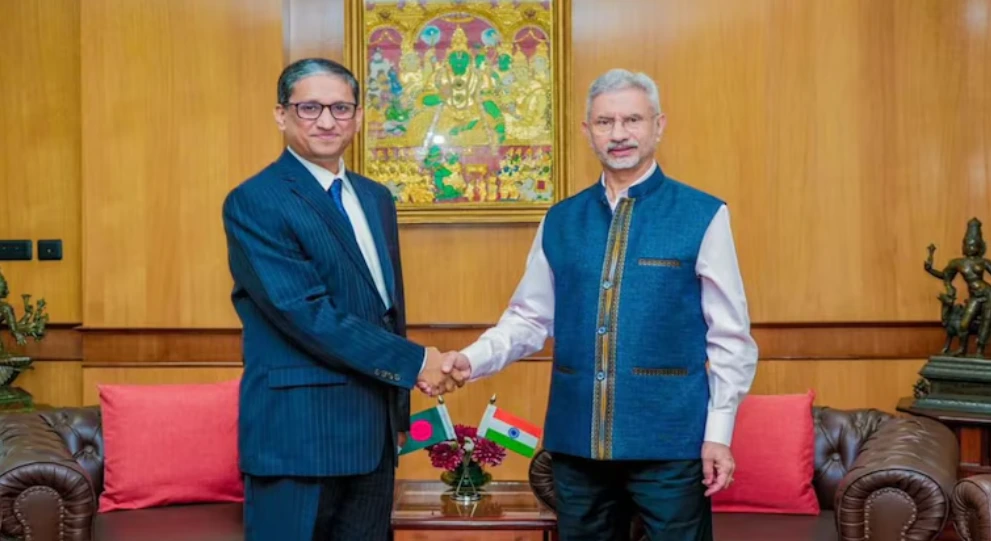
India’s External Affairs Minister S. Jaishankar met Bangladesh High Commissioner Riaz Hamidullah, marking a key diplomatic engagement amid efforts to further strengthen bilateral ties between the two countries.

The meeting assumes significance as it was Hamidullah’s first interaction with a senior Indian cabinet minister since he took charge in May last year.

Following the meeting, Hamidullah shared on social media that he had a “courtesy call” with Jaishankar and reaffirmed Bangladesh’s readiness to work together with India in areas of shared interest and mutual benefit.

Jaishankar also highlighted the importance of the engagement, noting that discussions focused on advancing bilateral relations between the neighbouring nations.

Possible visit by Bangladesh foreign minister

Diplomatic engagements between the two countries are expected to intensify in the coming weeks. According to sources, Bangladesh Foreign Minister Khalilur Rahman may visit India in the second week of April.

The visit is likely to be planned alongside his participation in a ministerial-level meeting of the Indian Ocean Rim Association (IORA) in Mauritius.

Rahman, who previously studied at Jawaharlal Nehru University in New Delhi, is considered familiar with India’s strategic and political landscape. He had also visited India in November last year in his earlier role as national security adviser under the interim government led by Muhammad Yunus.

He was appointed foreign minister after Tarique Rahman assumed office earlier this year.

High-level exchanges expected

Prime Minister Narendra Modi had earlier congratulated Tarique Rahman on his electoral victory and extended an invitation to visit India.

Lok Sabha Speaker Om Birla also attended Rahman’s swearing-in ceremony and later conveyed a personal letter from Modi, reiterating the invitation for an official visit.

The recent meeting between Jaishankar and Hamidullah is seen as part of broader diplomatic efforts to maintain momentum in India-Bangladesh relations through sustained high-level dialogue.

Continue Reading

Trending

© Copyright 2022 APNLIVE.com