English हिन्दी
Connect with us

Top Stories

Delhi LG VK Saxena orders CM Kejriwal to remove Jasmine Shah as DDC Vice Chairman for misusing his powers

According to the reports, Shah’s office at Shamnath Marg has been sealed and all other facilities, including his official vehicle, have been withdrawn with immediate effect.

Published

on

Delhi LG VK Saxena

Delhi Lieutenant Governor VK Saxena on Friday ordered the capital’s Chief Minister Arvind Kejriwal to remove Jasmine Shah from the post of Vice Chairman of the Dialogue and Development Commission (DDC) for misusing his office for political purposes.

Lt. Governor Saxena also directed the CM to restrict Shah from discharging his duties as the vice chairman of DDC and from using any privileges or facilities related to his position with immediate effect until a decision is taken by the CM in this regard.

The move came after BJP MP Parvesh Verma filed a complaint to the LG against Shah for allegedly misusing his public office by acting as the official spokesperson of the Aam Aadmi Party (AAP). Shah’s post is equivalent to the rank of a Delhi government minister.

Read Also: Twitter hit with mass resignations ahead of Elon Musk’s hardcore ultimatum

According to the reports, Shah’s office at Shamnath Marg has been sealed and all other facilities, including his official vehicle, have been withdrawn with immediate effect.

The LG office said the office chamber of the Vice Chairman, DDC at 33, Sham Nath Marg in Delhi has been sealed in order to prevent access to the premises. An administrative order to this effect was issued by the planning department of the Delhi Government on Thursday, in compliance with which the SDM, Civil Lines sealed the office premises of DDC late Thursday night.

The order further stated that Vide order No. 2/12/P1g/DDCD/2022/10895-10900 dated 17.11.2022, the Hon’ble Lt. Governor of GNCTD has ordered that Jasmine Shah be restricted from the discharge of functions as Vice Chairman, DDCD and to use any privileges and facilities connected with the office of VC, DDCD with immediate effect.

BJP releases list of 40 star campaigners for upcoming bypolls in Uttar Pradesh

Chhattisgarh CM Bhupesh Baghel attacks RSS over its same DNA claim

Latest world news

Bangladesh envoy meets S Jaishankar, Dhaka foreign minister may visit India in April

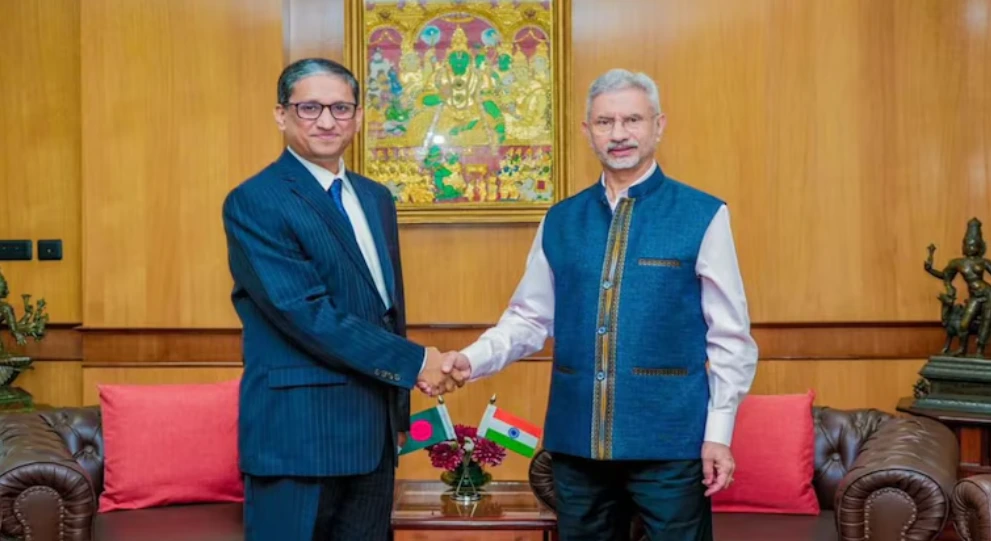
India and Bangladesh are stepping up diplomatic engagement as S Jaishankar meets envoy Riaz Hamidullah and discussions begin on a possible visit by Dhaka’s foreign minister.

Published

on

Bangladesh envoy meets S jayshankar

India’s External Affairs Minister S. Jaishankar met Bangladesh High Commissioner Riaz Hamidullah, marking a key diplomatic engagement amid efforts to further strengthen bilateral ties between the two countries.

The meeting assumes significance as it was Hamidullah’s first interaction with a senior Indian cabinet minister since he took charge in May last year.

Following the meeting, Hamidullah shared on social media that he had a “courtesy call” with Jaishankar and reaffirmed Bangladesh’s readiness to work together with India in areas of shared interest and mutual benefit.

Jaishankar also highlighted the importance of the engagement, noting that discussions focused on advancing bilateral relations between the neighbouring nations.

Possible visit by Bangladesh foreign minister

Diplomatic engagements between the two countries are expected to intensify in the coming weeks. According to sources, Bangladesh Foreign Minister Khalilur Rahman may visit India in the second week of April.

The visit is likely to be planned alongside his participation in a ministerial-level meeting of the Indian Ocean Rim Association (IORA) in Mauritius.

Rahman, who previously studied at Jawaharlal Nehru University in New Delhi, is considered familiar with India’s strategic and political landscape. He had also visited India in November last year in his earlier role as national security adviser under the interim government led by Muhammad Yunus.

He was appointed foreign minister after Tarique Rahman assumed office earlier this year.

High-level exchanges expected

Prime Minister Narendra Modi had earlier congratulated Tarique Rahman on his electoral victory and extended an invitation to visit India.

Lok Sabha Speaker Om Birla also attended Rahman’s swearing-in ceremony and later conveyed a personal letter from Modi, reiterating the invitation for an official visit.

The recent meeting between Jaishankar and Hamidullah is seen as part of broader diplomatic efforts to maintain momentum in India-Bangladesh relations through sustained high-level dialogue.

Continue Reading

India News

Late-March western disturbance brings 1,000-km rain band across India, Pakistan and Afghanistan

An unusual western disturbance has created a 1,000-km rain band, bringing widespread storms, rainfall and hail across parts of India and neighbouring countries.
Published

on

Weather

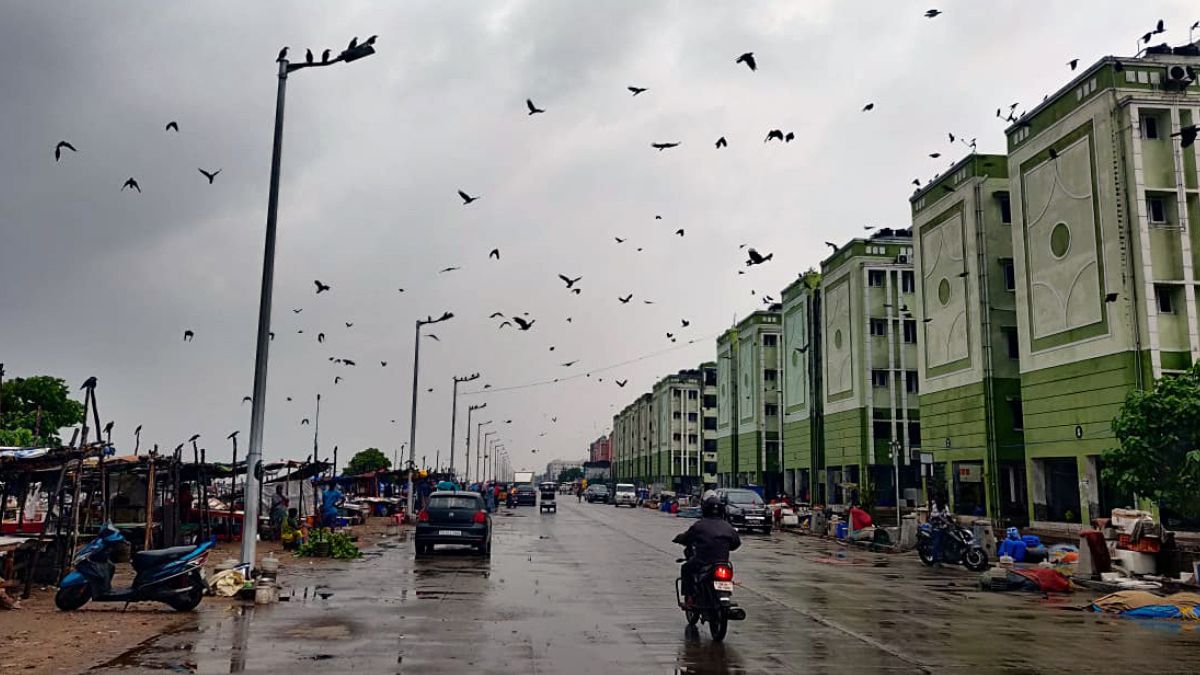
An unusual weather system is currently impacting large parts of India, Pakistan and Afghanistan, bringing widespread thunderstorms, gusty winds, rainfall and even hailstorms at a time when summer conditions typically begin to set in.

The ongoing event is being driven by an active western disturbance that has formed a nearly straight, linear low-pressure trough stretching about 1,000 kilometres—from Afghanistan, across Pakistan, and into India. This formation is considered atypical, as most western disturbances usually follow a curved path.

Western disturbances are generally extratropical systems originating near the Mediterranean region and are more common during winter months, when they bring snowfall and cold weather to northern India. However, this system stands out both for its timing in late March and its distinct structure.

Widespread weather activity across regions

The system is associated with an upper-air cyclonic circulation over northern Pakistan, which is leading to widespread thunderstorms and winds ranging between 40 and 80 kmph across northwest India. Isolated hailstorms and light-to-moderate rainfall or snowfall have also been reported.

Heavy to very heavy rainfall has already occurred in sub-Himalayan West Bengal and Sikkim, while southern states including Karnataka, Andhra Pradesh, Kerala and Tamil Nadu have received significant showers. Hailstorm activity has also been observed in multiple regions.

Meteorological conditions indicate that the western disturbance includes a trough in the middle and upper atmospheric levels. This is interacting with several low-level cyclonic circulations over regions such as north Madhya Pradesh, east Uttar Pradesh, west Rajasthan, Haryana, northeast Assam, coastal Andhra Pradesh, and parts of Tamil Nadu and Kerala, intensifying weather activity.

System likely to weaken, another disturbance ahead

The current disturbance is expected to remain active over the Western Himalayas and adjoining plains through Friday, after which its intensity is likely to decrease.

However, forecasts suggest that another weaker western disturbance may approach the region around March 22, potentially bringing further weather changes.

Moisture sources behind the system

The primary moisture feeding this system originates from evaporation over multiple water bodies, including the Mediterranean Sea, Caspian Sea, Black Sea, and the Persian Gulf.

As the system moves eastward, it gathers additional moisture from the Arabian Sea. This moisture is further enhanced due to orographic lifting along the Himalayas. Simultaneously, existing troughs and cyclonic features over regions such as Gujarat and the Mannar area are contributing to increased low-level convergence, leading to intensified rainfall and storm activity.

Delhi-NCR sees cooler conditions and rainfall

In Delhi-NCR, light-to-moderate rainfall accompanied by thunderstorms and winds of 30–50 kmph is expected to continue until Friday. Daytime temperatures are likely to remain between 25 and 28 degrees Celsius, which is below the seasonal average.

Why late-March disturbances are uncommon

Climatologically, western disturbances are most frequent between December and February, with India typically experiencing four to six such systems per month during winter.

By late March, their frequency usually declines sharply as the jet stream weakens and shifts northward. Historically, only one or two such systems occur during this period each year.

However, recent trends suggest a gradual extension of the western disturbance season into April. Experts attribute this to changes in atmospheric patterns, including stronger subtropical jet streams and broader climate variability.

Continue Reading

India News

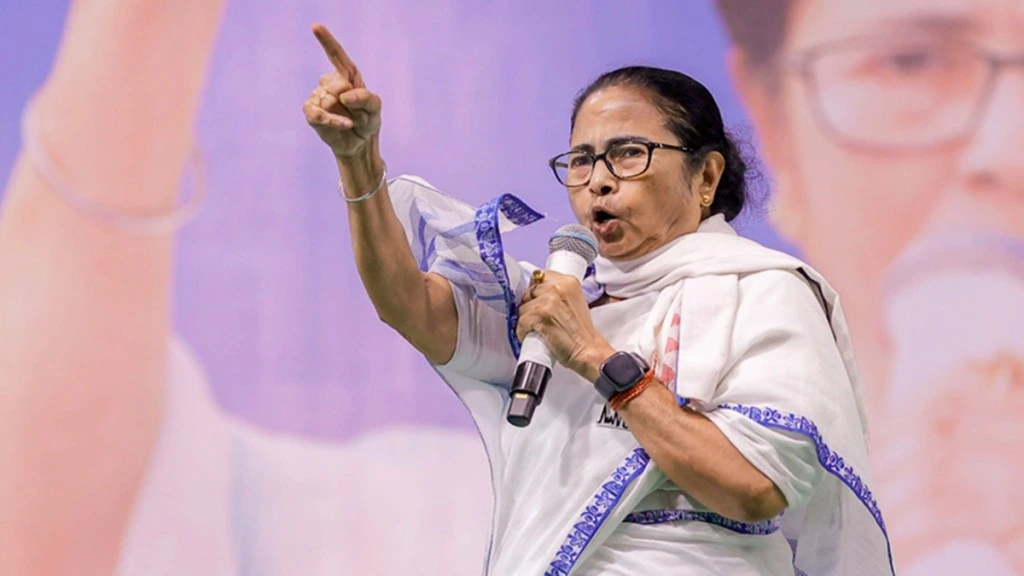
Mamata Banerjee slams poll body over officials’ transfer, calls move unprecedented

Mamata Banerjee has criticised the Election Commission for transferring senior officials ahead of West Bengal elections, alleging bias and procedural overreach.
Published

on

Mamata Banerjee

West Bengal Chief Minister Mamata Banerjee has sharply criticised the Election Commission of India over the transfer of senior state officials ahead of the assembly elections, alleging bias and procedural overreach.

In a strongly worded letter to Chief Election Commissioner Gyanesh Kumar, Banerjee expressed “deep shock” at the poll panel’s functioning, stating that it had “crossed all boundaries of decency and constitutional propriety.”

Concerns over transfers and alleged bias

The chief minister objected to what she described as “unilateral” transfers of key officials, including the chief secretary, home secretary, director general of police, and several district-level officers. According to her, these decisions were taken without citing any violations of electoral rules or the Model Code of Conduct.

Banerjee further alleged that the Commission had shown “apparent bias” since the beginning of the Special Intensive Revision of electoral rolls, claiming that repeated concerns raised by the state government had been ignored.

She also questioned the timing of the transfers, noting that district election officers were shifted during an ongoing revision process, which she suggested could affect administrative continuity and pending cases.

Supreme Court reference and governance concerns

Referring to her government’s move to approach the Supreme Court of India, Banerjee said the court had acknowledged the concerns and issued directions that are currently being implemented.

The chief minister warned that the removal of senior officials at short notice could disrupt governance, law and order, and disaster preparedness, particularly during the storm-prone months of March and April.

She also criticised the deployment of state police officers as observers in other poll-bound regions, calling it “arbitrary” and a “misuse of authority.”

Warning on federal structure and democracy

Describing the decisions as “biased, hasty and unilateral,” Banerjee said such actions undermine cooperative federalism and could create conditions resembling “indirect central rule.”

She urged the Commission to reconsider its decisions, warning that such steps are “deeply concerning” for a healthy democratic process.

Elections to the 294-member West Bengal assembly are scheduled to be held in two phases on April 23 and April 29, with counting set for May 4.

Continue Reading

Trending

© Copyright 2022 APNLIVE.com