English हिन्दी
Connect with us

Top Stories

PM Modi inaugurates AIIMS Guwahati, the first in the Northeast

The high tech super speciality hospital will not only cater to the medical and health needs of the people of Assam only but the entire northeast region.

Published

on

PM Modi cuts the ribbon of Northeast’s first AIIMS in Guwahati, dedicates 3 medical colleges to Assam

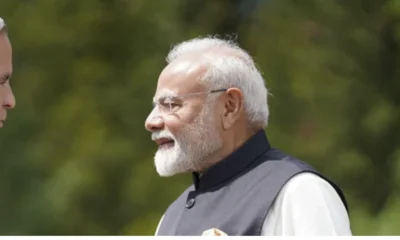
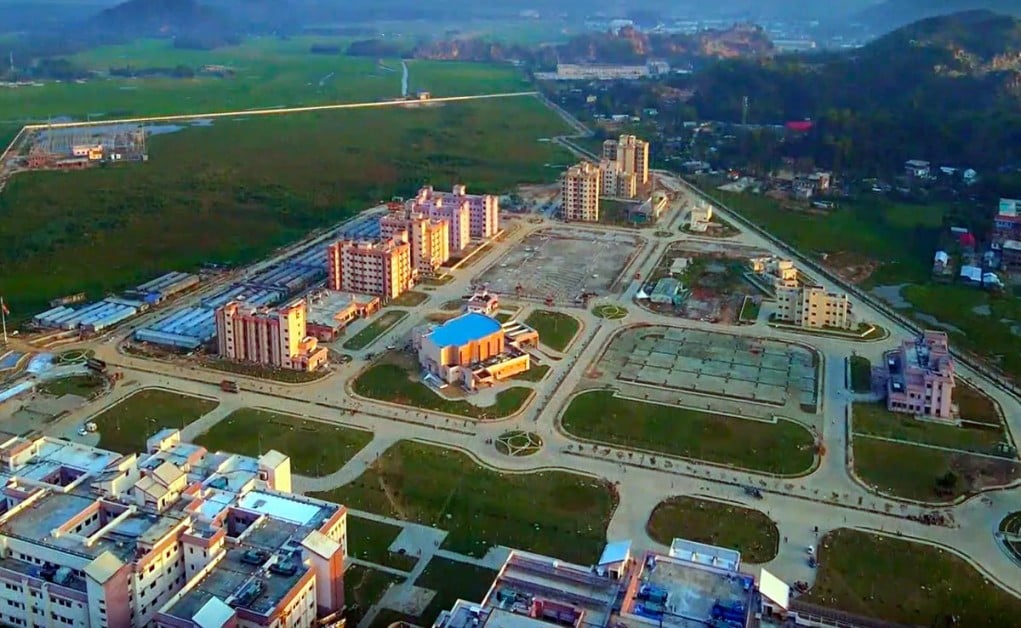
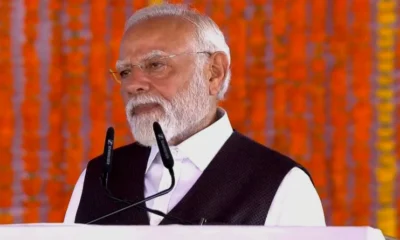
Prime Minister Narendra Modi, who is on a visit to Assam on the occasion of the state’s spring festival Bihu, on Friday inaugurated the All India Institute of Medical Sciences (AIIMS) Guwahati in Assam.

AIIMS Guwahati’s foundation stone was laid by the Prime Minister himself in 2017. Built at a cost of Rs 1,123 crore, it’s the Northeast’s first-ever AIIMS.

The high-tech super specialty hospital will not only cater to the medical and health needs of the people of Assam only but the entire northeast region. The Prime Minister said the AIIMS inauguration would strengthen medical infrastructure in the region. He also inaugurated three other medical colleges at Nalbari, Nagaon and Kokhrajhar, all in Assam, through video-conferencing.
Other than this, Prime Minister Modi laid the foundation stone for a Rs 546-crore project, the Advanced Healthcare Innovation Institute (AAHII), which is a joint venture between the state government and IIT Guwahati.

The AAHII is being set up with the objective that will help in encouraging technology with healthcare which will lead to research and development with innovations and inventions.

PM Modi also marked the launch of the distribution of 1.1 crore Aayushmaan cards to eligible beneficiaries that would help them in getting medical treatment of up to Rs 5 lakh for free.

The Prime Minister who arrived earlier today in Assam was welcomed by Assam Chief Minister Himanta Biswa Sharma, who tweeted a hearty welcome to the Prime Minister to the state to celebrate Bihu.

PM Modi will dedicate projects worth Rs 14,300 crore.

India News

Delhi air quality nears severe as smog blankets city, airport issues advisory

Delhi recorded very poor to severe air quality on Saturday, with dense smog affecting visibility and prompting an advisory from the city airport.

Published

on

Delhi pollution

Residents across Delhi and adjoining areas woke up to dense smog on Saturday morning, with air quality levels edging close to the ‘severe’ category in several locations

Data from the Central Pollution Control Board showed the overall Air Quality Index (AQI) at 390 at 8 am, placing it in the ‘very poor’ category. However, multiple monitoring stations in the national capital recorded AQI readings in the ‘severe’ range.

Areas reporting severe air quality included Anand Vihar (435), Ghazipur (435), Jahangirpuri (442), Rohini (436), Chandni Chowk (419), Burari Crossing (415), and RK Puram (404). The high pollution levels were accompanied by a mix of smog and shallow fog, which reduced visibility in several parts of the city during the early hours.

Smog reduces visibility, health risks rise

As per AQI classification, readings between 401 and 500 fall under the ‘severe’ category, indicating serious health risks. Officials note that prolonged exposure at such levels can trigger respiratory problems even among healthy individuals, while those with existing conditions face higher risks.

Dangerous pollution levels have become a recurring concern in Delhi during the winter months. On Friday as well, a thick haze covered the city, with the overall AQI recorded at 386 and visibility remaining poor in several localities.

Delhi airport activates low visibility procedures

Amid the deteriorating air quality, Delhi airport issued an advisory stating that low visibility procedures were in place. In a post on X, the airport confirmed that flight operations were normal at present but advised passengers to stay in touch with their respective airlines for the latest updates.

Despite some marginal improvement over recent weeks, large parts of the capital continue to remain under a blanket of toxic smog. The worsening situation has also intensified political sparring over pollution control measures in the city.

Continue Reading

Latest world news

US lawmakers move resolution to roll back Trump’s 50% tariffs on Indian imports

Three US lawmakers have moved a resolution to end Trump’s emergency declaration that imposed 50% tariffs on Indian goods, calling the move illegal and harmful to trade ties.

Published

on

trump

Three members of the US House of Representatives have introduced a resolution seeking to end former President Donald Trump’s national emergency declaration that led to steep tariffs on imports from India. The lawmakers termed the duties illegal and warned that they have hurt American consumers, workers and long-standing India-US economic ties.

The resolution has been moved by Representatives Deborah Ross, Marc Veasey and Raja Krishnamoorthi. It aims to terminate the emergency powers used to impose import duties that cumulatively raised tariffs on several Indian-origin goods to 50 per cent.

What the resolution seeks to change

According to details shared by media, the proposal specifically seeks to rescind an additional 25 per cent “secondary” tariff imposed on August 27, 2025. This was levied over and above earlier reciprocal tariffs, taking the total duty to 50 per cent under the International Emergency Economic Powers Act.

The House move follows a separate bipartisan effort in the US Senate that targeted similar tariffs imposed on Brazil, signalling growing resistance in Congress to the use of emergency powers for trade actions.

Lawmakers flag impact on US economy and consumers

Congresswoman Deborah Ross highlighted the deep economic links between India and her home state of North Carolina, noting that Indian companies have invested over a billion dollars there, creating thousands of jobs in sectors such as technology and life sciences. She also pointed out that manufacturers from the state export hundreds of millions of dollars’ worth of goods to India each year.

Congressman Marc Veasey said the tariffs amount to a tax on American households already facing high costs, stressing that India remains an important cultural, economic and strategic partner for the United States.

Indian-American Congressman Raja Krishnamoorthi described the duties as counterproductive, saying they disrupt supply chains, harm American workers and push up prices for consumers. He added that rolling back the tariffs would help strengthen economic and security cooperation between the two countries.

Background of the tariff hike

Earlier in August 2025, the Trump administration imposed a 25 per cent tariff on Indian goods, which came into effect from August 1. This was followed days later by another 25 per cent increase, citing India’s continued purchase of Russian oil. The combined duties were justified by the administration as a measure linked to Moscow’s war efforts in Ukraine.

Wider push against unilateral trade actions

The latest resolution is part of a broader push by congressional Democrats to challenge unilateral trade measures and reassert Congress’ constitutional authority over trade policy. In October, the same lawmakers, along with several other members of Congress, had urged the President to reverse the tariff decisions and work towards repairing strained bilateral relations with India.

Continue Reading

India News

MNREGA may be renamed Pujya Bapu Gramin Rozgar Yojana, proposal sent to Cabinet

The Centre has proposed renaming MNREGA as Pujya Bapu Gramin Rozgar Yojana and increasing guaranteed employment to 125 days, with the proposal now before the Cabinet.

Published

on

The Central government has moved a proposal to rename the Mahatma Gandhi National Rural Employment Guarantee Scheme (MNREGA), one of the country’s largest social security programmes, with the matter now placed before the Union Cabinet for approval. As per the proposal, the scheme could be rebranded as Pujya Bapu Gramin Rozgar Yojana

Preparations are underway to roll out the restructured programme, which is expected to increase the guaranteed employment days for rural households to 125 days per year, up from the current provision of at least 100 days.

Higher allocation and expanded employment guarantee

According to the information shared, the government is working on allocating more than Rs 1.5 lakh crore for the revamped rural employment scheme. The proposed changes are aimed at strengthening income support for poor families living in rural areas.

MNREGA, enacted as a labour law and social security measure, provides unskilled manual work to eligible rural households and legally guarantees the right to employment. At present, around 154 million people are employed under the programme, with women accounting for nearly one-third of the beneficiaries.

Background of the scheme

The employment guarantee programme was launched during the Manmohan Singh-led government and was initially known as the National Rural Employment Guarantee Act. In 2009, it was renamed after Mahatma Gandhi.

A key feature of the scheme is its decentralised structure, with the Panchayati Raj institutions responsible for ensuring 50 per cent of the work. Another crucial provision mandates that if employment is not provided within 15 days of application, beneficiaries are entitled to an unemployment allowance.

The proposal to rename the flagship scheme and expand its scope is currently awaiting Cabinet consideration, after which a formal decision is expected.

Continue Reading

Trending

© Copyright 2022 APNLIVE.com