English हिन्दी
Connect with us

Latest world news

Afghanistan: Daesh controls two districts, Islamabad supports terror group

Published

on

Afghanistn: Daesh controls two districts, Islamabad supports terror group
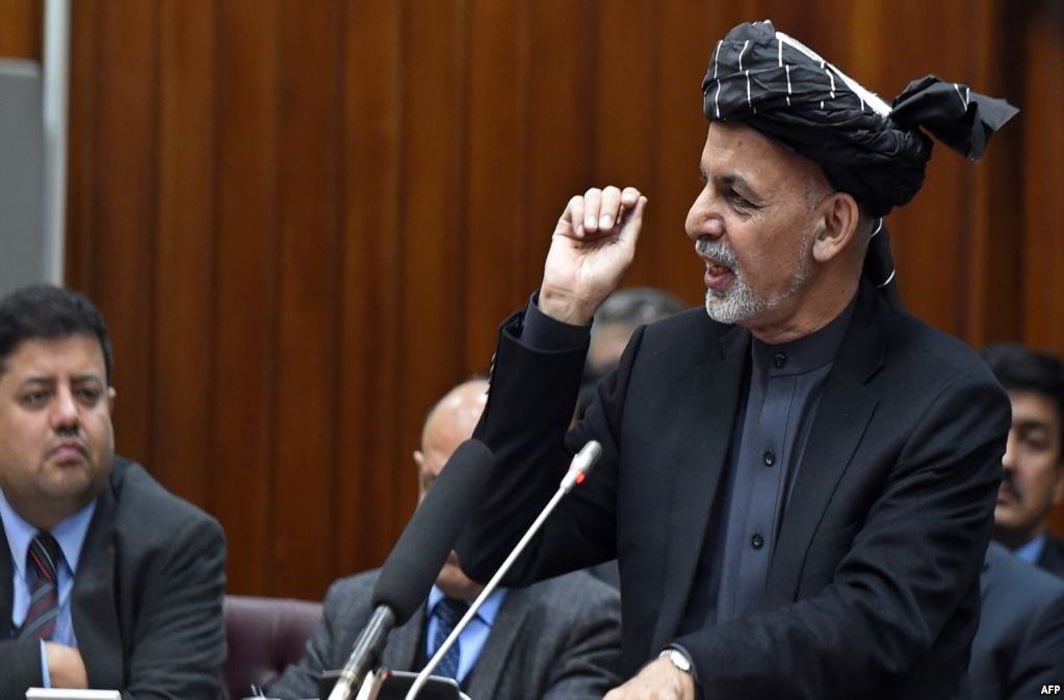
Foreign terrorists enter Afghanistan through Tajikistan, says report

After being defeated badly in Syria and Iraq, the dreaded terrorist organization Daesh (IS) is now strengthening its positions in Afghanistan. The officials have revealed that all villages of the Darzab and Qosh Tepa districts of Jawzjan province were controlled by the Daesh terrorists while security forces hold handful of checkpoints and few government buildings. Afghan officials blame Pakistan for financially supporting and providing arms to the terror group.

According to Afghanistan Times, Baz Mohammad Dawar, the district governor of Darbaz told this on Tuesday. He said, “Only the buildings of the police department and the district office are still controlled by the government and the rest are under Daesh control.”

He also said that the local people have moved to the Sheberghan city, the provincial capital and have been waiting for army operations to “take back the areas”.Afghanistn: Daesh controls two districts, Islamabad supports terror group
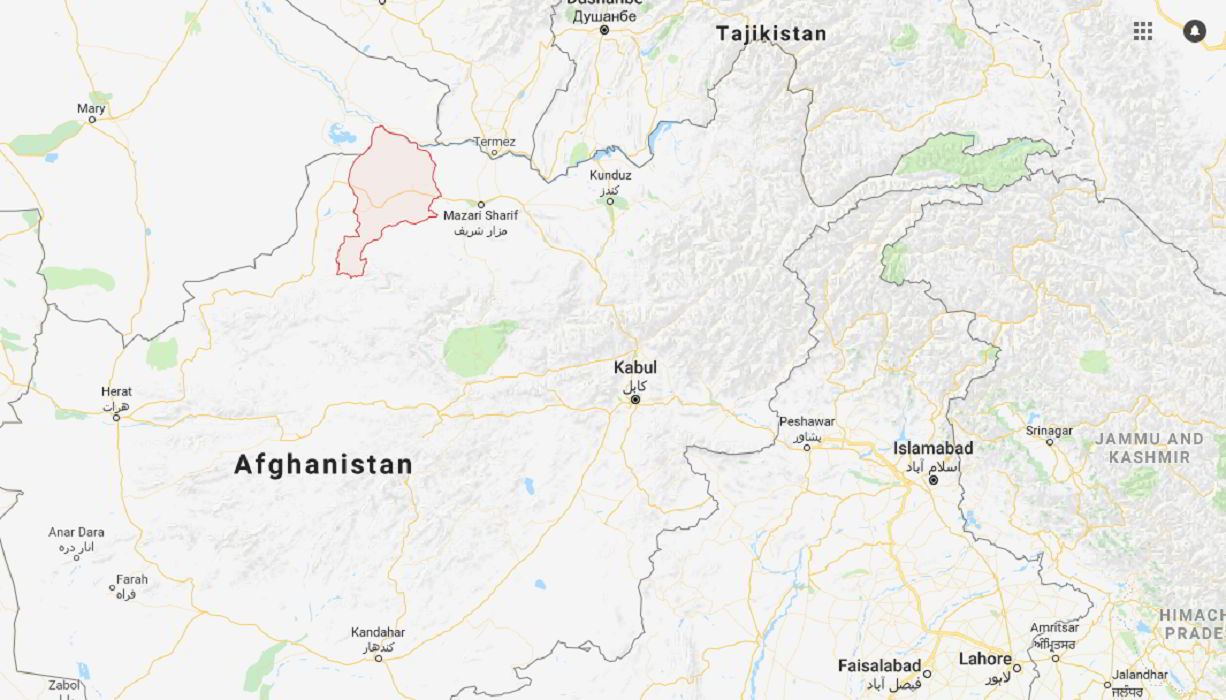
Dawar has further revealed that Daesh command centers were situated in Sardara, Golkhani and Moghul villages from where the terror group launch attacks on other nearby areas.

​Meanwhile, Rahmatullah Kohestani, provincial police chief has reportedly said,   “There are French, Chechen and even German terrorists in Darzab and Qosh Tepa, while the Uzbek terrorists who are the fighters of Taher Yoldash are living along with their families.” He further said that the terrorists buy foodstuff in the local markets and arms and money come to them from Pakistan.
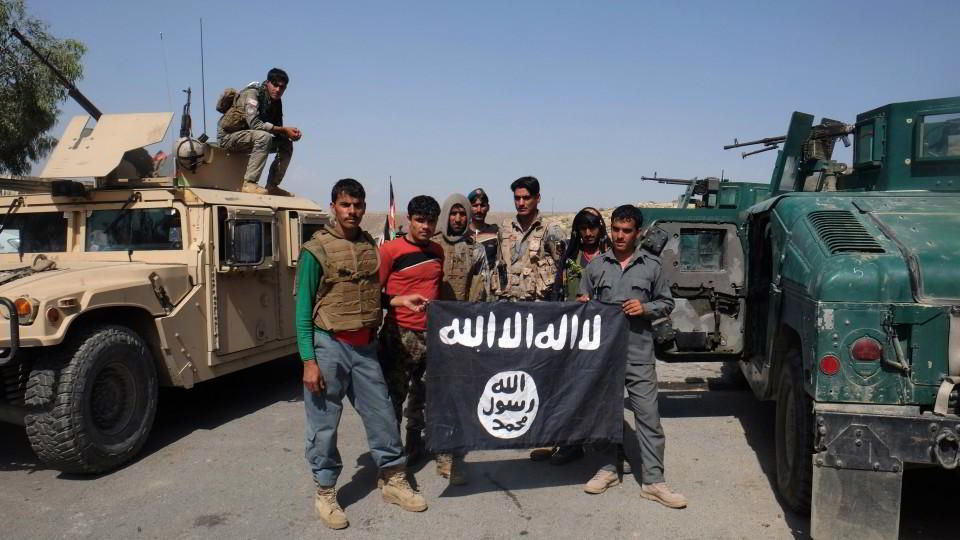
Afghanistn: Daesh controls two districts, Islamabad supports terror groupThe villagers have claimed of having seen terrorists from France and Algeria who have reportedly entered the province from Tajikistan.

Daesh terrorists have reportedly closed schools in the districts and their fighters were recruiting locals to train them for suicide attacks.

Meanwhile, the country’s Interior ministry has claimed that that army began its operations on Tuesday to retake the areas from Daesh terrorists.

In June 2015, Aimal Faizi, spokesman to the former President Hamid Karzai claimed in an article published by BBC that Daesh in Afghanistan is the creation of Islamabad to gain access to the energy-rich Central Asia, China and Russia. He also blamed local media outlets for not differentiating news from propaganda and promoting terrorist group. Hamid Karzai was President of Afghanistan from December 2001 to September 2014.
Latest world news

Moscow says no word from India on stopping Russian oil purchases

Russia says it has received no confirmation from India on stopping Russian oil purchases, despite Donald Trump’s claim that the move was part of a new India-US trade deal.

Published

on

Vladimir Putin

The Kremlin on Tuesday said it has not received any official communication from India regarding a halt in Russian oil purchases, following claims by US President Donald Trump that New Delhi had agreed to stop buying Russian crude as part of a trade agreement with Washington.

Kremlin spokesperson Dmitry Peskov told reporters that Moscow had not heard any confirmation from Indian authorities on the matter.

“So far, we haven’t heard any statements from New Delhi on this matter,” Peskov said, responding to Trump’s remarks linking reduced US tariffs on Indian goods to an alleged commitment by India to end Russian oil imports.

Russia stresses importance of ties with India

Peskov said Russia respects bilateral relations between India and the United States but underlined the strategic importance of ties between Moscow and New Delhi.

“We respect bilateral US-Indian relations,” he said, adding that Russia places equal importance on its strategic partnership with India.
“This is the most important thing for us, and we intend to further develop our bilateral relations with Delhi.”

What Trump claimed

Trump announced the India-US trade deal on Monday, stating that tariffs on Indian goods had been reduced from 50 per cent to 18 per cent. He claimed the reduction was linked to India agreeing to stop purchasing Russian oil.

According to Trump, India would instead buy more oil from the United States and potentially from Venezuela. He also suggested that the move would help bring an end to the war in Ukraine.

“He agreed to stop buying Russian oil and to buy much more from the United States and, potentially, Venezuela,” Trump said, referring to Prime Minister Narendra Modi.

India’s reliance on Russian crude

India has emerged as one of the largest buyers of Russian crude since the start of the Ukraine conflict. It currently imports around 1.5 million barrels of Russian oil per day, accounting for more than one-third of its total oil imports, according to global trade data.

India is the second-largest purchaser of Russian crude globally. Even after earlier US tariff measures on Indian goods, New Delhi continued its Russian oil imports, citing energy security concerns.

The Indian government has consistently maintained that securing affordable energy supplies is critical, given the country’s heavy dependence on oil imports.

Shift in energy ties after Ukraine war

Historically, India’s relationship with Russia was centred more on defence cooperation than energy trade, with Russia supplying a majority of India’s military equipment while contributing only a small share of its oil imports.

After the invasion of Ukraine, India significantly increased purchases of discounted Russian oil. The move helped India boost energy supplies while providing Russia with much-needed revenue amid Western sanctions.

As recently as December 2025, Russian President Vladimir Putin said during a visit to New Delhi that Moscow was ready to ensure uninterrupted fuel supplies to India despite pressure from the United States.

Earlier US push for Indian energy imports

Trump had earlier said, following a meeting with Prime Minister Modi in February last year, that India would begin buying more American oil and natural gas. However, those discussions did not lead to a major shift in India’s energy sourcing.

Subsequent US tariff measures also failed to significantly alter India’s stance on Russian oil imports.

Continue Reading

India News

Markets surge as Nifty jumps 750 points after India-US trade deal

Indian equity markets rallied sharply with Nifty and Sensex posting strong gains after the India-US trade agreement announcement.

Published

on

Sensex

The Indian equity markets opened sharply higher on Tuesday morning, buoyed by optimism following the announcement of a trade agreement between India and the United States.

In early trade, the Nifty jumped around 750 points, while the Sensex surged nearly 2,400 points, reflecting strong investor confidence hours after the deal was made public.

The rally came after US President Donald Trump announced that Washington would slash tariffs on Indian goods to 18 per cent from 50 per cent, as part of a broader trade agreement with New Delhi. In return, India agreed to halt purchases of Russian oil and lower trade barriers, according to the announcement.

President Trump shared the development in a post on his social media platform, calling it a major trade breakthrough. The announcement was followed by a message from Prime Minister Narendra Modi, who thanked the US President on behalf of the people of India for the decision.

Rupee opens stronger against dollar

The positive sentiment was also reflected in the currency market. The Indian rupee opened stronger at 90.40 against the US dollar, gaining 1.10 rupees in early trade, supported by expectations of increased foreign investor inflows following the deal.

Asian markets rebound

Asian markets also traded higher, adding to the positive global cues. Japan’s Nikkei rose about 2.5 per cent, recovering from previous losses, while South Korea’s KOSPI climbed nearly 4 per cent. Market sentiment was further supported by signs of improved US factory activity overnight.

Futures indicated a recovery in Hong Kong markets, while S&P 500 futures were up around 0.3 per cent, as investors tracked upcoming corporate earnings.

With global cues turning favourable and optimism surrounding the India-US trade agreement, Indian markets are expected to remain buoyant, with investors closely watching further developments during the trading session.

Continue Reading

Latest world news

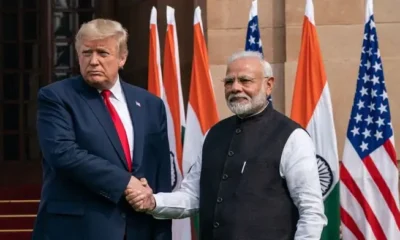
Trump announces trade deal with India, claims New Delhi will stop buying Russian oil

Donald Trump announces a trade deal with India, reducing US tariffs to 18 per cent and claiming New Delhi will halt Russian oil purchases.

Published

on

US President Donald Trump on Tuesday announced that the United States and India have agreed to a trade deal that will reduce American tariffs on Indian goods from 25 per cent to 18 per cent. The announcement was made through a post on Trump’s social media platform, Truth Social.

According to Trump, the decision was taken “out of friendship and respect” for Prime Minister Narendra Modi and at the Indian leader’s request. He stated that the revised tariff would take effect immediately, with remaining formalities to be completed in the coming days.

Prime Minister Modi, in a post shortly after Trump’s announcement, thanked the US President for what he described as a significant step, expressing appreciation on behalf of India’s population.

Tariff reduction to be finalised soon

While neither government initially shared detailed terms of the agreement, the US ambassador to India later indicated that further clarity would follow. In an interaction with media, he confirmed that the overall tariff on Indian goods entering the US market would stand at 18 per cent once the deal is formally concluded.

He added that some procedural aspects are still pending, but the tariff rate itself has been agreed upon and is not expected to change.

Trump also claimed that India would move to reduce its own tariffs and non-tariff barriers on US goods to zero, though no official statement from the Indian side has detailed such measures so far.

Claim on Russian oil purchases

In his post, Trump further asserted that India has agreed to stop buying Russian oil and instead increase its energy purchases from the United States and potentially Venezuela. He linked this claim to broader geopolitical developments, stating that such a move would contribute to ending the war in Ukraine.

There has been no official confirmation from New Delhi regarding any commitment to halt Russian oil imports.

Timing linked to wider trade developments

The announcement comes soon after India concluded a major free trade agreement with the European Union following prolonged negotiations. That agreement provides India with expanded access to the EU market, particularly in pharmaceuticals and medical devices, and is expected to support manufacturing, employment and MSMEs.

The tariff reduction by the US was also announced a day after India presented its annual budget, which included measures aimed at addressing challenges arising from higher US tariffs imposed earlier.

Background of stalled negotiations

Trade talks between India and the US had slowed in recent months after Washington imposed a steep tariff on Indian goods over continued energy purchases from Russia. Negotiations resumed following renewed engagement between the two sides, including high-level discussions between the two leaders.

Officials had earlier indicated that progress was being made toward a trade agreement, with cooperation expanding across areas such as technology, energy, defence and trade.

Continue Reading

Trending

© Copyright 2022 APNLIVE.com