English हिन्दी
Connect with us

Latest world news

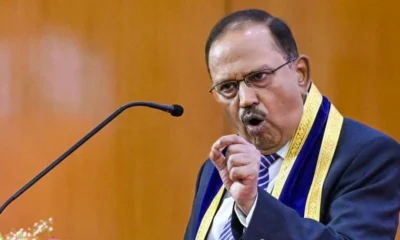
NSA Ajit Doval’s Canada visit signals cautious reset in India-Canada ties

NSA Ajit Doval’s visit to Canada marks a cautious effort by New Delhi and Ottawa to stabilise strained ties through renewed security and law enforcement cooperation.

Published

on

Ajit Doval

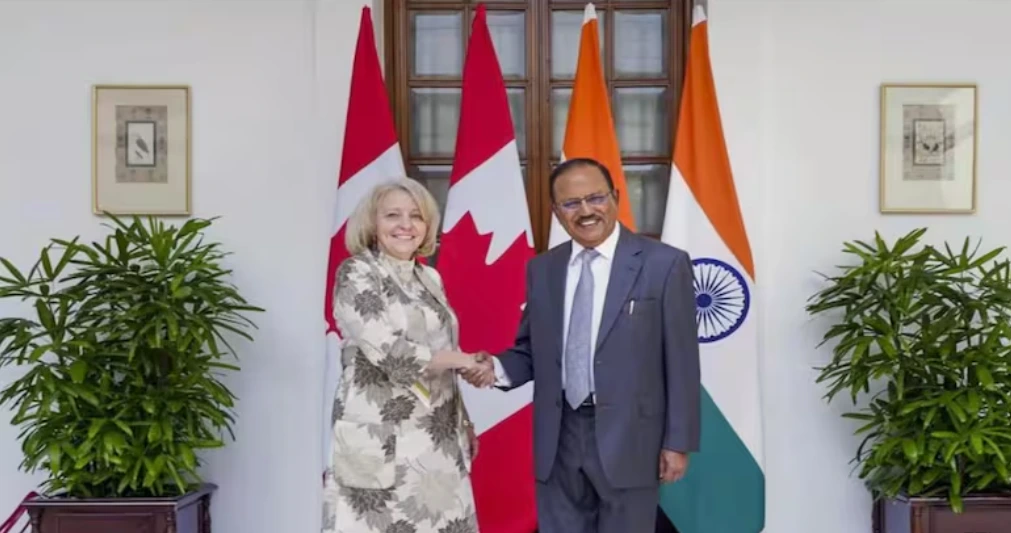
India and Canada have taken a measured step toward repairing strained bilateral ties following National Security Adviser Ajit Doval’s visit to Ottawa last week. The NSA-level engagement marks one of the most substantive security interactions between the two countries in recent years and signals a cautious return to dialogue after a prolonged diplomatic freeze.

Doval’s visit, held from February 6 to 7, comes against the backdrop of tensions that followed a diplomatic row in 2023 over the killing of a Khalistani separatist. While both sides described the talks as part of routine bilateral engagement, officials and analysts see the timing as significant, indicating a deliberate effort to stabilise relations.

Focus on security and law enforcement cooperation

During the visit, Doval held meetings with Canada’s Deputy Clerk and National Security and Intelligence Adviser to the Prime Minister, Nathalie Drouin, and Public Safety Minister Gary Anandasangaree. The discussions centred on strengthening cooperation in national security and law enforcement, with an emphasis on practical and result-oriented collaboration.

According to India’s official statement, both sides acknowledged progress on initiatives aimed at enhancing the safety and security of their citizens. They also agreed on a shared work plan to guide future cooperation, underscoring a mutual intent to rebuild trust through structured engagement.

Canada’s readout echoed this approach, highlighting agreement on concrete steps rather than broad political signalling. A key outcome of the meetings was the decision to establish security and law-enforcement liaison officers in each other’s countries, a move expected to streamline communication and improve information-sharing.

Cooperation on cyber threats, drugs and immigration enforcement

Officials said the liaison mechanism would help address issues such as transnational organised crime, the illegal flow of drugs—including fentanyl precursors—and other cross-border security challenges. These concerns have increasingly featured in bilateral discussions between New Delhi and Ottawa.

The talks also covered cooperation on cybersecurity policy and the sharing of information related to cyber threats. Continued engagement on fraud prevention and immigration enforcement was discussed as well, with both sides stressing that collaboration would remain aligned with domestic laws and international obligations.

The careful wording of official statements reflects sensitivity to past disputes and the need for institutional safeguards as ties are gradually rebuilt.

Message on extremism and diplomatic reset

Beyond the immediate outcomes, Doval’s visit is being viewed as a broader signal that extremist groups, including Khalistani-linked networks, do not enjoy official backing under the current Canadian government led by Prime Minister Mark Carney.

The engagement is also seen as laying the groundwork for a possible prime ministerial-level visit. Officials in both capitals are treating the NSA talks as an important precursor to Carney’s likely visit to India next month, which would mark the first such engagement since relations deteriorated sharply.

Background of strained ties

India-Canada relations hit a low point during the tenure of former prime minister Justin Trudeau, particularly after his 2023 allegations of a potential Indian link to the killing of Khalistani separatist Hardeep Singh Nijjar. India had rejected the claims as “absurd,” leading to mutual recriminations and downgraded diplomatic engagement.

Against that backdrop, the resumption of structured security dialogue is being interpreted as a sign that both sides are seeking to move past recent turbulence. Analysts note that cooperation in technical and functional areas such as law enforcement and cybersecurity could help rebuild confidence and create momentum for broader political engagement.

While the visit does not resolve all outstanding issues, it reflects a willingness to re-engage seriously. With high-level political contact potentially on the horizon, India and Canada appear to be cautiously steering their relationship back toward a more stable and predictable footing.

Latest world news

Iran’s 4,000 km strike attempt raises concerns over undeclared missile range

Iran’s reported 4,000 km missile attempt toward Diego Garcia has raised concerns about its undeclared long-range missile capabilities.

Published

on

Missiles

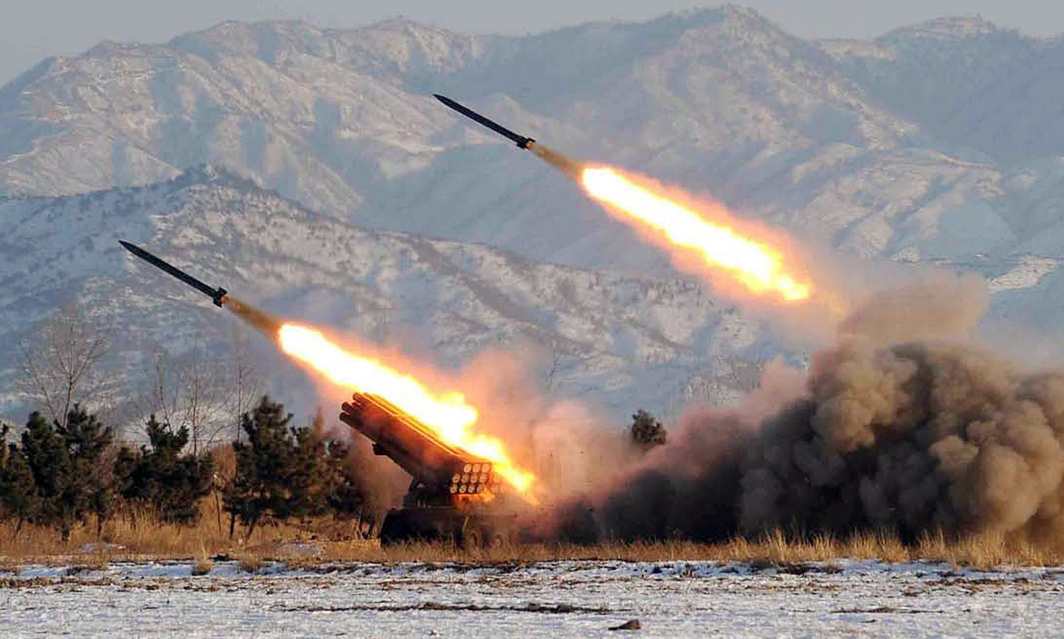
A reported attempt by Iran to target the US-UK military base at Diego Garcia, located roughly 4,000 km away, has raised fresh questions about Tehran’s actual missile capabilities. Iran has publicly maintained that its ballistic missile range is limited to around 2,000 km, but the attempted strike at double that distance suggests the possibility of undeclared long-range systems.

According to reports, two intermediate-range ballistic missiles were launched toward the base in the Indian Ocean. One missile reportedly failed, while the other may have been intercepted. However, analysts say the attempt itself is strategically significant regardless of the technical outcome.

Strategic implications for US and allies

Diego Garcia is considered a high-value military facility used by the United States and the United Kingdom for long-range bomber operations, logistics, and surveillance missions. Any attempt to target the base indicates a potential expansion of the conflict theatre beyond the Middle East into the Indian Ocean region.

If Iran is indeed testing missiles closer to true intermediate-range ballistic missile capability, it could potentially reach deeper into the Indian Ocean and parts of southern Europe. Such uncertainty over actual missile range creates strategic ambiguity, complicating defence planning for the US and its allies, including Israel and Gulf countries.

Political signalling more significant than outcome

Experts suggest the political and strategic messaging behind the attempt may matter more than whether the strike succeeded. By attempting to target a distant base like Diego Garcia, Iran may be signalling that no US military facility is beyond its reach.

Reports also indicated that the US may have used an SM-3 interceptor in response, though the outcome remains unclear. Even the use of high-end missile defence systems can be seen as a strategic win for Iran in signalling its extended reach and forcing the deployment of advanced interception resources.

Overall, the attempted strike has shifted attention toward Iran’s potential undeclared missile capabilities and added a new dimension to regional and global security calculations.

Continue Reading

Latest world news

Trump signals possible wind-down of Iran war as oil tensions rattle global markets

Trump indicates the US may scale down military operations against Iran as oil market concerns intensify.
Published

on

Donald Trump

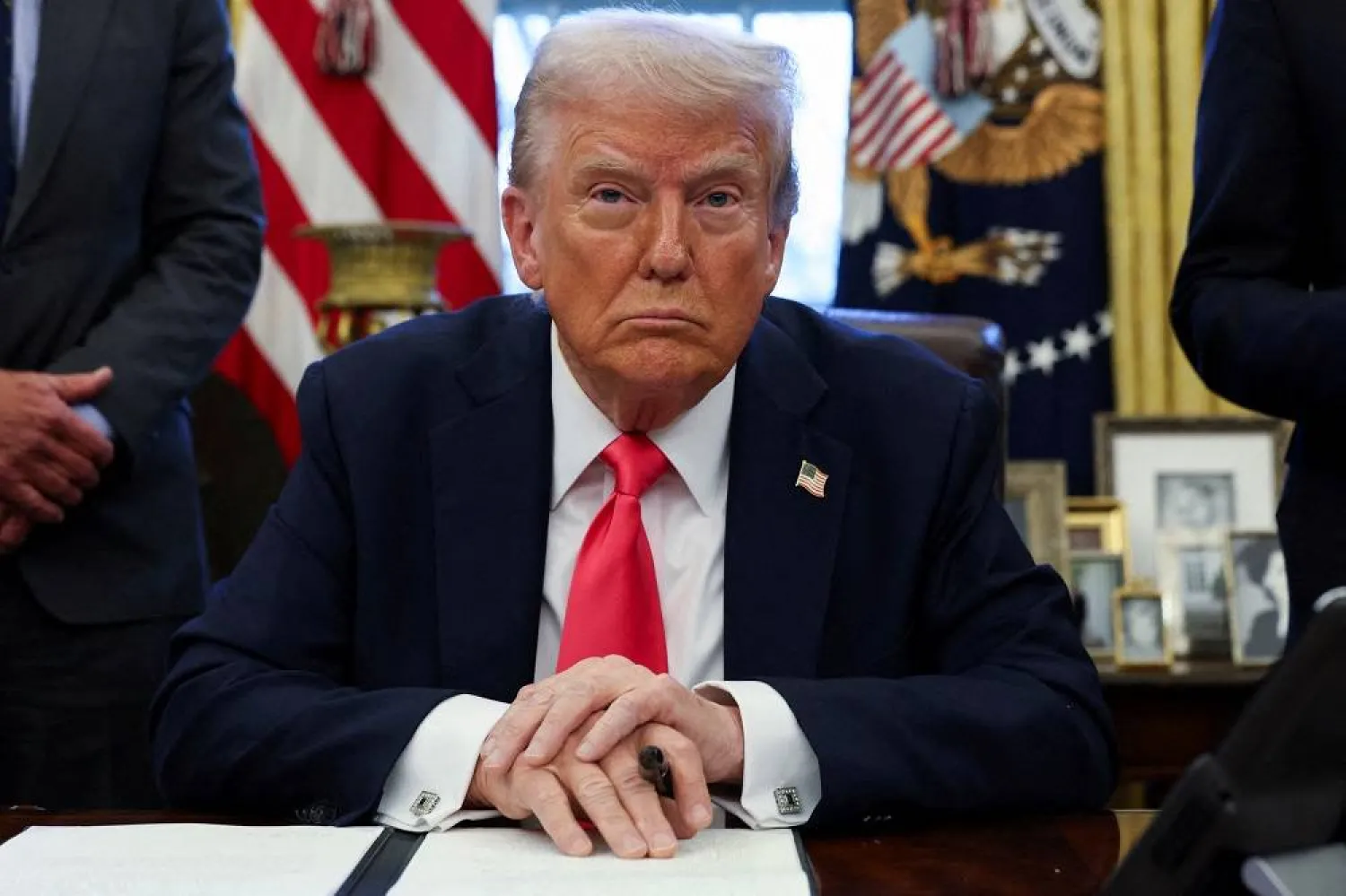
Donald Trump has indicated that the United States may consider scaling down its military operations against Iran, saying the country is “getting very close” to achieving its objectives in the ongoing conflict in West Asia.

In a post on Truth Social, Trump highlighted the progress made by US forces and suggested that a potential wind-down of operations could be under consideration. His remarks are among the clearest signals so far that Washington may be looking at reducing its military engagement.

The statement comes at a time when the US has temporarily eased restrictions on Iranian oil shipments. The move is aimed at addressing concerns over global supply disruptions and stabilising rising oil prices amid continued tensions in the region.

White House Press Secretary Karoline Leavitt said the administration had anticipated a timeline of around four to six weeks for the operation. With the conflict now entering its third week, she noted that developments were being closely monitored.

Oil markets in focus

Global oil markets have come under pressure due to the ongoing tensions. The temporary relaxation allows certain Iranian oil shipments that were already in transit to reach markets, helping ease supply concerns.

The situation has contributed to volatility in oil prices, with investors closely watching developments in the Middle East for further signals on supply stability.

Rising regional tensions

The conflict continues to see exchanges of attacks in parts of the region. Iran has carried out drone and missile strikes targeting Israel and Saudi Arabia, contributing to the escalation.

At the same time, concerns remain high over the security of key energy routes.

Strait of Hormuz concerns

The Strait of Hormuz, a crucial global oil transit route, remains a focal point of concern. A significant portion of the world’s oil supply passes through the strait, making it highly sensitive to any disruption.

Trump suggested that countries dependent on the route should also take responsibility for its security, while indicating that the US could assist if required.

No ceasefire signal

Despite hinting at a possible wind-down of operations, Trump said he is not currently seeking a ceasefire, indicating that the US position remains firm as the situation evolves.

The developments highlight the close link between geopolitical tensions, global energy markets, and the broader economic outlook.

Continue Reading

Latest world news

PM Modi discusses West Asia tensions with Bahrain King, condemns attacks on infrastructure

PM Modi and Bahrain King discuss West Asia tensions, condemn attacks on infrastructure, and stress need for secure shipping and diplomacy.
Published

on

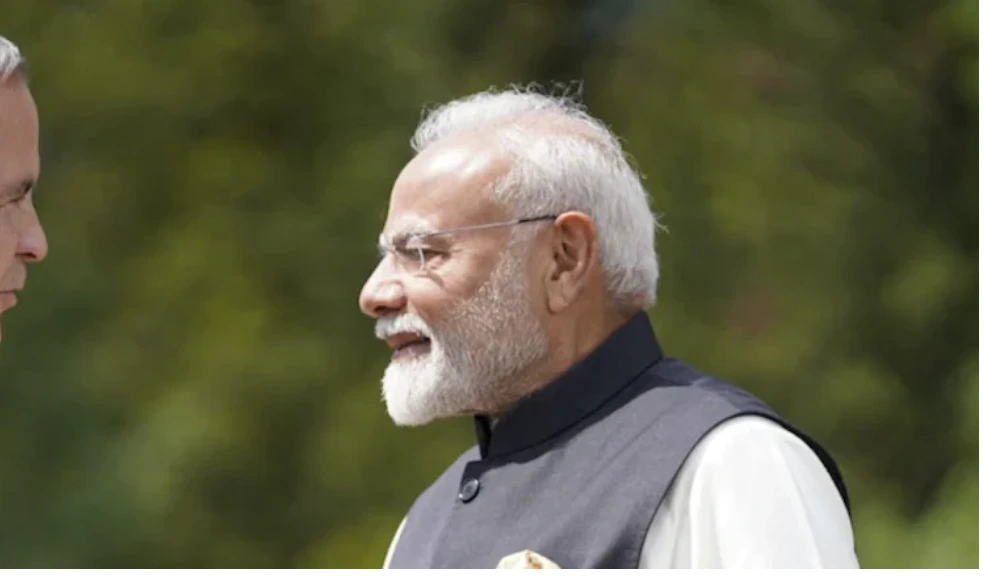
Prime Minister Narendra Modi on Friday held a telephonic conversation with Bahrain’s King Hamad bin Isa Al Khalifa, focusing on the evolving situation in West Asia and condemning recent attacks on energy and civilian infrastructure in the region.

During the call, PM Modi extended Eid al-Fitr greetings to the King and the people of Bahrain. He also expressed appreciation for Bahrain’s continued support towards the welfare of the Indian community residing in the Gulf nation.

Sharing details of the conversation, the Prime Minister said both leaders discussed regional developments and raised concerns over the impact of attacks on critical infrastructure. He noted that such incidents could adversely affect global food, fuel, and fertiliser security.

PM Modi also underlined the importance of ensuring freedom of navigation and keeping key shipping routes open and secure, amid rising tensions in the region.

The conversation comes against the backdrop of ongoing conflict in West Asia following reported US-Israeli strikes on Iran on February 28, which allegedly resulted in the death of Iran’s Supreme Leader Ali Khamenei and senior military officials. Iran subsequently launched drone and missile attacks targeting US and Israeli-linked assets across the region.

India has been actively engaging with multiple global and regional leaders in recent days. PM Modi has held discussions with leaders from several countries, including Malaysia, Oman, France, Kuwait, the UAE, Israel, Iran, Saudi Arabia, and Qatar, as part of ongoing diplomatic efforts.

Earlier, the Prime Minister also spoke with Jordan’s King Abdullah II, where both leaders expressed concern over the situation and emphasised the need for dialogue and diplomacy to restore peace and stability.

In another conversation, PM Modi spoke with French President Emmanuel Macron, reiterating the urgent need for de-escalation. He also held talks with Oman’s Sultan Haitham bin Tariq, condemning the violation of Oman’s sovereignty and stressing peaceful resolution through diplomatic channels.

The Prime Minister further highlighted the importance of secure maritime routes, particularly through the Strait of Hormuz, a critical global energy corridor.

Continue Reading

Trending

© Copyright 2022 APNLIVE.com