English हिन्दी
Connect with us

Latest world news

Facebook to restore news pages in Australia, government to amend media bargaining code

Facebook on Tuesday has announced that it will restore news content to its users in Australia after the government agreed to amend a world-first media law opposed by the tech giant.


Published

on

Facebook won’t allow advertisers to target groups identified by self-reported information

Facebook on Tuesday has announced that it will restore news content to its users in Australia after the government agreed to amend a world-first media law  opposed by the tech giant.

The news pages would be restored on Facebook in the coming days, the amendments would be made to the news media bargaining code, said Australian Treasurer Josh Frydenberg in a statement.

The agreement has been reached between Facebook and Australian government on key aspects of a law that would force digital giants to pay news companies for content. 

Prime Minister Scott Morrison-led government has introduced a last minute change to the code that includes a two-month period to allow digital platforms and publishers to broker deals before they are made to enter arbitration as a last resort. The proposed code is in Parliament which is expected to be voted into law soon. 

Facebook in a statement said that it appreciated the constructive discussion it had with Treasurer Frydenberg and Communications Paul Fletcher over the past week. 

The social media giant was satisfied that the Australian government has agreed to a number of changes and guarantees that address our core concerns about allowing commercial deals that recognise the value our platform provides to publishers relative to the value we receive from them.

Also Read: Government expert panel says Covid cases likely to drop to low tens of thousands by March end

The managing director of Facebook Australia, Will Easton said that as a result of these changes, the company can now work to further our investment in public interest journalism, and restore news on Facebook for Australians in the coming days. 

The social media giant had imposed a contentious ban on Australian news pages in response to a proposed law which would make the platform and Google pay news publishers for content. In the ban, a number of non-news pages were also swept up including community organisations and Bureau of Meteorology.

Latest world news

Iran proposes 3-stage plan to US to end war, reopen Hormuz and delay nuclear talks

Iran has предложed a three-stage plan to the US focusing on ending the war, discussing Hormuz management, and delaying nuclear negotiations.

Published

on

Iran has proposed a three-stage framework for talks with the United States, outlining a phased approach that begins with ending the war and moves towards addressing the nuclear issue at a later stage.

According to media reports, the proposal sets out a sequence aimed at reducing tensions while avoiding early deadlock on more complex issues.

Three-stage framework outlined

In the first stage, Iran has called for a complete end to the war, along with guarantees to ensure that hostilities do not resume. This step is positioned as a necessary starting point before any further discussions can take place.

The second stage focuses on discussions related to the Strait of Hormuz, particularly its management and administration. The waterway remains a critical global oil transit route and has been central to regional tensions.

In the third stage, Iran has proposed that talks on its nuclear programme be taken up only after progress is made in the earlier phases. This sequencing reflects a shift from previous negotiation patterns where nuclear issues dominated discussions from the outset.

Diplomatic channel and context

The proposal was reportedly conveyed through intermediaries, indicating ongoing backchannel diplomatic efforts. It comes after earlier attempts at engagement, including talks involving regional players, did not lead to a breakthrough.

Tensions between Iran and the United States have remained high over issues including the war, regional security concerns, and disagreements related to Iran’s nuclear programme.

Focus on phased engagement

By placing the nuclear issue in the final stage, the proposal appears to prioritise initial agreements on conflict resolution and regional stability. The approach suggests an effort to build momentum through sequential steps rather than tackling all contentious issues simultaneously.

While it remains unclear how the United States will respond, the proposal marks a fresh diplomatic move amid ongoing geopolitical tensions.

Continue Reading

Latest world news

Trump sets fresh ultimatum to Iran, rules out nuclear strike as tensions escalate

Trump says “clock is ticking” for Iran but rules out nuclear weapons, maintaining pressure for a long-term deal.

Published

on

Donald Trump statement

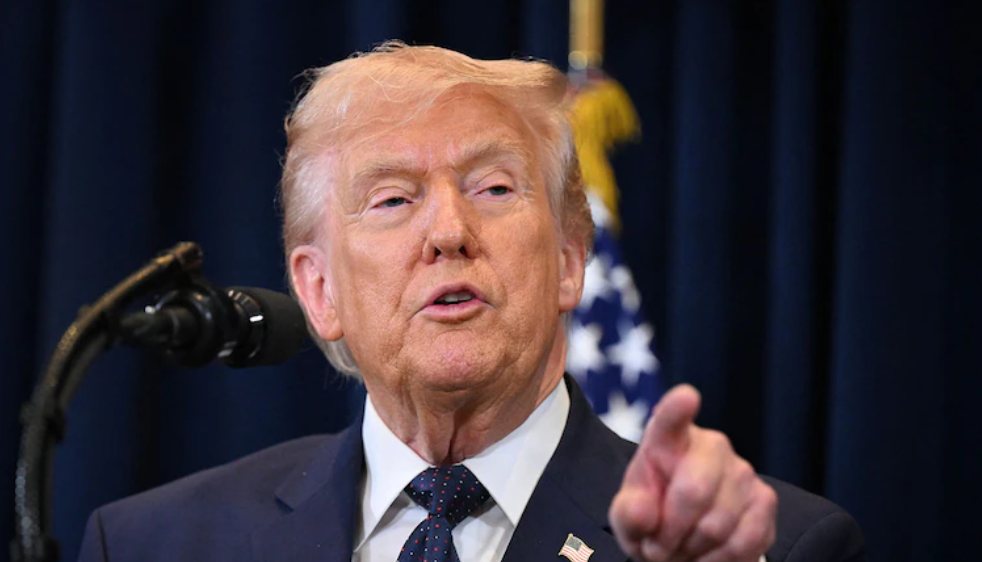
Amid rising tensions in the ongoing Iran-US conflict, Donald Trump has issued a new ultimatum to Iran, stating that time is running out for Tehran to reach a deal with Washington.

According to recent media reports, Trump reiterated that while the United States is prepared to continue military pressure, it does not intend to use nuclear weapons in the conflict. He emphasised that Iran has already been significantly weakened through conventional military action.

No urgency for deal, but pressure remains

Despite the “clock is ticking” warning, Trump indicated there is no immediate pressure on the US to finalise a deal. He suggested that any agreement would only be pursued if it aligns with American interests and ensures long-term stability rather than a quick resolution.

This stance reflects a continued hardline approach, where Washington is maintaining strategic pressure while keeping diplomatic options open.

Nuclear option ruled out

In a significant statement, Trump ruled out the use of nuclear weapons in the conflict, calling such a move unnecessary given the current military situation. He stressed that conventional forces have already inflicted major damage on Iran’s capabilities.

Conflict enters critical phase

The Iran-US conflict, which has seen military strikes, naval tensions, and diplomatic efforts, remains at a sensitive stage. While ceasefire efforts and negotiations have intermittently taken place, both sides continue to exchange warnings and prepare for potential escalation.

Recent developments, including maritime tensions and earlier threats targeting infrastructure, underline the fragile situation in the region.

Continue Reading

Latest world news

India-bound tanker among 2 vessels seized by Iran’s Revolutionary Guards amid Hormuz tensions

Iran’s seizure of an India-bound tanker near the Strait of Hormuz signals rising maritime tensions and risks to global oil supply routes.

Published

on

Strait of Hormuz

Iran’s Islamic Revolutionary Guard Corps (IRGC) has seized two vessels near the strategically crucial Strait of Hormuz, with one of them reportedly bound for India, intensifying concerns over maritime security in the region.

The development comes amid escalating tensions linked to the ongoing confrontation involving Iran and the United States, which has already disrupted shipping routes and heightened risks for commercial vessels passing through the area.

According to reports, the vessels were intercepted by Iranian forces close to the Strait of Hormuz — a critical chokepoint through which a significant portion of the world’s oil supply transits. The move underscores growing instability in one of the busiest and most sensitive maritime corridors globally.

Separate reports indicate that multiple ships have faced attacks or interceptions in recent days, with at least two vessels taken into custody by Iranian authorities after being targeted near Iranian waters.

The incident follows a series of confrontations at sea, including gunfire and forced halts of commercial ships, as tensions remain high despite attempts at ceasefire arrangements.

The Strait of Hormuz has become a focal point of the broader conflict, with both military actions and retaliatory measures affecting shipping traffic. Any disruption in this region carries global implications, particularly for countries like India that depend heavily on energy imports passing through the route.

India has already been taking steps to safeguard its maritime interests, including enhanced monitoring and security measures for vessels navigating the region.

Continue Reading

Trending

© Copyright 2022 APNLIVE.com