English हिन्दी
Connect with us

Latest world news

US, Nigerian forces kill ISIS global deputy chief Abu Bilal al-Minuki, says Trump

Donald Trump announced that US and Nigerian forces had eliminated Abu Bilal al-Minuki, described as ISIS’s global second-in-command, in a joint Africa operation.

Published

on

trump

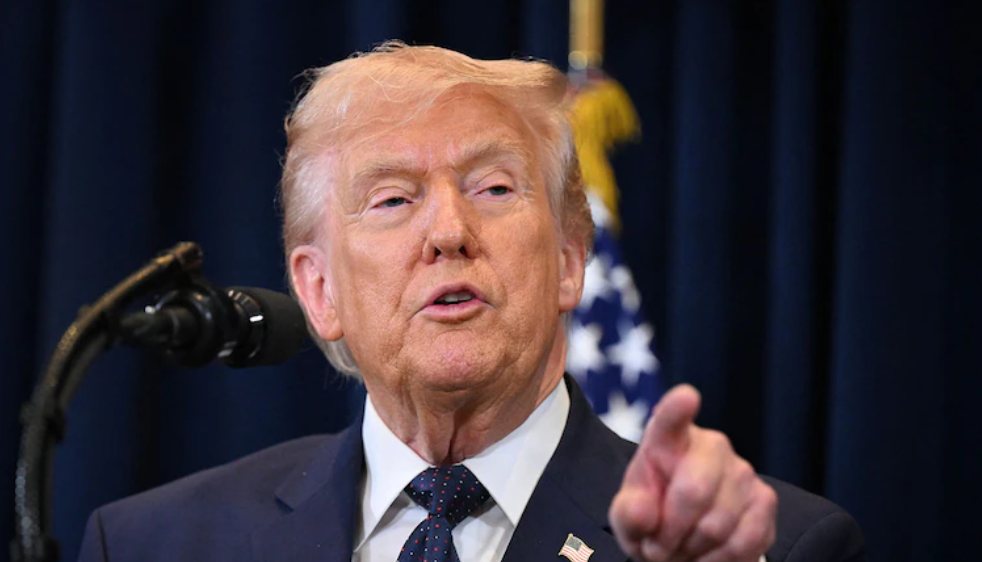
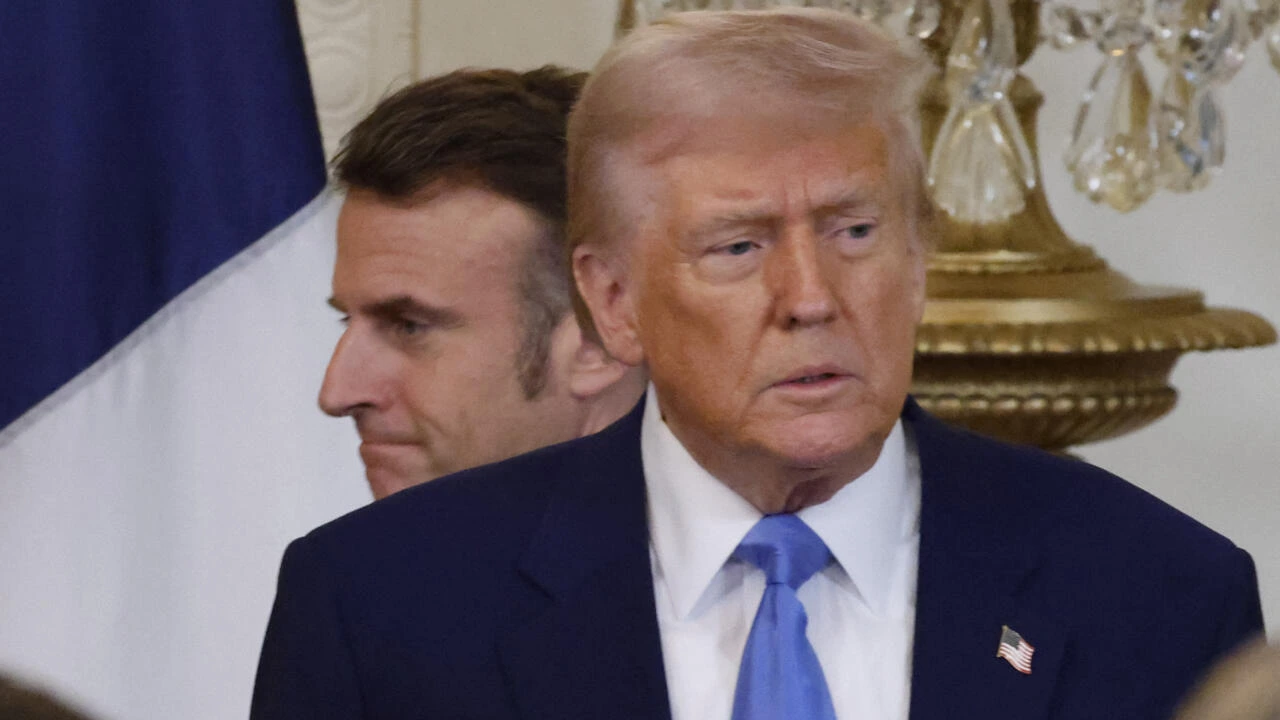
US President Donald Trump on Friday announced that American and Nigerian forces had killed Abu Bilal al-Minuki, whom he described as the global second-in-command of the Islamic State group (ISIS), during a joint military operation in Africa.

According to Trump, the operation was conducted under his direction and involved US forces working alongside the Armed Forces of Nigeria in what he called a “meticulously planned” and “very complex” mission.

In a statement posted on Truth Social, Trump said Abu Bilal al-Minuki believed he could remain hidden in Africa, but intelligence sources had tracked his movements. He also claimed the ISIS leader had been among the “most active terrorists in the world.”

Trump thanked the Nigerian government for cooperating in the operation and said the killing would weaken ISIS’s global activities. However, officials did not immediately release details about the exact location or timing of the mission.

There has been no independent confirmation yet from Nigerian authorities regarding the operation or al-Minuki’s role within the terror organisation.

Latest world news

US airstrikes hit Iranian children’s cancer hospital as IRGC claims downing of American MQ-9 drone

A major military escalation in the Middle East has seen US overnight airstrikes hit several Iranian cities, damaging a children’s cancer facility in Ahvaz, while the IRGC claims it has intercepted a US military drone over Andimeshk.

Published

on

Iran us strikes

A fresh round of intense military escalation has unfolded in the Middle East as the United States launched a new wave of overnight airstrikes across Iran. The military action coincided with a renewed American blockade of Iranian ports, prompting Tehran to strike back at regional allies and reaffirm its vow to keep the vital Strait of Hormuz closed until the US halts its military campaign.

Multi-city bombardment impacts medical facility and military sites

Explosions rattled numerous locations across Iran, including major centers and coastal zones such as Qeshm Island, Bandar Abbas, Sirik, Chabahar, Konarak, Rask City, Khondab, and the western city of Khorramabad.

A severe consequence of the operation occurred in the city of Ahvaz, where local media reported that the Shahid Baghaei Hospital sustained damage from the American bombardment. The strike impacted the hospital’s specialized children’s cancer treatment department, forcing an emergency evacuation of the facility which provides critical chemotherapy treatments.

Beyond civilian infrastructure, Iranian officials stated that the airstrikes hit an army barracks, resulting in the deaths of at least seven troops. According to Tehran, the total casualties from the ongoing US campaign have reached at least 35 dead and more than 300 injured. In response to the aerial incursions, state media confirmed that air defence systems were activated over the capital city of Tehran. Fresh strikes were also reported in Bushehr, the location of Iran’s lone civilian nuclear power plant, following earlier blasts near southern maritime hubs.

Maritime confrontation and regional retaliation

US Central Command (CENTCOM) stated that its operations targeted Iranian military assets that directly threaten commercial vessels navigating the strategic waterway. Furthermore, the US military confirmed it disabled a Curacao-flagged oil tanker, the M/T Belma, by firing Hellfire missiles into its smokestack after the vessel attempted to breach the naval blockade. CENTCOM confirmed via social media that the ship is no longer moving toward Iran.

In retaliation, the Islamic Revolutionary Guard Corps (IRGC) launched attacks targeting the US Fifth Fleet stationed in Bahrain, triggering air sirens as incoming threats were intercepted. Additionally, Jordan’s armed forces reported intercepting and downing three missiles launched from Iran.

The IRGC also claimed a major defensive success via media reports, stating its aerospace force utilized a newly deployed air defence system to intercept and destroy an “enemy” MQ-9 drone over the southwestern city of Andimeshk. Meanwhile, in northern Iraq, Kurdish forces reported that the US-led coalition successfully shot down eight explosive-laden drones over Erbil, near the US consulate, with no casualties reported.

Washington increases regional arms sales and signals next steps

Against the backdrop of active hostilities, the US State Department announced the provisional approval of a $1.96 billion weapons sale to Saudi Arabia, alongside a separate $484 million aircraft sustainment package for Kuwait. The proposed Saudi agreement includes up to 20,000 Advanced Precision Kill Weapon System guidance sections for both air-to-air and air-to-ground configurations, alongside launchers, warheads, and logistical support. The package for Kuwait focuses on the sustainment of C-17 aircraft. Both deals must pass congressional review before final finalization.

Following the third wave of American strikes within a 24-hour window, Donald Trump commented during a defence summit at the US Army War College that Iran appears willing to settle, though he remained ambiguous about the path forward. However, in a later media interview, he sharpened his rhetoric, threatening potential strikes on power plants and bridges if Tehran refuses to return to negotiations, warning that the situation would worsen significantly next week.

Diplomacy remains active amid the Hormuz crisis

Despite the surge in kinetic actions, mediated talks between Washington and Tehran have not officially collapsed. Iran’s top negotiator, Mohammad Bagher Ghalibaf, emphasized that any memorandum of understanding requires valid implementation of its clauses to remain meaningful, warning that Iran will not adhere to the agreement if it receives no tangible benefits.

Concurrently, Iranian Deputy Foreign Minister Kazem Gharibabadi stated that the reimposed US naval blockade has effectively compromised the interim Islamabad memorandum established last month.

In what was described as a goodwill gesture, Iran released US-Iranian dual citizen Dena Karari, who had been detained since 2024 on espionage charges related to her work running a non-profit organization. her legal counsel confirmed her release following Trump’s initial announcement.

The conflict remains anchored around the Strait of Hormuz, a critical bottleneck for global energy shipping. Iran originally blockaded the strait following the outbreak of conflict via US-Israeli strikes on February 28. While briefly opened under last month’s diplomatic understanding, the waterway is once again restricted by Tehran until US operations cease. Consequently, maritime data indicates traffic has plummeted to just 21 transits on Tuesday, sparking an upward trend in global oil prices.

Continue Reading

Latest world news

Indian Muslim man stabbed 15 times in US mall after suspect allegedly targeted his religion

An Indian Muslim worker remains in critical condition after being stabbed 15 times in a Utah shopping mall. Police say the suspect admitted he targeted the victim because of his religion.

Published

on

Indian man stabbed 15 times in US mall

A 48-year-old man has been charged with attempted murder after allegedly stabbing an Indian Muslim worker multiple times inside a shopping mall in the US state of Utah. Investigators say the suspect admitted he deliberately targeted the victim because of his religion.

The incident took place on Monday at Valley Fair Mall in West Valley City, where the victim was working at a kiosk. According to court documents, the accused, identified as Peter Michael Larsen, allegedly told investigators that he “intends to kill Muslims.”

Suspect allegedly asked victim about his religion before attack

Police said Larsen approached the kiosk and began speaking with the worker, who was later identified by friends as Sohail. According to witnesses, the suspect first asked where he was from.

A nearby jewellery store employee, Luna Nunez, said Sohail replied that he was from India. Larsen then allegedly asked whether he was Muslim. After Sohail answered yes, the suspect reportedly launched the knife attack.

According to Imam Shuaib Din of the Utah Islamic Center, Larsen had also asked Sohail for a bottle of water. As the victim turned to get it, the suspect allegedly pulled out a knife and began stabbing him.

Victim stabbed 15 times, remains in critical condition

A GoFundMe campaign created by Nunez states that Sohail suffered 15 stab wounds during the attack. He has since undergone multiple surgeries and remains in critical condition.

Friends described Sohail as the sole earning member of his family, supporting his wife and two young children. Nunez said he does not have health insurance, adding that his family currently has no other source of income.

Bystanders overpowered suspect before police arrived

Witnesses at the mall intervened during the attack, tackling Larsen and restraining him until officers reached the scene. Police later treated the suspect for injuries sustained while he was being held down before taking him into custody.

Authorities have charged Larsen with attempted murder and prohibited dangerous weapon conduct. He is currently being held at the Salt Lake County jail.

Investigators said the accused poses “a substantial danger to the public,” citing his alleged violent actions, extremist views and concerns over possible pre-planned mass casualty intentions.

Friends condemn attack as hate crime

Sohail’s manager, Adnan Mohammed, condemned the assault, calling it a hate crime and saying there is “no space for hate.” He described Sohail as a hardworking employee who was always smiling and had recently been promoted to manage operations.

Mohammed also expressed regret that he was not present during the attack, saying he wished he could have protected Sohail.

Recalling the incident, Nunez said she threw nearby objects, including shoes and a chair, in an attempt to stop the attacker, adding that she feared Sohail would not survive.

She also said other mall employees later told her the suspect had been walking around the shopping centre asking people about their religion before the stabbing.

Civil rights organisations have repeatedly raised concerns over an increase in anti-Muslim incidents in the United States, citing factors such as anti-immigration rhetoric, white supremacist activity and tensions linked to the Israel-Gaza conflict.

Continue Reading

Latest world news

US eases Russian oil tariff proposal, offering relief to India and China

A revised US Senate Russia sanctions bill lowers the proposed tariff on countries importing Russian energy from 500% to 100%, easing potential trade pressure on India and China.

Published

on

Donald Trump

India and China have received a significant respite after US lawmakers revised a bipartisan Russia sanctions bill, reducing the proposed tariff on countries importing Russian energy from a blanket 500% to a maximum of 100%.

The revised legislation, backed by late Republican Senator Lindsey Graham and Democratic Senator Richard Blumenthal, would authorise US President Donald Trump to impose tariffs of up to 100% on major buyers of Russian oil and natural gas if the bill becomes law.

Revised bill lowers tariff proposal

The original proposal sought to impose a 500% tariff on countries continuing to purchase Russian energy. Under the updated version, the tariff has been capped at 100% for the top purchasers of Russian oil and natural gas.

The legislation is intended to increase economic pressure on Moscow over its ongoing war in Ukraine by discouraging countries from relying on Russian energy supplies.

India and China are among the world’s largest buyers of Russian crude oil. Other major purchasers include Slovakia, Hungary and Azerbaijan. In the natural gas segment, China, France, Japan, Hungary and Belgium rank among the leading importers.

Exemptions included in updated draft

The revised bill introduces an exemption for countries that import less than 15% of Russia’s natural gas exports and are making substantial efforts to reduce those imports. If the provision is retained, countries such as Japan, France, Hungary and Belgium could qualify for relief.

The legislation also proposes sanctions targeting Russia’s shadow tanker fleet, major financial institutions including the Central Bank of Russia, and key state-backed energy projects such as Yamal LNG and Arctic LNG projects 1, 2 and 3.

Additionally, the bill allows the US President to waive sanctions if doing so is considered to be in the national interest.

Negotiations led to softer provisions

According to a Senate aide quoted by media, several provisions were moderated following months of negotiations aimed at securing support from President Donald Trump.

The aide said the revised bill represents the version that has broad backing and is most likely to advance through Congress while maintaining pressure on Russia.

The legislation, originally introduced in April 2025 by Lindsey Graham and Richard Blumenthal, is expected to attract additional bipartisan support.

Trump optimistic about passage

President Trump said at the White House that the legislation could also be expanded to include sanctions targeting Iran and Hezbollah, describing it as a potentially significant measure.

He expressed confidence that the bill could eventually become law, describing it as an initiative that Senator Graham strongly supported.

However, Senator Blumenthal urged lawmakers to move ahead with the current version instead of broadening its scope, arguing that additional targets could complicate the bill’s progress.

Continue Reading

Trending

© Copyright 2022 APNLIVE.com