English हिन्दी
Connect with us

Latest world news

Israel detects first Florona case, everything you need to know about double infection of Covid-19 and influenza

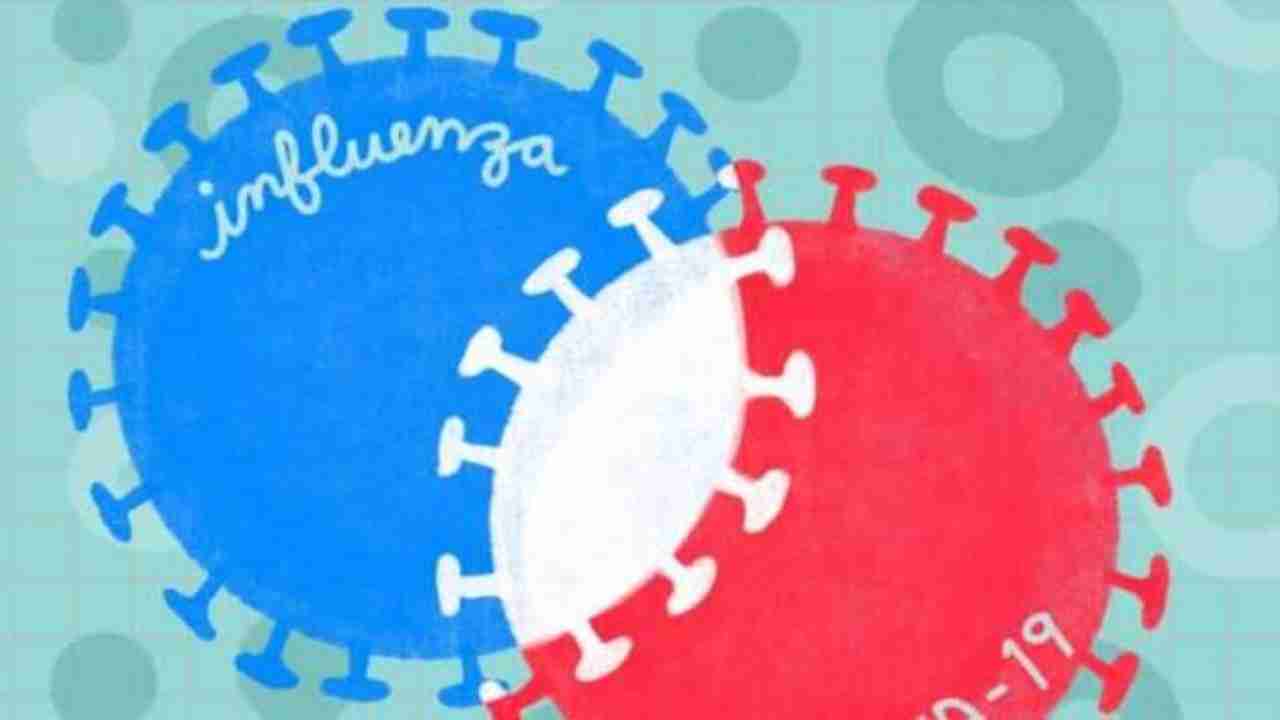
Florona is a double infection of Covid-19 and influenza.

Published

on

Israel detects first Florona case, everything you need to know about double infection of Covid-19 and influenza

Israel on Thursday had detected the first case of Florona infection which is a double infection of Covid-19 and influenza. The disease was found in a pregnant woman who was admitted to the Rabin Medical Centre for her delivery, as per a report in Hindustan Times.
The reports also said that the pregnant woman was not vaccinated.

Everything you need to know about Folorna and its symptoms

Reportedly, Florona is a double infection of Covid-19 and influenza. Arab News stated that the disease is not a new variant of Covid-19 and is believed to be the occurrence of flu and coronavirus at the same time.
The reports also said that Israeli doctors are studying Florona as the country has witnessed a surge in influenza cases in the last few weeks. However, the World Health Organisation has not yet confirmed the reports of Foloran being detected in Israel.

As per a report in The Indian Express, the symptoms of Folorna includes runny nose, cold, fever, and cough.

Covid-19 is Israel

Meanwhile, Israel is witnessing a spike in Covid-19 cases amid the spread of the Omicron variant. The country is all set to administer the fourth dose of the vaccine to its citizen with weak immune systems and also to elderly residents and employees.

The country has registered 8,243 deaths from the contagious virus ever since the pandemic hit the country. According to data, 6.5 million people in the country has received at least one dose of the Pfizer or BioNTech vaccine.

On other hand, India on January 1, 2022, registered a total of 22,775 new Covid-19 cases in the last 24 hours. The total tally of Omicron cases in the country stands at 1,431. India’s total tally of people who succumbed to the virus stands at 4,81,486, whereas, the number of total Covid cases are 3,48,61,579.

Latest world news

Magnitude 7 earthquake strikes Russia’s Kamchatka Peninsula

A magnitude 7 earthquake struck Russia’s Kamchatka Peninsula region on Friday. The initial report placed the earthquake at a depth of 140 kilometres.

Published

on

earthquake-tremors

A magnitude 7 earthquake struck Russia’s Kamchatka Peninsula region on Friday, October 16, according to the European-Mediterranean Seismological Centre (EMSC).

The initial report placed the earthquake at a depth of 140 kilometres (approximately 87 miles). Details about the impact of the earthquake, including any damage or casualties, were not immediately available in the initial report.

Earthquake strikes seismically active Kamchatka region

Russia’s Kamchatka Peninsula is a seismically active region where earthquakes occur because of tectonic activity.

The latest earthquake was reported by the EMSC, which provided the initial magnitude and depth estimates. Further information about the situation on the ground was not available in the initial report.

What is known so far

  • Location: Kamchatka Peninsula region, Russia
  • Magnitude: 7.0
  • Date: Friday, October 16, 2026
  • Reported depth: 140 kilometres
  • Casualties and damage: Not provided in the initial report

Continue Reading

Latest world news

S Jaishankar says India is a natural option for Russia amid Europe tensions

External Affairs Minister S Jaishankar said India remained a natural option for Russia as Moscow increasingly turned towards Asia amid strained relations with Europe. He highlighted the continuity of India-Russia ties and their significance for the balance of power in Asia.

Published

on

External Affairs Minister S Jaishankar has described India as a natural option for Russia as Moscow increasingly looks towards Asia amid deteriorating relations with Europe. He said India’s longstanding relationship with Russia had remained steady despite significant changes in the international strategic landscape.

Jaishankar made the remarks during a conversation with John Micklethwait, editor-in-chief of the Bloomberg New Economy Forum. He discussed how the Russia-Ukraine war had affected Moscow’s relationship with Europe and contributed to Russia’s growing focus on Asia.

Jaishankar highlights Russia’s shift towards Asia

Jaishankar said Russia’s relationship with Europe had become deeply strained following the Ukraine war. He noted that Russia had historically viewed itself as a European country and placed considerable importance on its relations with Europe and the United States.

However, the conflict had pushed Moscow to look increasingly towards Asia,with much of that shift directed towards China.

The minister said it was in India’s interest, as well as the wider world’s interest, for Russia to maintain multiple relationships in Asia rather than having its options concentrated in one direction.

Against this backdrop, he described India as a natural partner for Russia, pointing to the longstanding nature of the relationship between the two countries.

India-Russia ties remain steady despite global changes

Jaishankar said India and Russia had maintained a consistent relationship over several decades. He emphasised that New Delhi continued to engage with Moscow even as the global order and Russia’s strategic calculations evolved.

According to the minister, India was reassuring Russia that the relationship built over nearly eight decades remained steady despite the changes in Moscow’s relations with Europe and the wider West.

He stressed that India was not passing a value judgment on those changes but was continuing its bilateral engagement with Russia.

Jaishankar said the relationship had benefited both countries and contributed to the balance of power and the broader status quo in Asia. 

Why the relationship matters for Asia

Jaishankar’s remarks highlighted India’s position in Russia’s changing regional outlook. As Moscow increasingly turns towards Asia, India continues to maintain its longstanding ties with Russia while navigating a changing international environment.

The minister’s comments underscored the importance he placed on preserving India-Russia ties and ensuring that Russia maintained multiple relationships in Asia. 

His assessment came against the backdrop of strained Russia-Europe relations following the war in Ukraine, which has reshaped Moscow’s engagement with Western countries and increased its focus on Asian partners.

Continue Reading

Latest world news

Putin praises PM Modi, says he has very good ideas on Ukraine war

Russian President Vladimir Putin has praised Prime Minister Narendra Modi for repeatedly raising the need to end the Ukraine war, describing his ideas for a settlement as “very good”.

Published

on

Vladimir Putin

Russian President Vladimir Putin has praised Prime Minister Narendra Modi for his continued efforts to promote an end to the Russia-Ukraine war, saying the Indian leader has “very good ideas” aimed at finding a mutually acceptable solution.

Putin made the remarks while addressing the Valdai Forum of international Russia experts, where he spoke about Modi’s repeated efforts to raise the issue of ending the conflict.

What Putin said about PM Modi

Putin said Modi has continued to raise the question of ending the conflict despite the close and friendly relationship between India and Russia.

According to Putin, the Prime Minister has shown a strong interest in finding a solution and has ideas that could help identify mutually acceptable ways to resolve the conflict.

Putin also described India’s position as neutral while highlighting Modi’s interest in bringing the conflict to an end through peaceful means.

The Russian president expressed gratitude to Modi for his ideas and his desire to see the conflict end as soon as possible.

Modi’s position on the Ukraine war

PM Modi has repeatedly called for dialogue and diplomacy to resolve conflicts, including during his meetings with Putin.

During their September 11 meeting in New Delhi, Modi reiterated that dialogue and diplomacy are the way forward for resolving conflicts.

Modi had also told Putin during their meeting on the sidelines of the Shanghai Cooperation Organisation summit in Bishkek that the situation needed to move from “endless war” towards an end to the war.

India has consistently maintained that conflicts should be addressed through dialogue and peaceful means, with Modi previously describing the present period as not being an era of war.

The Russia-Ukraine conflict began in February 2022 and has continued despite repeated diplomatic efforts to seek a resolution.

Continue Reading

Trending

© Copyright 2022 APNLIVE.com