English हिन्दी
Connect with us

Latest world news

G20 leaders issue joint declaration, emphasize on universal health coverage, pandemic preparedness, infectious diseases surveillance

The global leaders committed to improve access to medical countermeasures and provide more supplies and production capacities in developing countries

Published

on

G20 leaders issue joint declaration, emphasize on universal health coverage, pandemic preparedness, infectious diseases surveillance

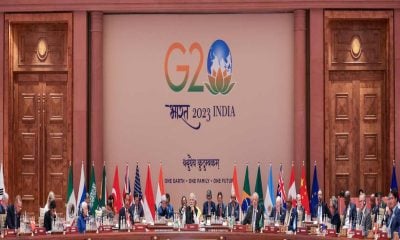
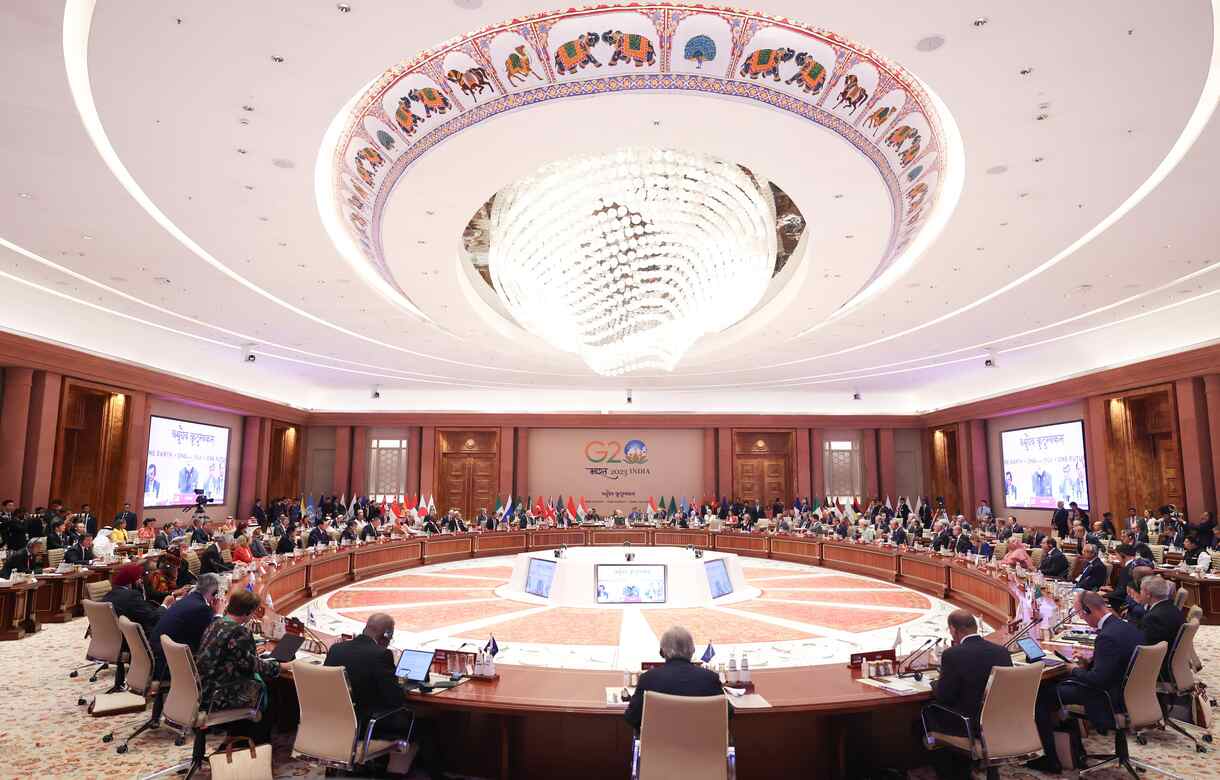
The two day G20 Summit under India’s presidency concluded on Sunday at Bharat Mandapam in New Delhi. During the mega summit, the global leaders resolved to build more resilient, equitable, sustainable and inclusive health systems to achieve universal health coverage, enhance pandemic preparedness and strengthen existing infectious diseases surveillance systems.

Issuing a joint declaration, the G20 leaders emphasized on strengthening primary healthcare, health workforce and essential health services to better than pre-pandemic level, ideally within the coming two-three years. Apart from focusing on epidemics like tuberculosis and AIDs, the G20 leaders also recognised the importance of research on long COVID-19.

The global leaders committed to improve access to medical countermeasures and provide more supplies and production capacities in developing countries to develop better for future health emergencies.
Furthermore, the New Delhi Leaders Declaration also underscored the need to promote One Health based approach driven by the quadripartite One Health Joint Plan of Action (2022-2026) and enhance the resilience of health infrastructure. In addition, it also stressed the need to support development of climate-resilient and low-carbon health systems in collaboration with multilateral development banks (MDBs) and assist the work of WHO-led Alliance for Transformative Action on Climate and Health.

The declaration noted implementing and prioritising tackling antimicrobial resistance (AMR) following the One Health approach. It further called for equitable access to safe, effective, quality-assured, and affordable vaccines, therapeutics, and diagnostics in middle and low income countries. It also upheld the potential role of evidence based traditional and complementary medicine in health.

Stressing on the public health dimension of the world drug problem, global leaders called for strong international counter-narcotics cooperation, free of unnecessary restrictions, involving information sharing, capacity building to prevent production and proliferation of illicit drugs, including synthetic drugs, and precursor chemicals at their origin, in transit and at destination points.

The G20 leaders committed to strengthening the global health architecture for pandemic prevention, preparedness and response through enhanced collaboration between finance and health ministries under the Joint Finance and Health Task Force.

Deliberations on the Framework on Economic Vulnerabilities and Risks (FEVR) and the initial Report for Economic Vulnerabilities and Risks arising from pandemics, created through collaboration between the World Health Organization (WHO), World Bank, IMF, and European Investment Bank (EIB) also took place.

Latest world news

PM Modi receives Ethiopia’s highest civilian honour, first world leader to get award

PM Modi has become the first global leader to be awarded Ethiopia’s highest civilian honour for strengthening bilateral ties and global leadership.

Published

on

PM modi Ethiopias highest civillian award

Prime Minister Narendra Modi on Tuesday was conferred with ‘The Great Honour Nishan of Ethiopia’, the highest national award of the African nation, becoming the first head of government or state globally to receive the honour.

The award was presented during a special ceremony held at the Addis International Convention Centre, where Ethiopian Prime Minister Abiy Ahmed Ali honoured Modi for his role in strengthening bilateral relations between India and Ethiopia and for his leadership on global issues.

Recognition of India-Ethiopia partnership

According to an official statement, the honour recognises Prime Minister Modi’s contribution to deepening the long-standing partnership between the two countries and his engagement with issues concerning the Global South. The conferment is being seen as a milestone in India-Ethiopia relations and reflects the growing diplomatic and development cooperation between the two nations.

Prime Minister Modi acknowledged the award and dedicated it to the people of India. In a post on X, he said he was honoured to receive Ethiopia’s highest recognition and attributed it to the collective strength and aspirations of 140 crore Indians.

‘Accepted with humility and gratitude’

Speaking at the ceremony, Prime Minister Modi said it was a privilege to accept the honour from one of the world’s most ancient civilisations. He expressed humility and gratitude while thanking Prime Minister Abiy Ahmed and the people of Ethiopia for the recognition.

He also praised the Ethiopian Prime Minister’s leadership and initiatives aimed at promoting national unity, sustainability and inclusive development. Highlighting the role of knowledge and education in nation-building, Modi noted that Indian teachers have been contributing to Ethiopia’s progress for more than a century.

The Prime Minister dedicated the award to both Indians and Ethiopians who have nurtured bilateral ties over generations and conveyed appreciation on behalf of India’s population for the honour bestowed upon him.

Continue Reading

Latest world news

Trump administration expands US travel ban to 20 more countries, Palestinians also affected

The Trump administration has widened its travel ban, adding 20 more countries and fully restricting entry for Palestinians, citing security and vetting concerns.

Published

on

The Trump administration has widened its travel restrictions, adding 20 more countries to the existing list and imposing a complete ban on travel for people holding documents issued by the Palestinian Authority. The decision significantly expands the scope of the travel limits announced earlier this year and will come into force from January 1.

According to the proclamation issued on Tuesday, the latest move doubles the number of nations impacted by US travel and immigration restrictions. Five additional countries now face a full ban, while 15 others have been placed under partial restrictions. The administration said the measures apply to both visitors and those seeking to immigrate to the United States.

Countries facing full travel ban

The newly added countries under the full ban include Burkina Faso, Mali, Niger, South Sudan and Syria. In addition, people travelling on Palestinian Authority-issued passports or documents have been fully barred from entering or emigrating to the US. South Sudan had already been subject to significant restrictions before this announcement.

Earlier, the administration had imposed a complete ban on travellers from Afghanistan, Myanmar, Chad, the Republic of Congo, Equatorial Guinea, Eritrea, Haiti, Iran, Libya, Somalia, Sudan and Yemen.

15 countries under partial restrictions

The list of countries now facing partial travel restrictions includes Angola, Antigua and Barbuda, Benin, Ivory Coast, Dominica, Gabon, Gambia, Malawi, Mauritania, Nigeria, Senegal, Tanzania, Tonga, Zambia and Zimbabwe.

These join the earlier partially restricted countries such as Burundi, Cuba, Laos, Sierra Leone, Togo, Turkmenistan and Venezuela. The administration also said restrictions on Laos and Sierra Leone have been upgraded, while some limits on Turkmenistan have been eased after an improvement in vetting standards.

Who is exempt from the restrictions

The proclamation clarifies that certain categories of travellers are exempt. These include people who already hold valid US visas, lawful permanent residents, diplomats, athletes, and individuals whose entry is considered to be in the national interest of the United States.

Reasons cited by the administration

The US administration said many of the affected countries suffer from widespread corruption, unreliable civil documents and weak criminal record systems, making proper vetting difficult. It also pointed to high visa overstay rates, refusal by some governments to accept deported nationals, and broader concerns related to immigration enforcement, foreign policy and national security.

The expansion follows the arrest of an Afghan national accused in the shooting of two National Guard troops near the White House during the Thanksgiving weekend. The accused has pleaded not guilty to murder and assault charges.

Criticism and concerns over Afghan visas

The decision has drawn criticism from rights groups and immigration advocates, who argue that national security is being used to justify broad restrictions on entire populations. Concerns have also been raised over the removal of an exception for Afghans eligible for the Special Immigrant Visa, a category meant for those who assisted US forces during the war in Afghanistan.

Advocacy groups said these individuals undergo extensive vetting and that restricting their entry could undermine commitments made by the United States.

New restrictions on Palestinians

The full ban on people holding Palestinian Authority passports marks a further tightening of restrictions imposed earlier, which had already made it extremely difficult for Palestinians to travel to the US for work, education, business or tourism. The administration justified the move by citing the presence of US-designated terrorist groups in the West Bank and Gaza, as well as challenges in vetting due to ongoing conflict.

Governments of some newly affected countries said they were reviewing the decision and seeking clarity from US officials on the implications of the restrictions.

Continue Reading

Latest world news

Luthra brothers deported from Thailand in Goa nightclub fire case

The Luthra brothers, owners of the Goa nightclub where a fire killed 25 people, have been deported from Thailand and are returning to India.

Published

on

Saurabh and Gaurav Luthra, the owners of a Goa nightclub where a massive fire led to the deaths of 25 people, have been deported from Thailand and are on their way back to India. The two brothers boarded a flight to India after Thai authorities sent them back from Bangkok.

According to information available, the Luthra brothers had left the country within hours of the tragic incident and travelled to Thailand’s Phuket. At the time the fire broke out at the Goa nightclub, both Saurabh and Gaurav Luthra were in Delhi.

The fire at the club triggered widespread outrage and raised serious questions over safety measures at nightlife venues in Goa. The incident resulted in the deaths of 25 people, making it one of the deadliest nightclub fires in the state.

After their departure from India soon after the tragedy, the whereabouts of the club owners became a key focus of the investigation. Their deportation from Thailand and return to India is seen as a significant development in the case related to the deadly fire.

Continue Reading

Trending

© Copyright 2022 APNLIVE.com